Diplomatic efforts fail in the Middle East… rate cuts aren’t coming any time soon… the Fed’s hands are tied… copper’s case gets stronger

The collapse of high-stakes diplomatic negotiations in Islamabad, Pakistan, has triggered a significant escalation in Middle Eastern tensions, resulting in an immediate naval blockade of the Strait of Hormuz and a fundamental recalibration of global financial expectations. After 21 hours of intensive deliberations led by U.S. Vice President JD Vance, the American delegation departed without a resolution, citing Iran’s refusal to abandon its nuclear weapons program. The failure of these talks has not only heightened the risk of regional conflict but has also effectively dismantled the prevailing market narrative regarding a 2024 pivot in Federal Reserve monetary policy. With energy prices surging and inflation data trending upward, the prospect of interest rate cuts has been pushed indefinitely into the future, forcing investors to seek refuge in industrial commodities with strong structural demand, most notably copper.
The Failure of the Islamabad Summit and the Naval Blockade
The diplomatic mission to Islamabad was widely viewed by international observers as a critical "off-ramp" to prevent a broader regional war. The U.S. delegation, headed by Vice President Vance, engaged in nearly a day of continuous negotiations with Iranian officials, including Mohammad Bagher Ghalibaf, the Iranian parliamentary speaker and lead negotiator. Despite initial reports of cautious optimism from U.S. officials, the talks reached a definitive impasse on Sunday morning. Iranian representatives reportedly maintained that the United States had failed to establish the necessary "trust" required for a deal, specifically regarding the lifting of sanctions and the verification of nuclear enrichment activities.
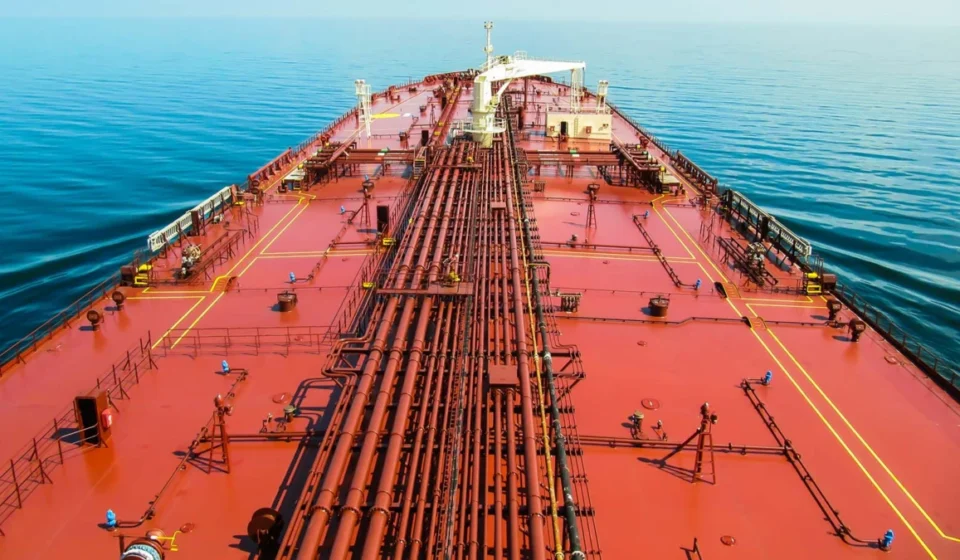
Following the departure of the U.S. delegation, President Trump announced a naval blockade of the Strait of Hormuz, a move that went into effect at 10:00 a.m. Eastern Time on Monday. The Strait of Hormuz is the world’s most vital energy chokepoint, with approximately 20% of the world’s total oil consumption—roughly 20.5 million barrels per day—passing through the narrow waterway. U.S. Central Command (CENTCOM) clarified that while the blockade is intended to target Iranian interests and exports, vessels destined for non-Iranian ports would technically remain unimpeded. However, the logistical reality of a blockade in such a confined space has already led to a spike in maritime insurance premiums and shipping delays.
The Iranian response was swift and focused on economic leverage. Mohammad Bagher Ghalibaf took to social media to warn U.S. consumers of the impending costs, suggesting that the current retail price of gasoline—already hovering between $4 and $5 per gallon—would soon be viewed with nostalgia as prices climb further. This geopolitical volatility has pushed Brent crude and West Texas Intermediate (WTI) prices toward the $100 per barrel threshold, a psychological and economic level that threatens to sustain inflationary pressures across the global economy.
The End of the Rate-Cut Narrative
The geopolitical crisis has arrived at a precarious moment for the Federal Reserve. Earlier in the year, the March Summary of Economic Projections (SEP) suggested that policymakers were prepared to implement at least one quarter-point interest rate cut by the end of 2024. That projection, however, was predicated on a cooling energy market and a steady decline in core inflation toward the Fed’s 2% target. The failure of diplomacy in the Middle East has rendered those assumptions obsolete.
The most recent inflation data underscores the Federal Reserve’s dilemma. The February Personal Consumption Expenditures (PCE) report and the March Consumer Price Index (CPI) both exceeded expectations, showing that price increases are not only persistent but are trending in the wrong direction. Crucially, these reports do not yet account for the full impact of the current naval blockade or the recent surge in oil prices. The CPI, while picking up early signs of energy volatility, reflects a period before the total closure of the Strait of Hormuz to fertilizer and energy shipments. As these costs work their way through the supply chain—impacting everything from agricultural production to transcontinental shipping—the data for the second and third quarters is expected to show significant upward pressure on the "headline" inflation figures.
According to the CME Group’s FedWatch Tool, which tracks the probability of interest rate changes based on Fed funds futures pricing, the market has dramatically repriced its expectations. The "hold steady" scenario, which was previously a short-term expectation, is now the dominant forecast well into the future. Some market analysts suggest that current rates could remain at their 22-year high for years, with some projections extending as far as late 2027.
Global Inflationary Pressures and the Fed’s Constraints
The Federal Reserve is now essentially "cornered" by two opposing economic forces. On one side, high interest rates are beginning to strain the U.S. consumer, particularly in the housing and automotive sectors. On the other side, cutting rates while energy-driven inflation is accelerating would risk a 1970s-style inflationary spiral, where price expectations become unanchored.
This predicament is not unique to the United States. The Organization for Economic Co-operation and Development (OECD) recently revised its inflation forecasts for the G20 countries. The OECD now projects that inflation across these major economies will rise to 4% in 2026, a significant increase from the previous estimate of 2.8%. For the U.S. specifically, the OECD expects inflation to reach 4.2%, more than double the Federal Reserve’s target.
Federal Reserve Governor Christopher Waller recently acknowledged the severity of the situation, noting that oil prices are likely to remain elevated for an extended period. This admission highlights the shift in central bank thinking: inflation is no longer viewed as a purely monetary phenomenon that can be managed by interest rates alone, but as a structural issue driven by geopolitical instability and supply chain disruptions. In this environment, the Fed is unlikely to provide the "liquidity liftoff" that many equity investors had been anticipating.
The Structural Bull Case for Copper
As the prospect of "cheap money" fades, capital is flowing toward assets with fundamental, structural demand that is independent of interest rate policy. Copper has emerged as the primary beneficiary of this shift. On Monday, copper prices surged more than 5%, reaching nearly $6 per pound. While often viewed as a bellwether for general economic health ("Dr. Copper"), the metal is currently being driven by a unique convergence of technological and industrial trends.
The primary driver of copper demand is the massive expansion of artificial intelligence (AI) infrastructure. Modern hyperscale data centers, which house the high-performance computing clusters required for AI model training, are incredibly metal-intensive. A single AI-focused data center can consume up to 50,000 tons of copper for its electrical grounding, power distribution, and cooling systems. Industry analysts estimate that data center demand alone could require hundreds of thousands of additional tonnes of copper annually by 2030.
Beyond AI, the global transition toward electrification and decarbonization remains a core pillar of copper demand. Electric vehicles (EVs) require nearly four times as much copper as internal combustion engine vehicles, and the expansion of renewable energy grids—including wind and solar—relies heavily on copper wiring for efficient power transmission.
Supply Deficits and Mining Investment Gaps
The surge in copper prices is also a reflection of a looming supply crisis. The International Copper Study Group (ICSG) has projected that the refined-copper market will shift into a deficit of approximately 150,000 tonnes this year. This deficit is driven by a combination of declining ore grades at existing mines and a lack of new "greenfield" projects coming online.
The financial requirements to bridge this supply gap are staggering. Experts suggest that more than $200 billion in new mining investment is needed over the next decade to meet projected demand. However, total investment in copper mining over the last six years has amounted to only $76 billion. The long lead times required to bring a new mine from discovery to production—often exceeding 10 to 15 years—mean that the supply-demand imbalance is likely to persist regardless of short-term economic fluctuations.
Individual companies within the copper sector are already seeing significant capital inflows. Freeport-McMoRan Inc. (FCX), one of the world’s largest publicly traded copper producers, has become a focal point for institutional investors. Despite a production setback at its Grasberg mine in Indonesia in late 2025, the company is positioned to see a dramatic increase in earnings as production recovers and prices remain elevated. Projections suggest that Freeport’s EBITDA could climb from $12 billion to over $17.5 billion by 2027, making it a rare example of a value play in a high-growth sector.
Conclusion: A New Paradigm for Investors
The failure of Middle Eastern diplomacy and the subsequent naval blockade have signaled the end of the post-pandemic economic recovery phase and the beginning of a more volatile, inflationary era. The Federal Reserve, once expected to be the savior of the markets via rate cuts, is now restricted by the reality of $100 oil and persistent price increases.
For investors, the takeaway is a shift in strategy. The "old playbook" of relying on low interest rates to drive equity valuations is being replaced by a focus on structural scarcity and essential industrial materials. As the Strait of Hormuz remains a flashpoint for global energy markets, the demand for the "wiring of the world"—copper—continues to grow, driven by the inexorable rise of AI and the global electrification of infrastructure. In this new landscape, fundamental strength and resource security have become the primary metrics of success.