Indian Shuttlers Deliver Mixed Results at 2026 Orleans Masters as Ayush Shetty and Rising Stars Advance While Veterans Exit

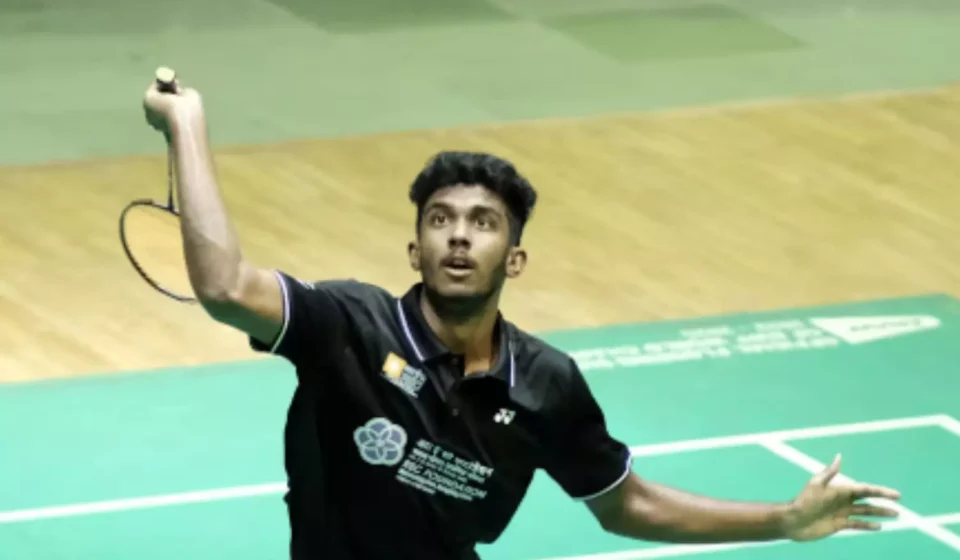
The landscape of Indian badminton witnessed a significant shift in momentum on Wednesday at the 2026 Orleans Masters Super 300, as a new generation of talent asserted their dominance while several established veterans struggled to find their footing. In a high-stakes all-India opening round clash that served as a microcosm of the current transition within the national circuit, Ayush Shetty, currently India’s second-highest-ranked men’s singles player, demonstrated remarkable resilience to overcome his compatriot Kiran George. The encounter, which lasted 49 minutes, saw Shetty recover from a first-game deficit to secure a 17-21, 21-10, 21-17 victory, marking a pivotal moment in his campaign at the Palais des Sports in France.
The tournament, a crucial stop on the BWF World Tour for players looking to accumulate points in the post-Olympic cycle, proved to be a productive hunting ground for India’s women’s singles contingent. Malvika Bansod, Isharani Baruah, and the teenage sensation Tanvi Sharma all secured passages to the second round, showcasing the depth of talent currently emerging from Indian academies. However, the day was not without its setbacks, as former world number one Kidambi Srikanth and national mainstay Aakarshi Kashyap were among the high-profile casualties of the opening round, highlighting the increasingly competitive nature of the international circuit.
A Changing of the Guard in Men’s Singles
The headline match of the day featured Ayush Shetty and Kiran George, two players who have frequently crossed paths in the domestic circuit. Shetty, who has seen a meteoric rise in the BWF rankings over the last twelve months, entered the match under significant pressure to justify his seeding. George, known for his aggressive net play and powerful smashes, took early control of the proceedings. In the opening game, George’s tactical precision allowed him to dictate the pace, forcing Shetty into defensive errors and eventually taking the set 21-17.
The second game, however, saw a dramatic tactical shift. Shetty adjusted his length and began employing a more patient, rallying style of play that exploited George’s unforced errors. The 21-10 scoreline in the second set reflected Shetty’s total dominance, as he neutralized George’s attacking threats. The deciding game was a more closely contested affair, with both players trading points until the mid-game interval. Ultimately, Shetty’s superior fitness and composure in the closing stages allowed him to pull away, securing the set 21-17 and sealing his spot in the Round of 16.
This victory is particularly significant for Shetty as he looks to consolidate his position as a leader in the Indian men’s singles category. With senior players like Lakshya Sen and HS Prannoy managing their workloads, the onus has fallen on Shetty to maintain India’s presence in the later stages of Super 300 and Super 500 events.
The Women’s Singles Renaissance
India’s performance in the women’s singles category provided the most encouragement for the national coaching staff. Malvika Bansod, who has been working on her physical conditioning over the off-season, delivered a clinical performance against Chinese Taipei’s Sung Shou Yun. Bansod’s 21-18, 21-14 victory was characterized by her ability to retrieve difficult shots and transition quickly into counter-attacks. The win sets her up for a challenging second-round encounter, but her current form suggests she is a serious contender for a podium finish in Orleans.
Joining Bansod in the second round is Isharani Baruah, who overcame Denmark’s Amalie Schulz in a tense straight-games battle. Both sets ended with a 21-19 scoreline, underscoring Baruah’s ability to handle pressure during the "clutch" moments of a match. Baruah’s victory is a testament to her tactical growth, as she successfully navigated Schulz’s height advantage by keeping the shuttle low and forcing the Danish player into awkward movement patterns.
Perhaps the most talked-about result in the women’s draw involved 17-year-old Tanvi Sharma. Facing the second-seeded Thai powerhouse Supanida Katethong, Sharma was considered a massive underdog. However, Sharma displayed no signs of intimidation, taking the first game 21-18 with a display of fearless badminton. The match came to an abrupt end in the second game when Katethong, trailing 12-14, was forced to retire due to an apparent injury. While the victory came via retirement, Sharma’s performance up to that point suggested she was more than capable of competing with top-10 caliber opponents.
Veteran Struggles and Early Exits
While the youth contingent thrived, the day was somber for the more experienced members of the Indian squad. Kidambi Srikanth, whose career has been marked by historic highs including four Super Series titles in a single year, continued to struggle with consistency. His opening-round exit serves as a reminder of the physical toll that years of high-level competition have taken. Srikanth’s inability to close out tight rallies was evident, leading to a premature departure that will likely impact his world ranking.
Aakarshi Kashyap also faced a disappointing exit. As a player who has often been the bridge between the senior and junior ranks, Kashyap was expected to progress deep into the tournament. Her loss, coupled with the exits of Rakshita Ramraj and Devika Sihag, underscored the volatility of the women’s singles draw. In the mixed doubles category, the newly formed pair of Tanisha Crasto and Dhruv Kapila also suffered a first-round defeat, suggesting that their partnership still requires time to develop the necessary on-court chemistry to compete at the Super 300 level.
Success in Doubles and Mid-Tier Brackets
Not all was lost in the doubles and secondary singles matches. The mixed doubles pair of Rohan Kapoor and Ruthvika Gadde provided a silver lining with a convincing straight-games win. Their coordination at the net and improved defensive rotations were key factors in their progression to the Round of 16. Additionally, the young sensation Anmol Kharb continued her upward trajectory with a disciplined performance in her opening match, further solidifying her reputation as one of the most promising talents in the Asian circuit.
As the first day of main-draw action drew to a close, attention turned to Tharun Mannepalli, who was scheduled for a late-night clash against Wang Tzu Wei of Chinese Taipei. Mannepalli, often regarded as a "dark horse" in these tournaments, faced a daunting task against the experienced Wang, with the result of this match expected to set the tone for the remaining Indian men’s singles challengers.
Tournament Context and Technical Implications
The 2026 Orleans Masters holds a unique position in the BWF calendar. Known for its fast courts and European conditions, it often favors players with strong defensive capabilities and high shuttle control. For the Indian contingent, the tournament serves as a vital opportunity to earn points that determine seedings for the upcoming Asian Championships and the subsequent summer swing of the World Tour.
From a technical standpoint, the success of players like Shetty and Bansod can be attributed to a shift in training focus toward endurance and multi-shuttle drills. The high-altitude training camps held in India prior to the European leg appear to be paying dividends, as Indian players showed less fatigue in three-game matches compared to their counterparts.
The retirement of Supanida Katethong also raises questions about the density of the BWF calendar. As the second seed and a top-10 player, her exit is a blow to the tournament’s star power but opens a significant gap in the draw for Tanvi Sharma and other emerging players to exploit.
Broader Impact on Indian Badminton
The results at the Orleans Masters reflect a broader trend in Indian badminton: the narrowing gap between the domestic top tier and the international elite. The fact that India’s second-highest-ranked player is now a youngster like Ayush Shetty indicates that the transition period following the golden era of Saina Nehwal and the peak of PV Sindhu is nearing its conclusion.
The Badminton Association of India (BAI) has recently invested heavily in junior development programs, and the presence of four Indian women in the second round of a Super 300 event is a direct result of these initiatives. However, the exit of veterans like Srikanth poses a strategic dilemma for the national selectors regarding the balance between experience and youth in major team events like the Thomas and Uber Cups.
Looking Ahead: The Round of 16
As the tournament moves into the Round of 16, the focus will remain on whether the young Indian brigade can maintain their intensity. Ayush Shetty will face a stern test against international opposition, where he will no longer have the "insider knowledge" he possessed against Kiran George. For Tanvi Sharma and Anmol Kharb, the second round represents a chance to prove that their opening-round successes were not flashes in the pan but the result of sustained growth.
The coaching staff, led by national and personal coaches traveling with the team, will be tasked with scouting the upcoming opponents, many of whom are from the dominant stables of Japan and South Korea. With several seeds already out of the tournament, the 2026 Orleans Masters is wide open, providing a golden opportunity for an Indian shuttler to claim a World Tour title early in the season.
The path forward remains challenging, but the opening day in Orleans has established a clear narrative: the future of Indian badminton is no longer a distant prospect—it is unfolding in the present, match by match, on the courts of France.