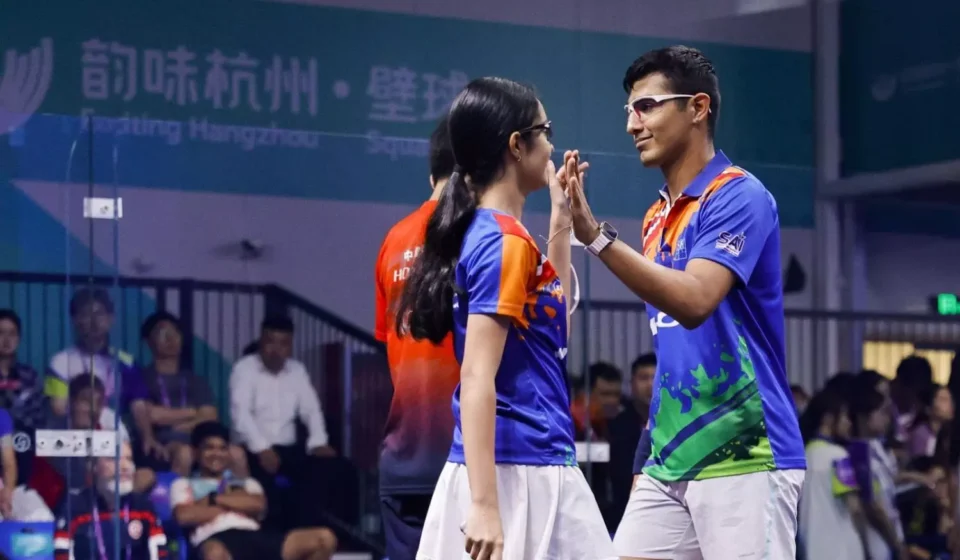

The 2026 India Open PSA Copper event, currently being held in the historic sporting hub of Mumbai, witnessed a day of high-intensity squash and fluctuating fortunes for the home contingent during the second round of competition on Thursday. As the tournament progressed into the business end of the draw, the Professional Squash Association (PSA) Copper-level event served as a platform for both the emergence of young talent and the resilience of seasoned veterans. While the Indian squash faithful celebrated the advancement of top-tier talents like Anahat Singh and Abhay Singh, the afternoon session was marked by significant setbacks as seeded players Ramit Tandon and Velavan Senthilkumar were eliminated in unexpected circumstances. The day’s proceedings underscored the competitive depth of the international circuit, particularly the growing influence of Malaysian and Egyptian players on the global stage.
Technical Breakdown of the Second Round Performance
The second round is often considered the most volatile phase of a PSA Copper event, as seeded players face off against qualifiers and lower-ranked competitors who have already acclimatized to the court conditions. In Mumbai, the court’s responsiveness and the humid conditions characteristic of the coastal city played a visible role in the shot-making and stamina of the athletes.
For the Indian squad, the results were a study in contrasts. The highlight of the session was undoubtedly the performance of Tanvi Khanna. Facing the seventh-seeded Egyptian, Nour Khafagy, Khanna displayed a tactical masterclass. Egypt has long been the dominant force in world squash, and Khafagy entered the match as the clear favorite based on world rankings. However, Khanna utilized the home-court advantage to perfection, maintaining a high tempo that forced the Egyptian into uncharacteristic errors. The straight-game victory (11-5, 11-9, 11-9) was not merely a win on paper but a statement of intent, showcasing Khanna’s ability to compete with the top twenty-five caliber players on the PSA tour.
Seeded Casualties: Tandon and Senthilkumar Exit
The most surprising results of the day involved the exits of Ramit Tandon and Velavan Senthilkumar. Ramit Tandon, currently one of India’s highest-ranked male players, struggled to find his rhythm against Malaysia’s Duncan Lee. Lee, who has been steadily climbing the PSA rankings, exploited Tandon’s lack of clinical finishing in the crucial moments of each game. The scoreline of 9-11, 4-11, 9-11 reflected a match where Tandon was competitive in the first and third games but suffered a significant lapse in concentration during the second. This loss is particularly impactful for Tandon’s world ranking, as a deep run in a home Copper event is usually essential for maintaining a position within the top 40.
Equally frustrating for the local fans was the performance of Velavan Senthilkumar. Senthilkumar has been lauded for his physical prowess and reach, but his match on Thursday highlighted the psychological pressures of closing out games. The third game was a microcosm of his current struggles; after losing the first two games 8-11 and 9-11, Senthilkumar raced to an 8-0 lead in the third. In professional squash, an 8-0 lead is statistically considered an insurmountable advantage. However, a series of unforced errors and a shift in momentum allowed his opponent to claw back, eventually taking the game 11-9 and ending Senthilkumar’s campaign. Analysts suggest that this "blown lead" indicates a need for greater mental fortitude when playing under the expectations of a home crowd.
Veteran Resilience and Youthful Dominance
While some seeds faltered, the pillars of Indian squash remained firm. Joshna Chinappa, a former World No. 10 and a legend of the sport in Asia, proved that experience remains a formidable asset. Her match against Ireland’s Breanne Flynn was a tactical battle of attrition. After taking a commanding two-game lead (12-10, 11-4), Chinappa faced a spirited comeback from Flynn in the third (8-11). However, the Indian veteran regained her composure in the fourth, utilizing her trademark cross-court nicks and deceptive drops to seal the match 11-9. This victory ensures that the Indian women’s draw retains a high-profile presence heading into the quarterfinals.
Simultaneously, the "prodigy" of Indian squash, Anahat Singh, continued her meteoric rise. Having transitioned from the junior circuits to the professional ranks with remarkable ease, Singh’s victory on Thursday was clinical. Her ability to control the "T" and her superior court coverage have made her a difficult opponent for even seasoned international travelers. She now prepares for a high-stakes quarterfinal against Malaysia’s Sehveetrraa Kumar, a match that is being billed as a preview of future Asian Games finals.
In the men’s draw, Abhay Singh also secured his progression. Singh has been in exceptional form over the last calendar year, and his victory on Thursday solidified his status as the current spearhead of the Indian men’s challenge in the absence of a deep run by Tandon. Furthermore, the youngster Veer Chotrani reached the quarterfinals through a stroke of fortune, as his opponent, Yannik Omlor of Germany, was forced to withdraw during the first game due to an injury. While not the preferred way to advance, the rest day afforded to Chotrani could prove vital for his physical readiness in the later stages of the tournament.
Chronology of Key Match Results
The following table outlines the specific scoring data from the pivotal matches of the second round:
| Player (India) | Opponent | Result | Scores |
|---|---|---|---|
| Tanvi Khanna | Nour Khafagy (EGY) | Won | 11-5, 11-9, 11-9 |
| Joshna Chinappa | Breanne Flynn (IRL) | Won | 12-10, 11-4, 8-11, 11-9 |
| Ramit Tandon | Duncan Lee (MAS) | Lost | 9-11, 4-11, 9-11 |
| Velavan Senthilkumar | [Opponent] | Lost | 8-11, 9-11, 9-11 |
| Veer Chotrani | Yannik Omlor (GER) | Won | Retired (Injury) |
Contextualizing the PSA Copper Event
The India Open holds a "Copper" designation within the PSA World Tour structure. In the hierarchy of professional squash, Copper events sit below Platinum, Gold, and Silver tiers but above the Challenger Tour. These events are critical for mid-tier players looking to break into the elite rankings, as they offer significant points and a total prize purse that attracts top-50 talent from across the globe.
For the Squash Federation of India (SFI), hosting the 2026 edition in Mumbai is part of a broader strategy to revitalize the sport following its inclusion in the upcoming Olympic program. Mumbai, with its rich history of squash clubs and world-class facilities, provides the ideal backdrop. The tournament serves not only as a competitive arena but also as a developmental tool, allowing younger Indian players to observe and compete against international styles ranging from the flair of the Egyptians to the disciplined retrieving of the Europeans.
Implications for the Quarterfinals and Beyond
The exit of two seeded Indian men shifts the pressure onto Abhay Singh and Veer Chotrani to keep the host nation’s hopes alive in the men’s category. Conversely, the women’s draw remains strong for India, with Anahat Singh, Joshna Chinappa, and Tanvi Khanna all advancing.
The quarterfinal lineup scheduled for Friday is particularly noteworthy for the "Indian-Egyptian" matchups. Egypt currently holds a stranglehold on the PSA rankings, and for Indian players to bridge the gap, they must consistently win these head-to-head encounters. Tanvi Khanna’s victory over Khafagy has provided a blueprint for her compatriots: aggressive length, early takes, and unwavering mental discipline.
Analysts believe that Anahat Singh’s upcoming match against Sehveetrraa Kumar will be the most technically demanding of the quarterfinals. Kumar represents the "Malaysian school" of squash—characterized by incredible speed and deceptive wrist work. Singh will need to rely on her power and accuracy to push Kumar to the back of the court and neutralize her attacking options.
Broader Impact on Indian Squash
The mixed results on Thursday reflect the current transitional state of Indian squash. The "Golden Generation" led by Joshna Chinappa and Saurav Ghosal is gradually passing the torch to a younger group including Anahat Singh and Abhay Singh. While the losses of Tandon and Senthilkumar are setbacks, the resilience shown by Khanna and the efficiency of the younger Singhs suggest that the pipeline of talent remains robust.
Furthermore, the withdrawal of Yannik Omlor highlights the grueling nature of the PSA circuit. As the season progresses, player management and injury prevention become as important as technical skill. For the Indian organizers, the success of the event is measured not just by the trophies won by local players, but by the successful delivery of a world-class tournament that adheres to international standards of officiating, broadcasting, and player hospitality.
As the tournament moves into the quarterfinals on Friday, the intensity is expected to escalate. With the field narrowed to the final eight in each category, the margin for error disappears. For the Indian contingent, the goal remains clear: to ensure that the 2026 India Open title remains on home soil, signaling India’s readiness to compete as a powerhouse in the lead-up to the sport’s Olympic debut.