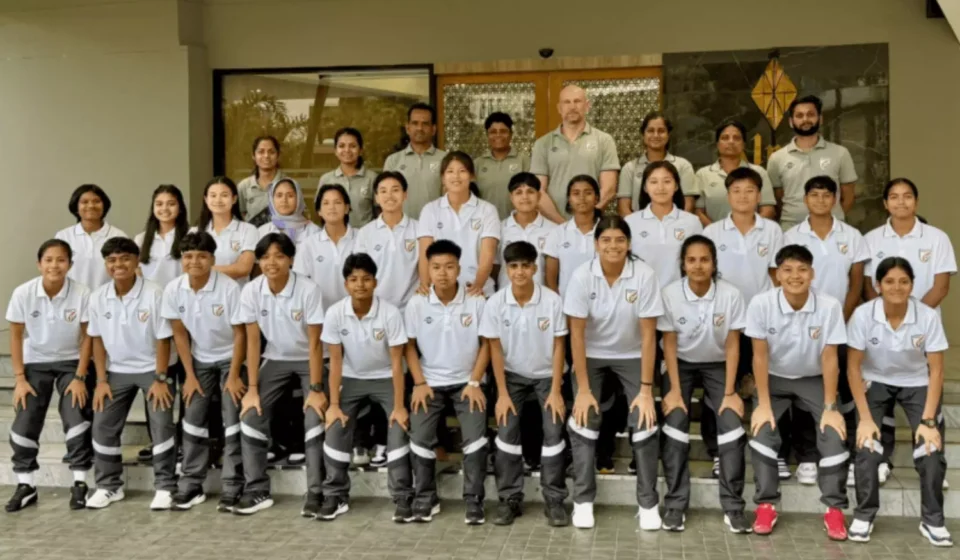
India Names 24-Member Probable Squad for AFC U20 Women’s Asian Cup as Young Tigresses Arrive in Thailand for Final Preparations

The All India Football Federation (AIFF) has officially announced a 24-member probable squad for the upcoming AFC U20 Women’s Asian Cup, marking a pivotal moment in the nation’s women’s football trajectory. The announcement coincided with the team’s arrival in Bangkok, Thailand, on Friday morning, where they have commenced a crucial pre-tournament acclimatization camp. This tournament represents a historic milestone for the "Young Tigresses," who have secured qualification for the Asian Cup for the first time in 20 years, signaling a resurgence in the youth development pipelines of Indian football. The squad will spend the next 13 days in the Thai capital, fine-tuning their tactical approach and adapting to the humid Southeast Asian climate before their demanding Group C campaign begins.
Strategic Preparation and a Multi-Continental Training Roadmap
The journey to the AFC U20 Women’s Asian Cup has been characterized by an intensive and meticulously planned preparation phase under the guidance of Swedish head coach Joakim Alexandersson. The AIFF’s strategy for this cohort focused on providing a blend of domestic stability and international exposure, ensuring the players were tested against various styles of play.
The preparation cycle began in earnest in January in Bengaluru, immediately following the conclusion of the first phase of the Indian Women’s League (IWL). This initial domestic camp allowed the coaching staff to assess the fitness levels and technical proficiency of the players after a rigorous league season. By selecting players who had been active in the IWL, Alexandersson ensured that the squad possessed match fitness and competitive sharpness from the outset.
Following the Bengaluru leg, the team embarked on a high-performance exposure tour in Sweden. This month-long European stint was designed to expose the young Indian players to the physical and tactical demands of European football. During their stay in Scandinavia, the Young Tigresses played five friendly matches against the senior teams of various Swedish club sides. Facing senior-level opposition provided the squad with a steep learning curve, particularly in terms of defensive organization and transition play. The Swedish influence, brought by Alexandersson, emphasized a disciplined structural approach, which was further refined upon the team’s return to India. The final domestic phase of training took place in Kolkata, a city with a deep-rooted footballing culture, providing a familiar environment for the players to consolidate their learnings before departing for Thailand in the early hours of Friday.
Tournament Structure and the Path to Global Recognition
The AFC U20 Women’s Asian Cup Thailand 2026 is not merely a continental championship but serves as the primary qualifying vehicle for the global stage. The stakes for the Young Tigresses are exceptionally high, with the tournament offering a direct pathway to the FIFA U20 Women’s World Cup Poland 2026.
According to the tournament regulations, the competition features three groups. India has been placed in Group C, which is widely regarded as one of the most challenging brackets in the tournament. The qualification criteria for the knockout stages are stringent: the top two teams from each group will advance to the quarter-finals, alongside the two best third-placed teams across all three groups.
The ultimate prize lies in the quarter-final round. The four winners of the quarter-final matches will not only progress to the semi-finals of the Asian Cup but will also secure their berths as Asia’s representatives at the FIFA U20 Women’s World Cup in Poland. For India, reaching the quarter-finals and potentially the World Cup would represent a tectonic shift in the standing of the women’s game within the country.
Group C Analysis: A Gauntlet of Asian Powerhouses
India’s schedule in Group C presents a formidable challenge, featuring matches against established powerhouses of Asian women’s football. Each opponent brings a distinct tactical identity that will test the Young Tigresses’ resolve and adaptability.
- Japan vs. India (April 2, 18:30 IST): India opens its campaign against Japan at the Thammasat Stadium in Pathum Thani. Japan is a perennial favorite in Asian football, known for its technical excellence, fluid passing, and high tactical intelligence. Facing the "Young Nadeshiko" in the opening fixture will require India to maintain a compact defensive shape and look for opportunities on the counter-attack.
- India vs. Australia (April 5, 14:30 IST): The second match takes the team to the Pathum Thani Stadium to face Australia. The "Young Matildas" typically rely on physical strength, pace on the wings, and a direct attacking style. Having trained in Sweden against physical senior sides, the Indian squad is expected to be better prepared for the aerial and physical duels that Australia frequently initiates.
- Chinese Taipei vs. India (April 8, 14:30 IST): The final group match against Chinese Taipei could be the decisive encounter for India’s quarter-final hopes. Chinese Taipei is known for its disciplined work rate and organized defensive blocks. Depending on the results of the first two matches, this fixture may determine whether India secures a top-two spot or contends for one of the best third-placed positions.
The decision by the AIFF to arrive in Thailand 13 days prior to the first match is a calculated move to mitigate the impact of heat and humidity. Pathum Thani, where India will play all its group matches, often experiences high temperatures in April, and acclimatization will be a critical factor in maintaining player performance over the 90 minutes.
Squad Composition and Coaching Philosophy
Head coach Joakim Alexandersson has named a 24-member travelling squad, which will be trimmed to a final 23-member roster closer to the tournament’s commencement. The squad reflects a balance of defensive stability and attacking flair, with several players having gained significant experience through the IWL and previous youth international caps.
The Travelling Squad:
- Goalkeepers: Monalisha Devi Moirangthem, Nandini, Ribansi Jamu.
- Defenders: Alka Indwar, Cindy Remruatpuii Colney, Nishima Kumari, Remi Thokchom, Ruchi Yadav, Sahena TH, Shubhangi Singh, Thoibisana Chanu Toijam.
- Midfielders: Anju Chanu Kayenpaibam, Arina Devi Nameirakpam, Bhumika Devi Khumukcham, Monisha Singha, Neha, Pooja, Shruti Kumari.
- Forwards: Babita Kumari, Deepika Pal, Lhingdeikim, Shilji Shaji, Sibani Devi Nongmeikapam, Sulanjana Raul.
The inclusion of players like Shilji Shaji and Sibani Devi Nongmeikapam provides India with potent options in the final third. Shaji, in particular, has been a standout performer in domestic circuits, known for her clinical finishing. In the midfield, the presence of Pooja and Neha will be vital for maintaining possession and transitioning from defense to attack. The defensive unit, led by Shubhangi Singh and Thoibisana Chanu Toijam, will bear the brunt of the pressure against high-pressing teams like Japan and Australia.
Alexandersson’s philosophy emphasizes a collective work ethic. In recent interviews regarding the team’s progress, the coaching staff has noted the players’ improved tactical awareness and their ability to execute game plans under pressure. The stint in Sweden was instrumental in building this mental toughness.
Official Outlook and Inferred Reactions
While official statements from the AIFF have focused on the logistical and technical aspects of the camp, the sentiment within the Indian football community is one of cautious optimism. The 20-year wait for qualification has created a sense of urgency and motivation among the players and coaching staff.
The AIFF leadership has reiterated its commitment to women’s football as a core pillar of its "Vision 2047" roadmap. Success at the U20 level is viewed as a prerequisite for building a competitive senior national team. By investing in long-term camps and international exposure tours, the federation is attempting to bridge the gap between Indian youth teams and the elite echelons of Asian football.
Broadcasting partners have also recognized the rising interest in the women’s game. The announcement that the AFC U20 Women’s Asian Cup will be streamed live on FanCode ensures that fans across India can follow the Young Tigresses’ journey, providing the players with a virtual support system and increasing the commercial viability of women’s sports in the region.
Broader Implications for Indian Women’s Football
The participation of the Young Tigresses in the AFC U20 Women’s Asian Cup has implications that extend far beyond the pitch in Thailand. Firstly, it validates the structure of the Indian Women’s League. The fact that the majority of the squad was scouted and conditioned through the IWL proves that a functional domestic league is essential for national team success.
Secondly, the performance in Thailand will serve as a benchmark for the AIFF’s scouting and coaching programs. If India can compete effectively against the likes of Japan and Australia, it will provide a blueprint for future youth development. A successful campaign—specifically reaching the quarter-finals—would likely trigger increased corporate sponsorship and government funding for women’s football initiatives.
Finally, the potential qualification for the FIFA U20 Women’s World Cup would be a transformative event. It would place Indian women footballers on the global radar, potentially opening doors for players to secure contracts with overseas clubs, further enhancing the quality of the national team.
As the Young Tigresses begin their final 13 days of preparation in Bangkok, the focus remains on the April 2nd opener. The 20-year journey back to the Asian Cup is complete; now, the quest to establish India as a permanent force in Asian women’s football begins. The matches in Pathum Thani will not just be a test of skill, but a testament to the growth and ambition of a new generation of Indian athletes.