

While artificial intelligence continues to reshape the global financial landscape by processing vast quantities of text and generating complex investment theses in seconds, recent empirical evidence suggests that the technology still faces significant hurdles in visual data interpretation. A comprehensive study recently released by Mercor, an AI-driven recruitment and talent-matching platform, highlights a critical divergence between human cognitive abilities and the processing power of large language models (LLMs). The research indicates that while AI can outperform humans in standardized testing and legal analysis, it consistently falters when tasked with extracting precise data from financial charts and investor decks—a deficiency that underscores the continued necessity of human oversight in high-stakes market analysis.
The Visual Gap: Analyzing the Mercor Study Findings
The Mercor study focused on the performance of the world’s most sophisticated AI models, including Claude Opus 4.6, GPT-5.4, and Gemini 3.1 Pro. Researchers subjected these models to a series of real-world financial tasks, ranging from balance sheet analysis to the interpretation of technical trading charts. The results revealed a stark performance gap based on the format of the data provided.
When financial data was presented in a "clean" format—standardized, structured text or spreadsheets—the models demonstrated a high level of competency, achieving an accuracy rate of approximately 75%. However, this reliability plummeted when the same data was embedded within visual elements such as bar charts, line graphs, or complex axes typical of corporate earnings presentations. The researchers observed that the models frequently "hallucinated" values, misread the scale of chart axes, or latched onto irrelevant data points that appeared visually prominent but were contextually incorrect.
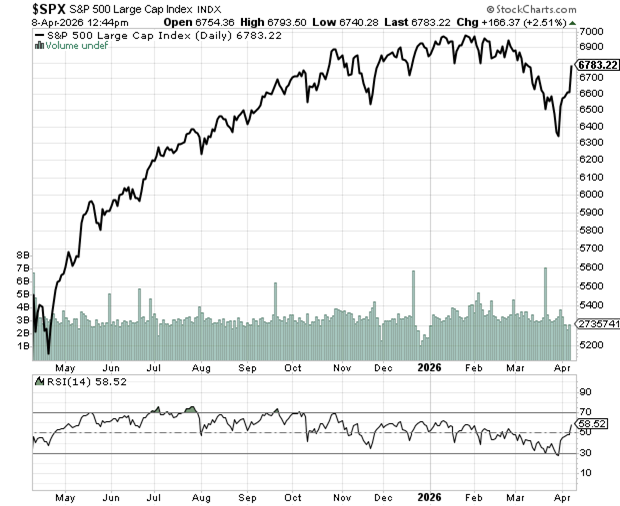
This failure in visual reasoning is particularly significant for the investment community. Modern financial analysis relies heavily on the "investor deck," a medium where critical performance metrics are often communicated through infographics and non-linear visuals. Because an initial error in data extraction cascades through subsequent calculations, the inability of AI to reliably read a simple price chart or Relative Strength Index (RSI) graph remains a primary bottleneck in the automation of the analyst’s role.
Market Chronology: Geopolitics and the Resumption of the Bull Cycle
The limitations of AI in visual analysis have come to the fore during a period of intense market volatility and subsequent recovery. The broader market recently navigated a period of high tension known as Operation Epic Fury, a geopolitical conflict involving Iran that introduced a significant "fear premium" into global equities.

The timeline of the recent market shift can be traced through the following key milestones:
- The Height of Operation Epic Fury: During the peak of the conflict, risk-aversion strategies dominated the market. Capital flowed out of growth-oriented tech sectors and into traditional safe havens, causing many AI-linked stocks to trade sideways or experience moderate pullbacks.
- The Ceasefire Announcement: Following the brokering of a ceasefire agreement, market sentiment shifted almost immediately. The removal of the geopolitical overhang allowed investors to refocus on technological fundamentals.
- The Infrastructure Pivot: In the wake of the ceasefire, analysts noted a rapid re-acceleration of the AI megatrend. This "second wave" of the bull market has been characterized by a move away from purely speculative software bets and toward the physical infrastructure required to sustain the AI ecosystem.
Luke Lango, a prominent technology investing expert, characterized this transition as a pivotal moment for "dry powder" deployment. Lango’s analysis suggests that the market is currently transitioning from a phase of geopolitical anxiety back to a "fundamental premium" environment, where stocks are valued based on their role in the AI buildout rather than macro-environmental risks.
Economic Indicators: Inflationary Pressures and GDP Revisions
While the tech sector shows signs of a robust rebound, the broader economic backdrop remains complex. Data released by the Bureau of Economic Analysis (BEA) and the government’s Consumer Price Index (CPI) reports indicate that inflation remains a persistent challenge for the Federal Reserve and market participants.
In February, the Personal Consumption Expenditures (PCE) index—the Federal Reserve’s preferred measure of inflation—showed that Core PCE (excluding food and energy) rose 3.0% on a year-over-year basis. While this was in line with consensus estimates, it remains a full percentage point above the Fed’s long-term target of 2.0%. Headline PCE for the same period was recorded at 2.8%.
Further complicating the economic outlook was a significant downward revision of fourth-quarter GDP growth. Initially estimated at 1.4%, the annualized growth rate was cut to a mere 0.5%. This suggests that while the AI sector is expanding rapidly, the underlying economy is growing at a much more fragile pace.
The March CPI data further highlighted these pressures, showing a 0.9% monthly increase in consumer prices, largely driven by an 11% surge in energy costs. The annual inflation rate rose to 3.3%, its highest level in nearly two years. For investors, this creates a "bifurcated" market: a macro-environment characterized by "sticky" inflation and slowing growth, contrasted against a micro-environment of hyper-growth in the semiconductor and AI infrastructure sectors.
The Infrastructure "Immune System": KLA Corp and Ciena
As the AI megatrend re-accelerates, investment capital is increasingly concentrating on the companies that provide the essential hardware and networking capabilities for the digital age. Two companies, KLA Corp. (KLAC) and Ciena Corporation (CIEN), have emerged as critical players in this "Hard Assets Boom Cycle."
KLA Corporation (KLAC)
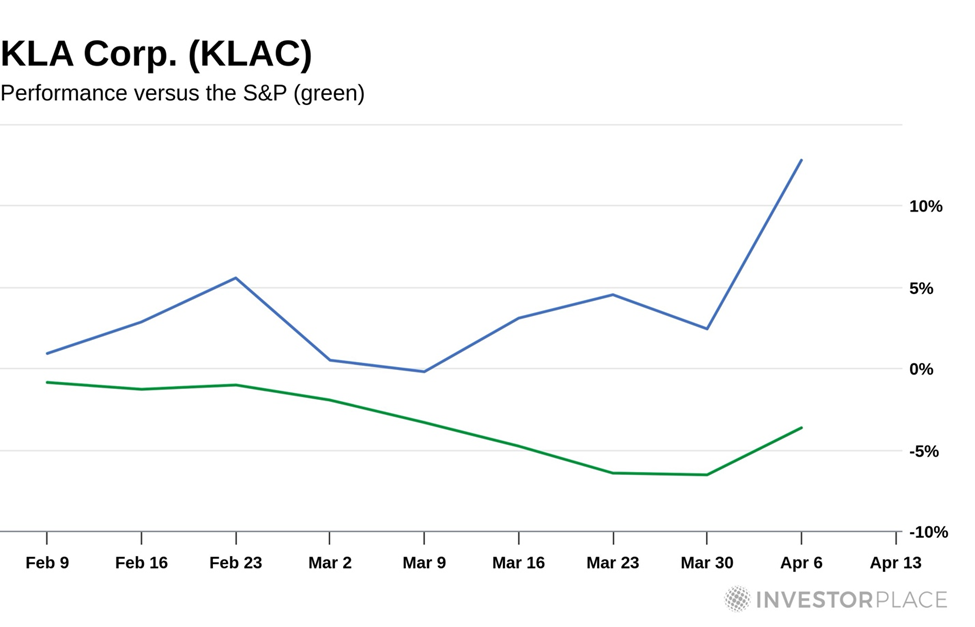
KLA Corp occupies a unique niche in the semiconductor supply chain. Rather than manufacturing chips, KLA produces the inspection and metrology tools required to ensure the viability of silicon wafers. In the high-stakes world of semiconductor fabrication, where a single wafer can cost upwards of $200,000, the "yield"—the percentage of functional chips per wafer—is the most critical metric. KLA’s machines act as the "immune system" for the manufacturing process, detecting nanometer-scale defects that could lead to catastrophic financial losses. As chip designs become more complex with the rise of AI, the demand for KLA’s precision monitoring tools has surged, allowing the stock to decouple from the broader S&P 500’s recent negative performance.
Ciena Corporation (CIEN)
Ciena Corporation focuses on the connectivity aspect of the AI revolution. As AI models require the movement of massive datasets between data centers, the demand for high-bandwidth optical networking has reached unprecedented levels. Ciena provides the systems and software that create "adaptive networks," which can dynamically adjust to fluctuating data demands.
The company’s financial outlook reflects this demand. For fiscal year 2026, Ciena anticipates total revenue between $5.9 billion and $6.3 billion, representing an annual growth rate of up to 32.1%. Louis Navellier, a veteran investor with four decades of market experience, notes that Ciena’s performance is a prime example of how "fundamentally superior stocks" can thrive even when the broader market is sidelined by inflation fears.
Future Implications: OpenAI’s IPO and the "Mega Computer"
The next phase of the AI megatrend is expected to be defined by two major developments: the anticipated public debut of OpenAI and the construction of next-generation AI hardware.
OpenAI, the organization behind ChatGPT, is reportedly preparing for a historic initial public offering (IPO). This event is expected to be a watershed moment for the industry, potentially resetting valuation benchmarks for the entire sector. Analysts are closely watching how private equity and retail investors position themselves ahead of the official filing, as the IPO represents the most direct way to invest in the "intelligence layer" of the AI boom.
Simultaneously, the industry is moving toward a scale of hardware never before seen. Elon Musk has recently teased the development of what is being described as the "world’s first AI mega computer." This project involves a computing device with a physical and digital footprint so vast it is being compared to the scale of large geographical regions. The proposed machine would theoretically possess 283 trillion times the processing power of current data centers, aiming to solve the "compute bottleneck" that currently limits the development of Artificial General Intelligence (AGI).
Analysis of the Human-AI Synergy
The current state of the market suggests that the most successful investment strategies will be those that combine AI’s data-processing speed with human contextual reasoning. The Mercor study serves as a reminder that while AI can handle the "heavy lifting" of data aggregation, it cannot yet replace the human analyst’s ability to interpret a chart’s nuance or understand the geopolitical subtext of a ceasefire.
As the AI megatrend enters this new phase of re-acceleration, the focus has shifted from "can the technology work?" to "how do we build the infrastructure to house it?" This shift favors companies with deep moats in manufacturing and networking. For the individual investor, the challenge lies in navigating the noise of inflationary data and geopolitical headlines to identify the "immune system" and "nervous system" of the burgeoning AI economy.
The upcoming quarterly earnings season will be the ultimate test for this thesis. With analysts already revising earnings expectations upward for AI leaders, the market is signaling that it values growth and fundamental strength over macro-economic stability. As long as the AI infrastructure buildout continues to outpace the broader economic slowdown, the megatrend appears poised to sustain its current trajectory, regardless of whether the AI models themselves can accurately read the charts of their own success.