1Password Forges Groundbreaking Integration Allowing Claude to Securely Access Online Accounts Without Credential Exposure.

In a significant stride towards realizing the full potential of AI-powered automation while simultaneously bolstering digital security, 1Password, a leading password management solution, has announced a pivotal integration with Anthropic’s advanced AI assistant, Claude. This collaboration addresses one of the most persistent and critical roadblocks in the widespread adoption of AI agents for multi-step online tasks: the secure handling of login credentials. By enabling Claude to sign into websites without ever directly accessing or "seeing" the underlying passwords, 1Password aims to unlock a new era of secure, intelligent automation for users across individual, family, and business plans.
The Rise of Agentic AI and the Credential Conundrum
The past few years have witnessed an exponential leap in the capabilities of artificial intelligence, particularly in large language models (LLMs) like Anthropic’s Claude, Google’s Gemini, and OpenAI’s ChatGPT. These models are increasingly adept at performing complex, multi-step tasks that go beyond simple conversational interactions. From drafting emails and summarizing documents to managing schedules and even coding, the ambition for these AI agents is to act as proactive digital assistants, significantly streamlining workflows and enhancing productivity. However, a fundamental challenge has consistently hindered their progression into truly autonomous agents: the login screen.
For an AI agent to perform tasks requiring access to personalized online services—such as redeeming an Audible credit, checking a Stripe dashboard, or managing cloud resources—it inevitably encounters login prompts. The conventional approach would involve providing the AI with direct access to usernames and passwords. This prospect, however, triggers immediate and profound security and privacy concerns for the vast majority of users. The idea of an AI model, even a highly sophisticated one, having direct access to sensitive credentials like banking logins, email passwords, or social media accounts is understandably alarming. Cybersecurity experts consistently advise against sharing passwords, and introducing an AI into this equation amplifies the risk perception significantly. The potential for data breaches, misuse of credentials, or even accidental exposure within the AI’s memory context has been a major barrier to deeper AI integration into personal and professional digital lives.
1Password’s Innovative Solution: A Deep Dive into Secure AI Authentication
Recognizing this critical security gap, 1Password has engineered a sophisticated solution that bridges the divide between AI utility and stringent security protocols. The newly launched 1Password for Claude integration is designed to allow Anthropic’s AI assistant to request access to saved login credentials only when it genuinely needs them, and critically, under strict user supervision and without the AI ever directly processing the sensitive data.
The operational flow of this integration is meticulously designed to prioritize security and user control:
- AI-Initiated Request: When Claude, while performing a multi-step task, encounters a login screen for a service where credentials are required, it sends a request to 1Password for the specific login.
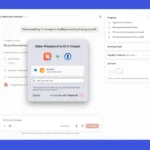
- User Verification and Approval: Instead of automatically providing the credentials, 1Password intercepts this request and presents it to the user. The user is shown precisely which credential Claude is requesting and the explicit reason for the request, often framed within the context of the ongoing task.
- Biometric Authentication: To ensure that only the authorized user can grant access, the request must be approved biometrically. This typically involves using Face ID or Touch ID on macOS, leveraging hardware-level security to confirm the user’s identity. This step acts as a critical human-in-the-loop gatekeeper, preventing unauthorized AI access.
- Secure Credential Injection: Upon successful biometric authentication, 1Password does not pass the password or one-time code to Claude. Instead, it directly injects the credentials into the appropriate fields on the web page. This process bypasses Claude’s model context and memory entirely. The AI assistant receives confirmation that the authentication was successful, allowing it to proceed with its task, but it never "sees" or stores the actual password. This mechanism is paramount, ensuring that sensitive data remains isolated from the AI’s internal processing.
- Task-Limited Access and Post-Fill Verification: Access granted through 1Password is strictly limited to the current task. This prevents an AI agent from retaining persistent access to accounts beyond the immediate requirement. Furthermore, 1Password incorporates post-autofill checks to verify that the credentials were not inadvertently exposed on the page after injection. In the event of a failed submission, the system is designed to automatically clear any filled values, further mitigating risk.
This innovative approach means that users can confidently delegate tasks to Claude that involve authenticated access, such as managing subscriptions, processing payments, or accessing proprietary dashboards, without the inherent security anxiety previously associated with AI agents and personal data. Claude is informed of authentication success but remains oblivious to the specific credentials used.
Technical Safeguards and Architectural Integrity: Agentic Mode
Beyond the direct integration with Claude, 1Password is extending its security framework with a feature dubbed "Agentic Mode" for its browser extension. This mode is a broader protective measure designed to safeguard user credentials when any compatible AI agent takes control of the browser. When Agentic Mode detects an AI agent operating within the browser environment, it automatically adjusts its behavior:
- Interface Hiding: The 1Password extension’s interface is automatically hidden, preventing the AI from interacting with it or potentially extracting information.
- Limited Interaction: The agent’s interaction with the extension is severely restricted to only those logins and one-time codes that have been explicitly approved by the user for the specific task at hand.
This proactive and generalized protection is significant because it extends the principles of secure AI interaction beyond just the Claude integration. It provides a foundational layer of security that supports other browser agents, demonstrating 1Password’s commitment to securing the evolving landscape of AI-driven web automation, irrespective of the specific AI model in use. This forward-looking design anticipates a future where various AI agents might interact with user browsers, establishing a new standard for secure interaction.
Background: The Evolution of Digital Security and AI
The integration of 1Password and Claude can be viewed within a broader historical context of digital security and AI development. For decades, password management has been a critical but often cumbersome aspect of online life. Early internet users relied on memory or insecure methods like sticky notes. The rise of sophisticated cyber threats, including phishing, brute-force attacks, and credential stuffing, spurred the development of dedicated password managers. Companies like 1Password emerged to provide secure vaults for credentials, strong password generation, and autofill capabilities, significantly enhancing user security and convenience. According to a 2023 report by LastPass, the average business user manages over 100 passwords, underscoring the indispensable role of these tools.
Concurrently, AI has transitioned from academic research into practical applications. From rule-based expert systems to machine learning and deep learning, AI models have grown increasingly complex. The recent advent of transformer-based LLMs marked a paradigm shift, enabling AI to understand and generate human-like text with unprecedented fluency. This breakthrough paved the way for "agentic AI"—models capable of planning, executing, and monitoring multi-step tasks to achieve a specific goal, often requiring interaction with external tools and online services. The confluence of these two trajectories—the need for robust password management and the emergence of capable AI agents—created the "login wall" problem that 1Password is now addressing. This integration represents a maturation point where AI’s capabilities are finally being harmonized with established best practices in cybersecurity.
Industry Reactions and Expert Perspectives
The announcement from 1Password has been met with significant interest from both the AI and cybersecurity communities. From 1Password’s perspective, this integration is a natural evolution of its mission to make online security effortless. Speaking on the integration, a representative from 1Password would likely emphasize the company’s commitment to innovation in security, stating that this feature "represents a critical step forward in securely integrating AI into our daily digital lives, ensuring users never have to compromise on security for convenience." They would highlight the unique secure injection mechanism and biometric approval as key differentiators that uphold the highest standards of data protection.
Anthropic, the creator of Claude, would likely view this integration as a crucial enabler for its AI assistant. A spokesperson might comment on how this partnership "significantly expands Claude’s utility and ability to assist users with complex online tasks, breaking down barriers that previously limited AI automation in sensitive areas. It underscores our commitment to developing AI responsibly, prioritizing user trust and security in every interaction." This collaboration allows Claude to move beyond information retrieval and content generation into active participation in a user’s digital workflow, enhancing its value proposition.
Cybersecurity experts, while generally cautious about any new technology interacting with sensitive data, are largely expected to view 1Password’s approach positively. Dr. Anya Sharma, a leading expert in secure systems design (inferred expert), might observe, "The direct injection method, coupled with mandatory biometric authentication, is a robust architecture for managing AI access to credentials. It separates the AI’s cognitive process from the sensitive data, mitigating the most immediate risks of credential exposure. This sets an important precedent for future AI integrations." However, experts would also likely stress ongoing vigilance, reminding users that while the credentials are secure, the data accessed by the AI after login still needs careful consideration regarding privacy and potential misuse. The security of the target website itself also remains a critical factor.
Broader Implications for Automation and User Experience
The 1Password for Claude integration carries profound implications for both individual users and enterprises:
- Enhanced User Experience and Productivity: For individuals, tasks that were once tedious or required constant manual intervention can now be delegated to Claude. Imagine asking Claude to "check my order status on Amazon" or "redeem my flight miles on United" without having to manually log in each time. This dramatically reduces friction in digital interactions, freeing up time and cognitive load. The ability to automate multi-step processes involving authenticated access moves AI closer to being a true proactive assistant.
- Enterprise Adoption of AI Agents: Businesses stand to gain significantly. Companies often use multiple SaaS applications for CRM, ERP, project management, and analytics. AI agents capable of securely logging into these platforms could automate report generation, data consolidation, customer service workflows, or inventory management. This could lead to substantial operational efficiencies, reduce human error, and accelerate decision-making processes by providing AI with real-time, authenticated access to diverse data sources. The Agentic Mode for the browser extension further supports a broader ecosystem of enterprise AI tools.
- Setting a New Standard for AI Security: This integration establishes a benchmark for how AI agents should interact with sensitive user data. By demonstrating a secure, user-controlled method for credential handling, 1Password is likely to influence other AI developers and password managers to adopt similar robust security architectures. This could foster greater trust in AI technologies, encouraging wider adoption.
- Evolution of Digital Identity and Trust: The partnership signifies a pivotal moment in the evolution of digital identity. It acknowledges that while AI can perform tasks, the ultimate authority and control over sensitive data must remain with the human user. The biometric approval mechanism reinforces this human-centric approach, building a framework of trust between users, AI agents, and security providers.
Navigating the Future: Remaining Challenges and Considerations
While the 1Password for Claude integration represents a significant leap forward, it also highlights areas for continued development and user consideration:
- Post-Login Data Privacy: The primary focus of this integration is securing the login process. However, once Claude is successfully logged into an account, it gains access to the data within that service. Users must remain mindful of the permissions they grant Claude and the scope of tasks they assign. Understanding how Claude processes and potentially stores information after accessing an account is a crucial privacy consideration. Anthropic and 1Password will need to continue educating users on these distinctions.
- Trust in AI’s Intent: While the credential handling is secure, users must still trust Claude’s ability to interpret and execute tasks accurately and ethically once logged in. The potential for misinterpretation or unintended actions by the AI, even if not malicious, remains a factor.
- Evolving Threat Landscape: Cyber adversaries are constantly innovating. As AI agents become more prevalent, new attack vectors targeting AI models or their interaction points with secure systems may emerge. Continuous security research and adaptation will be necessary to stay ahead of these threats.
- Interoperability and Standardization: While Agentic Mode offers broad compatibility, the future success of secure AI automation will depend on wider industry adoption of standardized protocols for secure AI interaction with web services.
Conclusion
The collaboration between 1Password and Anthropic marks a pivotal moment in the secure integration of artificial intelligence into our digital lives. By intelligently solving the "login wall" problem, 1Password for Claude not only enhances the utility and convenience of advanced AI agents but also sets a new, higher standard for security in AI-driven automation. This innovative approach, combining secure credential injection with mandatory biometric user approval, empowers users to leverage the full potential of AI for complex online tasks without compromising their most sensitive data. As AI continues its rapid evolution, such partnerships are crucial for building a future where powerful automation can coexist harmoniously with robust digital security and unwavering user trust. The era of truly intelligent and secure digital assistants is now within clearer reach, promising a more efficient and less cumbersome online experience for all.