
Google Chrome on Android to Revolutionize Notification Prompts with Less Intrusive UI in Version 155

Google is set to roll out a significant update to its Chrome browser on Android, fundamentally altering how websites request permission to send notifications. This change, slated for Chrome 155, aims to mitigate a long-standing point of user frustration: the disruptive, full-screen notification prompts that currently hijack a user’s browsing experience. The company’s announcement, detailed on the Chrome for Developers blog, signals a strategic pivot towards a more user-centric design philosophy, prioritizing an uninterrupted browsing flow over immediate permission requests.
The Pervasive Problem of Intrusive Notification Prompts
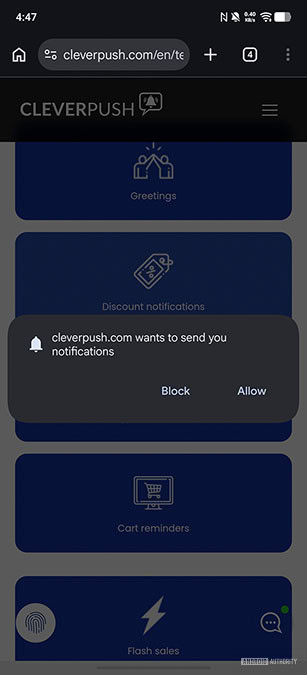
For years, the standard method for websites to solicit notification permissions on Chrome for Android has been an overlay that completely covers the existing web page. This modal dialogue demands an immediate decision from the user—either to "Allow" or "Block" notifications—before they can proceed with interacting with the content. This approach, while technically effective in securing user attention, has widely been criticized for its intrusive nature. Users often encounter these prompts upon visiting a new site, even before they have had a chance to evaluate the site’s content or determine if its notifications would be valuable. The result is a phenomenon commonly referred to as "notification fatigue," where users reflexively deny all requests, or worse, become frustrated and abandon the site entirely.
Industry data and numerous user surveys have consistently highlighted notification prompts as one of the most annoying aspects of modern web browsing. The incessant pop-ups, particularly from less reputable or overly aggressive websites, contribute to a degraded user experience, fostering a sense of being constantly interrupted and losing control over one’s digital environment. This friction point has not only soured user perception of web notifications as a whole but has also undermined the potential for genuine, value-added communication between websites and their audience. Web developers, in their pursuit of re-engagement, have inadvertently created a barrier, leading to low acceptance rates and a general disengagement with the feature.
Introducing a Paradigm Shift: Subtle Prompts and User Agency
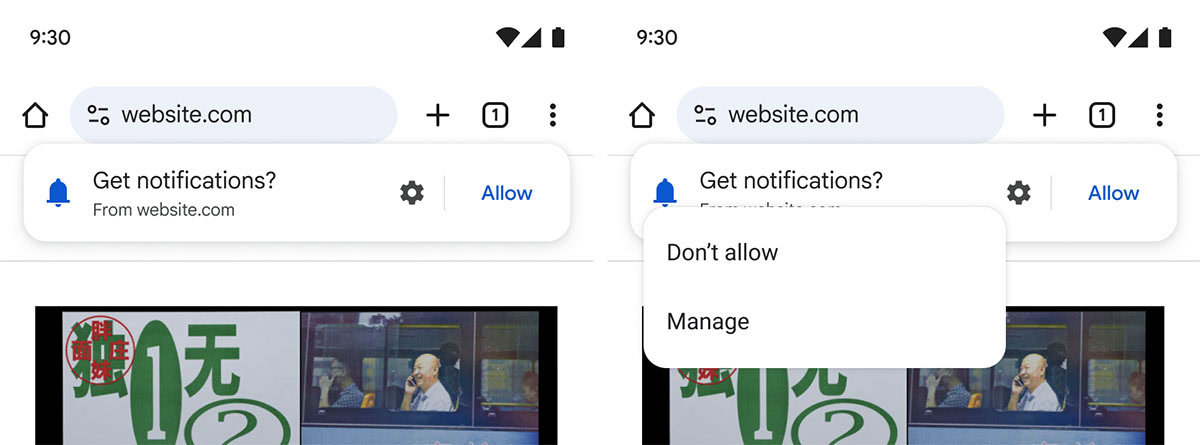
The forthcoming update in Chrome 155 on Android promises a stark departure from this interruptive model. Instead of a full-screen takeover, notification requests will now appear as small, unobtrusive pop-ups positioned at the top of the browser window. This subtle banner-style prompt allows users to continue scrolling, reading, or interacting with the webpage without immediate interruption. Critically, if a user chooses to ignore this new prompt, it will automatically time out and disappear after a predetermined period, effectively dismissing itself without requiring explicit action.
This change represents a significant enhancement in user agency. By making the prompts less demanding, Google empowers users to decide when and if they want to engage with the notification request, rather than forcing an instant choice. The implicit message is clear: the browser should facilitate content consumption, not obstruct it. This design choice aligns with broader trends in software development that emphasize non-modal interfaces, allowing users to maintain context and control their workflow.

Furthermore, for users who initially dismiss or ignore a prompt but later decide they wish to receive notifications from a particular site, Chrome 155 will introduce a convenient new mechanism. The option to subscribe to notifications will be seamlessly integrated into Chrome’s site controls UI, typically accessible via the padlock icon or site information button in the address bar. This ensures that the opportunity to opt-in remains available without requiring the website to re-trigger the initial, less intrusive prompt, further streamlining the user experience.
A Chronology of Chrome’s Evolution Towards User-Centricity
This update is not an isolated incident but rather a continuation of Google’s sustained efforts to refine the Chrome experience on Android. In recent months and years, the browser has seen a flurry of improvements aimed at enhancing usability, privacy, and performance. Notably, Google recently introduced a redesigned navigation bar, offering a more intuitive layout and potentially integrating features like the Gemini AI assistant, signaling a concerted drive to modernize the mobile browsing interface.
The evolution of web notifications itself provides crucial background context. When web push notifications were first introduced, they were hailed as a powerful tool for website re-engagement, allowing publishers to send timely updates, news alerts, or promotional messages directly to users’ devices, even when the browser was closed. This capability offered a bridge between the immediacy of native app notifications and the accessibility of the web. However, the rapid adoption, coupled with the aggressive implementation by some websites, quickly led to an oversaturation and abuse of the feature, diminishing its perceived value and leading to the aforementioned user fatigue.
Google, as the steward of the most widely used web browser, has a vested interest in fostering a healthy web ecosystem. Past initiatives, such as stricter autoplay policies for media, enhanced ad blocking features, and ongoing work on the Privacy Sandbox to replace third-party cookies, all underscore a long-term commitment to improving web user experience and privacy. The shift in notification prompt behavior can be seen as another critical step in this overarching strategy, addressing a specific pain point that has detracted from the quality of web interactions. The announcement for Chrome 155, while seemingly far off from the current Chrome 150, provides ample lead time for developers, highlighting Google’s recognition of the ecosystem’s need to adapt.
The Rationale Behind the Shift: Fostering Meaningful Engagement
The primary motivation behind this redesign is unequivocally to enhance user satisfaction and, by extension, encourage more meaningful engagement with web notifications. Google’s internal data and extensive user research have undoubtedly indicated that the current intrusive prompts lead to high rejection rates, often driven by annoyance rather than a genuine disinterest in a site’s content. By reducing friction, Google hopes to create an environment where users are more likely to consider notification requests on their merits, rather than dismissing them out of hand.
The expectation is that a less aggressive prompt will result in fewer immediate "Blocks" and potentially more "Allows" from users who have had a chance to evaluate a website’s content and find value in its offerings. This aligns with a broader industry trend focusing on "permission hygiene" – ensuring that requests for user data or access are contextually relevant and presented in a respectful manner. For Google, a healthier notification ecosystem means greater utility for both users and web developers, ultimately strengthening the open web. This move also reinforces Chrome’s position as a browser that respects user choice and privacy, a critical differentiator in an increasingly competitive market where privacy concerns are paramount.
Implications for Web Developers: Adaptation, Strategy, and Opportunity
While users stand to benefit immediately from a less intrusive browsing experience, web developers face the imperative to adapt their strategies and, in some cases, their site code. Google’s proactive announcement on the Chrome for Developers blog is a clear signal to the developer community, providing ample notice for these adjustments. Developers will need to ensure their notification request logic is compatible with the new, banner-style prompt and that their sites can gracefully handle the scenario where a prompt is ignored and times out.
This shift also presents a significant opportunity for developers to rethink their approach to requesting notification permissions. The era of "ask early, ask often" is effectively over. Instead, the focus will need to shift towards demonstrating value before making the request. Websites that provide genuinely useful content or services will be more likely to gain notification subscriptions if the prompt appears after a user has had a positive experience, rather than upon initial landing. This could involve triggering the prompt after a certain amount of time spent on a page, after a user completes a specific action (like signing up for a newsletter or adding an item to a cart), or in a context where notifications offer clear benefits (e.g., price drop alerts, new article releases).
The new system implicitly encourages developers to design more thoughtful user journeys around notifications. Websites that continue to indiscriminately bombard users with prompts will likely see even lower subscription rates, as the prompts will simply time out and disappear. This could lead to a more discerning approach from developers, resulting in higher-quality, more relevant notifications for those who do opt-in, ultimately benefiting the entire web ecosystem. Google’s provision of implementation changes and best practices for web developers underscores its commitment to a smooth transition, ensuring that essential web functionalities are not inadvertently broken.
The Broader Landscape: Browser Competition and Industry Trends
This move by Chrome is not happening in a vacuum. Other major browser developers, such as Mozilla with Firefox and Apple with Safari, have also been grappling with the challenge of notification fatigue and intrusive permission requests. Many have implemented their own mechanisms to temper the aggressiveness of these prompts, including default blocking of requests from sites with low engagement or providing more granular controls within browser settings. Google’s decisive action with Chrome, given its dominant market share on Android, is likely to set a new standard for user experience in this domain.
The industry as a whole is trending towards greater user control and privacy. The deprecation of third-party cookies, the emphasis on first-party data, and the increasing scrutiny of data collection practices are all manifestations of this shift. By making notification prompts less intrusive, Chrome is aligning itself with this broader movement, enhancing its reputation as a user-friendly and privacy-conscious browser. This can serve as a competitive advantage, attracting users who are increasingly sensitive to interruptions and data privacy.
Anticipated User Reception and Long-Term Impact
The anticipated reception from the vast majority of Android users is overwhelmingly positive. The relief of no longer being subjected to screen-hijacking prompts is expected to be significant, leading to a more pleasant and productive browsing experience. For many, this change will remove a persistent source of irritation, making the mobile web feel more responsive and less demanding.
In the long term, this update has the potential to foster a healthier and more sustainable notification ecosystem. By reducing the noise and improving the quality of consent, websites that offer genuine value through their notifications will likely see higher quality subscriptions and better engagement metrics. Users will be more inclined to trust websites that respect their browsing flow, potentially leading to increased loyalty and a more positive perception of web notifications as a useful tool, rather than a nuisance. This evolution represents a maturation of web technology, moving from an early, somewhat unrefined implementation to a more sophisticated, user-centric design.
Looking Ahead: The Future of Web Permissions
This change to notification prompts may also serve as a blueprint for how Chrome and other browsers could handle other types of permission requests in the future. Prompts for location access, camera and microphone usage, or even clipboard access could potentially adopt a similar, less intrusive, and time-sensitive model. The underlying principle of giving users more control and context before demanding a decision is applicable across various permission types.
Google’s continuous investment in improving Chrome’s user experience on Android underscores its commitment to maintaining the browser’s relevance and dominance in the mobile landscape. By addressing a core pain point, the company is not only enhancing the daily lives of millions of users but also guiding web developers towards more ethical and effective engagement strategies. The rollout of Chrome 155 will mark a significant milestone in the ongoing quest for a more open, user-friendly, and respectful web.