Samsung Unveils Cross-Platform SmartTag 3, Expanding Ecosystem Reach and Enhancing Tracking Capabilities.

Samsung Electronics has officially introduced its latest iteration in the burgeoning smart tracker market, the SmartTag 3, marking a pivotal shift in the company’s strategy by extending its compatibility beyond the exclusive Galaxy ecosystem to now include iOS devices. This strategic move, announced amidst intense competition in the personal item tracking sector, positions the SmartTag 3 as a more versatile and compelling option for a broader consumer base, while simultaneously integrating significant advancements in design, battery efficiency, and location precision. The device is slated for availability in the United States by early November, priced at $29.99 for a single unit and $99.99 for a four-pack, alongside optional accessory cases.
A Strategic Leap: Embracing Cross-Platform Functionality
The most groundbreaking feature of the SmartTag 3 is its newfound compatibility with Apple’s iOS platform, a significant departure from its predecessors, the original SmartTag and SmartTag 2, which were exclusively tied to Samsung’s Galaxy devices. While the full suite of features remains optimized for Android and particularly Galaxy users, iPhone owners can now leverage the core functionalities of the SmartTag 3 through the SmartThings application. This includes the fundamental ability to locate tagged items and share their location with other SmartThings users.
However, the iOS experience does come with certain limitations. Features such as the enhanced Compass View, the "Ring Phone" function (which allows the tag to ring a paired phone), and "Left Behind Alerts" (notifications when the tag moves out of range from the primary device) are notably absent for iPhone users. Despite these omissions, the mere existence of cross-platform support represents a substantial enhancement, making the SmartTag 3 a viable option for households with a mix of Android and iOS devices. For instance, a family where one parent uses a Galaxy phone and the other an iPhone can now both track a shared item, like car keys or a child’s backpack, using the same SmartTag 3. Furthermore, this broadens the device’s appeal for users who might transition between mobile operating systems, ensuring their investment in a tracker remains functional regardless of their primary smartphone choice.
This expansion signals Samsung’s intention to directly challenge the "walled garden" approach often adopted by competitors, most notably Apple with its AirTag, which is deeply integrated into the "Find My" network and inaccessible to Android users. By offering partial iOS compatibility, Samsung aims to capture a segment of the market that values flexibility and interoperability, potentially setting a new standard for openness in the smart tracker industry.
Redesigned for Portability and Efficiency
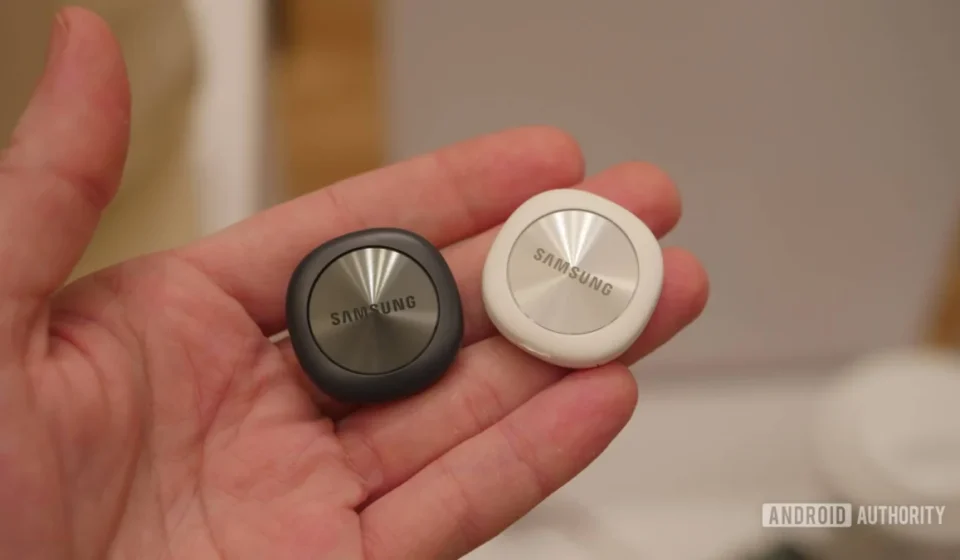
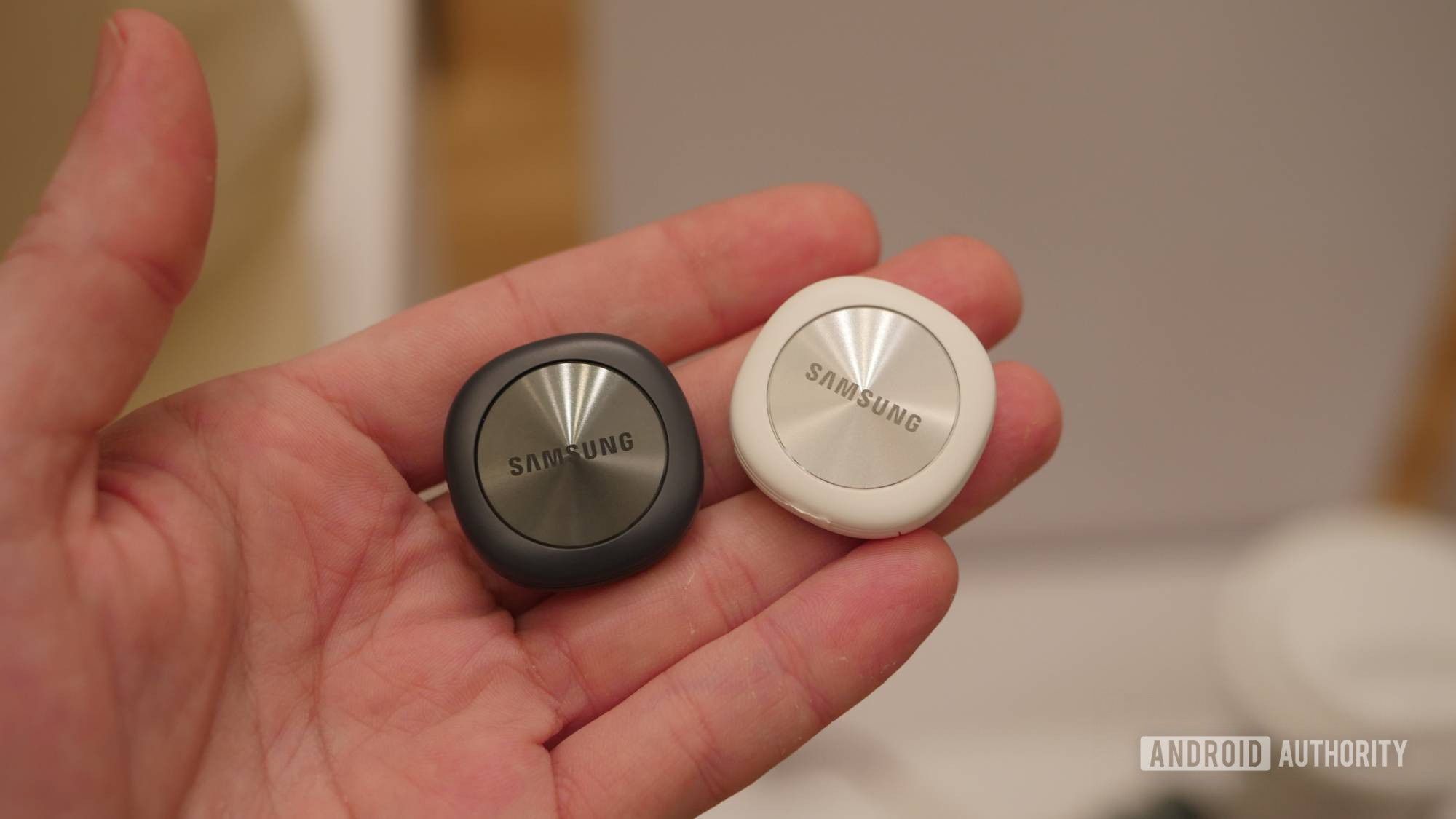
Beyond its software advancements, the SmartTag 3 introduces a substantial physical redesign aimed at enhancing portability and user convenience. The device is now considerably smaller and lighter than its predecessors, shedding its traditional loop design in favor of a more compact form factor. Specifically, it boasts a 35% reduction in size and is 33% lighter. This streamlined design makes it more versatile for attachment to a wider array of items, from slender wallets and keychains to pet collars and luggage, without adding unnecessary bulk. The removal of the integrated loop, while potentially requiring separate accessories for certain attachment methods, contributes significantly to its overall diminished profile.
Concurrent with the size reduction, Samsung has also engineered the SmartTag 3 for superior battery efficiency. The standard battery life has been extended to an impressive 550 days, an improvement over the SmartTag 2’s 500-day rating. Activating the device’s battery saver mode further boosts this longevity to 790 days, surpassing the SmartTag 2’s 700 days. While the battery saver mode significantly extends the operational period, it does necessitate certain trade-offs, disabling advanced features such as Compass View and volume/ringtone controls, leaving only basic Bluetooth Low Energy (LE) finding capabilities active. This tiered approach allows users to prioritize either advanced tracking functionalities or extended battery life based on their immediate needs. The use of a standard, replaceable CR2032 coin cell battery ensures ease of maintenance for users, a practical consideration that enhances the device’s long-term utility.
Enhanced Precision and Range: The Power of UWB and Bluetooth 6.0
The SmartTag 3 significantly upgrades its location-finding capabilities, promising a more precise and extended tracking experience. The enhanced Compass View, a feature exclusive to compatible Galaxy smartphones, now guides users towards a lost tag from up to 200 feet away – roughly three times the range of previous generations. This substantial improvement in directional finding is attributed to a sophisticated combination of Ultra-Wideband (UWB) technology and Bluetooth 6.0 channel sounding.
UWB technology, known for its ability to provide highly accurate spatial and directional information, allows for precise localization within short ranges, making it ideal for pinpointing items indoors or in cluttered environments. When a user is in close proximity to a lost SmartTag 3, the UWB radio can determine its exact direction and distance with remarkable accuracy, often down to a few centimeters. Bluetooth 6.0 channel sounding further augments this precision by analyzing the characteristics of radio signals to estimate distance and direction more effectively, especially in environments where UWB signals might be obstructed. However, Samsung has clarified that the full benefits of Bluetooth Channel Sounding with the SmartTag 3 are currently only available on select Galaxy phone models, indicating an ongoing optimization process within its ecosystem.
For situations where a SmartTag 3 ventures beyond the direct Bluetooth connection range of its paired smartphone, Samsung leverages its extensive Galaxy Find Network. This vast network, comprising over 900 million active Samsung Galaxy devices globally, operates by anonymously detecting nearby SmartTags and relaying their encrypted location data back to the owner. This crowd-sourced tracking mechanism ensures that even if a tag is far from its owner, its last known location can still be updated through the collective power of the Galaxy user base, providing a robust safety net for lost items. The sheer scale of this network is a formidable asset, rivaling similar networks from competitors and providing a broad coverage area that enhances the probability of recovery for lost items.
Introducing "Place Notifications": Geofencing for Peace of Mind
A completely new and highly anticipated feature making its debut with the SmartTag 3 is "Place Notifications." This geofencing capability allows users to define specific geographical zones and receive automated alerts whenever a SmartTag 3 enters or leaves these designated areas. This innovative feature opens up a myriad of practical applications, significantly enhancing the utility of the tracker beyond simple item retrieval.
Consider scenarios such as receiving a notification if a pet wearing a SmartTag 3 collar wanders beyond the boundaries of a defined yard or park. Parents can set up geofences around their home or school to get alerts when their child’s bicycle, equipped with a SmartTag 3, enters or exits the immediate neighborhood. For travelers, a geofence around an airport terminal could provide an alert if luggage equipped with a SmartTag 3 moves unexpectedly. This proactive notification system transforms the SmartTag 3 from a reactive finding tool into a proactive monitoring device, offering an added layer of security and peace of mind for valuable possessions, dependents, or even vehicles. The integration of this feature with the SmartThings app centralizes control and allows for easy management of multiple geofences and tags.
Competitive Landscape and Market Implications
The smart tracker market is fiercely competitive, dominated by key players like Apple with its AirTag, Tile, and now Samsung with its increasingly sophisticated SmartTag series. Apple’s AirTag, launched in 2021, quickly gained significant market share due to its seamless integration with the iPhone’s "Find My" network and precise UWB tracking. Tile, a pioneer in the space, offers a wide range of trackers and boasts cross-platform compatibility, though its network relies on its own user base rather than a vast smartphone ecosystem.
Samsung’s introduction of the SmartTag 3, particularly its limited iOS compatibility, represents a strategic maneuver to broaden its appeal and capture market share from both Apple and Tile. By breaking down some of the ecosystem barriers, Samsung positions itself as a more inclusive choice, appealing to users who might be hesitant to commit to a single brand’s ecosystem for all their smart devices. Industry analysts suggest that this move could pressure other manufacturers to consider more open standards for item tracking, potentially leading to a more interoperable future for connected devices. The robust Galaxy Find Network, with its massive installed base of over 900 million devices, provides a significant advantage in terms of widespread tracking coverage, a critical factor for the effectiveness of any smart tracker.
While the SmartTag 3 doesn’t fully replicate the Android experience on iOS, its foundational cross-platform capability signifies a shift towards user-centric design that prioritizes functionality over strict ecosystem lock-in. This could lead to increased adoption rates, especially in regions with high Android market penetration where Samsung holds a dominant position. The enhanced features like improved range, battery life, and geofencing also solidify Samsung’s competitive edge, offering tangible improvements that directly address common user pain points in item tracking.
The Evolution of Samsung SmartTags: A Brief Chronology
Samsung’s journey in the smart tracker market began with the original Galaxy SmartTag, introduced in January 2021. This initial device utilized Bluetooth Low Energy (LE) for proximity finding and relied on the nascent Galaxy Find Network for wider area tracking. Shortly after, Samsung released the SmartTag+, which augmented the original’s capabilities by incorporating Ultra-Wideband (UWB) technology, enabling more precise directional finding with compatible Galaxy smartphones.
In October 2023, Samsung launched the SmartTag 2, which brought a significant redesign, improved battery life, and enhanced durability (IP67 rating). While the SmartTag 2 refined the tracking experience and offered a more versatile design, it remained an exclusive component of the Samsung Galaxy ecosystem. The unveiling of the SmartTag 3 in late 2024 (as per the implied date in the source image, 2026/09, for a future release) represents the most significant leap yet, primarily driven by its groundbreaking partial iOS compatibility and the introduction of advanced features like "Place Notifications." This chronology demonstrates Samsung’s continuous investment and innovation in the smart tracker category, progressively refining its offerings in response to market demands and technological advancements.
Looking Ahead: The Future of Item Tracking
The trajectory of smart tracker technology points towards greater integration, enhanced precision, and a stronger emphasis on user privacy and security. The SmartTag 3’s move towards cross-platform compatibility could be a harbinger of broader industry trends, where devices are designed to function more seamlessly across different operating systems. As the Internet of Things (IoT) continues to expand, item trackers are likely to become even more sophisticated, potentially integrating with augmented reality (AR) interfaces for more intuitive finding experiences or incorporating biometric sensors for enhanced security.
Furthermore, the industry is grappling with concerns surrounding the misuse of these devices for stalking or unauthorized tracking. Manufacturers, including Samsung and Apple, have been proactive in implementing anti-stalking measures, such as automatic notifications for unknown trackers traveling with a user. Future iterations are expected to strengthen these safeguards, utilizing advanced algorithms and network-level detection to prevent malicious use. The continuous improvement in battery technology and the expansion of global tracking networks will further solidify the utility and reliability of smart trackers, making lost items a less frequent concern for consumers worldwide.
Conclusion
The Samsung SmartTag 3 represents a significant evolutionary step in the smart tracker market, combining a sleek, more portable design with substantial technological enhancements. Its unprecedented move to offer partial iOS compatibility fundamentally redefines Samsung’s approach to ecosystem integration, positioning the device as a more versatile solution for a wider demographic. Coupled with triple the tracking range via enhanced Compass View, significantly extended battery life, and the introduction of proactive "Place Notifications," the SmartTag 3 offers a compelling package of features designed to provide unparalleled peace of mind. As it prepares for its early November launch, the SmartTag 3 is poised not only to solidify Samsung’s standing as a major player in the smart tracker arena but also to influence the broader industry towards greater interoperability and user-centric innovation.