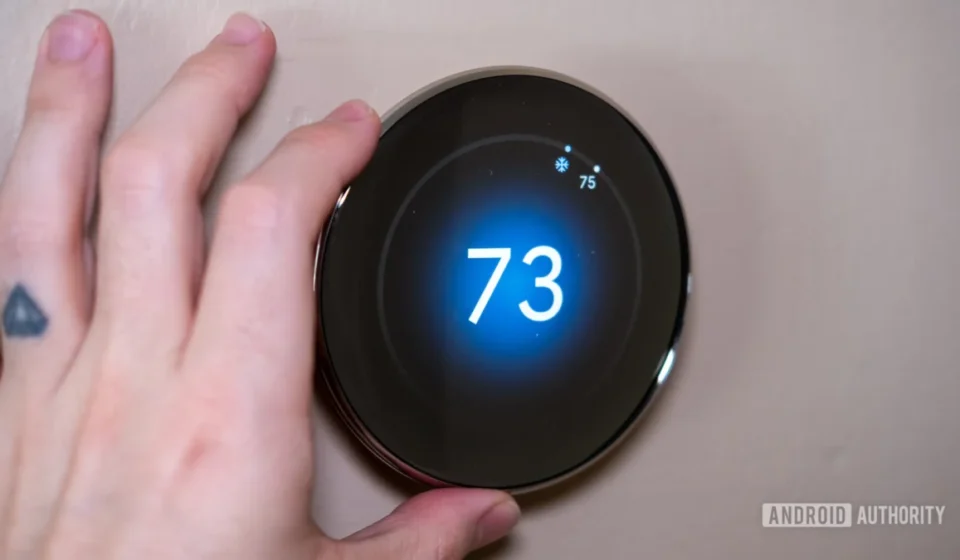

A growing number of Google Home users are reporting significant connectivity issues preventing their voice commands from controlling Nest Thermostats, despite the devices remaining accessible and controllable through the Google Home application. This disruption highlights the inherent vulnerabilities in interconnected smart home ecosystems, where a breakdown in communication between core components can severely diminish the promised convenience and functionality. The problem, initially surfacing on community forums, appears to be affecting an unspecified but notable segment of users, raising concerns about reliability and the dependency on cloud-based smart home infrastructure.
The Core Disruption: Voice Commands Fail, App Control Persists
The primary symptom reported by affected users is the inability of Google Home speakers and smart displays to execute voice commands directed at Nest Thermostats. When attempting to adjust temperature settings or query thermostat status, users are met with a standardized error message from Google Assistant: "Sorry, I can’t reach the Nest Thermostat right now." This response is particularly perplexing for users because, simultaneously, the very same Nest Thermostat can be seamlessly controlled via the Google Home mobile application, indicating that the thermostat itself is online and functional, and the issue lies specifically within the voice command integration layer.
One Reddit user vividly detailed their experience, describing a sudden onset of this communication breakdown. Their Google Home speakers, which had previously controlled their Nest Thermostat without issue for an extended period, abruptly ceased to function via voice. The user’s account quickly garnered traction, with numerous other individuals chiming in to report identical or strikingly similar problems with their own setups. While the original poster noted a spontaneous resolution to their specific issue the following day, the prevalence of similar reports suggests an underlying systemic glitch rather than isolated incidents. The intermittent nature of the problem for some users further complicates troubleshooting and points towards potential server-side inconsistencies or temporary communication bottlenecks within Google’s smart home infrastructure.
Unpacking User Frustration and Expectations
The smart home paradigm is built upon the promise of seamless integration and effortless control. Users invest in devices like Nest Thermostats and Google Home speakers precisely for the convenience of voice-activated automation, expecting their homes to respond intelligently to their spoken commands. When this fundamental functionality falters, it directly undermines the value proposition of a smart home. The frustration articulated by users on platforms like Reddit stems from several factors:
Firstly, the unexpected nature of the outage. Smart home devices are often seen as set-and-forget appliances, and their sudden failure to communicate can be jarring. Secondly, the lack of a clear explanation or immediate fix exacerbates the problem. Users are left to speculate on whether the issue is with their own network, their devices, or Google’s backend, leading to time-consuming and often fruitless troubleshooting efforts. Thirdly, the dichotomy of app control working while voice control fails is particularly confusing, suggesting a specific breakdown in the Google Assistant’s interaction with the Nest service rather than a general connectivity failure of the thermostat itself. This points to potential API (Application Programming Interface) communication issues or problems with the specific microservices responsible for voice command processing and relay.
This incident is not merely an inconvenience; for many, a smart thermostat is an integral part of their home management, impacting comfort and energy efficiency. The inability to quickly adjust temperatures, especially during extreme weather conditions or for individuals with mobility challenges, can transform a minor technical glitch into a significant disruption of daily life.
The Smart Home Ecosystem: A Double-Edged Sword
The architecture of modern smart homes relies heavily on a complex web of interconnected devices, cloud services, and communication protocols. A Nest Thermostat typically connects to a user’s local Wi-Fi network, which then communicates with Google’s cloud servers. Google Home devices, similarly, connect to the local network and rely on cloud-based Google Assistant services to process voice commands and relay instructions to other smart devices, often through the same cloud infrastructure. This multi-layered approach offers immense flexibility and remote control capabilities but also introduces multiple points of potential failure.
When a user issues a voice command, the following general sequence of events occurs:
- Voice Capture: The Google Home device records the command.
- Cloud Processing: The audio is sent to Google’s cloud servers for speech-to-text conversion and intent recognition.
- Command Routing: The recognized command is then routed to the appropriate smart home service (in this case, Nest).
- Device Instruction: The Nest service translates the command into an instruction for the specific Nest Thermostat.
- Device Execution: The instruction is sent to the thermostat, which then performs the requested action.
- Confirmation: The thermostat sends a status update back through the cloud, and Google Assistant provides verbal confirmation.
A disruption at any of these stages, particularly steps 3 or 4, could explain why voice commands fail while direct app control (which might bypass certain voice processing or API routing steps) remains functional. Such issues are often attributed to server load, software bugs in recent updates, or transient network problems affecting specific data centers or communication pathways.
Technical Underpinnings of Connectivity Challenges
Delving deeper into the potential technical causes, several factors could contribute to such intermittent communication failures. One common culprit in complex cloud-based systems is API incompatibility or degradation. If Google Assistant’s API for communicating with Nest services experiences a change, a bug, or an overload, it could result in the "cannot reach" error. This is distinct from the Nest Thermostat’s own connection to the internet, which would typically be managed by a separate API or direct connection for app control.
Another possibility involves server-side processing issues. Google’s vast infrastructure comprises numerous servers and data centers. If a particular cluster of servers responsible for routing Google Assistant commands to Nest Thermostats experiences high load, a software glitch, or a temporary outage, it could lead to the observed errors. This might explain why some users experience intermittent issues or why the problem might resolve itself "the next day" as server loads normalize or automated restarts occur.
Network latency or packet loss between Google Home devices, Google’s cloud, and Nest’s cloud could also play a role. While the user’s local Wi-Fi might be stable, the broader internet path could experience congestion. However, the specific failure of voice commands while app control works points away from a general network issue on the user’s end and more towards a specific service interaction.
Finally, firmware updates for either Google Home devices or Nest Thermostats, or updates to the Google Home app itself, can sometimes introduce unforeseen bugs that affect inter-device communication. While typically rigorously tested, complex software environments can occasionally manifest conflicts that only appear under specific conditions or after wider deployment.
A History of Smart Home Glitches and Broader Implications
This incident, while specific to Nest Thermostats and Google Home, is not an isolated phenomenon in the broader smart home landscape. Connectivity issues, service outages, and integration failures are a recurring challenge for consumers and manufacturers alike. Companies like Amazon (with Alexa), Apple (with HomeKit), and various other smart device makers have all faced similar periods of user frustration due to system unreliability. These incidents serve as crucial reminders of the inherent fragility of systems that rely on constant internet connectivity and complex cloud infrastructure.
For Google, which has heavily invested in establishing itself as a leader in the smart home market, such outages carry significant implications. The Nest brand, acquired by Google in 2014, was a pioneer in smart thermostats and cameras, known for its sleek design and intelligent features. Integrating Nest fully into the Google Home ecosystem was a strategic move to consolidate Google’s smart home offerings under a unified banner. However, every reported failure erodes consumer confidence and can potentially deter future adoption. Users prioritize reliability and ease of use above almost all other features in smart home technology. If a basic function like voice control of a thermostat becomes unreliable, it calls into question the fundamental value proposition of the entire ecosystem.
Beyond individual user frustration, persistent reliability issues can also impact the perceived maturity of the smart home industry as a whole. For mainstream consumers still on the fence about embracing connected living, reports of widespread glitches can reinforce skepticism and slow down market penetration.
Google’s Response and Ongoing Investigation (Inferred)
As of the initial reports, Google has not released an official statement regarding a widespread outage or specific technical issue affecting Nest Thermostat and Google Home voice command integration. Android Authority, the publication detailing these reports, has reached out to Google for comment, indicating that an official response is anticipated.
Based on historical precedents and typical corporate protocol in such situations, Google’s likely initial steps would involve:
- Internal Investigation: Engineering teams would be tasked with analyzing server logs, monitoring system performance metrics, and attempting to replicate the reported issues.
- User Support Channels: Customer support teams would likely be briefed on the issue, potentially providing troubleshooting steps or acknowledging a known problem if a widespread cause is identified.
- Public Statement (If Widespread): If the issue is confirmed to be widespread and systemic, Google would typically issue a public statement through its official support channels, social media, or a dedicated status page, providing updates on the investigation and expected resolution timelines.
Given the reports of intermittent resolution for some users, it is plausible that Google’s systems are either self-correcting or undergoing background adjustments to alleviate the problem without a formal announcement of a major outage. However, the persistent nature of the complaints suggests that a more definitive resolution may be required.
Navigating the Outage: User Actions and Workarounds
While awaiting an official diagnosis and fix from Google, affected users can attempt several troubleshooting steps, though their efficacy may vary depending on the root cause:
- Check Google’s Status Page: Google often maintains status dashboards for its services. Users should check the Google Home or Nest status pages (if available) for any reported outages.
- Restart Devices: A classic IT solution, restarting both the Google Home speaker/display and the Nest Thermostat (by temporarily cutting its power if possible, or via its settings menu) can sometimes resolve temporary communication glitches.
- Check Wi-Fi Connectivity: Ensure the home Wi-Fi network is stable and both devices are connected. While app control working suggests this isn’t the primary issue, a weak or intermittent Wi-Fi signal can still cause issues for certain cloud interactions.
- Verify Google Home App Connectivity: Ensure the Google Home app itself is updated to the latest version and the Nest Thermostat appears online and controllable within the app.
- Relink Nest Account: In some cases, unlinking and relinking the Nest account within the Google Home app can force a re-establishment of communication pathways. This should be done with caution as it might require re-configuring certain settings.
- Factory Reset (Last Resort): As a final, more drastic step, performing a factory reset on either the Google Home device or the Nest Thermostat could resolve deep-seated software issues, but this will require re-setup and should only be considered if other steps fail.
- Use the Google Home App: The most reliable workaround currently available is to simply use the Google Home application on a smartphone or tablet to control the Nest Thermostat, bypassing the problematic voice command interface.
It is crucial for users to document their experiences, including error messages, timestamps, and troubleshooting steps, as this information can be invaluable for Google’s support teams if the issue escalates.
Maintaining Trust in Connected Living
The incident with Nest Thermostat and Google Home voice control underscores a critical challenge for the smart home industry: maintaining user trust through consistent reliability. As smart devices become more embedded in essential home functions, the tolerance for downtime or partial functionality diminishes. Consumers expect these systems to be robust, secure, and always available.
For Google, the resolution of this issue, and how transparently they communicate with their user base, will be key to reinforcing their position in the smart home market. Proactive communication, clear explanations of technical problems, and swift, effective solutions are paramount in rebuilding and sustaining user confidence. The future growth of the smart home market hinges not just on innovative features but, more fundamentally, on the unwavering reliability of the underlying technology that powers our connected lives. As smart homes evolve, the emphasis will increasingly shift from simply "smart" to "dependably smart," ensuring that the promise of effortless control remains a consistent reality.