Hammer Media Executives to Detail Multi-Seven-Figure Revenue Diversification Strategies at FinCon 2026

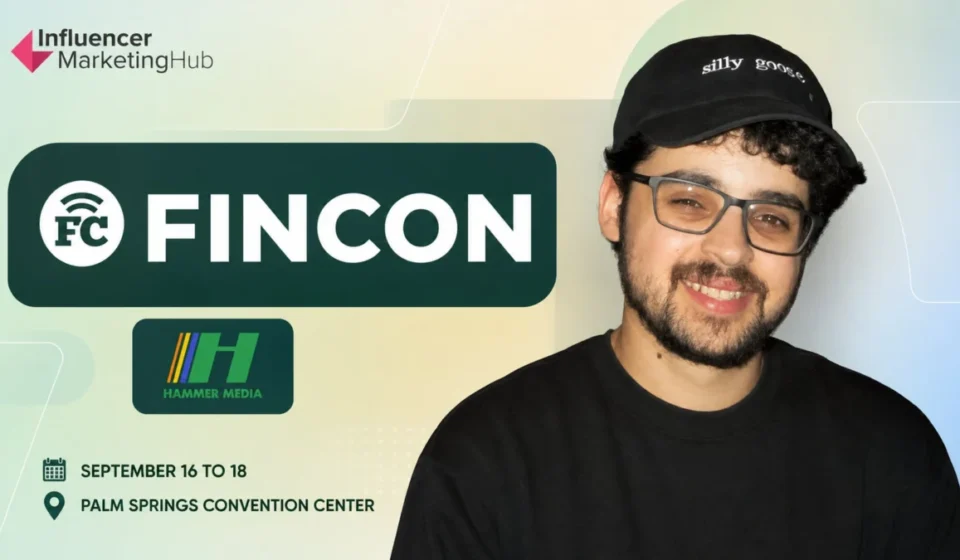
The landscape of digital content creation is undergoing a fundamental shift from individual-led entertainment to structured corporate media entities, a transition that will be highlighted at the upcoming FinCon 2026. Hammer Media, the organization behind the viral YouTube series Financial Audit, has announced that its executive leadership team will lead a keynote session focused on the strategic diversification of revenue streams. Mika Castro, Head of Financial Audit, will join Hammer Media President and COO Robert Kaliati and Head of Memberships Cristian Paz to present a session titled “Beyond Brand Deals: How Hammer Media Built Multiple Seven-Figure Revenue Streams.” Scheduled to take place from September 16 through 18 at the Palm Springs Convention Center, the session aims to provide a blueprint for creators looking to move beyond the volatility of platform-dependent income.
The core of the presentation will address the inherent risks of the modern creator economy, where businesses built solely around YouTube AdSense or sporadic brand partnerships remain vulnerable to algorithmic shifts and fluctuating advertising demand. Hammer Media’s evolution serves as a primary case study in mitigating these risks through the development of a comprehensive commercial ecosystem. By expanding into memberships, software, newsletters, and digital products, the company has successfully decoupled its financial stability from the whims of third-party platforms, creating a more resilient and scalable business model.
The Evolution of Hammer Media and the Financial Audit Model
The journey of Hammer Media is inextricably linked to the rapid rise of Caleb Hammer, whose "Financial Audit" program has become a cornerstone of the personal finance niche on YouTube. The show, which features raw, unfiltered conversations with individuals facing significant debt and financial mismanagement, has tapped into a growing demand for financial transparency and education. However, as the audience grew, the leadership at Hammer Media recognized that attention alone does not constitute a sustainable long-term business.
A chronological look at the company’s growth reveals a deliberate move toward professionalization. In late 2023, the team brought on Mika Castro to oversee the operational side of the content engine. Castro, who began his career as a YouTube creator in high school before transitioning into professional editing and production management, brought a focus on "repeatable processes." This shift marked the beginning of Hammer Media’s transformation from a high-output creator channel into a structured media house. Under this new framework, the production of content was no longer viewed merely as a means to generate views, but as the top-of-funnel driver for a much larger product suite.
By 2024 and 2025, Hammer Media had aggressively expanded its portfolio. This period saw the launch and scaling of Hammer Elite, a membership-based community; the development of Dollarwise, a dedicated budgeting application; and the growth of a newsletter that provides direct-to-consumer access, bypassing social media algorithms. The FinCon 2026 session will serve as the first comprehensive public debrief on the internal decisions, failures, and successes that occurred during this high-growth phase.
Data-Driven Diversification: The Hammer Media Ecosystem
The scale of Hammer Media’s diversification is evidenced by the performance metrics of its various sub-brands. According to official company data, the ecosystem currently supports 100,000 Hammer Elite members, 35,000 active users on the Dollarwise budgeting app, and a newsletter subscriber base exceeding 300,000 individuals. These figures represent more than just secondary income; they represent a fundamental shift in how creator-led businesses interact with their audience.
In a traditional creator model, the relationship with the viewer is often transactional and mediated by a platform. Hammer Media’s model utilizes a multi-touchpoint strategy:
- Top-of-Funnel Content: The "Financial Audit" YouTube series generates mass-market awareness and trust through free educational entertainment.
- Direct Distribution: The newsletter (300,000+ subscribers) ensures the company can reach its audience regardless of platform policy changes.
- Software as a Service (SaaS): The Dollarwise app (35,000 members) provides a utility-based product that solves a specific problem for the audience, creating recurring revenue.
- Premium Community: Hammer Elite (100,000 members) offers a high-engagement environment for the most dedicated segment of the audience.
This structure allows the company to maximize the "Life Time Value" (LTV) of a single viewer. A person who discovers a video may eventually become a newsletter subscriber, then an app user, and finally a premium member. This ecosystem significantly lowers the cost of customer acquisition (CAC) because the content serves as a continuous, low-cost marketing engine for the higher-margin products.
Operational Reliability as a Strategic Asset
A significant portion of the FinCon 2026 session will focus on the operational discipline required to maintain such a complex system. Mika Castro has been a vocal proponent of the idea that professional value in the creator space is derived from consistency rather than just individual talent. At Hammer Media, Castro oversees the end-to-end workflow of the Financial Audit series, including preproduction, recording, postproduction, and distribution.

His philosophy posits that for a creator operation to scale, it must move away from "improvised workflows." In the early stages of a channel, the creator often holds all the institutional knowledge. As the business grows, this becomes a bottleneck. Castro’s approach involves documenting every process—from how a guest is vetted to how a thumbnail is designed—to ensure that the quality of the output is independent of any one individual’s daily mood or availability.
This operational maturity is what allows Hammer Media to test new revenue streams without compromising the quality of its primary content. If the production of the YouTube show is streamlined and repeatable, the leadership team has the "cognitive bandwidth" to focus on developing software like Dollarwise or expanding the membership tiers. Reliability, in this context, is not just a management preference; it is a prerequisite for financial diversification.
FinCon 2026: A Hub for the Financial Creator Economy
FinCon, which began in 2011 as the Financial Blogger Conference, has evolved into the premier event for the "Money Nerd" community. Over the last decade and a half, the conference has mirrored the changes in the media landscape, shifting its focus from traditional blogging to podcasting, short-form video, and now, the "Creator-to-CEO" transition.
The 2026 event in Palm Springs is expected to draw thousands of attendees, ranging from solo influencers to representatives from major financial institutions like Vanguard, Fidelity, and Chase. The inclusion of Hammer Media’s leadership in the keynote lineup underscores a growing industry-wide interest in sustainable business models. For many attendees, the challenge is no longer "how to get views," but "how to build a business that lasts."
The convention will provide a backdrop for networking between creators and brands, but the educational sessions remain the primary draw. The Hammer Media session is expected to be particularly high-traffic, as it promises to move beyond theoretical advice and offer a "look under the hood" at a company that has successfully crossed the seven-figure threshold in multiple categories.
Analysis of Implications: The Future of Creator-Led Media
The success of Hammer Media’s model suggests several broader implications for the media industry at large. First, it signals the end of the "AdSense Era" as the gold standard for creator success. While advertising revenue remains a significant component, the most successful creators of the next decade will likely be those who own their distribution (newsletters) and their products (SaaS or physical goods).
Second, the Hammer Media approach highlights the importance of "niche authority." By focusing exclusively on personal finance and financial accountability, the company has built a level of trust that allows them to sell financial tools (like the Dollarwise app) more effectively than a generalist creator could. In the financial sector, where trust is the primary currency, this authority is a massive competitive advantage.
Finally, the transition of roles within Hammer Media—specifically the appointment of a Head of Financial Audit and a Head of Memberships—indicates that creator businesses are increasingly adopting traditional corporate structures. This "departmentalization" allows for specialized focus, ensuring that the membership experience is not neglected in favor of video production, and vice versa.
Conclusion and Outlook
As the digital economy continues to mature, the distinction between a "YouTuber" and a "Media CEO" will become increasingly stark. Hammer Media’s participation in FinCon 2026 serves as a milestone in this maturation process. By sharing the systems and decisions that powered their expansion into memberships, apps, and newsletters, Mika Castro, Robert Kaliati, and Cristian Paz are providing a roadmap for the next generation of digital entrepreneurs.
For the audience at FinCon, the takeaway is clear: sustainable growth requires more than just viral content; it requires a repeatable production system and a diversified revenue model that prioritizes direct-to-consumer relationships. As the industry gathers in Palm Springs this September, the focus will be squarely on how to turn temporary attention into a permanent, multi-faceted media institution. Hammer Media’s journey from a single YouTube channel to a multi-seven-figure ecosystem stands as one of the most prominent examples of this evolution in the current market.