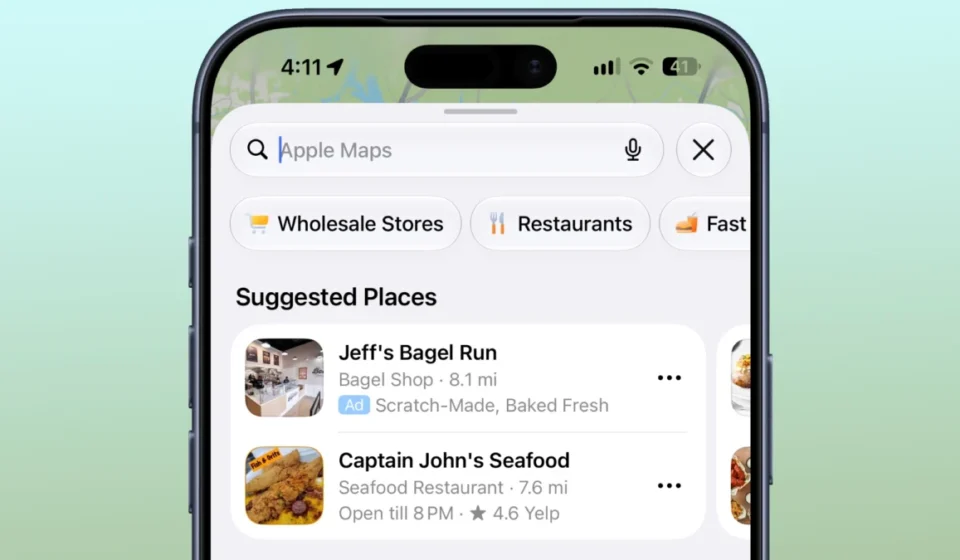

Apple Maps has officially launched advertisements within its mapping application across the United States and Canada, marking a significant shift in the platform’s monetization strategy. iPhone and iPad users will now encounter sponsored listings when searching for locations and browsing "Suggested Places." This rollout, confirmed by Apple to 9to5Mac, began over the past few days, with a planned increase in ad visibility in the coming weeks.
The introduction of ads in Apple Maps was initially announced in March, with Apple indicating a late summer debut. This move places Apple Maps in a similar advertising landscape to other major navigation and search platforms, such as Google Maps, which has long featured sponsored results for businesses. The integration of advertising aims to create a new revenue stream for Apple while potentially offering businesses a more direct way to reach consumers actively searching for products and services in their vicinity.
Ad Placement and User Experience
Advertisements will appear in two primary scenarios within the Apple Maps app:
- During Searches: When a user initiates a search query, sponsored listings may be displayed at the top of the results page.
- Suggested Places: Advertisements can also be integrated into the "Suggested Places" feature, which surfaces relevant businesses and points of interest to users based on their location and search history.
Each set of search results is capped at a single advertisement, aiming to maintain a relatively uncluttered user interface. While there is no immediate option for users to disable these advertisements within the Maps app itself, Apple has emphasized that they are clearly demarcated with a blue "Ad" tag. This labeling is intended to differentiate sponsored content from organic search results, ensuring transparency for users.
Apple has also provided assurances regarding user privacy. The company stated that interactions with advertisements within Maps are not directly associated with a user’s Apple Account, and data collected from these interactions will not be shared with third-party advertisers. This commitment to privacy is a cornerstone of Apple’s broader product philosophy and is likely a key consideration in the design of its advertising initiatives.
Chronology of Ad Rollout
The journey to integrating ads into Apple Maps has been a gradual process, with several key milestones:
- March 2026: Apple publicly announced its intentions to introduce advertising into the Maps application. This announcement set the stage for the feature’s eventual debut.
- May 2026: Early indications of the impending ad functionality began appearing in beta versions of iOS 26. Developers and early adopters noticed the presence of ad-related elements within the Maps app, signaling that development was well underway.
- August 2026 (Early August): Apple opened up the platform for businesses to purchase advertising slots within Maps. This move allowed companies to prepare their campaigns and secure placements ahead of the public launch. To incentivize early adoption, Apple offered a 15 percent credit on future ad spending for businesses that committed to purchasing ad slots.
- August 2026 (Mid-to-Late August): The advertisements officially went live for users in the United States and Canada. This marks the culmination of the development and preparation phases.
This phased approach allowed Apple to refine the advertising system, test its performance, and provide businesses with ample opportunity to participate. The introductory credit program was a strategic move to encourage initial investment and gather valuable data on advertiser response and campaign effectiveness.

Supporting Data and Market Context
The introduction of ads in Apple Maps is a strategic move within a rapidly growing digital advertising market. While specific figures for Apple Maps’ advertising revenue are not yet available, the broader digital advertising landscape offers context:
- Global Digital Ad Spending: Projections from industry analysts consistently show robust growth in global digital ad spending. For instance, eMarketer has previously forecast that global digital ad spending would surpass hundreds of billions of dollars annually, with mobile advertising forming a significant portion of this.
- Search Advertising Dominance: Search advertising, which Apple Maps is now entering, remains a highly effective channel for businesses. It captures consumers at the moment they are actively looking for products or services, leading to higher conversion rates compared to other forms of advertising. Google’s search advertising business, for example, generates tens of billions of dollars in revenue quarterly.
- Location-Based Advertising: The increasing reliance on smartphones for navigation and local discovery makes location-based advertising particularly potent. Businesses can target consumers who are geographically close to their establishments, increasing the likelihood of in-person visits.
By integrating ads, Apple Maps is tapping into this lucrative market. The platform’s extensive user base, coupled with its integral role in daily navigation for millions, presents a compelling proposition for advertisers. The ability to reach users who are actively seeking directions, local businesses, or points of interest positions Apple Maps as a significant new player in local search advertising.
Prohibited Categories and Policy Adherence
Apple has established clear guidelines regarding the types of advertisements that will be permitted within Apple Maps, aiming to maintain a safe and relevant user experience. According to Apple’s Advertising Services policy, certain categories are strictly prohibited:
- Home Services: Advertisements for services related to home repair, maintenance, and improvement are not allowed.
- Bail Bonds: This sensitive service category has been excluded from advertising.
- Cryptocurrency ATMs: Advertisements promoting or directing users to cryptocurrency ATMs are prohibited.
These restrictions reflect a cautious approach to advertising in areas that could be considered high-risk, sensitive, or potentially misleading.
Furthermore, advertisements for medical services may be permitted but are subject to a rigorous case-by-case evaluation. This indicates that while Apple is open to featuring healthcare providers, it will implement strict scrutiny to ensure compliance with its advertising standards and to protect consumers.
All advertisements submitted for placement in Apple Maps must also adhere to Apple’s broader advertising rules, which typically encompass policies against deceptive practices, misleading claims, and the promotion of illegal goods or services. This comprehensive policy framework aims to safeguard the integrity of the Apple Maps platform and the trust of its users.
Broader Impact and Implications
The introduction of advertisements in Apple Maps has several significant implications for users, businesses, and the competitive landscape of digital mapping services:
- For Users: While ads may alter the visual presentation of search results, Apple’s emphasis on clear labeling and privacy protections aims to mitigate potential negative impacts. Users will need to develop an awareness of sponsored listings, and the effectiveness of these ads will likely depend on their relevance and unobtrusiveness. The potential benefit for users lies in discovering new businesses or services they might not have otherwise found.
- For Businesses: The launch presents a new and potentially powerful channel for local advertising. Businesses, particularly small and medium-sized enterprises, can leverage Apple Maps to increase their visibility among a highly targeted audience. The introductory credit program offers an incentive for businesses to experiment with the platform and understand its return on investment. The effectiveness of these ads will hinge on keyword targeting, ad creative, and the overall user experience of clicking through to a business listing.
- Competitive Landscape: This move intensifies competition in the digital mapping and local search market. Apple Maps, now a direct competitor in local search advertising, puts further pressure on platforms like Google Maps. The success of Apple’s advertising strategy could influence how other mapping services evolve their monetization models and advertising offerings. Apple’s strong brand loyalty and integrated ecosystem provide a solid foundation for its advertising ventures.
The long-term success of ads in Apple Maps will likely be determined by a delicate balance between revenue generation for Apple and advertisers, and the preservation of a positive and trustworthy user experience. As the feature matures, Apple may introduce more sophisticated targeting options or analytics for advertisers, further solidifying its position in the digital advertising ecosystem. The company’s commitment to privacy will also be a critical factor in maintaining user confidence as advertising becomes a more prominent feature of its services.