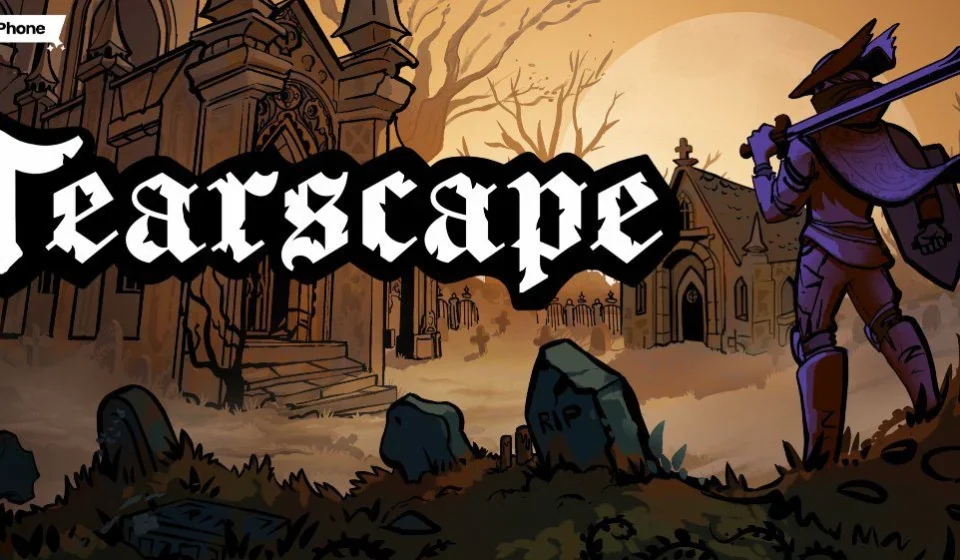
Tearscape lets you step into its Gothic world of monsters, dungeons, and secrets, with the game now available across multiple platforms

NERDS TAKE OVER, an independent game development studio, has officially launched its highly anticipated 2D top-down action-adventure title, Tearscape, across a broad spectrum of platforms. The premium game is now accessible to players on Android and iOS mobile devices, PC, Nintendo Switch, PlayStation 5, and Xbox Series S|X. This multi-platform release marks a significant milestone for the indie studio, bringing a challenging Soulslike experience, devoid of traditional difficulty settings, to a global audience within a meticulously crafted gothic, pixelated world. The simultaneous launch across such diverse hardware underscores a growing trend in indie development to maximize reach and accessibility from day one.
Unveiling a Grim Gothic Tapestry: The World of Tearscape
Tearscape immerses players in a profoundly gloomy Gothic world, deliberately designed to evoke the nostalgic aesthetic of classic Game Boy Color adventures while integrating modern, fast-paced combat mechanics and the punishing yet rewarding elements characteristic of the Soulslike genre. Players assume the role of a Hunter, tasked with navigating a dark, intricately interconnected world that brims with perilous dungeons, grotesque creatures, elusive hidden routes, and a myriad of secrets awaiting discovery. The game’s visual style, characterized by its detailed pixel art, serves not merely as a throwback but as a deliberate artistic choice to enhance the oppressive atmosphere and sense of isolation inherent in its narrative. This combination of retro visuals and contemporary gameplay aims to carve out a unique niche in the competitive indie landscape.
The design philosophy behind Tearscape places a strong emphasis on player agency and exploration. The non-linear structure of its world encourages players to diverge from obvious paths, seek out shortcuts, uncover secret areas, and delve into hidden dungeons. These subsidiary zones are not mere filler but are populated with unique challenges, valuable items, and formidable adversaries, ensuring that every exploration yields meaningful rewards or teaches a harsh lesson. This design choice contributes significantly to the game’s replayability and fosters a sense of genuine discovery, a hallmark of well-executed action-adventure titles.
Core Mechanics: A Deep Dive into Soulslike Combat and Survival
Central to the Tearscape experience is its demanding combat system, which mandates precise timing and meticulous resource management. Players must vigilantly monitor their stamina, a critical resource that dictates the frequency and potency of attacks, dodges, and other defensive maneuvers. Engaging with the game’s dangerous array of enemies requires strategic engagement, often involving careful observation of attack patterns and identifying opportune moments to strike or retreat. The unforgiving nature of combat is further compounded by the scarcity of healing resources; players are equipped with a restricted number of flasks, necessitating thoughtful consideration before each use. This scarcity imbues every healing decision with significant weight, amplifying the tension and challenge that define the Soulslike genre.
Character progression is another vital aspect, with players needing to upgrade their Hunter’s statistics to stand a chance against the game’s colossal boss creatures. These encounters are designed as monumental tests of skill, patience, and strategic preparation, often requiring multiple attempts and a deep understanding of both the boss’s mechanics and the player’s own character build. The absence of difficulty settings reinforces the developers’ commitment to a singular, uncompromised challenge, ensuring that all players experience Tearscape as intended—a brutal yet fair trial of perseverance.
As players venture deeper into the game’s gothic labyrinth, they will unearth powerful tools and unlock new abilities concealed within the dungeons. These discoveries are integral to overcoming increasingly formidable obstacles and accessing previously unreachable areas, thereby expanding both the player’s combat repertoire and their capacity for exploration. The integration of such progression mechanics ensures that the difficulty, while consistently high, is mitigated by the player’s evolving capabilities and strategic options.
The Development Journey: From Concept to Multi-Platform Launch
The journey of Tearscape from conceptualization to its wide-ranging release reflects the iterative and often challenging process inherent in indie game development. NERDS TAKE OVER, a studio that positions itself on delivering intense and memorable gameplay experiences, likely embarked on this project with a clear vision: to distill the essence of punishing action-RPGs into a 2D top-down format, while wrapping it in a distinctive pixel art aesthetic reminiscent of classic handheld gaming.
Early development phases would have focused on establishing the core combat loop and movement mechanics, ensuring that the Soulslike ‘feel’ was accurately translated to a 2D plane. This would involve extensive prototyping and internal testing to fine-tune enemy AI, player hitboxes, and the nuanced interactions governing stamina and health. The decision to incorporate a non-linear world design would have necessitated sophisticated level design tools and a robust internal mapping system to manage the interconnectedness and potential for player sequence breaking.
Mid-development would likely have seen the expansion of content, including the creation of diverse enemy types, intricate dungeon layouts, and the design of the game’s formidable boss encounters. Character progression systems, including stat upgrades and ability unlocks, would have been iteratively refined to provide a satisfying sense of growth without undermining the core challenge. A critical aspect of this phase would also be the narrative development, weaving secrets and lore into the environmental storytelling, allowing players to piece together the grim history of Tearscape‘s world.
The later stages of development would have concentrated heavily on optimization and porting. Releasing Tearscape simultaneously across mobile (Android, iOS), PC, and multiple console platforms (Nintendo Switch, PlayStation 5, Xbox Series S|X) is a significant technical undertaking for an indie studio. This likely required a versatile game engine (such as Unity or Unreal Engine) and a dedicated team focused on platform-specific optimizations, UI/UX adjustments for different input methods (touch, keyboard/mouse, controller), and ensuring performance parity across diverse hardware specifications. The inclusion of 2-player local co-op support, specifically with controllers, further highlights the technical ambition, requiring robust networking or local input management systems.
Market Context and Strategic Positioning
Tearscape‘s launch occurs within a vibrant yet highly competitive independent gaming market. The $9.99 premium price point positions it as an accessible yet substantive offering, particularly appealing to players seeking deep gameplay experiences without the higher cost of AAA titles. For mobile gamers, this represents a premium experience free from microtransactions, a refreshing alternative in a market often dominated by free-to-play models. On PC and consoles, it competes with a vast array of indie titles, relying on its distinctive art style and established genre mechanics to stand out.
The Soulslike genre, pioneered by FromSoftware’s Demon’s Souls and Dark Souls, has matured into a distinct and highly respected subgenre known for its high difficulty, intricate world-building, and profound sense of accomplishment upon overcoming challenges. Tearscape‘s embrace of these elements, combined with its retro pixel art, targets a specific demographic: players who appreciate both nostalgic aesthetics and modern, challenging gameplay loops. The influence of classic Game Boy Color adventures adds another layer of appeal for retro enthusiasts, promising a blend of familiar charm with contemporary design sensibilities.
The decision to forgo difficulty settings is a bold one, echoing the design philosophy of many classic challenging games and, more recently, some contemporary Soulslike titles that aim for a singular, uncompromised vision. While this might deter some casual players, it is precisely this uncompromising stance that often attracts a dedicated core audience who value genuine challenge and the sense of mastery it confers.
Statements and Industry Reception (Inferred)
While no direct quotes from NERDS TAKE OVER have been provided beyond the initial announcement, one can logically infer the studio’s sentiments surrounding the launch. A representative, perhaps a lead developer or studio head, might express enthusiasm for finally bringing their vision to players worldwide. They could articulate their commitment to delivering a challenging, rewarding experience, stating, "We set out to create a game that respects players’ intelligence and perseverance, offering a genuine challenge that rewards mastery rather than simply providing a guided tour. Tearscape is our love letter to classic tough-as-nails games, infused with the atmospheric depth and combat precision of modern Soulslikes."
Regarding the multi-platform launch, the studio might comment on the technical efforts involved: "Bringing Tearscape to so many platforms simultaneously was a monumental task for our small team. We believe that great games shouldn’t be confined to a single device, and we wanted to ensure that as many players as possible could dive into our gothic world from day one, whether on their mobile device, PC, or favorite console."
Initial player reactions, based on the genre and visual style, are likely to be polarized, a common characteristic of Soulslike games. Fans of the genre will appreciate the difficulty, the intricate level design, and the satisfaction of overcoming formidable bosses. The pixel art will likely be praised for its evocative atmosphere and clarity in conveying information during combat. Conversely, players unaccustomed to the genre’s demands might find the lack of difficulty settings and the punishing combat loop frustrating, underscoring the game’s niche appeal. However, for its target audience, Tearscape is poised to deliver a deep and memorable experience.
Broader Impact and Implications
The release of Tearscape carries several broader implications for the indie gaming landscape and for NERDS TAKE OVER. For the studio, a successful multi-platform launch could significantly bolster its reputation, establishing it as a developer capable of delivering high-quality, challenging titles across diverse ecosystems. This success could pave the way for future projects, potentially attracting further investment or fostering a dedicated community around their specific brand of game design.
For the indie market, Tearscape contributes to the ongoing evolution of the Soulslike genre, demonstrating its adaptability to different perspectives and artistic styles. It reinforces the viability of premium indie titles on mobile platforms, a segment often overshadowed by free-to-play giants. The game also serves as a testament to the enduring appeal of retro pixel art, proving that modern gameplay mechanics can thrive within classic visual frameworks.
Furthermore, the game’s emphasis on non-linear exploration and hidden content speaks to a design philosophy that values player discovery and engagement beyond a linear progression. In an era where many games guide players meticulously, Tearscape‘s approach encourages independent thought and rewards thorough exploration, fostering a deeper connection with its desolate world. The inclusion of local co-op, a feature increasingly rare in modern gaming, also offers a unique value proposition, allowing players to share the demanding experience with a friend, potentially mitigating some of the genre’s inherent loneliness while amplifying the strategic depth.
In conclusion, Tearscape represents a meticulously crafted offering from NERDS TAKE OVER, blending nostalgic aesthetics with a modern, unforgiving gameplay loop. Its multi-platform launch ensures broad accessibility, inviting a diverse player base to delve into its dark, challenging world. As players embark on their journey as a Hunter, they will find a game that demands patience, skill, and strategic thinking, promising a deeply satisfying experience for those willing to embrace its inherent difficulty and uncover the numerous secrets hidden within its gothic pixelated depths. The game is now available for download via the Google Play Store and Apple App Store, as well as on PC, Nintendo Switch, PlayStation 5, and Xbox Series S|X digital storefronts.