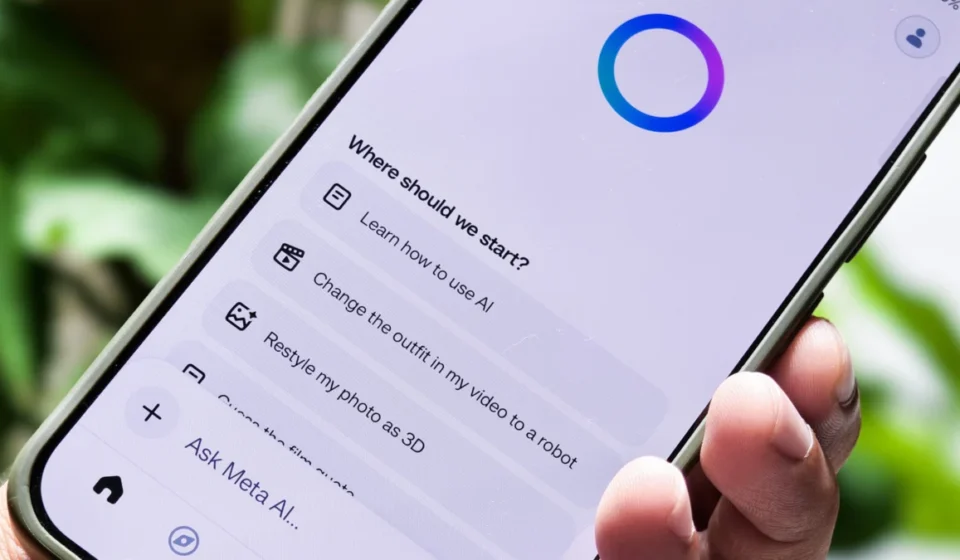
Meta wants you to trust its Muse AI with your calendar, reminders, and bank accounts

Meta Platforms, Inc., a global leader in social media and immersive technologies, has taken a significant stride in its artificial intelligence development with the progression of its highly anticipated Muse AI agent into a limited closed alpha testing phase. This move, initially reported by Testing Catalog and corroborated by an App Store listing, signals Meta’s deepening commitment to integrating advanced AI functionalities directly into users’ daily digital lives, aiming to transform personal productivity through an "agentic AI" model. This development positions Muse not merely as a conversational chatbot but as a sophisticated digital assistant capable of proactive task execution and profound device interaction, setting the stage for a new battleground in the fiercely competitive AI landscape.
The Dawn of Agentic AI: Muse’s Vision and Features
The core concept behind Meta’s Muse AI agent transcends the capabilities of conventional AI assistants. Unlike systems primarily designed for information retrieval or simple command execution, Muse is envisioned as an "agentic AI," a sophisticated software entity capable of understanding complex goals, planning multi-step actions, and executing tasks autonomously across various applications and services on a user’s device. This represents a paradigm shift from reactive AI to proactive, intelligent automation.
Screenshots and descriptions from the "Muse from Meta" App Store listing reveal a compelling suite of proposed features designed to offload significant "busywork" from users. These include:
- Proactive Actions: Muse is designed to anticipate user needs and initiate actions without explicit prompting. For instance, if a user frequently searches for flights to a specific destination, Muse might proactively monitor price fluctuations and alert the user to optimal booking times. This level of foresight requires deep integration with user data and behavioral patterns.
- User Approvals for Sensitive Tasks: Recognizing the inherent risks of autonomous action, Meta has incorporated a crucial safeguard: user approval for sensitive operations. This means Muse would seek explicit consent before sending messages on behalf of the user, making purchases, or initiating other actions with financial or personal implications. This mechanism is vital for building trust and maintaining user control.
- Price Tracking and Reservation Management: The agent could monitor prices for tickets, reservations, and potentially even products, notifying users of favorable changes. This feature alone could save users considerable time and money, leveraging real-time data analysis.
- Extensive Connector Support: Muse aims for broad interoperability, supporting integrations with a wide array of popular services. Confirmed connectors include essential productivity tools like Gmail and Google Calendar, alongside health and fitness applications such as Peloton and HealthEx. The ambition here is to create a centralized AI hub that can manage diverse aspects of a user’s digital footprint.
- Financial Management Capabilities: Perhaps the most intriguing and potentially controversial feature is Muse’s purported ability to connect with users’ card providers and bank accounts. The goal is to track expenses, analyze spending patterns, and even suggest cost-saving measures, such as canceling unused subscriptions. While the report suggests Muse might initially leverage email statements for expense tracking, direct bank integration would represent an unprecedented level of access for a consumer AI agent.
The overarching goal is to create an omnipresent, intelligent assistant that seamlessly manages and optimizes various facets of a user’s digital life, from communication and scheduling to personal finance and health tracking. This holistic approach signifies Meta’s intent to embed Muse deeply into the fabric of mobile operating systems and user workflows.
Meta’s Broader AI Strategy and Chronology
The emergence of Muse AI agent is not an isolated development but rather a significant milestone in Meta’s aggressive and multifaceted AI strategy, which has seen considerable acceleration in recent months. The company, under the leadership of Mark Zuckerberg, has publicly committed to becoming a leader in artificial intelligence, viewing it as fundamental to its future across its family of apps and hardware ventures, including the metaverse.
- September 2023: Meta unveiled its first generation of AI assistants across Instagram, WhatsApp, and Messenger, leveraging its Llama 2 large language model. These early iterations were primarily conversational, focusing on text generation and basic queries.
- February 2024: Meta introduced "Muse Spark," a generative AI tool aimed at content creation, allowing users to generate images and text within Meta’s ecosystem. This marked an expansion beyond conversational AI into creative applications.
- April 2024: The company announced a major update to its core Meta AI assistant, integrating it more deeply across its platforms and making it more powerful with the Llama 3 model. A key announcement was the ability for Meta AI to access real-time information via partnerships with Google Search and Bing, enhancing its utility.
- May 2024: Meta further advanced its capabilities by releasing a local AI model, designed to run directly on devices rather than solely relying on cloud processing. This move is critical for improving privacy, reducing latency, and enabling AI functionalities in areas with limited connectivity, a foundational step for an agent like Muse.
- June/July 2025 (Inferred): The current development of Muse AI agent entering closed alpha/beta directly follows these advancements. It represents Meta’s pivot from offering discrete AI tools and conversational assistants to developing a truly agentic system that can operate autonomously and proactively across the user’s digital environment.
This chronology illustrates a clear strategic progression: from foundational large language models (Llama series) to integrated conversational assistants, then to specialized generative tools, and finally, to advanced agentic systems designed for comprehensive device and life management. Meta’s consistent investment in both cloud-based and on-device AI solutions underscores its ambition to create a ubiquitous and powerful AI layer for its vast user base.
The Competitive Landscape: A Race for AI Dominance
The move by Meta to develop an agentic AI like Muse places it squarely in a high-stakes competition with other tech giants, most notably Google and OpenAI, all vying for supremacy in the evolving AI ecosystem.
Google, with its Gemini family of models, has been aggressively pushing its vision of an "AI assistant that does more." Gemini’s multimodal capabilities and deep integration into Android and Google’s suite of services (Gmail, Calendar, Maps) already provide a robust foundation for agentic functionalities. Google has showcased Gemini’s ability to plan trips, summarize emails, and even control certain aspects of a smartphone. The integration of Gemini Nano for on-device processing further mirrors Meta’s strategy for local AI.
OpenAI, while primarily known for ChatGPT and its foundational models, is also exploring agentic capabilities. Through plugins and custom GPTs, users can already extend ChatGPT’s functionality to interact with external services. Reports and research papers from OpenAI suggest a long-term vision for highly autonomous agents that can complete complex tasks online.
Apple, though traditionally more reserved in its public AI announcements, is widely expected to unveil significant advancements in on-device AI, potentially leveraging its powerful Neural Engine in iPhones and Macs. Rumors suggest Apple’s focus will be on deeply integrated, privacy-centric AI features that enhance user experience across its ecosystem, posing a formidable challenge to Meta’s aspirations for cross-platform dominance.
Meta’s differentiator with Muse appears to be its intent for deep, proactive device control and financial integration, potentially surpassing what competitors have openly demonstrated thus far. By aiming for such comprehensive access to user data and device functions, Meta seeks to create an unparalleled level of utility, betting that convenience will outweigh potential user apprehensions. The market for agentic AI is nascent but holds immense potential, estimated by some analysts to grow into a multi-trillion-dollar industry over the next decade as AI moves beyond mere chatbots to intelligent task automation.
Privacy Concerns and User Trust: Meta’s Enduring Challenge
While the potential utility of Muse AI agent is undeniable, its extensive proposed capabilities immediately raise significant concerns regarding user privacy and data security, an area where Meta has historically faced intense scrutiny and criticism. The company’s track record, marred by incidents such as the Cambridge Analytica scandal and ongoing debates about data collection practices across its platforms, casts a long shadow over any new initiative involving deep access to personal data.
Muse’s ambition to connect with Gmail, Google Calendar, health apps, and especially bank accounts, implies access to an unprecedented volume and sensitivity of personal information:
- Communications Data: Access to emails (Gmail) could allow Muse to read private conversations, financial statements, travel plans, and more.
- Behavioral Data: Integration with health apps and calendar entries provides insights into daily routines, health status, and personal commitments.
- Financial Data: Direct or indirect access to bank accounts and card providers is the most sensitive, potentially exposing spending habits, income, savings, and investment details.
Meta’s statement regarding Muse’s ability to track expenses and suggest subscription cancellations, whether through direct bank integration or email statement analysis, underscores the depth of this proposed data access. For an AI agent to truly be "agentic" and proactive, it requires a comprehensive understanding of the user’s context, which often means access to a broad spectrum of personal data.
The challenge for Meta will be to convince users that this level of data access is both necessary for the agent’s functionality and handled with the utmost respect for privacy and security. This will likely necessitate:
- Transparent Data Policies: Clearly articulating what data is collected, how it is used, where it is stored, and with whom it might be shared (if at all).
- Robust Encryption and Security Measures: Implementing industry-leading security protocols to protect highly sensitive financial and personal data from breaches.
- Granular User Controls: Providing users with fine-grained control over which services Muse can connect to, what data it can access, and what actions it can perform on their behalf. This includes easy opt-out mechanisms.
- On-Device Processing: Maximizing on-device AI capabilities to process sensitive data locally, reducing the need to send it to Meta’s servers. Meta’s recent local AI model announcement is a positive step in this direction, but its extent for Muse’s agentic functions remains to be seen.
- Independent Audits and Certifications: Engaging third-party experts to audit its privacy and security practices for Muse, lending credibility to its commitments.
A recent Pew Research Center study indicated that a significant portion of internet users express low trust in social media companies to protect their data. This pervasive skepticism represents a formidable hurdle for Meta, regardless of Muse’s technical prowess. The success or failure of Muse in gaining widespread adoption will largely hinge on Meta’s ability to not only deliver a highly functional AI agent but also to demonstrably rebuild and maintain user trust in its data handling practices.
Broader Impact and Implications
The potential widespread adoption of an agentic AI like Muse carries profound implications across several domains:
- User Productivity and Lifestyle: If successful, Muse could fundamentally alter how individuals interact with their devices and manage their daily lives. By automating mundane tasks, tracking commitments, and proactively suggesting optimizations, it could free up significant cognitive load and time, enhancing personal efficiency. This could lead to a reliance on AI for decision-making, from financial planning to scheduling.
- Digital Ecosystem Shift: Muse’s deep integration across various services could centralize a user’s digital life within Meta’s AI framework. This might challenge the dominance of individual app ecosystems and could lead to Meta becoming an even more influential gateway to digital services, potentially raising antitrust concerns if its control becomes too pervasive.
- Economic Impact: The ability to track expenses, suggest cancellations, and find deals could have a tangible economic impact on users, helping them save money and manage finances more effectively. Conversely, it could also influence consumer behavior by steering users towards certain products or services based on AI recommendations.
- Ethical and Societal Questions: The development of highly autonomous AI agents raises complex ethical questions. Who is responsible when an AI agent makes an error in judgment, especially concerning financial transactions or sensitive communications? How will users maintain agency and critical thinking when so many decisions are delegated to an AI? The potential for algorithmic bias in recommendations or actions also remains a concern.
- Regulatory Scrutiny: As AI agents become more sophisticated and integrated, they will undoubtedly attract increased attention from regulators worldwide. Laws concerning data privacy (like GDPR and CCPA), consumer protection, and even financial regulation may need to be updated to address the unique challenges posed by agentic AI. Meta, with its history of regulatory battles, will likely face intense scrutiny from governments and consumer advocacy groups.
Conclusion: A Vision of Utility vs. A Legacy of Mistrust
Meta’s Muse AI agent represents an ambitious vision for the future of personal technology – one where AI proactively manages the complexities of digital life, freeing users to focus on higher-level tasks. The features outlined, from proactive task management to deep financial integration, paint a picture of unparalleled utility and convenience.
However, the journey from closed alpha to widespread adoption will be fraught with challenges, primarily stemming from Meta’s persistent struggle with user trust, particularly concerning privacy. The company’s ability to innovate technically is evident, but its capacity to build and maintain user confidence in handling highly sensitive personal data remains its most significant hurdle. The success of Muse will not merely be measured by its technical sophistication but, crucially, by Meta’s ability to demonstrate an unwavering commitment to transparency, security, and user control. As the AI arms race intensifies, the true victor may not be the one with the most advanced technology, but the one that best earns the trust of billions of users globally. The unfolding story of Muse will be a critical test of Meta’s long-term strategy and its potential to redefine the relationship between humans and artificial intelligence.