Amazfit Reaffirms Commitment to Helio Ring with Significant Firmware Update, Introducing HybridCharge and Enhanced Health Tracking

The Amazfit Helio Ring, a discrete wearable designed for advanced health and recovery tracking, has received a substantial software update, firmware version 2.9.0.1, signaling a renewed commitment from manufacturer Zepp Health. This development arrives after a period of relative silence surrounding the smart ring, which had led some owners to speculate about its long-term support, particularly as Amazfit expanded its smartwatch and Helio Strap lineups. The update, confirmed by multiple user reports across platforms like Reddit, introduces a revamped recovery tracking system called HybridCharge, alongside critical enhancements to heart rate and stress monitoring, reinforcing the device’s position within the broader Amazfit health ecosystem.
Revitalizing the Helio Ring: Key Features of Firmware 2.9.0.1
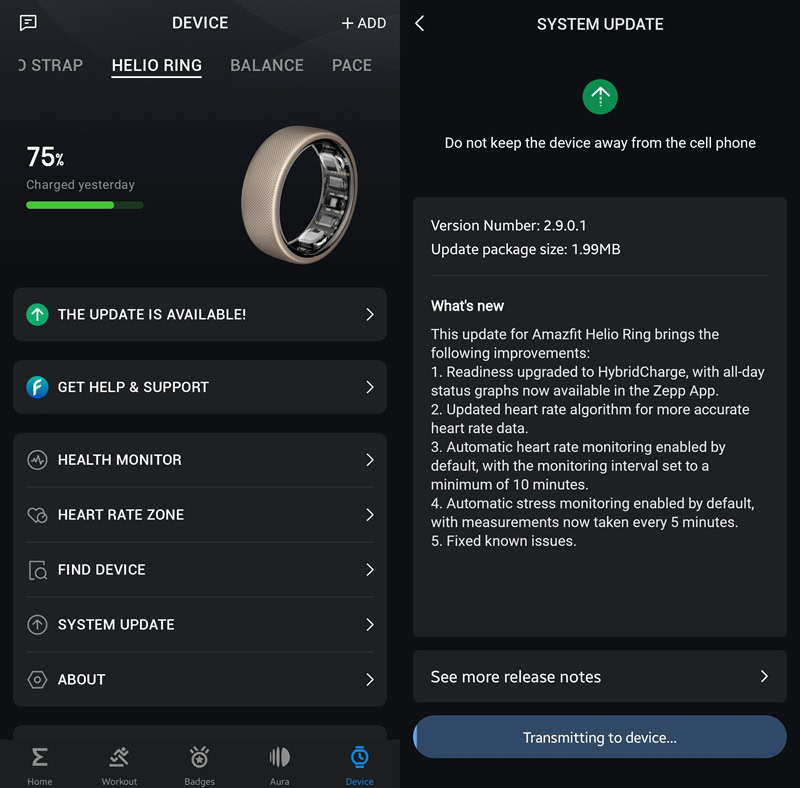
At the core of the 2.9.0.1 firmware update is the introduction of HybridCharge, a sophisticated recovery analysis system designed to replace the Helio Ring’s previous "Readiness" metric. This new approach offers a more dynamic and comprehensive view of a user’s physiological state, moving beyond a single recovery snapshot to provide all-day status graphs within the companion Zepp app. HybridCharge aims to empower users with granular insights into how various factors—including training intensity, sleep quality, and daily stressors—collectively influence their energy levels and overall recovery throughout a 24-hour cycle. This shift aligns the Helio Ring’s capabilities more closely with the advanced recovery tracking features found in Amazfit’s newer generation of smartwatches, ensuring feature parity and a cohesive user experience across the brand’s diverse product portfolio.
Beyond the headline HybridCharge feature, the update also brings a suite of under-the-hood improvements crucial for a health-focused wearable:
- Enhanced Heart Rate Monitoring: Algorithms for heart rate tracking have been refined, promising greater accuracy and responsiveness, particularly during periods of activity or rest. This is vital for precise calorie expenditure calculations and effective training zone analysis.
- Improved Stress Monitoring: The accuracy of stress detection has been bolstered, allowing the ring to provide more reliable insights into a user’s mental and physiological load. Better stress monitoring can assist users in identifying patterns and implementing stress-reduction techniques.
- Optimized Sleep Tracking: Updates to sleep monitoring algorithms are expected to yield more precise data on sleep stages (REM, deep, light), interruptions, and overall sleep quality, contributing to a more accurate understanding of nightly recovery.
- Refined Activity Recognition: The ring’s ability to automatically detect and classify various physical activities has been enhanced, improving the accuracy of workout logging and activity-level assessments.
- Enhanced Data Stability: General improvements to data acquisition and synchronization processes aim to ensure more consistent and reliable data transfer between the Helio Ring and the Zepp app, minimizing discrepancies and potential data loss.
- Bug Fixes and Performance Optimizations: As with most software updates, various minor bugs have been addressed, and overall system performance has been optimized for a smoother and more efficient user experience.
These cumulative enhancements underscore Zepp Health’s commitment to refining the core functionality of the Helio Ring, addressing user feedback, and leveraging the device’s advanced sensor array to its fullest potential. However, the increased frequency of monitoring and enhanced data processing capabilities inherently raise questions regarding the impact on the device’s battery life. The official changelog does not explicitly detail any adjustments to battery performance, leaving it to owners to assess the practical implications of the update on the ring’s endurance in real-world usage. For a device designed for continuous, unobtrusive wear, maintaining a competitive battery life remains a critical factor in user satisfaction.
Background and User Concerns: The Helio Ring’s Journey

The Amazfit Helio Ring was introduced into an increasingly competitive smart ring market, aiming to carve out a niche for itself with a focus on high-performance athletes and fitness enthusiasts seeking detailed recovery metrics. Upon its initial launch, the Helio Ring was positioned as a premium wearable, emphasizing comfort, discreet design, and advanced biometric tracking, including heart rate variability (HRV), skin temperature, and blood oxygen saturation. It entered a space dominated by established players like Oura Ring and nascent offerings from other tech giants, promising a seamless integration with Amazfit’s existing ecosystem through the Zepp app.
However, in the months following its debut, the attention from Zepp Health appeared to shift towards its broader smartwatch portfolio, with new models like the Amazfit Balance and Ultra receiving prominent updates and marketing focus. Concurrently, the company also launched the Helio Strap, further diversifying its wearable offerings. This perceived lack of consistent, significant updates for the Helio Ring led to growing apprehension among its user base. Discussions on forums and social media platforms, including Reddit, revealed concerns that the smart ring might have been quietly deprioritized or even abandoned by Amazfit. Users expressed frustration over the perceived stagnation of features and the potential for their investment in a relatively new product to become obsolete. The last major firmware update prior to 2.9.0.1 was in January, further fueling these anxieties. The current update, therefore, represents a significant turnaround, alleviating these concerns and providing a strong signal that the Helio Ring remains an integral part of Amazfit’s long-term strategy.
Amazfit’s Broader Ecosystem Strategy: HybridCharge at the Forefront
The rollout of HybridCharge to the Helio Ring is not an isolated event but rather a strategic move within Amazfit’s overarching plan to standardize and enhance its health-tracking ecosystem. Zepp Health’s official software roadmap for Q4 2026 and Q1 2027 clearly outlines a comprehensive integration of HybridCharge across its product lines and the Zepp app.
According to the roadmap:
- Newer Smartwatches: Upcoming Amazfit smartwatches are slated to receive ongoing improvements and refinements to their HybridCharge capabilities, ensuring that the latest devices offer cutting-edge recovery insights.
- Amazfit Balance: The original Amazfit Balance smartwatch is specifically scheduled to receive the HybridCharge feature in December, bringing its recovery tracking in line with the advanced functionalities now present in the Helio Ring.
- Zepp App Integration: Crucially, the Zepp app, the central hub for all Amazfit device data, is poised to gain AI-powered HybridCharge insights. This intelligent analysis will leverage accumulated data to provide more personalized and actionable recommendations for users. A US beta program for these AI insights is planned for November, with a global rollout anticipated in December.
This synchronized deployment underscores Amazfit’s vision for a unified and intelligent health ecosystem. By bringing HybridCharge to the Helio Ring, Zepp Health is ensuring that even its "aging" wearable devices remain current and integrated into its evolving platform. This strategy not only enhances the value proposition for existing users but also strengthens the overall coherence and competitiveness of the Amazfit brand in the crowded wearable market. The goal appears to be to create a seamless experience where users can transition between different Amazfit devices—be it a ring, a strap, or a smartwatch—and still benefit from the same advanced, AI-driven health insights within the Zepp app.
Implications and Future Outlook
The firmware 2.9.0.1 update for the Amazfit Helio Ring carries several significant implications for users, the company, and the broader smart ring market.
For Helio Ring Owners: This update is undoubtedly a welcome development, breathing new life into their device. It validates their initial investment and assures them of ongoing product support. The enhanced features, particularly HybridCharge, offer deeper, more actionable insights into their health and recovery, potentially improving their training regimens and overall well-being. The shift from a "recovery snapshot" to "all-day status graphs" provides a more nuanced understanding of their body’s response to daily demands, which is invaluable for serious athletes and health-conscious individuals. This renewed attention could also foster a stronger sense of community and trust among Amazfit users.
For Amazfit (Zepp Health): The update serves as a powerful statement about the company’s commitment to its entire product lineup, dispelling notions of product abandonment. In a market where customer loyalty is increasingly tied to long-term software support and feature enhancements, this move can significantly boost Amazfit’s brand reputation. By integrating the Helio Ring into the broader HybridCharge ecosystem, Amazfit strengthens the appeal of its Zepp app as a central, intelligent health management platform. This strategic unification can drive greater user engagement across its diverse hardware offerings and differentiate Amazfit from competitors who might focus primarily on new hardware releases. It also demonstrates Amazfit’s responsiveness to user feedback, a critical factor in building a loyal customer base.
For the Smart Ring Market: The smart ring segment is experiencing rapid growth, with new entrants and increasing competition. This significant update from Amazfit sets a precedent for ongoing software development and feature parity across different device types. It highlights the importance of a robust software ecosystem that transcends individual hardware iterations. As other companies like Samsung enter the smart ring space, the expectation for continuous improvement and feature integration will likely intensify. Amazfit’s move could push competitors to invest more heavily in post-launch software support, ultimately benefiting consumers through more capable and long-lasting devices. The focus on sophisticated recovery metrics like HybridCharge also underscores the growing maturity of health tracking technology in compact form factors.
Availability and Update Process
Firmware version 2.9.0.1 is currently rolling out to Amazfit Helio Ring owners, though availability may vary based on region and individual device configurations. Users eager to receive the update can actively check for it through the Zepp application. The typical pathway involves navigating to the Zepp app > Device > Helio Ring > System Update. Some users have also reported that the firmware became available shortly after updating the Zepp app itself to its latest version, suggesting that updating the companion application might sometimes be a prerequisite or trigger for the ring’s firmware update notification. As with any software rollout, patience may be required, but the widespread reports indicate a broad distribution is underway.
In conclusion, the Amazfit Helio Ring’s latest firmware update is more than just a routine patch; it is a strategic repositioning that reaffirms Zepp Health’s commitment to its smart ring users and its vision for a unified, intelligent health ecosystem. With HybridCharge leading the charge, the Helio Ring is poised to deliver even more sophisticated and actionable health insights, ensuring its continued relevance in the dynamic wearable technology landscape.