Anthropic Unveils Claude Design, Ushering in a New Era of Conversational AI for Visual Content Creation

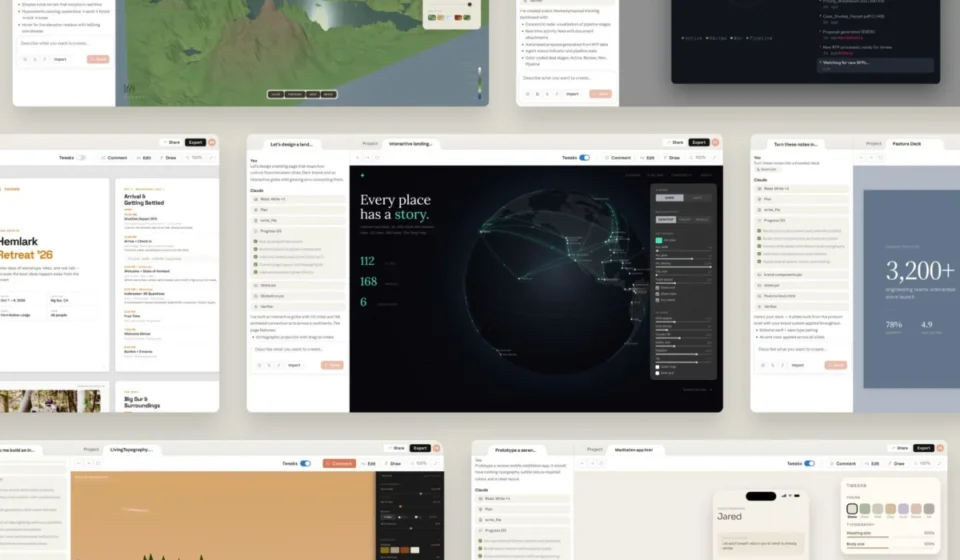
Anthropic, a prominent leader in artificial intelligence research and development, has officially launched Claude Design, an innovative AI-powered tool poised to revolutionize how individuals and teams approach visual content creation. This groundbreaking platform leverages sophisticated natural language processing and advanced vision capabilities to enable users to generate and refine a wide array of visual assets, including interactive prototypes, compelling presentations, and professional marketing materials, all through intuitive conversational commands. The product, incubated within the forward-thinking Anthropic Labs, is currently accessible as a research preview exclusively for paid Claude subscribers and is being progressively rolled out to a wider audience.
At its core, Claude Design is propelled by Anthropic’s most advanced vision model to date, Claude Opus 4.7. This state-of-the-art technology represents a significant leap forward, aiming to democratize design by bridging the perceived chasm between the complex technical expertise traditionally required for design software and the everyday creative needs of a broad user base. The overarching philosophy behind Claude Design is to streamline and simplify the often arduous process of visual content creation. Instead of navigating intricate menus and mastering specialized software, users can articulate their vision in plain language, and Claude Design will translate these descriptions into tangible visual outputs. The iterative refinement process is equally conversational, allowing for design adjustments through dialogue, inline comments, direct edits, and the manipulation of accessible controls, fostering a more fluid and dynamic creative workflow.
A Paradigm Shift in Design Workflows: From Command to Creation
The fundamental innovation of Claude Design lies in its ability to abstract away the technical complexities of traditional design tools. Historically, creating even a basic wireframe or a preliminary presentation slide demanded a certain level of proficiency with applications like Adobe Photoshop, Illustrator, or Figma. These tools, while powerful, possess steep learning curves and require dedicated training. Claude Design fundamentally alters this dynamic. Users are empowered to simply describe their desired outcome. For instance, a user might request, "Create a mobile app prototype for a sustainable coffee delivery service, featuring a clean, minimalist aesthetic with earth tones and a prominent call to action for ordering." Claude Design, drawing upon its understanding of design principles and visual elements, would then generate an initial rendition of this concept.
This initial output serves as a starting point, which can then be meticulously honed through ongoing conversation. Users can provide feedback such as, "Make the ‘Order Now’ button a brighter shade of green," or "Can we explore a different layout for the product catalog screen, perhaps with larger images?" The platform’s intelligence allows it to interpret these instructions and implement the necessary changes. Beyond conversational refinement, Claude Design incorporates direct editing capabilities and adjustable controls, providing granular oversight for those who desire it. This hybrid approach caters to both novice users seeking ease of use and experienced professionals looking for efficient tools to accelerate their workflow.
The potential applications of Claude Design are vast and varied. It is engineered to support the creation of a wide spectrum of visual assets. This includes, but is not limited to, the rapid generation of interactive prototypes for web and mobile applications, enabling stakeholders to experience a product’s user flow before extensive development. It can also facilitate the creation of detailed product wireframes, which serve as the skeletal blueprints for digital interfaces. Furthermore, Claude Design is positioned to streamline the production of professional pitch decks for startups and established businesses, as well as the development of engaging marketing materials, such as social media graphics, banner ads, and digital brochures. The platform’s capacity to quickly explore multiple design directions without the time-consuming constraints of manual execution is a significant advantage for teams aiming to innovate rapidly. For example, a marketing team might use Claude Design to generate ten different ad variations for a new product campaign in the time it would traditionally take to design one, allowing for more robust A/B testing and optimization.

Integration of Design Systems and Enhanced Collaboration: Building Consistency and Synergy
A particularly powerful feature of Claude Design is its inherent capability to automatically build and apply a company’s established design system. During an initial onboarding phase, the AI can analyze existing design files, style guides, and even codebases to meticulously replicate and enforce brand elements. This includes the precise application of brand colors, typography hierarchies, and reusable UI components. The significance of this feature cannot be overstated, as it ensures brand consistency across all projects and digital touchpoints without requiring constant manual oversight from designers. This automation frees up valuable time for design teams, allowing them to focus on higher-level strategic thinking and creative problem-solving rather than the repetitive task of ensuring adherence to brand guidelines. Moreover, Claude Design is designed to support the maintenance of multiple distinct design systems, enabling organizations with diverse brands or product lines to manage their visual identities efficiently and to iteratively refine these systems over time as their brand evolves.
Collaboration is another cornerstone of Claude Design’s architecture, recognizing that modern creative work is often a team sport. The platform facilitates seamless sharing of designs within an organization, allowing for granular control over editing access. This ensures that only authorized personnel can make changes, while still enabling multiple team members to contribute and iterate on designs in real time. This collaborative environment is crucial for fostering synergy and ensuring that everyone is working with the most up-to-date versions of a design. To further enhance interoperability and flexibility, Claude Design supports the export of projects into widely compatible formats such as PDF for static documents, PPTX for presentations, and HTML for web-based content. Additionally, it offers integrations with popular creative tools like Canva, a widely used platform for graphic design, enabling users to seamlessly transition their AI-generated designs for further customization and refinement within a familiar ecosystem.
The Profound Impact on Creators and Teams: Democratizing Design and Accelerating Innovation
The introduction of Claude Design carries significant implications for both individual creators and collaborative teams. Traditionally, the design process has been characterized by numerous iterative cycles, extensive feedback loops involving various stakeholders, and complex coordination efforts between different departments, such as marketing, product development, and sales. Claude Design aims to dramatically streamline this entire pipeline by significantly reducing the time and effort required to move from an initial concept or idea to a tangible, executed design. This acceleration has the potential to dramatically shorten product development cycles and speed up the launch of marketing campaigns.
For individuals who may not possess formal design training, Claude Design acts as a powerful enabler, lowering the barrier to entry for creating professional-looking visual content. This empowers entrepreneurs, educators, researchers, and small business owners to produce high-quality assets without needing to hire external design professionals or invest heavily in complex software. Simultaneously, for seasoned designers, Claude Design offers a complementary tool that can significantly augment their productivity. It allows them to rapidly explore a wider array of creative possibilities and conceptual directions, shifting their focus from tedious, repetitive tasks to more strategic and value-added activities such as conceptualization, user experience refinement, and the nuanced final polishing of designs.
Early feedback, as highlighted by Anthropic, points to a transformative impact on team efficiency. Reports suggest that teams utilizing Claude Design have been able to transition from a nascent concept to functional prototypes within a single collaborative session. This dramatic reduction in turnaround time can be a critical competitive advantage in fast-paced industries. For instance, a software startup could potentially iterate on user interface designs for a new feature within a single afternoon, a process that might have previously taken days or even weeks. This agility allows businesses to respond more effectively to market demands and customer feedback.

User-Centric Evolution: Accessibility, Collaboration, and Expanded Possibilities
From a user’s perspective, Claude Design heralds a significant shift towards more accessible, intuitive, and collaborative creative tools. It empowers individuals without extensive design backgrounds to bring their innovative ideas to fruition, thereby fostering a more inclusive creative landscape. Concurrently, it provides robust capabilities that can support and enhance the sophisticated workflows of professional designers. The ability to generate interactive prototypes directly from conversational prompts, without the necessity of writing code, further broadens the platform’s utility across a multitude of industries. For example, in the education sector, instructors could quickly design engaging visual aids for their lectures, or in healthcare, researchers might develop intuitive interfaces for patient data visualization.
The seamless integration with other digital tools and the capacity to produce dynamic, interactive prototypes without a coding prerequisite underscore the far-reaching potential of Claude Design. This expands its applicability beyond traditional graphic design and into areas such as user experience design, educational technology, and scientific visualization. The implications are profound for anyone who needs to communicate visually, democratizing a powerful aspect of modern communication and business.
The Road Ahead: Continued Innovation and the Future of AI in Design
Anthropic has signaled its commitment to the ongoing development of Claude Design, with plans to introduce additional integrations and features in the coming weeks. These enhancements are expected to further streamline the process of connecting Claude Design with existing workflows and a broader spectrum of industry-standard tools. As artificial intelligence continues its relentless advance and its integration into various creative domains, platforms like Claude Design exemplify a powerful and growing trend. This trend is characterized by the development of conversational interfaces that are designed to simplify and democratize complex tasks, making sophisticated capabilities accessible to a wider audience.
While Claude Design is currently in its early preview stages, it offers a compelling glimpse into the future trajectory of design processes. The increasing sophistication of AI, coupled with a focus on user-friendly, natural language interaction, suggests that the way we conceptualize, create, and collaborate on visual content is on the cusp of a significant transformation. This evolution promises to unlock new levels of creativity and efficiency, making the act of design more accessible and impactful than ever before. The transition from command-line interfaces and complex graphical menus to fluid, conversational interactions marks a pivotal moment, potentially redefining the role of AI as a creative partner rather than just a tool.