The Converging Forces of Geopolitical Shifts Energy Demands and the Artificial Intelligence Infrastructure Supercycle

On the evening of November 9, 1965, a single misconfigured relay at a transmission station near Niagara Falls triggered a cascading failure that plunged 30 million people across the northeastern United States and Ontario, Canada, into darkness. The Great Northeast Blackout served as a stark realization that the existing electrical grid was not designed to accommodate the rapidly increasing post-war industrial and residential load. Today, nearly six decades later, global infrastructure faces a remarkably similar mismatch between capacity and demand. However, the primary driver of this modern strain is not the expansion of traditional appliances or urban growth, but the exponential power requirements of artificial intelligence (AI) and the massive data centers required to sustain it.
As tech conglomerates and energy providers grapple with this deficit, the landscape is further complicated by shifting geopolitical dynamics in the Middle East and the emergence of novel financial instruments. The convergence of these factors—geopolitically driven energy volatility, the race for next-generation power sources, and the robust manufacturing guidance from semiconductor giants—points toward a multi-trillion-dollar infrastructure buildout that will redefine the global economy over the next decade.
Geopolitical De-escalation and the Normalization of Energy Markets
The geopolitical landscape, which has been dominated by the conflict involving Iran, Israel, and Lebanon, appears to be entering a phase of stabilization. Recent diplomatic movements suggest a concerted effort toward a broader regional de-escalation, which has immediate implications for global energy prices and market volatility.
A significant milestone was reached this week with the agreement of a 10-day ceasefire between Israel and Lebanon. This development is bolstered by the announcement that the United States will host high-level talks involving Israeli Prime Minister Benjamin Netanyahu and Lebanese officials, marking a level of direct diplomatic engagement not seen since the early 1980s. Furthermore, reports indicate that a Pakistani delegation, acting as an intermediary with a U.S.-backed framework, has arrived in Tehran to facilitate second-round peace negotiations.
The market reaction to these diplomatic signals has been one of cautious optimism. The "war risk premium" that had previously inflated oil prices is beginning to dissipate. Crude oil, which had seen elevated levels during the height of the blockade concerns, is now stabilizing in the $90 range, with analysts projecting a gradual retreat toward $80 as supply chain anxieties ease. For investors, this shift signals a transition from a wartime defensive posture—favoring traditional defense contractors and immediate energy infrastructure—to a peacetime normalization that may benefit broader tech and consumer sectors.
The Dual-Track Solution to the AI Energy Bottleneck
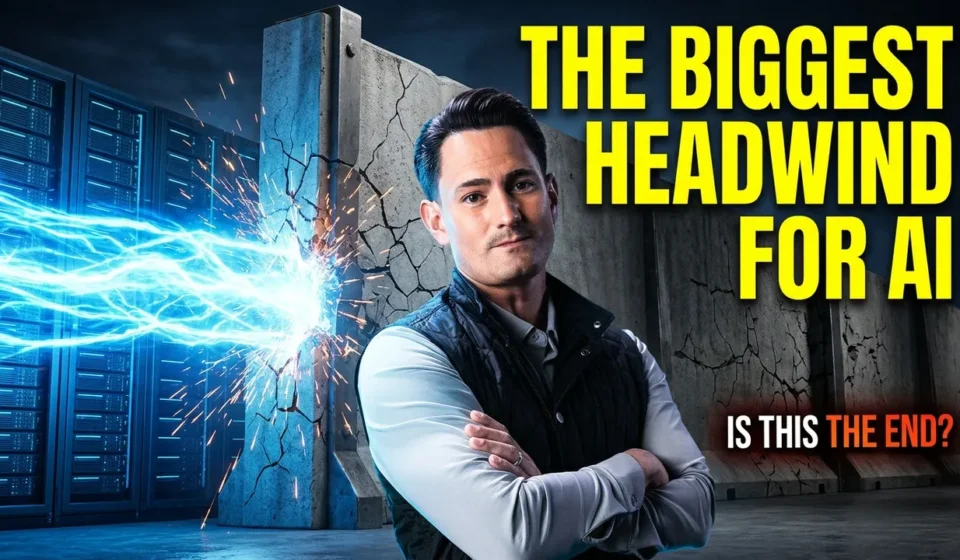
The scalability of AI models is currently restricted not by the availability of silicon chips, but by the availability of electricity. Hyperscalers such as Amazon, Microsoft, and Google are currently engaged in a massive capital expenditure cycle, with much of that investment directed toward securing reliable, high-density power. This has led to an active debate between two primary infrastructure visions: next-generation terrestrial nuclear power and the nascent field of orbital compute.
The Nuclear Renaissance
To meet the "baseload" requirements of massive compute clusters, technology firms are increasingly turning to nuclear energy. This trend is evidenced by recent moves from companies like Constellation Energy (CEG), which is working to restart decommissioned reactors to provide dedicated power to data centers. Additionally, the development of Small Modular Reactors (SMRs) by firms like Oklo (OKLO) offers a decentralized approach to power generation, allowing reactors to be placed adjacent to the data centers they serve. This shift is reflected in the performance of the Global X Uranium ETF (URA), as the demand for nuclear fuel reaches levels not seen in decades.
The Rise of Orbital Compute
While nuclear power addresses terrestrial constraints, a more radical solution is emerging in the form of space-based data centers. The concept involves launching compute clusters into low-Earth orbit (LEO), where they can utilize solar energy and the natural vacuum of space for cooling, bypassing terrestrial grid limitations entirely.
Amazon’s recent acquisition of Globalstar (GSAT) is viewed by industry analysts as a foundational move in this direction. While the acquisition provides immediate benefits in terms of satellite connectivity and licensed spectrum, its long-term value lies in providing the infrastructure for orbital compute. By securing a trusted LEO constellation and the necessary spectrum to route data, Amazon is positioning itself to compete with SpaceX’s Starlink and potential future orbital data centers. This "space-for-compute" strategy involves a complex supply chain including rocket manufacturers like Rocket Lab (RKLB), orbital network operators like AST SpaceMobile (ASTS) and Iridium (IRDM), and specialized hardware providers like GlobalFoundries (GFS) and Nvidia (NVDA).
Prediction Markets and the Evolution of Financial Signals
Beyond energy and hardware, the way investors process information is undergoing a fundamental shift through the rise of prediction markets. Platforms like Robinhood (HOOD) have begun integrating these markets, allowing users to trade on the outcomes of real-world events, from elections to geopolitical developments.
Financial analysts note that prediction markets often serve as a more accurate, real-time probability engine than traditional polling or punditry. Because participants have "skin in the game," these markets tend to aggregate collective intelligence more efficiently, providing a forward-looking signal that traditional financial markets are beginning to incorporate into their pricing models. For firms like Robinhood, the expansion into prediction markets represents a significant growth vertical, potentially transforming the platform from a retail brokerage into a primary source of alternative macroeconomic data.
The Semiconductor Indicator: TSMC’s Massive Guidance
The most definitive evidence of the sustained AI infrastructure boom comes from the manufacturing sector. Taiwan Semiconductor Manufacturing Company (TSMC), the world’s largest contract chipmaker, recently released a quarterly report that exceeded market expectations and provided an aggressive outlook for the coming years.
TSMC raised its full-year 2026 guidance, projecting growth exceeding 30%. More importantly, the company maintained its capital spending at the upper end of its $56 billion range. As the primary manufacturer for Nvidia’s Blackwell architecture, Apple’s custom silicon, and Broadcom’s AI accelerators, TSMC’s capital expenditure is a direct reflection of the demand from the world’s largest technology companies.
The "read-through" for the broader market is clear: the companies designing these chips and the hyperscalers deploying them are operating under the assumption that AI demand is not a temporary bubble, but a structural shift in the global economy. This sentiment is echoed by the performance of infrastructure-adjacent firms like Credo Technology (CRDO), which specializes in high-speed connectivity solutions required to link these massive compute clusters together.
Risks to the Supercycle: Social Sentiment and Market History
Despite the robust fundamental data, the AI sector faces significant headwinds, primarily in the form of social and political backlash. As AI’s impact on the labor market and its immense energy consumption become more visible to the public, populist sentiment has turned increasingly skeptical. Analysts warn that this negative sentiment is the single largest risk to the AI trade, as it could lead to restrictive anti-AI legislation or regulatory hurdles that slow the pace of infrastructure deployment.
Historically, every major technological leap—from the expansion of the railroads to the birth of the internet—has faced a period of public and political resistance once the scale of the investment became apparent. While the current capital commitments are deep, the "sentiment cycle" often moves independently of the "fundamental cycle," creating periods of volatility even when earnings remain strong.
Furthermore, market technicals suggest a period of consolidation may be approaching. The Nasdaq recently achieved a 12-day winning streak, a rare occurrence that has historically been followed by short-term corrections. Data from 1980, 1986, and 1992 indicate that while 12-month forward returns following such streaks are generally positive, they are often preceded by corrections of 10% or more within the first five months. This historical precedent suggests that while the long-term thesis for AI infrastructure remains intact, investors may need to exercise patience and selectivity in the near term.
Conclusion: The Path Forward for Global Infrastructure
The current economic moment is defined by the convergence of disparate forces: the cooling of Middle Eastern tensions, the desperate search for new energy paradigms, the maturation of space technology, and the relentless demand for semiconductor capacity. The transition from the 1965-era grid to a 21st-century AI-ready infrastructure is a multi-trillion-dollar undertaking that is already underway.
While the "picks and shovels" of this era—nuclear reactors, satellite constellations, and advanced optical interconnects—are still being deployed, the data from manufacturing leaders like TSMC confirms that the underlying demand is "extremely robust." As the world navigates the social and political challenges of this transition, the companies that successfully bridge the gap between energy supply and compute demand will likely sit at the center of the next decade’s economic growth. The transition may be volatile, but the fundamental trajectory toward a more compute-intensive global economy appears increasingly certain.