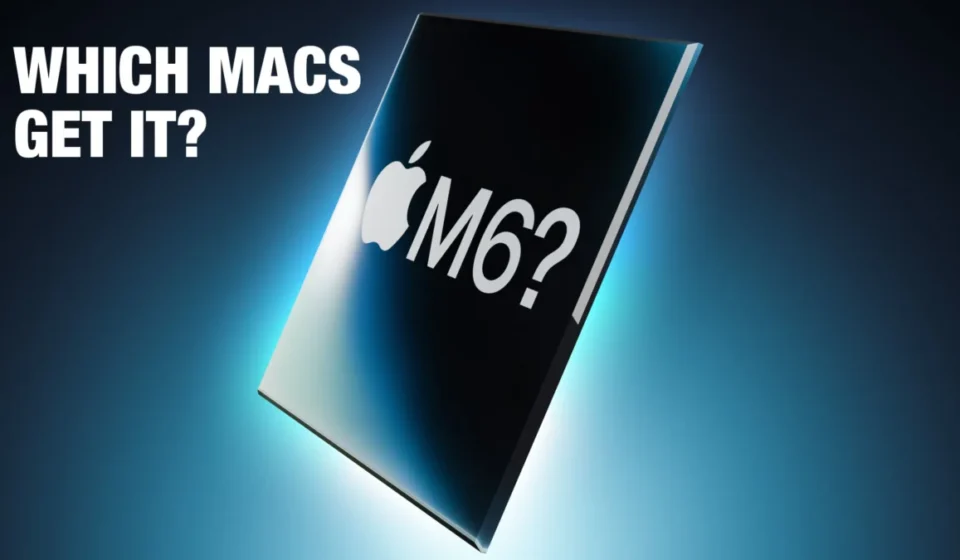

Apple announced new Mac mini machines this week, and the lower-end models include the first M6 chip. The M6 era will be a little complicated, because few Macs are going to get it. We won’t have M6 Pro or M6 Max chips, which shakes up the Mac lineup for the next couple of years. This strategic shift in Apple’s silicon development roadmap has significant implications for both its current product offerings and its long-term vision for the Mac ecosystem, particularly in an increasingly competitive market driven by advancements in on-device artificial intelligence and graphics processing.
The introduction of the M6 chip into the entry-level Mac mini marks a pivotal moment, signaling a departure from the traditional tiered Pro and Max variants for this generation of Apple Silicon. This decision, reportedly driven by a desire to accelerate the development of future generations of chips, particularly those focused on enhanced AI capabilities, has led to a temporary stratification in Apple’s Mac offerings. Instead of the expected M6 Pro and M6 Max iterations, Apple is reportedly streamlining its development cycle to bring the M7 generation of chips to market sooner. This move suggests a proactive response to the rapidly evolving demands for more powerful on-device AI processing and graphically intensive applications.
The M6 Chip: A New Foundation
The M6 chip itself represents a significant technological leap, built upon Apple’s cutting-edge 2-nanometer process. This advanced manufacturing node allows for increased transistor density within a smaller die size, directly translating to improved performance and enhanced power efficiency. According to internal Apple specifications, the M6 boasts a 12-core CPU, featuring what the company claims is the world’s fastest CPU core. Complementing the CPU is a larger 12-core GPU, augmented with dedicated Neural Accelerators for each core, indicating a strong emphasis on machine learning tasks. The Neural Engine has been upgraded to a dual 16-core configuration, further bolstering its AI processing capabilities. Memory bandwidth has also seen a substantial increase, reaching up to 170GB/s.
On the graphics front, the M6’s GPU showcases an updated shader core architecture, a more sophisticated Dynamic Caching system, and hardware-accelerated ray tracing, a feature increasingly crucial for realistic rendering in professional applications and immersive gaming. The chip also supports 50 percent higher geometry rates, which is vital for handling complex 3D models and visually demanding software. These specifications position the M6 as a powerful entry-level chip, capable of handling a wide range of everyday tasks and even some more demanding professional workloads.
Strategic Shift: No M6 Pro or M6 Max
The most striking aspect of this new chip generation is the absence of M6 Pro and M6 Max variants. This deviates from Apple’s established practice of offering progressively more powerful versions of its silicon to cater to different tiers of Mac devices. Sources close to Apple’s silicon development, including reports from Bloomberg, suggest that this is a deliberate strategy. Instead of investing in the development and manufacturing of M6 Pro and M6 Max chips, Apple is reallocating resources to expedite the arrival of the M7 generation. This accelerated timeline aims to bring the M7 Pro and M7 Max chips to market more quickly, equipped with the advanced technologies necessary to meet the escalating demand for processors with robust on-device AI and superior GPU performance.
This strategic pivot implies that Apple foresees a future where AI integration and high-performance graphics are paramount differentiators in the personal computing market. By fast-tracking the M7 series, Apple aims to equip its higher-end Macs with these capabilities sooner, ensuring they remain at the forefront of technological innovation. The implication is that the M6, while powerful for its segment, is designed as a transitional chip, paving the way for more AI-centric architectures in subsequent generations.
The M5’s Extended Role in High-End Macs
The decision to forgo M6 Pro and M6 Max chips means that Macs that would have typically received these processors will continue to be powered by the M5 generation until the M7 family is ready. This includes anticipated high-end models such as the OLED "MacBook Ultra," which is expected in late 2026 or early 2027. These premium devices will likely ship with M5 Pro and M5 Max chips, mirroring the configurations found in current MacBook Pro models, with the possibility of the M5 Ultra chip also being integrated into some configurations.
The newly announced Mac mini also features an M5 Pro chip option, indicating that Apple is leveraging its existing M5 silicon to fill the gap left by the absence of M6 Pro. Similarly, the refreshed Mac Studio, unveiled alongside the Mac mini, is equipped with M5 Max and M5 Ultra chips. This approach allows Apple to maintain its product release cadence and offer robust performance in its higher-end machines while its engineering teams focus on perfecting the next generation of AI-accelerated silicon. This strategy might also serve to manage inventory and production costs, utilizing existing chip lines while new ones are in development.
A Short Lifespan for the M6 Generation
The M6 chip’s tenure in the market is projected to be relatively short. Apple’s aggressive development schedule indicates that the M7 chip is slated for a debut in the first half of 2027. Following this, the M7 Pro and M7 Max variants are expected to be released by the end of the same year. This accelerated product cycle underscores Apple’s commitment to rapid innovation in its core silicon technology, particularly in response to the burgeoning field of on-device AI and the increasing computational demands of modern software. The quick transition suggests that the M6 is more of an interim solution, designed to introduce Apple’s latest manufacturing process and core architectural improvements to a broader range of products without delaying the introduction of more AI-focused chips.
Contextualizing the Announcement: A Rare August Debut
The announcement of new Mac mini and Mac Studio models this week is noteworthy for its timing. Apple’s decision to unveil new Mac hardware in August is exceptionally rare. Historically, Apple’s most significant product announcements for Macs tend to occur in the fall, coinciding with its annual iPhone launch event, or in the spring. The last notable August product announcement for Macs dates back to 2020, when the 27-inch iMac received an update. For anything beyond minor accessory updates or new color options, August is an unusual month for Apple to make significant hardware introductions. This rare August debut highlights the importance Apple places on refreshing its Mac lineup and perhaps signals a shift in its product release calendar, or a strategic move to get new hardware into the hands of consumers before the busy holiday season.
Industry Reactions and Implications
The move to skip Pro and Max variants for the M6 generation, while potentially causing some short-term confusion for consumers, is being analyzed by industry experts as a strategic gamble. "Apple is clearly signaling its priorities for the next few years," commented a senior analyst specializing in semiconductor technology. "The emphasis on accelerating AI capabilities suggests they believe this will be the primary driver of differentiation in the personal computing space. By streamlining the M6 development, they are making a calculated trade-off to get those advanced AI features into their premium products sooner."
This strategy could have a ripple effect across the industry. Competitors, who are also heavily investing in AI-accelerated hardware, will be closely watching Apple’s performance with the M7 generation. The success of Apple’s M7 Pro and M7 Max chips in delivering a superior AI experience could set a new benchmark for the industry. Furthermore, the M5 Pro and M5 Max continuing in high-end models for an extended period might provide Intel and AMD with a temporary window to compete more effectively in certain segments, though Apple’s integrated approach often provides significant advantages.
Broader Impact on the Mac Ecosystem
The accelerated timeline for the M7 generation and the continued reliance on M5 chips for higher-end models will shape the perception and performance of the Mac lineup over the next 18-24 months. For consumers looking for the absolute latest in Apple’s silicon innovation for their professional workflows, the wait for M7-powered machines will be keenly anticipated. However, the M6’s robust specifications ensure that entry-level users will still receive a significant performance upgrade. The M5 Pro and M5 Max in devices like the MacBook Pro and the upcoming MacBook Ultra will still offer formidable performance for demanding tasks, even if they lack the newest AI-centric advancements expected in the M7.
The strategic decision also raises questions about Apple’s future chip naming conventions and product segmentation. The clear delineation between a base chip and its more powerful variants has been a hallmark of Apple Silicon. The absence of M6 Pro and M6 Max, and the rapid transition to M7, suggests a potential evolution in how Apple communicates its chip technology and product tiers, possibly moving towards a more unified focus on generational advancements rather than incremental tier increases within a single generation. This could lead to more distinct product generations, with each offering a more cohesive set of technological advancements.
In conclusion, Apple’s introduction of the M6 chip and its strategic decision to bypass Pro and Max variants for this generation signals a significant shift in its silicon development roadmap. By prioritizing the accelerated development of AI-focused M7 chips, Apple aims to maintain its leadership in performance and innovation, particularly in the rapidly evolving landscape of artificial intelligence and demanding graphical applications. While this may lead to a transitional period where M5 chips continue to power high-end Macs, the long-term implications point towards a future where Apple’s silicon is even more deeply integrated with advanced AI capabilities, setting new standards for personal computing.