
The month of August 2026 marks a significant period for the Android ecosystem, with the introduction of several innovative applications that promise to reshape user interaction, productivity, and mobile entertainment. From a highly anticipated solution for messaging customization to a pioneering platform for bringing PC games to handheld devices, these new offerings underscore a vibrant development landscape driven by both established needs and emerging technological capabilities. This comprehensive overview delves into the functionality, implications, and broader context of the top new Android applications making waves this month.
The Messaging Evolution: OzarksMade’s Samsung Messages Revival
The recent decision by Samsung to discontinue its proprietary Samsung Messages application, redirecting users towards Google Messages for RCS (Rich Communication Services) functionality, left a notable void for a segment of its user base. This strategic pivot, which began to roll out extensively in late 2025 and finalized its transition by early 2026, aimed to streamline the messaging experience across the Android platform and accelerate RCS adoption, aligning with Google’s broader strategy for a unified, modern messaging standard. However, for many loyal Samsung users, the aesthetic and specific features of the native Samsung app were deeply ingrained, leading to a demand for alternatives that preserved that familiar interface.
Responding to this user sentiment, a new application titled "Messages by OzarksMade" has emerged, aiming to meticulously emulate the look, feel, and user experience of the discontinued Samsung Messages. Currently in its initial development and testing phases, with an open beta accessible via Google Groups, OzarksMade’s solution represents a significant technical undertaking. The app achieves RCS support not by independently integrating the protocol, but through an innovative background integration with Google Messages. This means that while users interact with the OzarksMade interface, Google Messages continues to operate discreetly in the background, handling the underlying RCS communication protocols. This approach allows users to maintain the visual and interactive familiarity of Samsung Messages without sacrificing the advanced features of RCS, such such as high-resolution photo and video sharing, typing indicators, and read receipts.
The emergence of "Messages by OzarksMade" highlights a persistent tension within the Android ecosystem: the balance between OEM-specific customization and platform-wide standardization. While Google’s push for universal RCS through its own Messages app is a logical step towards improving cross-platform communication, it inadvertently curtails OEM autonomy in designing core applications. The rapid development and beta launch of OzarksMade’s offering within months of Samsung’s full transition underscores the agility of the independent developer community in addressing niche but significant user needs. Industry analysts suggest that while Google and Samsung are unlikely to officially endorse such third-party workarounds, their existence reflects a vibrant user base that values choice and customization above all. This development could pave the way for similar community-driven initiatives whenever platform shifts impact established user preferences.
Redefining the Home Screen: Mango Launcher’s Vibrant Customization
The Android launcher market, a cornerstone of the platform’s customizability, continues to evolve with the introduction of "Mango Launcher." Positioned as a "minimal, fast, and customizable" solution prioritizing "simplicity and efficiency," Mango distinguishes itself through a vibrant, color-centric design philosophy. Unlike many launchers that prioritize stark minimalism or intricate feature sets, Mango integrates an array of bright colors and dynamic visual elements, offering users a refreshing aesthetic experience.
Launched just a few months prior, Mango Launcher has quickly garnered attention for its extensive suite of customization options. Users can personalize their home screens with support for sophisticated app folders, a diverse selection of baked-in widgets, and various transition effects that add fluidity to navigation. A standout feature is its "scribble search" capability, reminiscent of the innovative Nokia Z Launcher. This allows users to quickly launch apps or search content by drawing the first letter of an app’s name directly on the home screen, significantly enhancing efficiency for power users.
The pricing model for Mango Launcher presents a notable point of discussion. Following a two-week trial period, the full "Pro" version, which unlocks the majority of its advanced features, is available for a one-time purchase of $24.99 for a lifetime license, with an alternative annual subscription also offered. This premium pricing places Mango among the higher-end launchers in the market, a bold move for a relatively new entrant. Established alternatives such as Nova Launcher or Action Launcher have historically offered more modest one-time fees or freemium models. Analysts suggest that Mango’s success will hinge on its ability to justify this cost through unparalleled performance, unique features, and sustained development. Early reviews commend its stability and comprehensive feature set, indicating that for users seeking a highly personalized, visually engaging, and efficient home screen experience, Mango Launcher could indeed represent a worthy investment, despite the initial outlay. The continuous innovation in the launcher space highlights the enduring demand for personal expression and optimized workflows on Android devices.
Informed and Independent: HomeFeed’s Open-Source RSS Widget
In an era increasingly dominated by algorithmic news feeds and curated content, the demand for user-controlled information consumption remains strong. "HomeFeed," a new open-source RSS widget, addresses this need by providing a straightforward, privacy-centric solution for accessing news directly from chosen sources on the Android home screen. Its development signals a renewed interest in RSS (Really Simple Syndication) as a robust mechanism for staying informed without the biases or data harvesting associated with many mainstream news aggregators.
HomeFeed is meticulously crafted using Google’s Material You design language, ensuring seamless aesthetic integration with modern Android devices, particularly Google Pixel phones. This commitment to contemporary design principles enhances its appeal, making it a natural fit for users who value both functionality and visual consistency. The widget supports multiple RSS feeds, consolidating headlines into a single, scrollable stream directly on the home screen. This approach offers a quick glance at the latest updates without requiring users to navigate into a full-fledged news application, addressing the "bulky" nature of many standalone RSS apps mentioned by users.
A key feature distinguishing HomeFeed is its integrated reader mode. This functionality allows users to read articles directly within the widget, stripping away extraneous website elements like ads and complex layouts, thereby providing a clean and focused reading experience without relying on external web browsers or webview components. The open-source nature of HomeFeed is another significant advantage. As an open-source project, its code is publicly available for inspection, allowing users and developers to verify its data handling practices and ensure its transparency and commitment to privacy. This aspect is particularly appealing to privacy-conscious individuals who are wary of the data collection practices of proprietary news applications. The success of HomeFeed could bolster the open-source movement within the Android ecosystem, demonstrating the viability of community-driven solutions that prioritize user control and ethical data management in the realm of information consumption.
Calendar Reimagined: Glance’s Panoramic Planning Solution
The realm of digital calendar applications, while seemingly mature, continues to see innovation aimed at enhancing long-term planning and visual clarity. "Glance," a new calendar app, introduces a novel approach to task and event visualization, departing from conventional day-to-day or month-to-month views. Its core innovation lies in its ability to display three full months simultaneously on a single vertical screen, offering an expansive, yet compressed, overview of one’s schedule. This design philosophy evokes the utility of a large, physical year-at-a-glance calendar poster, but recontextualized for digital interaction. Tapping on a specific date fluidly transitions the view to an hourly breakdown, providing granular detail when needed.
Glance is particularly optimized for larger displays, such as those found on Android tablets and foldable smartphones. The increased screen real estate on these devices fully leverages Glance’s panoramic view, allowing users to absorb more information and identify patterns in their schedule more effectively. This makes it an exceptionally useful tool for individuals engaged in long-term project planning, academic scheduling, or managing complex event timelines. The ability to visualize commitments across a quarter at a glance facilitates better strategic planning and resource allocation, enabling users to understand how much time is genuinely available to achieve their goals.
While Glance is acknowledged to be in its early stages of development, its stability and unique approach have already garnered positive attention. The current iteration focuses on its core innovative display method, and while it may not yet possess the exhaustive feature set of more established calendar applications, its foundational design is robust. The development roadmap for Glance is anticipated to include an expansion of features, potentially incorporating deeper integration with other productivity tools, enhanced notification options, and collaborative functionalities. Its trajectory suggests a promising future for users seeking a visually intuitive and highly efficient tool for comprehensive long-term planning, particularly as the market for large-screen Android devices continues to expand.
Breaking Boundaries: GameNative Brings PC Gaming to Android
Perhaps the most transformative application to emerge this month is "GameNative," a platform that significantly blurs the lines between PC and mobile gaming. After months of being available to an enthusiast audience via GitHub, GameNative has officially launched on the Google Play Store, making high-fidelity PC gaming more accessible to a broader Android user base than ever before. This move signals a major step in the convergence of gaming platforms, leveraging the rapidly advancing capabilities of modern Android devices.
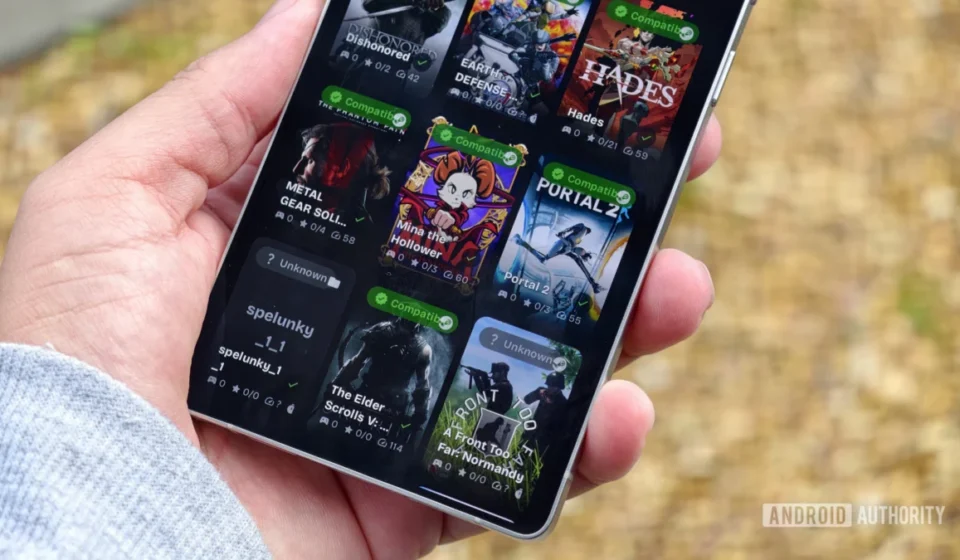
GameNative functions as a sophisticated compatibility layer and management platform, allowing users to access and, crucially, download and play games from popular PC platforms like Steam directly on their Android devices. Unlike traditional cloud streaming services (e.g., GeForce Now, Xbox Cloud Gaming) or local streaming solutions (e.g., Steam Link), GameNative aims for a more native execution experience for supported titles. This means that while some form of optimization or emulation is involved, the games are intended to run directly on the Android device’s hardware, contingent on the game being "supported on your device." The GameNative website provides a comprehensive, searchable database of compatible titles, detailing performance expectations and specific device requirements, which users are advised to consult prior to attempting installations.
The technical implications of GameNative are profound. It suggests a significant leap in Android’s capability to run complex x86-architecture PC games, likely utilizing advanced virtualization or compatibility layers akin to Valve’s Proton for Linux or Apple’s Game Porting Toolkit for macOS. This capability is made possible by the exponential growth in mobile chipset power, with flagships like the Galaxy S25 Ultra, running advanced Snapdragon or Exynos processors, now boasting performance levels that rival entry-level gaming PCs from just a few years ago.
Beyond simply running games, GameNative includes essential features for a seamless gaming experience, such as cloud saves that synchronize progress between PC and mobile versions of a game. This ensures that a player can seamlessly switch between their desktop rig and their Android phone or tablet without losing progress. Furthermore, robust controller support is integrated, catering to the preferences of serious gamers and enhancing the playability of complex titles on a mobile form factor.
The official Play Store launch of GameNative is a strategic move that will significantly increase its visibility and adoption, potentially challenging the market dominance of dedicated handheld gaming PCs like the Steam Deck and ROG Ally. While those devices offer a purpose-built experience, GameNative transforms existing Android flagships and tablets into powerful, versatile gaming machines. This development democratizes access to a vast library of PC games, opening new avenues for both casual and hardcore gamers. Its broader impact could redefine expectations for mobile devices, pushing manufacturers to further enhance gaming-centric hardware and software optimizations, solidifying Android’s position as a truly multifaceted computing and entertainment platform.
Conclusion: A Dynamic Android Landscape in August 2026
The collection of applications highlighted in August 2026 paints a vivid picture of an Android ecosystem that is both maturing and continuously innovating. From user-driven solutions like "Messages by OzarksMade" that restore preferred aesthetics and functionality, to cutting-edge platforms like "GameNative" that fundamentally alter how and where high-end games are played, these developments reflect a dynamic interplay between user demands, technological advancements, and the ingenuity of the developer community. The emphasis on customization, user control, and expanding device capabilities underscores a future where Android devices are not merely communication tools but highly adaptable personal computing hubs, capable of delivering a diverse range of sophisticated experiences.