Critical Qualcomm Bootloader Exploit Discovered, Affecting Snapdragon 8 Elite Gen 5 and Prompting Urgent Security Patches

A significant security vulnerability, dubbed the "Qualcomm GBL Exploit," has recently come to light, enabling the unauthorized unlocking of bootloaders on a range of Android flagship smartphones powered by Qualcomm’s latest Snapdragon 8 Elite Gen 5 System-on-Chip (SoC). This development has sent ripples through the mobile technology community, particularly impacting devices like the Xiaomi 17 series, OnePlus 15, and the recently launched Samsung Galaxy S26 Ultra. While the exploit primarily facilitates user-initiated bootloader unlocking, its underlying mechanisms highlight critical oversights in secure boot processes and the complexities of Android ecosystem security.
Understanding the Qualcomm GBL Exploit: A Deep Dive into the Vulnerability
At its core, the Qualcomm GBL Exploit leverages a weakness in how the Generic Bootloader Library (GBL) is handled by Qualcomm’s Android Bootloader (ABL) on devices running Android 16. The GBL is a fundamental component within the boot process, responsible for initializing various hardware elements and preparing the system for the operating system to load. In a secure boot environment, every stage of the boot process, from the initial firmware to the operating system, is cryptographically verified to ensure its integrity and authenticity, preventing unauthorized or malicious code from executing.
However, the discovered vulnerability reveals a critical lapse in this verification chain. Qualcomm’s ABL, when attempting to load the GBL from the "efisp" partition, was found to be merely checking for the presence of a UEFI application within that partition, rather than rigorously verifying its cryptographic signature or authenticity as the legitimate GBL. The "efisp" partition, or EFI System Partition, typically stores bootloaders and other system utilities necessary for booting the device. This oversight effectively creates an open door, allowing unsigned, custom code to be loaded onto the efisp partition and subsequently executed without any authenticity checks. This ability to execute arbitrary, unverified code at such a foundational level of the device’s startup sequence forms the bedrock of the Qualcomm GBL exploit.
The Exploit Chain: A Multi-Layered Approach to Bootloader Unlocking
While the GBL vulnerability provides a pathway for executing unsigned code, exploiting it to unlock a bootloader requires a more sophisticated, multi-layered approach. Modern Android devices employ robust security mechanisms, notably SELinux (Security-Enhanced Linux), which operates in "Enforcing" mode by default. SELinux enforces mandatory access controls, strictly limiting what processes can access specific system resources, including sensitive partitions like efisp. To write unsigned code to efisp, SELinux must be set to "Permissive" mode, which relaxes these restrictions. However, setting SELinux to Permissive typically requires root access, which in turn often necessitates an unlocked bootloader, creating a circular dependency.
This is where a second, equally critical vulnerability comes into play. Researchers discovered that Qualcomm’s ABL accepts a fastboot command — fastboot oem set-gpu-preemption — which is intended for specific hardware-level configurations. Crucially, this command was found to accept input arguments without any proper sanitization or validation. This oversight allowed attackers to append arbitrary parameters to the command line. By appending androidboot.selinux=permissive to the fastboot oem set-gpu-preemption 0 command, users could force the system to boot with SELinux in Permissive mode:

fastboot set-gpu-preemption 0 androidboot.selinux=permissiveThis single command effectively bypasses a core Android security layer, allowing the necessary write access to the efisp partition. Once SELinux is in Permissive mode, the custom UEFI application containing the bootloader unlock instructions can be written to the efisp partition. Upon a subsequent reboot, the GBL exploit allows the ABL to load and execute this custom, unsigned UEFI application. This application then proceeds to manipulate critical bootloader flags, specifically setting is_unlocked and is_unlocked_critical to ‘1’. These flags are identical to those manipulated by the standard fastboot oem unlock command, effectively achieving a full bootloader unlock without requiring the OEM’s permission or a specific unlock token.
Impact on Flagship Devices and the Broader Android Ecosystem
The discovery of the GBL exploit has profound implications, particularly for users of the latest flagship Android devices. The Snapdragon 8 Elite Gen 5, Qualcomm’s newest premium SoC, powers a significant portion of the high-end Android market. Devices confirmed to be affected include the highly anticipated Xiaomi 17 series, the OnePlus 15, and even the Samsung Galaxy S26 Ultra. While Samsung typically utilizes its proprietary S-Boot instead of Qualcomm’s ABL, indicating a potential divergence in the exploit chain for their devices, the widespread adoption of the Snapdragon 8 Elite Gen 5 means a vast number of users could be impacted.
For years, many OEMs, especially those targeting the Chinese market like Xiaomi, have implemented increasingly stringent bootloader unlock policies. These often involve lengthy waiting periods, mandatory application forms, device limitations, and even quizzes designed to deter casual users. Xiaomi’s policies, in particular, had become notorious for their difficulty, leading many enthusiasts to abandon the idea of customizing their devices. The GBL exploit offers an unprecedented bypass to these restrictions, providing a direct route to bootloader unlocking for a user base that has long sought it.
The ability to unlock the bootloader opens the door to a world of customization. Users can install custom recovery environments (like TWRP), flash custom ROMs (such as LineageOS or Pixel Experience), gain root access, remove bloatware, and generally extend the lifespan and functionality of their devices beyond what the manufacturer intended. For the custom ROM community, this exploit represents a significant victory, revitalizing interest in device modification for these premium smartphones.
However, the existence of such a vulnerability also raises serious security concerns. An unlocked bootloader, while beneficial for customization, can also make a device more susceptible to malicious attacks. It bypasses fundamental security checks, potentially allowing malware to gain deep system access or persist across factory resets. While the current exploit is focused on user-initiated unlocking, the underlying vulnerabilities could theoretically be abused by malicious actors to compromise devices, install persistent spyware, or bypass encryption, especially if combined with other vulnerabilities.
Qualcomm’s Swift Response and Industry Coordination
In response to the surfacing of the GBL exploit, Qualcomm has acted swiftly. On March 14, 2026, a Qualcomm spokesperson issued an official statement acknowledging the vulnerability and confirming that fixes had been made available to their customers (device manufacturers) in early March 2026. The statement commended the Xiaomi ShadowBlade Security Lab for their role in the discovery and their adherence to coordinated disclosure practices. Coordinated disclosure is a crucial industry standard where security researchers privately report vulnerabilities to vendors, allowing them time to develop and distribute patches before the details of the exploit are made public. This approach minimizes the window during which malicious actors could exploit the flaw.
Qualcomm’s statement also strongly urged end-users to apply security updates as soon as they become available from their device makers. It is important to note that while these updates will patch the loophole used for bootloader unlocking, they will also, by design, close off this avenue for customization. Evidence of Qualcomm’s proactive patching can be seen in public code repositories like CodeLinaro, where commits addressing the vulnerabilities have been identified. Specifically, checks on the fastboot oem set-gpu-preemption command have been fixed, along with similar commands like fastboot oem set-hw-fence-value, which, while not part of the current exploit chain, presented similar input sanitization weaknesses.
The rapid turnaround from discovery to patch availability underscores the importance of a robust vulnerability management process within major technology companies. However, the efficacy of these fixes ultimately depends on the speed and commitment of individual Android OEMs to integrate these patches into their firmware and distribute them to end-users via over-the-air (OTA) updates. This process can vary significantly across manufacturers and device models, often leaving a window of vulnerability open for some time.
Timeline of Key Events:
- Early March 2026: Qualcomm releases patches for the identified vulnerabilities to its OEM customers.
- March 12, 2026: Details of the "Qualcomm GBL Exploit" begin to circulate publicly, detailing the method for bootloader unlocking.
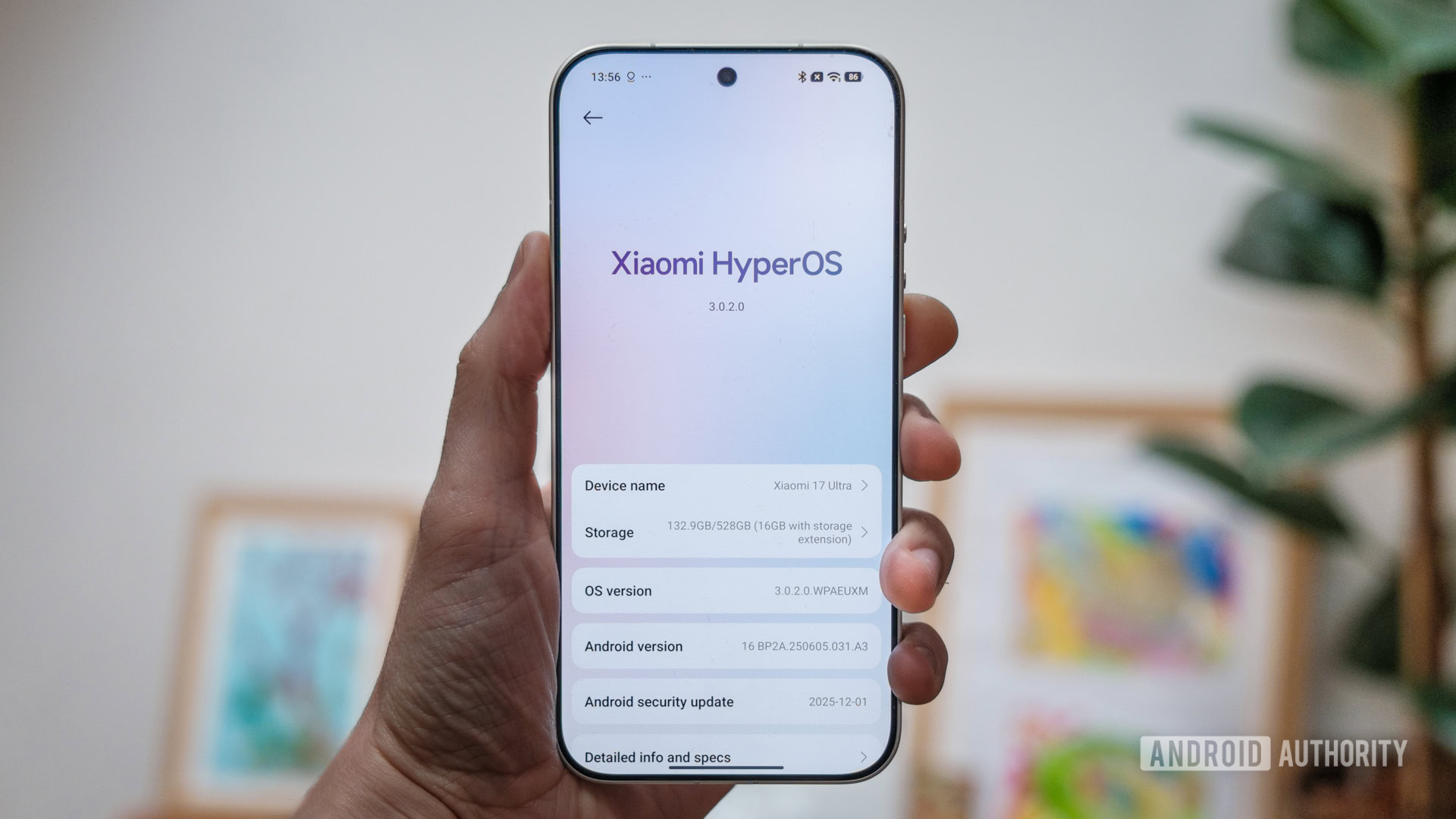
- March 13-14, 2026 (Inferred): Reports emerge suggesting Xiaomi may be patching the app used in the exploit chain, potentially with Hyper OS 3.0.304.0 builds. Users are advised to avoid updating to retain the exploit’s functionality.
- March 14, 2026: Qualcomm issues an official statement confirming the fixes, crediting Xiaomi ShadowBlade Security Lab, and urging users to install security updates.
- Ongoing: OEMs are expected to roll out security updates containing Qualcomm’s patches, closing the bootloader unlock vulnerability.
Broader Security Implications and the Future of Android Customization
The GBL exploit serves as a stark reminder of the continuous cat-and-mouse game between security researchers, exploit developers, and platform vendors. Even the most sophisticated security architectures, like those underpinning Android’s secure boot process, can harbor subtle flaws that, when chained together, lead to significant bypasses. This incident highlights several key areas for consideration within the mobile security landscape:
- Supply Chain Security: A vulnerability in a core component like a Qualcomm SoC can have a cascading effect across hundreds of millions of devices from various manufacturers. This underscores the critical need for rigorous security audits and robust vulnerability disclosure programs throughout the entire hardware and software supply chain.
- OEM Responsibilities: While Qualcomm provides the patches, the onus is on device manufacturers to promptly integrate and distribute these updates. Delays in rolling out security fixes leave users exposed and undermine the overall security posture of the Android ecosystem.
- User Agency vs. Security: The GBL exploit brings to the forefront the long-standing tension between users’ desire for device customization and manufacturers’ efforts to maintain a secure, controlled ecosystem. For many users, bootloader unlocking is essential for extending device longevity and tailoring the Android experience. For OEMs, it represents a potential vector for security breaches, warranty issues, and challenges in maintaining software integrity.
- Evolving Attack Surfaces: As Android and its underlying hardware become more complex, new attack surfaces emerge. The GBL exploit demonstrates how vulnerabilities in low-level bootloader components, when combined with issues in
fastbootcommands, can lead to unexpected and powerful bypasses. Continuous auditing and hardening of these foundational layers are paramount.
Security researchers often emphasize that no system is entirely impenetrable, and vulnerabilities are an inevitable part of complex software and hardware development. What matters most is the speed and effectiveness of the response once a vulnerability is discovered. Qualcomm’s swift action in providing patches to its customers, coupled with the responsible disclosure from Xiaomi’s security lab, represents a positive aspect of this incident.
In conclusion, the Qualcomm GBL exploit is a testament to the ingenuity of security researchers and the ongoing challenges in securing the vast and diverse Android ecosystem. While it offered a temporary reprieve for enthusiasts seeking to unlock their bootloaders, the impending security updates will soon close this window. Users are advised to weigh their desire for customization against the importance of maintaining the latest security protections, ultimately deciding whether to update their devices or retain access to this exploit at their own risk. The incident reinforces the critical role of timely security updates and the collaborative efforts between chipmakers, OEMs, and the security research community in safeguarding mobile technology.