DoorDash Air and the Emergence of Physical AI: The Logistics Revolution and Its Industrial Implications

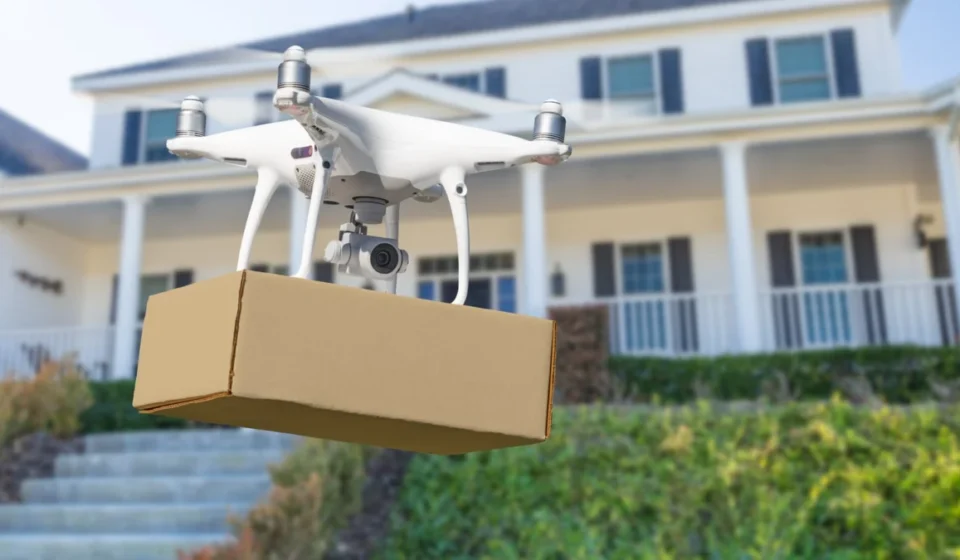
On September 30, DoorDash Inc. officially introduced "DoorDash Air," a drone-based delivery initiative designed to drastically reduce fulfillment times and bypass traditional ground-based logistical hurdles. This announcement marks a significant pivot for the delivery giant, transitioning from a service reliant solely on human gig workers and internal combustion vehicles to one integrated with autonomous flight technology. Initial pilot programs, scheduled for rollout in Northern California, include high-profile restaurant partners such as Chipotle Mexican Grill Inc. and Popeyes. The company reported that early testing phases yielded an average delivery time of under five minutes from the point of departure at the restaurant to the customer’s doorstep. While these results represent a limited sample of order sizes and flight distances, they signal a broader shift toward what industry analysts call "Physical AI"—the integration of artificial intelligence into machines capable of navigating and performing tasks in the real world.
The Evolution of the Last-Mile Logistics Framework
The concept of drone delivery is not new, but its practical implementation has historically been hindered by regulatory, technical, and logistical barriers. Amazon first announced its "Prime Air" concept in 2013, promising 30-minute deliveries that took over a decade to reach even limited commercial viability. Similarly, Alphabet’s Wing and the medical drone startup Zipline have spent years refining autonomous flight paths and safety protocols. DoorDash’s entry into this space is strategic, focusing on the "last-mile" problem—the most expensive and least efficient part of the supply chain.
In traditional delivery models, the final leg of the journey is subject to traffic congestion, human error, and multi-stop inefficiencies. By moving this process into the air, DoorDash aims to eliminate these variables. However, the operational complexity extends beyond the flight itself. The integration of drone pads, automated loading systems, and specialized packaging must be harmonized with existing restaurant workflows to prevent "internal bottlenecks," where time saved in the air is lost during kitchen preparation or drone loading.
The Rise of Physical AI and Autonomous Systems
The transition from digital AI, such as large language models and chatbots, to Physical AI represents a multi-billion-dollar industrial shift. Physical AI refers to autonomous systems—including warehouse robots, self-driving vehicles, and delivery drones—that use AI to interact with physical environments. Unlike digital AI, these machines must contend with gravity, weather, and physical obstacles, necessitating a robust hardware ecosystem.
The financial impact of this shift is already visible in the balance sheets of companies specializing in industrial automation. Symbotic Inc., a leader in AI-powered robotic systems for warehouse management, reported $721 million in revenue for its third fiscal quarter of 2026, a 22% increase over the previous year. Furthermore, the company reported $55 million in net income, demonstrating that the demand for Physical AI is translating into tangible profitability. For investors and industry observers, Symbotic serves as a case study for how automation is being adopted at scale by major retailers to streamline supply chains before goods ever reach a delivery drone.
Energy Constraints and the Push for Advanced Battery Technology
One of the primary technical limiters of drone-based logistics is the energy density of current battery technology. A drone must carry its own power source, and the weight of that power source directly impacts its payload capacity and flight range. Standard lithium-ion batteries often force a trade-off between how far a drone can fly and how much food it can carry. Furthermore, the "downtime" required for charging can undermine the efficiency gains of a high-speed delivery system.

To address these challenges, research is pivoting toward Solid-State Batteries (SSBs). Unlike conventional batteries that use liquid electrolytes, SSBs utilize solid materials, which can potentially offer higher energy density, faster charging times, and enhanced safety by reducing fire risks. Researchers at Oak Ridge National Laboratory have been conducting extensive tests to determine if SSB technology can be scaled for use in heavy-duty drones and industrial robotics.
However, the path to commercialization remains complex. Sandia National Laboratories has noted that solid-state designs require rigorous safety testing to understand how they fail under extreme stress or overheating. For a company like DoorDash or its hardware suppliers, the goal is to find a battery that survives thousands of charge cycles while maintaining a lightweight profile. The success of autonomous delivery networks is, therefore, inextricably linked to the success of the advanced materials and energy storage sectors.
Domestic Manufacturing and the Rebuilding of Industrial Capacity
The rollout of autonomous systems like DoorDash Air requires more than just software and batteries; it requires a massive increase in domestic manufacturing capacity. On July 14, Re:Build Manufacturing announced the launch of a new line of U.S.-assembled battery packs specifically designed for commercial and defense drones. This initiative was part of a larger $81 million investment into a Pennsylvania-based facility aimed at revitalizing American industrial output.
This trend toward "re-shoring" or "near-shoring" manufacturing is driven by both economic and national security concerns. The dependence on international supply chains for critical components like sensors, specialized motors, and high-capacity batteries has been identified as a strategic vulnerability. At the Pennsylvania Defense and Innovation Summit held in July at the U.S. Army War College, leaders from the military, finance, and technology sectors discussed the necessity of a robust domestic industrial base. The summit resulted in over $10 billion in new investment commitments spanning shipbuilding, AI, robotics, and advanced manufacturing.
For the drone industry, this means that the "hardware" side of the equation is finally receiving the capital necessary to match the "software" side. The ability to produce thousands of reliable units with standardized parts is essential for any company hoping to move from a pilot program to a nationwide delivery network.
Chronology of Recent Developments in Physical AI
The timeline of the current Physical AI buildout shows a rapid acceleration of investment and testing over the last 24 months:
- Mid-2024: Major investments in "dark warehouses" (fully automated facilities) by global retailers reach record highs, with Symbotic and similar firms reporting double-digit growth.
- July 14, 2024: Re:Build Manufacturing announces its $81 million Pennsylvania expansion, focusing on drone components and battery assembly to support domestic autonomous flight needs.
- July 2024: The Pennsylvania Defense and Innovation Summit secures $10 billion in commitments for the next generation of American industrial technology.
- September 30, 2024: DoorDash officially unveils DoorDash Air, moving food delivery into the autonomous flight sector with major corporate partners.
- Late 2024 (Projected): Ongoing testing by Oak Ridge and Sandia National Laboratories into solid-state battery durability is expected to provide a roadmap for the next generation of drone power systems.
Broader Economic and National Security Implications
The implications of Physical AI extend far beyond the convenience of receiving a hot cup of coffee in five minutes. The technology required to guide a food delivery drone is remarkably similar to the technology required for reconnaissance and logistics in a defense context. As the U.S. military increasingly looks toward "attritable" systems—low-cost, autonomous machines that can be produced in high volumes—the commercial sector’s advancements in drone manufacturing become a matter of national interest.
Economically, the shift toward Physical AI is expected to create a secondary market for specialized components. Companies that produce high-precision sensors (LiDAR and computer vision), lightweight carbon-fiber frames, and high-torque electric motors are positioned to become the "arms dealers" of the automation age. The transition is not merely about replacing human labor but about creating a new infrastructure layer that operates at a speed and scale previously impossible for human-driven systems.
Technical Challenges and Regulatory Hurdles
Despite the optimism surrounding DoorDash Air and the broader robotics sector, significant hurdles remain. The Federal Aviation Administration (FAA) maintains strict guidelines regarding "Beyond Visual Line of Sight" (BVLOS) flights. For drone delivery to become a ubiquitous reality, regulatory frameworks must evolve to allow for autonomous flight corridors in densely populated urban areas.
Furthermore, there is the "acoustic footprint" of drones. As hundreds or thousands of delivery aircraft take to the skies, noise pollution becomes a public concern that could lead to local zoning restrictions. Engineers are currently working on multi-rotor designs and propeller geometries that minimize noise, but these solutions often come at the cost of aerodynamic efficiency.
Conclusion: The Concrete Reality of Automation
DoorDash Air is a visible manifestation of a much deeper industrial transformation. The convergence of AI, advanced energy storage, and domestic manufacturing is creating a landscape where machines are no longer confined to digital screens but are active participants in the physical economy. For the consumer, the benefit is measured in minutes saved and food quality preserved. For the broader economy, the benefit lies in the rebuilding of an industrial base capable of producing the most advanced machines in the world.
As the pilot programs in Northern California progress, the data gathered will likely dictate the pace of adoption for the rest of the country. The success of this initiative will depend not just on the software guiding the drones, but on the reliability of the batteries, the efficiency of the manufacturing lines, and the robustness of the sensors that allow these machines to navigate a complex, physical world. The era of Physical AI has moved from theoretical research into the stage of active deployment, and the industrial capacity of the United States is being reshaped to support it.