Google Cloud Expands AI Video Production Capabilities with Advanced Avatar Controls and Veo 3.1 Integration in Google Vids

Google Cloud has officially unveiled a significant suite of updates for Google Vids, its artificial intelligence-driven video creation application, aiming to lower the barrier to entry for professional-grade video production. On Thursday, May 2, the company introduced features designed to enhance accessibility and efficiency for both domestic and corporate users, signaling a shift in how enterprises approach internal communications, marketing, and training. The latest rollout includes sophisticated avatar controls, personalized digital personas, and the integration of the Veo 3.1 Lite model, which brings high-quality generative video capabilities to personal Google account holders for the first time.
Advanced Controls for Digital Avatars and Personas
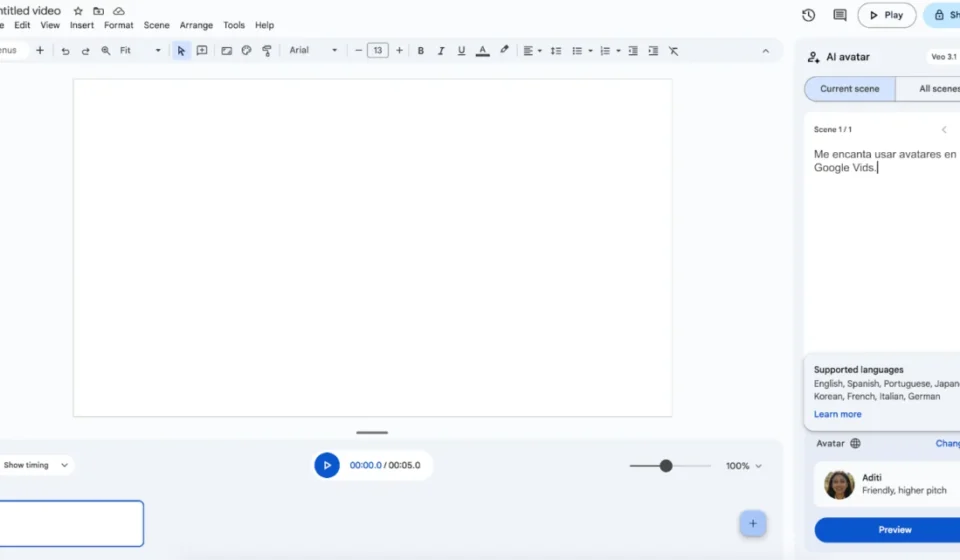
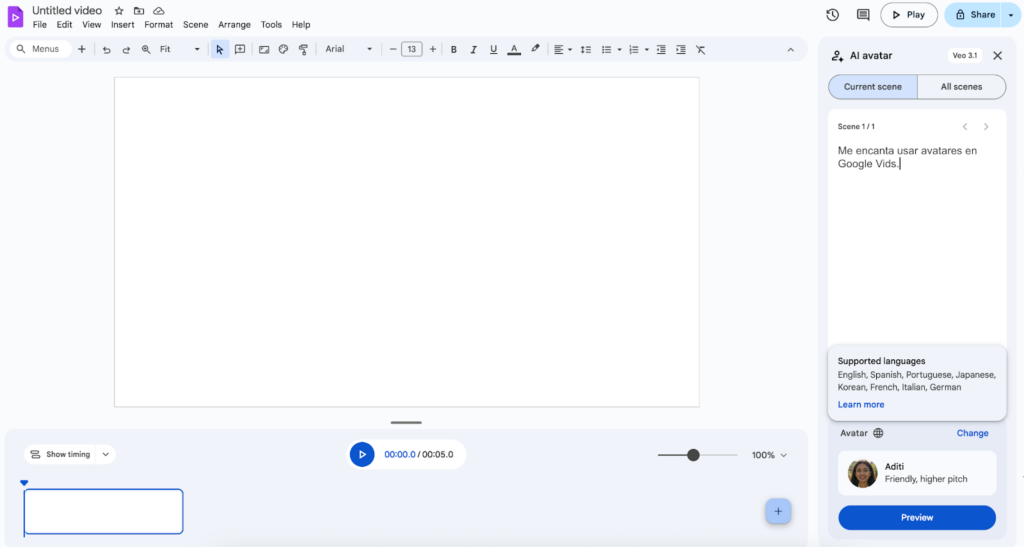
One of the most technically significant updates to Google Vids is the introduction of controllable avatars. This feature allows users to insert digital presenters into specific scenes and direct their interactions with uploaded objects, such as products, props, or specialized equipment, using simple text-based commands. This "text-to-action" capability addresses a common pain point in AI video production: the lack of precise spatial and physical interaction between digital characters and their environment.
The system ensures that the facial features and vocal characteristics of the avatar remain consistent across all generated frames. This consistency is vital for maintaining a professional and refined appearance, eliminating the disjointed "jitter" often associated with early-stage generative AI. For corporate users, this means the ability to create instructional videos or product demonstrations without the logistical overhead of multiple filming takes, professional lighting, or specialized camera equipment.
Complementing this is the new "Personalized Avatars" feature. Users can now generate entirely custom digital personas via text prompts. This allows for granular adjustments to the avatar’s appearance, including the ability to swap clothing and alter background environments to match the specific tone or branding requirements of a project. Despite these visual changes, the underlying voice and likeness remain consistent, allowing a company to maintain a "brand voice" across a diverse range of video content.
Democratizing Video Generation with Veo 3.1 Lite
In a move that significantly expands the reach of its generative AI, Google has integrated the Veo 3.1 Lite model directly into the Vids platform. This marks the first instance where individuals with personal Google accounts—not just those within the enterprise-level Google Workspace ecosystem—can generate dynamic video clips directly within the application.
Veo 3.1 Lite allows users to transform text prompts or uploaded images into dynamic eight-second video clips. To encourage adoption, Google is offering ten free generations per month for users to experiment with the technology. This integration is powered by Google’s latest advancements in video generation, which focus on cinematic consistency and high-resolution output. By bringing Veo 3.1 Lite to the general public, Google is positioning Vids as a versatile tool for social media creators, educators, and hobbyists, moving beyond its initial branding as a strictly corporate productivity tool.
Streamlining Workflows and Ecosystem Integration
Recognizing the importance of distribution in the content creation lifecycle, Google has added a direct export feature to YouTube. Previously, users were required to download completed video files and manually upload them to hosting platforms. The new integration allows for a seamless transition from the editing suite to the public sphere, significantly reducing the "time-to-publish" for creators and corporate communications teams.
This update builds upon a series of enhancements delivered earlier this year. In February, Google introduced Cartoon Avatars, offering 2D and 3D stylized characters. These avatars were designed to provide a more universal and emotionally resonant experience, particularly useful for internal HR training or educational content where a realistic human likeness might not be necessary or desired.
Furthermore, the platform has expanded its linguistic capabilities. Support for Avatars and Narration now includes seven additional languages: French, German, Italian, Korean, Portuguese, Spanish, and Japanese. This expansion is critical for multinational corporations that require consistent training and communication materials across diverse global regions.
Evolution of Google Vids: A Chronology
The development of Google Vids reflects the broader acceleration of generative AI within the Google Workspace suite. The application was first introduced in early 2024 as a response to the growing demand for "video-first" communication in the workplace.
- April 2024: Google Vids is officially announced at Google Cloud Next. It is positioned as an AI-powered video editing app for work, sitting alongside Docs, Sheets, and Slides.
- Late 2024: The platform enters various beta stages, focusing on "Help Me Create" features that generate scripts and storyboards from existing Workspace documents.
- February 2025: Significant updates introduce the Lyria 3 model for AI music generation, allowing users to create 30-second clips or full-length tracks from text prompts. Support for non-English languages and stylized cartoon avatars is also added.
- May 2025: The current rollout introduces controllable avatars, personalized digital personas, and the public integration of Veo 3.1 Lite.
Technical Foundation and Supporting Data
The rapid evolution of Google Vids is supported by Google DeepMind’s underlying models. The integration of Lyria 3 for audio and Veo for video represents a convergence of multimodal AI technologies. According to industry reports, the corporate video market is expected to grow significantly, with a projected compound annual growth rate (CAGR) of over 10% through 2030. Google’s strategy appears to be capturing this market by reducing the cost of production.
Data from recent productivity studies suggest that video content results in higher information retention rates compared to text-based documents. However, the high cost and specialized skills required for video production have historically been a barrier for many departments. Google Vids aims to solve this by providing "zero-skill" editing, where the AI handles the complex tasks of synchronization, transitions, and audio leveling.
Official Responses and Market Analysis
While Google executives have emphasized that Vids is designed to "tell stories at work," industry analysts view the latest updates as a direct challenge to emerging AI video competitors such as Sora (OpenAI), Runway, and Pika Labs. By embedding these tools directly into the Workspace environment, Google leverages its massive existing user base, providing a level of convenience that standalone startups may struggle to match.
"The goal is to make video as easy to create and edit as a slide deck," a Google Cloud spokesperson noted during a recent briefing. "By integrating Veo and providing advanced avatar controls, we are giving every employee the power of a production studio without the need for expensive hardware or years of training."
Market observers note that the inclusion of Veo 3.1 Lite for personal accounts is a strategic move to gather more user data and feedback, which will likely be used to refine the models for future enterprise releases. Furthermore, the focus on "consistency" in avatars suggests that Google is prioritizing the utility of AI in professional settings—where reliability is paramount—over purely creative or experimental uses.
Broader Implications for the Future of Work
The enrichment of Google Vids has profound implications for the future of corporate communication. As AI avatars become more realistic and easier to control, the need for traditional corporate video shoots may decline. This shift could lead to significant cost savings for enterprises but also raises questions regarding the authenticity of digital communications.
The ability to generate professional-grade video from a text prompt allows for "just-in-time" content creation. For instance, a sales manager could generate a personalized video message for a client in minutes, or an HR department could update a training module instantly to reflect a change in policy.
However, the rise of controllable and personalized avatars also brings ethical considerations to the forefront. Google has addressed these concerns by implementing digital watermarking and ensuring that generated content remains within the secure boundaries of the Google Workspace environment. As the technology continues to mature, the focus will likely shift from "what" the AI can create to "how" organizations can use it responsibly to enhance human productivity.
With the May 2 updates, Google Vids has transitioned from a promising experimental tool to a robust production platform. By combining the creative power of Veo 3.1 Lite with the practical utility of controllable avatars and YouTube integration, Google is setting a new standard for AI-assisted content creation in the digital age.