Google Photos Unveils Manual Photo Stacks and AI-Powered Virtual Wardrobe in Wider Rollout

Google Photos, a cornerstone of digital memory management for billions, is significantly enhancing its user experience with the wider rollout of two anticipated features: Manual Photo Stacks for improved organization and an AI-powered Virtual Wardrobe tool designed to revolutionize personal styling. These additions underscore Google’s ongoing commitment to evolving its photo management platform, blending advanced artificial intelligence with practical user-centric controls. The rollout signals a strategic move to offer users more granular control over their extensive digital libraries while simultaneously leveraging AI to provide innovative lifestyle assistance.
The integration of these features comes at a time when digital photo collections are growing exponentially, making efficient organization and utility more critical than ever. While Google Photos has long been lauded for its automatic categorization capabilities, often powered by sophisticated machine learning algorithms, the introduction of Manual Photo Stacks directly addresses a long-standing user demand for greater personal intervention in library management. Concurrently, the Virtual Wardrobe tool exemplifies Google’s ambition to extend the utility of photo data beyond mere archival, transforming it into an active asset for daily life decisions.
Manual Photo Stacks: Empowering User Organization
For users grappling with vast collections of similar images—be it multiple shots of a single event, burst mode photography, or iterative edits of a favorite picture—the new Manual Photo Stacks feature offers a robust solution to declutter and streamline their libraries. This functionality, which has already been available to iOS users for nearly a year, is now making its way to Android devices, marking a significant step towards feature parity across platforms.
The mechanism is straightforward yet powerful. When users select multiple photographs within the Google Photos app, a new "Stack Photos" option appears in the toolbar. Activating this option consolidates the chosen images into a single, navigable stack. This stack then presents a primary image as its cover, with the ability to expand and view all contained photos, effectively turning a cluster of related images into one organized unit. This approach significantly reduces visual noise in the main photo grid, making it easier for users to locate specific moments and manage their extensive collections.
The demand for such a feature highlights a subtle but important distinction in user preferences. While Google Photos’ existing AI, including the recent Gemini Spark integration, excels at automatically grouping similar photos based on date, location, and content, these automated groupings do not always align perfectly with individual users’ organizational logic. Manual Stacks provides the much-needed flexibility for users to define their own groupings, whether for aesthetic reasons, specific projects, or simply to keep related content together in a way that makes personal sense. This feature complements, rather than replaces, the AI-driven organization, offering a hybrid approach that caters to a broader spectrum of user needs. It acknowledges that human intuition often plays a crucial role in curating personal memories, even in an era of advanced automation. The introduction on Android is particularly welcome, given the platform’s larger global user base and the significant accumulation of photos on Android devices over the years.
The Virtual Wardrobe: AI-Driven Fashion and Lifestyle
Perhaps the more innovative and attention-grabbing of the two new features is the Virtual Wardrobe tool. First spotted under development in April of this year and then undergoing a gradual rollout, this feature is now seeing a wider release, particularly within the United States. This expansion, as noted by tech observer Artem Russakovskii on X (formerly Twitter), indicates Google’s readiness to bring this AI-powered personal assistant to a larger audience.
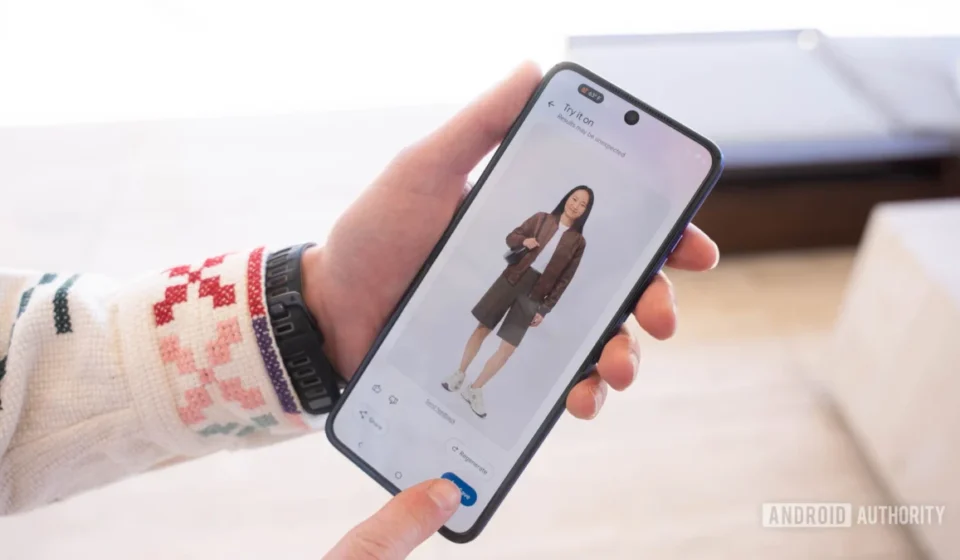
The Virtual Wardrobe leverages sophisticated artificial intelligence, specifically computer vision and object recognition technologies, to analyze a user’s existing photo library. From these images, Google Photos identifies and catalogs individual clothing items that the user owns and has worn. This process effectively constructs a digital inventory of the user’s apparel. Once this "virtual wardrobe" is established, the system takes a significant leap: it begins to recommend outfits. These recommendations are not random; they are built from the identified clothing items, suggesting combinations that users might not have considered or simply forgotten they possessed.
The true innovation lies in the "try on" feature. Utilizing generative AI capabilities, Google Photos can create an AI-generated image of the user wearing a suggested outfit. This allows users to visualize how an ensemble would look on them without the need for physical dressing and undressing. This feature moves beyond simple suggestion; it provides a simulated, personalized preview, enhancing the decision-making process for daily wear or special occasions.
Technological Underpinnings and Market Context
The Virtual Wardrobe tool is a prime example of how Google is integrating its cutting-edge AI research, particularly from projects like Gemini, into its consumer applications. The underlying technology involves:
- Object Recognition: Advanced algorithms identify specific articles of clothing (shirts, pants, dresses, shoes, accessories) within various photographs, regardless of lighting conditions, poses, or background clutter.
- Image Segmentation: Distinguishing the clothing items from the person wearing them and the surrounding environment.
- Pattern and Texture Analysis: Recognizing unique characteristics of clothing items to ensure accurate cataloging and avoid duplicates of different garments.
- Generative AI (for "Try On"): This is the most complex component, requiring the AI to understand human anatomy, clothing drape, and light interaction to realistically render a user wearing a new combination of clothes. This likely involves techniques similar to those used in deepfake technology, but applied ethically for personal utility.
From a market perspective, Google’s Virtual Wardrobe enters a growing niche of AI-powered fashion and personal styling applications. While dedicated fashion apps have offered outfit planning and virtual try-on features for specific retailers, Google Photos integrates this directly into a platform where users already store their entire visual history. This seamless integration provides a distinct advantage, as it eliminates the need for users to manually upload clothing items or take new photos, instead leveraging existing data. This also positions Google Photos as a competitor to standalone virtual styling apps and even augments the online shopping experience by providing a personal styling assistant derived from one’s own wardrobe. The implications for sustainable fashion are also noteworthy, as the tool could encourage users to re-wear and combine existing items in novel ways, potentially reducing the impulse for new purchases.
The Broader Implications: Google’s AI Strategy and User Experience
These new features, particularly the Virtual Wardrobe, are not isolated additions but rather components of Google’s overarching strategy to infuse AI across its product ecosystem. The previously announced Gemini Spark integration, designed to make photo organization "even easier" through advanced AI analysis and search, provides a foundational layer. The Manual Stacks and Virtual Wardrobe then build upon this, offering both enhanced user control and innovative utility.
The synergy between automated AI organization (like Gemini Spark) and manual control (Manual Stacks) illustrates Google’s dual approach. While AI can handle the heavy lifting of large-scale categorization, Google recognizes the value of human agency in personal curation. This balance ensures that users feel both supported by intelligent systems and empowered to manage their digital lives according to their unique preferences.
The Virtual Wardrobe takes this a step further by demonstrating how personal data, when processed intelligently and with user consent, can offer tangible benefits in daily life. It transforms a passive archive of memories into an active tool for decision-making, extending the utility of Google Photos far beyond simple storage and sharing. This move signifies Google’s ambition to make its services indispensable by solving real-world problems through data-driven insights and AI capabilities.
However, such deep integration of AI with personal data also raises important considerations regarding privacy and data security. Google has consistently iterated its commitment to user privacy, implementing robust security measures and providing users with control over their data. For features like the Virtual Wardrobe, the processing of highly personal visual data (images of one’s body and clothing) necessitates clear communication regarding how data is used, stored, and protected. Users will need assurances that their clothing data is not being used for unsolicited advertising or shared without explicit consent. While Google has not issued specific statements regarding the privacy implications of the Virtual Wardrobe, its general policies emphasize data anonymization, secure storage, and user controls over personal information.
Chronology and Rollout Dynamics
The development and rollout of these features highlight Google’s characteristic, often protracted, deployment strategy.
- Early 2023: Manual Photo Stacks reportedly becomes available for iOS users.
- April 2024: Development of the Virtual Wardrobe tool is first spotted by Android Authority.
- Late April 2024: A slow, initial rollout of the Virtual Wardrobe begins for a limited set of users.
- Current Period (Late 2024/Early 2025): Wider rollout of both Manual Photo Stacks on Android and the Virtual Wardrobe, with increased availability noted particularly in the US.
Google’s rollouts are frequently described as "finicky and oddly timed," often occurring in phases and reaching different user bases at varying speeds. This staggered approach allows Google to monitor performance, gather feedback, and address any unforeseen issues before a full-scale deployment. Consequently, while these features are now seeing a wider release, some users may still need to await an update to their Google Photos application to gain access. This incremental deployment is a standard practice in the software industry, especially for features relying on complex AI infrastructure and requiring extensive A/B testing.
Expert and User Perspectives
Technology analysts are likely to view these updates as a strategic play by Google to maintain its leadership in photo management and to further entrench its AI capabilities within its core products. The combination of manual controls and AI-driven insights caters to a broader user base and positions Google Photos as a comprehensive digital life assistant. The Virtual Wardrobe, in particular, showcases Google’s ability to transform passive data into active utility, potentially setting new benchmarks for personal AI applications.
From a user perspective, the reception is expected to be largely positive. Manual Photo Stacks addresses a practical pain point for many, offering a tangible improvement in library organization. The Virtual Wardrobe, while potentially seen as more of a novelty by some, offers genuine utility for those who struggle with outfit selection or wish to maximize their existing wardrobe. Early adopters are likely to appreciate the time-saving and creative aspects of the feature. However, as with any AI feature that delves into personal data, there will be a segment of users who approach it with caution, prioritizing privacy and data control. The success of these features will ultimately depend on their robustness, accuracy, and Google’s ability to clearly communicate their benefits and privacy safeguards.
Conclusion
The wider rollout of Manual Photo Stacks and the AI-powered Virtual Wardrobe marks a significant evolution for Google Photos. These features not only enhance the organizational capabilities of the platform but also introduce innovative ways for users to interact with their digital memories for practical, real-world benefits. By offering both refined manual controls and cutting-edge AI assistance, Google continues to solidify Google Photos’ position as a leading, versatile tool for managing and leveraging personal visual data. As digital photo libraries continue to expand, such intelligent and user-empowering features will become increasingly crucial, underscoring Google’s commitment to delivering a rich, intuitive, and forward-looking user experience in the realm of digital media management. The future of personalized digital services, as demonstrated by these updates, lies in the harmonious integration of intelligent automation and thoughtful user control.