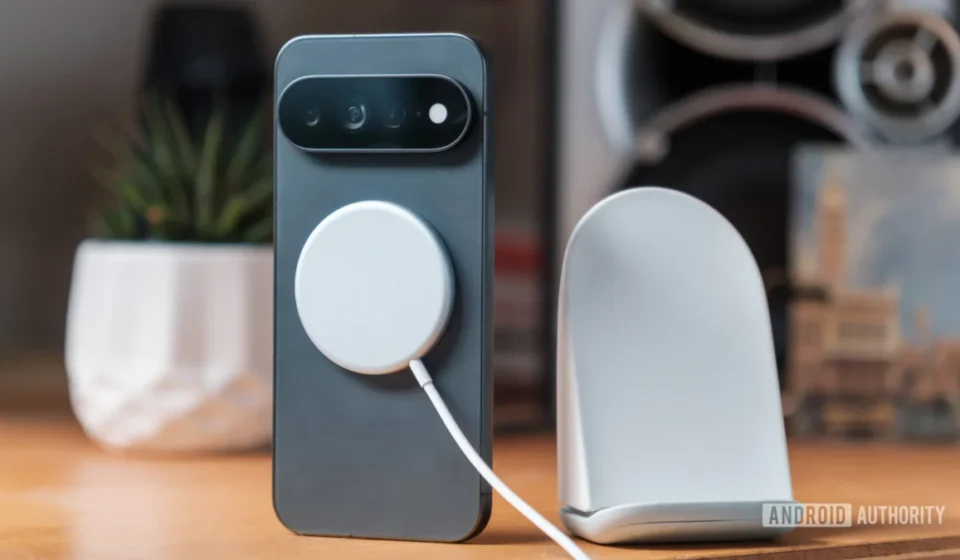
Google Pixel 11 Pro XL Wireless Charging Falls Short of Advertised 25W, Raising Concerns Over Ecosystem Strategy

Recent testing of Google’s latest Pixel 11 Pro XL reveals significant discrepancies between its advertised 25W wireless charging capabilities and real-world performance, with the new PixelSnap charger struggling to maintain peak power and offering a slower experience compared to earlier Pixel generations. This situation highlights an ongoing challenge for Google’s smartphone lineup, where charging solutions have often been a point of contention for users seeking efficiency and reliability. The transition from the lauded Pixel Stand to the new MagSafe-like PixelSnap system appears to have introduced trade-offs, prioritizing accessory compatibility over raw charging speed and thermal management, leading to a mixed bag of results for the flagship device.
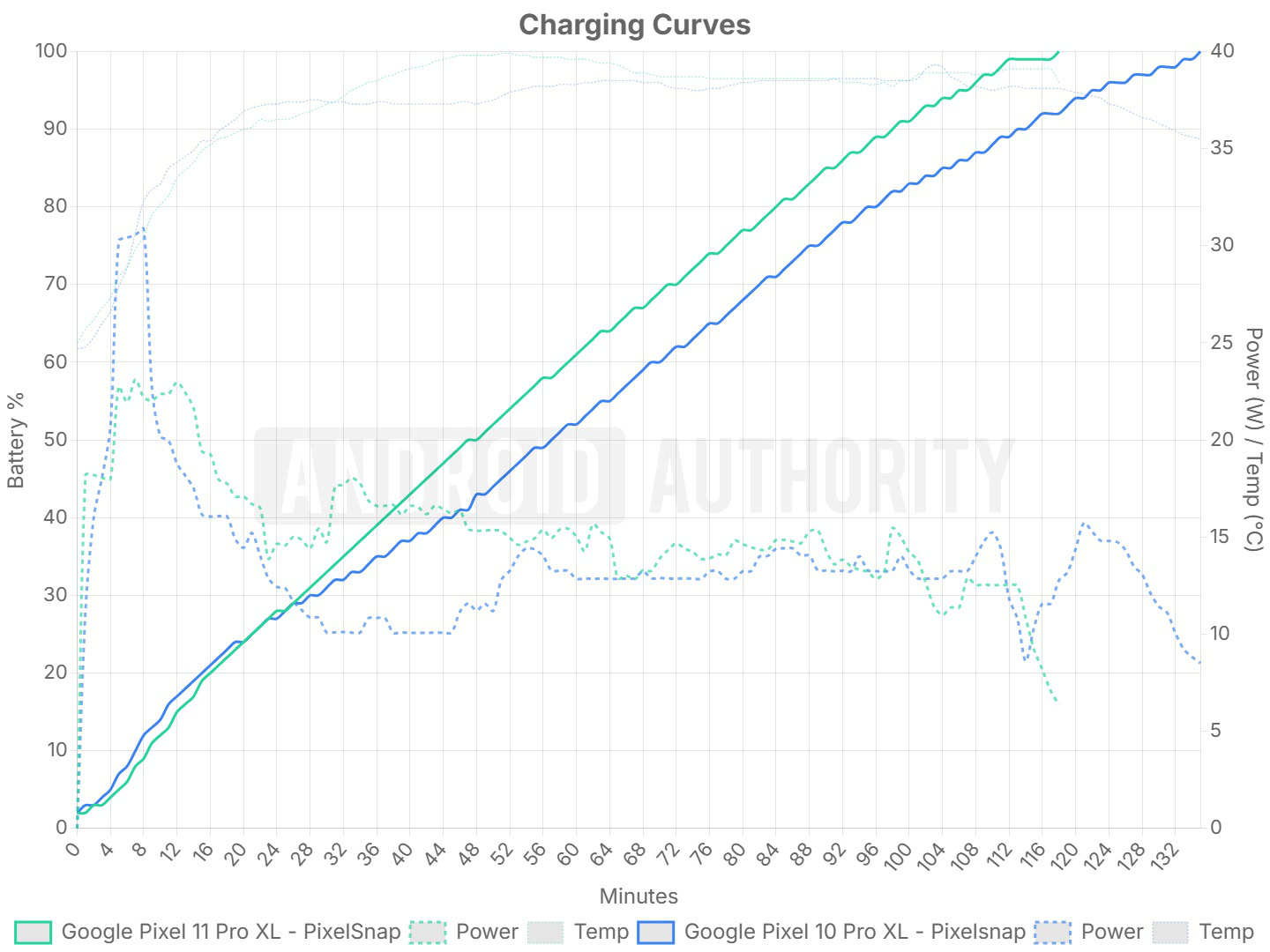
The core issue revolves around the PixelSnap wireless charger, priced at $39.99, which has replaced the previously well-regarded Pixel Stand (2nd Gen). While Google publicly champions the Pixel 11 series’ 25W wireless charging, independent evaluations on the Pixel 11 Pro XL demonstrate that the device rarely sustains power levels close to this peak. During testing, the PixelSnap struggled to reach even 23W, and crucially, it maintained this near-peak wattage for only a brief period. The charging cycle was characterized by a prolonged ramp-up phase, taking approximately six minutes for the charger and phone to lock into what should be their optimal power delivery, switching between 9V and 16V before settling. This initial delay significantly impacts the utility of short, opportunistic top-ups, a common use case for wireless charging.
Once peak power was achieved, it was maintained for a similarly short duration, approximately six minutes, before throttling down. This behavior means that despite the 25W advertisement, the PixelSnap operates closer to a 15W model for the majority of the charging cycle. This performance pattern raises questions about the practical application of the "25W wireless charging" claim, suggesting it represents a theoretical maximum under ideal, short-lived conditions rather than a sustained average.
Chronology of Pixel Charging Evolution and the Shift to PixelSnap
Google’s journey with smartphone charging has seen several iterations, reflecting broader industry trends and internal strategic shifts. Early Pixel devices relied on standard USB Power Delivery (PD) for wired charging, offering respectable speeds for their time. The introduction of the Pixel Stand (1st Gen) marked Google’s entry into proprietary fast wireless charging, integrating smart home features with charging functionality.
The second generation, the Pixel Stand (2nd Gen), released alongside the Pixel 6 series, represented a significant leap forward. This accessory boasted 23W wireless charging for the Pixel 6 Pro and 21W for the Pixel 6, featuring an integrated fan to actively manage thermals. This cooling mechanism was crucial, allowing the Pixel Stand 2nd Gen to sustain higher power outputs for longer durations, resulting in competitive charging times. For instance, the Pixel 9 Pro XL (a hypothetical successor to the 6 Pro, using the Pixel Stand 2nd Gen for comparison as per the original article’s data) could achieve a full charge in just 101 minutes and reach 50% battery in 33 minutes. These figures placed Google’s wireless charging solution in a favorable light against competitors at the time, offering a blend of speed and convenience.
However, with the Pixel 10 series and now the Pixel 11 series, Google pivoted its wireless charging strategy by introducing PixelSnap, a MagSafe-compatible system. This shift was widely interpreted as an attempt to leverage the growing ecosystem of magnetic accessories, popularized by Apple’s MagSafe, offering benefits like precise alignment and compatibility with various third-party peripherals like battery packs and car mounts. While the magnetic attachment offers undeniable convenience, especially for cases and other modular accessories, the data suggests it has come at the expense of charging performance.
The PixelSnap charger, designed to work with the magnetic array in the Pixel 10 and 11 series, represents a departure from the dedicated, fan-cooled design of the Pixel Stand. This change has had direct implications for charging efficiency and thermal management, which are critical for sustained high-wattage wireless charging.
Deep Dive into Pixel 11 Pro XL Wireless Charging Performance
Detailed testing on the Pixel 11 Pro XL with PixelSnap reveals the following:
- Peak Power Attainment: The device struggled to consistently hit the advertised 25W, peaking at approximately 23W. More critically, it took around six minutes to reach this peak, a delay that makes quick power boosts less effective.
- Sustained Power: The 23W peak was only maintained for about six minutes before the power delivery significantly dropped. For the majority of the charging cycle, the Pixel 11 Pro XL charged closer to 15W.
- Overall Charging Time: A full charge from 0% to 100% using PixelSnap took 119 minutes on the Pixel 11 Pro XL. While this is an improvement over the 145 minutes observed on the Pixel 10 Pro XL with PixelSnap, it still lags considerably behind the 101 minutes achieved by the Pixel 9 Pro XL on the older Pixel Stand 2nd Gen.
- Mid-Cycle Performance: Reaching 50% battery on the Pixel 11 Pro XL took 47 minutes, an improvement from 61 minutes on the Pixel 10 Pro XL. However, this is still slower than the 33 minutes achieved by the Pixel 9 Pro XL using the Pixel Stand 2nd Gen.
- Thermal Management: Wireless charging with PixelSnap resulted in noticeable heat generation, with the handset feeling considerably warm to the touch. Internal temperatures were observed to be limited to 40°C (without "Extreme Charging" mode), leading to power throttling. The average temperature during charging was 37.4°C, approximately half a degree warmer than the previous year’s model, indicating that the marginal speed increase in the Pixel 11 Pro XL is not without thermal cost.
A particularly disheartening finding is the incompatibility with the older Pixel Stand 2nd Gen. When attempting to charge the Pixel 11 Pro XL on the Pixel Stand, power delivery was capped at a meager 7.5W, presumably due to coil misalignment or changes in the charging protocol. This renders the previously efficient Pixel Stand virtually useless for newer Pixel models, extending charge times to over four hours—a period suitable only for overnight charging, negating its fast-charging capabilities. This forced obsolescence of a relatively recent and effective accessory adds to user frustration.
Wired Charging: Promises and Realities
The charging narrative for the Pixel 11 Pro XL is not limited to wireless frustrations. Google also promotes the device’s "impressive-sounding 45W wired charging capabilities." However, similar to its wireless counterpart, real-world performance presents a more nuanced picture. Peak wired power output was closer to 41W, and this maximum is only achievable under specific conditions: the charger must provide 18V and 2.27A via the USB Power Delivery Programmable Power Supply (USB PD PPS) protocol. This specificity means that users cannot simply use any high-wattage USB-C charger to achieve optimal speeds, requiring careful selection of compatible accessories. The PixelSnap itself also demands a charger with similar PPS specifications to deliver its best (albeit still underwhelming) performance.
Furthermore, Google introduced an "Extreme Charging mode" with the Pixel 11 Pro XL, designed to offer a short burst of faster charging. Testing showed this mode provided only a modest five-minute boost at the expense of a roughly 3°C temperature increase, peaking at 42.9°C. This marginal gain for a notable temperature spike makes the "Extreme Charging" mode less compelling for many users, particularly those concerned about battery longevity and device heat.
Implications for Users and Google’s Ecosystem Strategy
The inconsistent and often underwhelming charging performance across the Pixel 11 series, particularly with the PixelSnap, has several implications:
- Consumer Disappointment: Users are increasingly expecting fast and efficient charging from flagship smartphones. When advertised numbers (like 25W wireless or 45W wired) do not translate into real-world experience, it leads to frustration and a perception of misleading specifications. The need for specific, often proprietary or carefully selected, accessories to achieve even sub-optimal performance adds to user inconvenience.
- Ecosystem Fragmentation: The abandonment of the highly capable Pixel Stand 2nd Gen in favor of PixelSnap creates a fragmented ecosystem. Users who invested in the Pixel Stand are left with an incompatible accessory, forcing them to purchase new hardware for newer phones. While MagSafe-like magnetic attachment offers convenience for accessory integration, if the core charging performance is compromised, the trade-off becomes less appealing.
- Thermal Management Challenges: The persistent issue of high temperatures during wireless charging suggests that Google’s current design for PixelSnap and the Pixel 11 series struggles with efficient heat dissipation. Thermal throttling is a necessary measure to protect battery health and device longevity, but it directly impacts sustained charging speed. This contrasts sharply with the Pixel Stand 2nd Gen’s active cooling, which allowed for faster and more consistent power delivery.
- Competitive Disadvantage: In a highly competitive smartphone market, charging speed and efficiency are key differentiators. Many rival manufacturers, both within the Android ecosystem and with Apple’s MagSafe, offer more consistent or faster charging solutions. Google’s current approach risks positioning the Pixel line as lagging in this crucial area, potentially impacting its appeal to power users.
- Perception of Value: The PixelSnap charger’s price point of $39.99, or $65 for the Snap and stand combo, appears steep when considering its performance limitations and the requirement for a specific wired charger to unlock its full (yet still throttled) potential. This creates a perception of poor value for money, especially when compared to the performance of previous Google charging accessories.
Conclusion and Future Outlook
The current state of Google Pixel charging presents a dilemma for the company and its users. While the pivot to a MagSafe-like system with PixelSnap offers undeniable convenience for accessory attachment and alignment, it has demonstrably compromised the raw charging speed and thermal efficiency that were hallmarks of the previous Pixel Stand. The discrepancy between advertised wattage and actual sustained power, coupled with the frustrating incompatibility of older, more capable accessories, indicates a strategic misstep in prioritizing one aspect of user experience (accessory integration) over another (core charging performance).
For Google to truly compete in the premium smartphone segment, a holistic approach to charging is imperative. This would ideally involve developing a new generation of PixelSnap-compatible chargers that incorporate active cooling mechanisms, similar to the Pixel Stand 2nd Gen, to allow for sustained high-wattage charging without excessive thermal throttling. Such an innovation would combine the magnetic convenience with the robust performance that users expect from a flagship device. Without significant improvements in delivering consistent, fast, and thermally managed charging, the "frustrating Pixel charging" narrative is likely to persist, undermining an otherwise strong hardware and software package. The hope remains that future iterations will address these critical shortcomings, offering a charging experience that truly aligns with the premium promise of the Google Pixel brand.