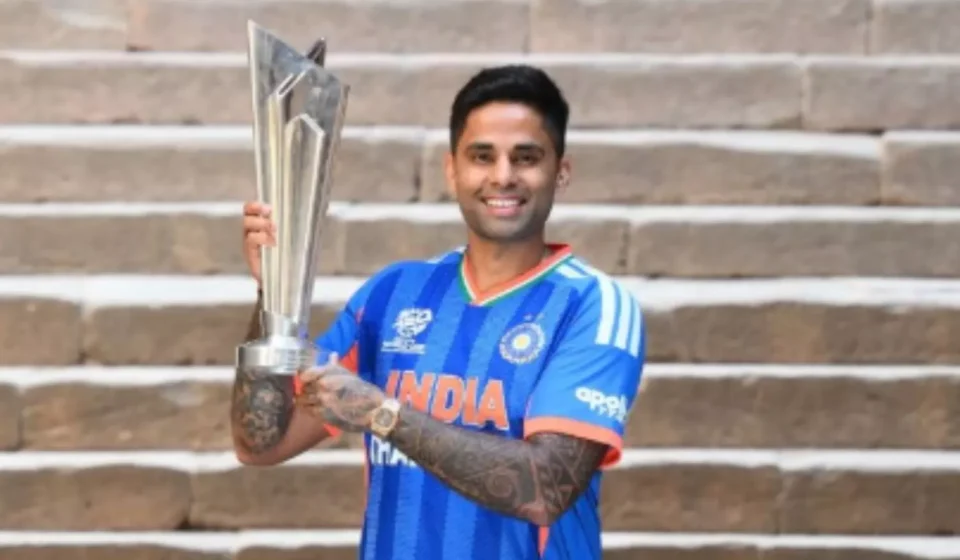
India Targets Olympic Gold and World Cup Hat Trick Following 2026 T20 World Cup Triumph in Ahmedabad

India’s dominance in the shortest format of international cricket reached a historic zenith as the national team secured its third ICC Men’s T20 World Cup title, further cementing its status as a global powerhouse. Following the victory at the Narendra Modi Stadium in Ahmedabad, India’s T20I captain Suryakumar Yadav has outlined a strategic roadmap that shifts the focus from immediate celebration to long-term sporting immortality. With the inclusion of cricket in the 2026 Asian Games and the 2028 Los Angeles Olympics, the Indian leadership is now prioritizing a gold medal on the Olympic stage and an unprecedented third consecutive T20 World Cup title in 2028.
Speaking in an extensive interview on JioStar’s ‘Follow The Blues,’ Yadav reflected on the emotional and tactical complexities of leading a high-pressure campaign. His journey, which came full circle in the very stadium where he made his international debut in 2021, serves as a microcosm of India’s evolution in the T20 format. The captain’s insights provide a rare look into the internal dynamics of a championship-winning squad, emphasizing the psychological management of players and the relentless pursuit of excellence that defines the current era of Indian cricket.
A Full Circle Journey at the Narendra Modi Stadium
The significance of the 2026 victory was heightened by the venue. The Narendra Modi Stadium, the world’s largest cricket ground with a seating capacity of 132,000, has become a cathedral for Indian cricket milestones. For Suryakumar Yadav, the venue is deeply personal. Having debuted for India in Ahmedabad against England in 2021—where he famously hit a six off his first ball in international cricket—returning as a captain to lift the World Cup trophy represented a profound career milestone.
Yadav noted that the atmosphere in Ahmedabad provided a unique energy that the team harnessed throughout the final. The journey from a debutant to a World Cup-winning leader within five years highlights the rapid ascent of "SKY" as a foundational pillar of the Indian setup. The captain emphasized that winning in front of a home crowd added a layer of responsibility and satisfaction that surpassed previous achievements.
The Psychological Architecture of Captaincy
Beyond tactical maneuvers and field placements, Yadav identified the management of the "bench strength" as the most grueling aspect of the 2026 campaign. In a tournament spanning several weeks, maintaining the morale of players who are not in the starting XI is a perennial challenge for any leader. Yadav’s philosophy centered on ensuring that the four players outside the match-day eleven felt as integral to the mission as the openers or the strike bowlers.
"The ones who keep playing are in autopilot mode," Yadav explained, noting that regular starters naturally find their rhythm through match practice. However, for those on the sidelines, the "switch on, switch off" nature of tournament cricket can be mentally taxing. Yadav, supported by the coaching staff, made it a priority to spend extra time with non-playing members, sharing meals and engaging in constant dialogue to ensure they remained match-ready.
This inclusive approach proved vital when injuries or tactical shifts necessitated sudden changes to the lineup. By treating the entire 15-member squad as a singular unit rather than a hierarchy of starters and reserves, the team maintained a cohesive environment that prevented the internal friction often seen in high-stakes sporting environments.
Inspiring Arcs: The Stories of Siraj, Kishan, and Samson
The 2026 squad was defined by several "inspiring and emotional" individual narratives that Yadav highlighted as the heartbeat of the team. One of the most dramatic inclusions was that of Mohammed Siraj, who was called into the squad as a late replacement for the injured Harshit Rana. Siraj’s reaction—disbelief followed by immediate commitment—underscored the prestige associated with representing the nation on the world stage.
Similarly, the inclusion of Ishan Kishan and Sanju Samson showcased the depth of character within the Indian ranks. Kishan’s promise to "walk the talk" and Samson’s selfless "tell me what I can do for the team" attitude provided the captain with a versatile roster of players who prioritized collective success over individual statistics. Yadav’s leadership style, characterized by direct communication and emotional intelligence, allowed these players to thrive regardless of their specific roles in any given match.
Mentoring through Form Slumps: The "Bow and Arrow" Analogy
Perhaps the most significant tactical and psychological masterstroke of the campaign was Yadav’s handling of Abhishek Sharma and Varun Chakaravarthy. Both players faced periods of inconsistent form during the tournament, a situation that often leads to a loss of confidence in the T20 format’s volatile environment.
Yadav’s "bow and arrow" analogy has since become a focal point of his leadership legacy. He encouraged the duo to view a dip in form not as a regression, but as a necessary "pulling back" before being launched toward a greater target. By assuring them of their spots in the final despite earlier struggles, Yadav removed the fear of failure, allowing them to perform with freedom when it mattered most.
This faith was rewarded in the final, where both Sharma and Chakaravarthy played pivotal roles in securing the trophy. This management of "destiny" through discipline and hard work has become a blueprint for how the Indian team handles young talent facing the pressures of international scrutiny.
The "National Treasure": Jasprit Bumrah’s Consistency
No analysis of India’s recent success is complete without the mention of Jasprit Bumrah. Yadav referred to the premier fast bowler as a "national treasure," citing his immunity to complacency as his greatest attribute. Despite being widely regarded as the best bowler in world cricket, Bumrah’s work ethic remained unchanged throughout the 2026 campaign.
Bumrah’s ability to deliver under pressure served as the team’s safety net. His presence allowed Yadav to be more aggressive with his captaincy, knowing he had a world-class operator to turn to in the "death overs." The synergy between Yadav’s creative leadership and Bumrah’s clinical execution has been the primary driver of India’s three-trophy streak.
Historical Context: India’s Triple Crown and the Road to 2028
India’s victory in 2026 marks a historic era of dominance. Since 2024, the team has secured three major ICC trophies:
- 2024 ICC Men’s T20 World Cup: Ending a long drought in the Caribbean.
- 2025/26 ICC Champions Trophy: Reaffirming dominance in the ODI/Hybrid format.
- 2026 ICC Men’s T20 World Cup: Securing the title on home soil in Ahmedabad.
This run mirrors the legendary dominance of the Australian teams of the late 1990s and early 2000s. However, the current Indian squad is operating in an era of much higher parity and technological scrutiny. The transition from the leadership of Rohit Sharma to Suryakumar Yadav has been seamless, with the team maintaining its aggressive, "fearless" brand of cricket.
Looking Ahead: The Olympic Dream and the T20 Hat-Trick
While the 2027 ODI World Cup remains a significant milestone on the horizon, the Indian team has set its sights on a prize that has eluded cricketers for over a century: Olympic Gold. With cricket’s return to the Olympic program for the 2028 Los Angeles Games, the sport enters a new dimension of global recognition.
"That Olympic gold will definitely be our top priority," Yadav stated, signaling a shift in how the BCCI and the national team view the multi-sport event. For India, an Olympic medal represents more than just a trophy; it is an opportunity to contribute to the nation’s overall medal tally and showcase cricket to a non-traditional audience.
Furthermore, 2028 will also feature the next iteration of the T20 World Cup. Having won back-to-back titles in 2024 and 2026, the Indian team is now chasing a "hat-trick" of T20 World Cup trophies. No team in the history of the format has achieved three consecutive titles, a feat that would arguably make this Indian side the greatest T20 team of all time.
Implications for the Future of Indian Cricket
The enrichment of the squad with young talents like Abhishek Sharma and the revitalization of veterans like Varun Chakaravarthy suggest that India’s "Golden Age" is far from over. The focus on the 2028 LA Olympics is expected to influence domestic structures, with a greater emphasis on fitness, fielding, and the high-intensity requirements of the T20 format.
Analysts suggest that the current leadership’s focus on the "human element" of the game—prioritizing mental health, bench motivation, and emotional support—has created a sustainable model for success. As India prepares for the 2027 ODI World Cup and the 2028 Olympic cycle, the foundation laid by Suryakumar Yadav and his support staff in 2026 will likely serve as the benchmark for future generations.
The message from the Indian camp is clear: there is no room for relaxation. With three trophies in the cabinet and the prospect of Olympic glory on the horizon, the "Men in Blue" are no longer just chasing titles; they are chasing a legacy that transcends the boundaries of the cricket pitch.