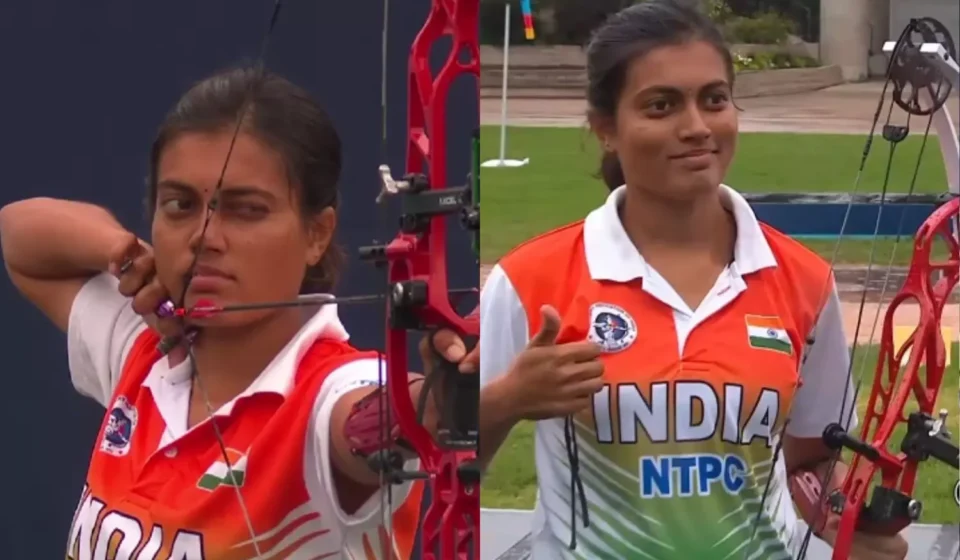
Indian Archers Deliver Commanding Opening Performance at Asia Cup Stage 1 in Bangkok to Secure Pre-Quarterfinal Berths

The Indian archery contingent commenced its 2024 international campaign with a display of precision and tactical discipline at the Asia Cup Stage 1 in Bangkok, Thailand. On the opening day of the competition, several Indian athletes successfully navigated the qualification rounds and early elimination phases to secure their places in the pre-quarterfinals of their respective individual events. The performance underscores India’s growing dominance in both the recurve and compound disciplines within the Asian circuit, as the nation seeks to consolidate its standing in the world rankings early in the sporting calendar.
The tournament, hosted at the Huamark Archery Field, serves as a critical barometer for the depth of India’s archery talent. While the senior-most stars often headline major World Cup stages, the Asia Cup provides a vital platform for emerging talents and seasoned competitors to garner international experience and essential ranking points. The opening day was characterized by consistent scoring and a calm approach to the windy conditions often prevalent in the Thai capital, allowing India to emerge as one of the strongest teams in the initial phases of the draw.
Recurve Men’s Division: Devaang Gupta Leads the Charge
In the recurve men’s individual category, Devaang Gupta emerged as the standout performer for the Indian side. During the qualification round, which involves archers shooting 72 arrows at a distance of 70 meters, Gupta demonstrated remarkable consistency. He finished the round in third place overall, amassing a total of 663 points out of a possible 720. This high seeding granted him a favorable position in the elimination brackets, where he continued his momentum to progress into the pre-quarterfinals.
Gupta was closely followed by teammate Sukhchain Singh, who also exhibited a strong technical foundation to finish the qualification round in eighth place with a score of 657. Singh’s progression to the next round ensures that India maintains a multi-pronged threat in the recurve division. Other Indian participants in the category included Juyel Sarkar, who placed 11th with a respectable score, and Aarav Punia, who finished 35th. The collective performance of the recurve men suggests a focused preparation period, as they look to challenge the traditional strongholds of the sport in the Asian region.
The recurve discipline, being the Olympic standard, carries significant weight for the Indian coaching staff. The ability of younger archers like Gupta and Singh to perform under the pressure of a continental stage is seen as a positive sign for the long-term health of the national program. The technical proficiency shown in the 70-meter rounds indicates that the developmental squads are narrowing the gap with the elite-tier athletes who represent the country in World Cup stages.
Compound Women’s Excellence: Depth and Dominance
India’s prowess in compound archery has been a recurring theme in international competitions over the last decade, and the opening day in Bangkok reinforced this reputation. In the compound women’s event, the Indian quartet of Chikitha Taniparthi, Raj Kaur, Tejal Salve, and Swati Dudhwal all secured their advancement to the pre-quarterfinals, showcasing the immense depth of talent available to the national selectors.
Chikitha Taniparthi led the Indian contingent in the qualification rounds, finishing in fourth place with a high score of 697. In compound archery, where the target is set at 50 meters and the scoring is notoriously tight, a sub-700 score of 697 is considered elite. Taniparthi’s performance was mirrored by Raj Kaur, who finished just two points behind in fifth place with a score of 695. The proximity of their scores highlights the internal competition within the Indian camp, which often drives athletes to higher standards.
Tejal Salve and Swati Dudhwal also delivered steady performances, finishing 13th and 17th respectively. While their qualification rankings were lower than Taniparthi and Kaur, their ability to navigate the subsequent elimination matches to reach the pre-quarterfinals ensures a strong Indian presence in the business end of the tournament. The compound discipline remains a stronghold for India, even in the absence of some of the nation’s most decorated world champions.
Strategic Squad Selection and the Absence of Top Seeds
The Archery Association of India (AAI) has fielded a balanced 16-member squad for the Asia Cup Stage 1, covering both recurve and compound events for men and women. The selection strategy for this leg of the Asia Cup appears to focus on broadening the base of experienced international archers. By providing opportunities to athletes like Chikitha Taniparthi and Devaang Gupta, the federation is ensuring that the pipeline for the senior national team remains robust.
Notably, India’s top-ranked compound archer and multiple-time World Cup gold medalist Jyothi Surekha Vennam is not part of the squad for this opening leg in Bangkok. Her absence has allowed younger archers to take on leadership roles within the team. In the compound men’s category, the team is led by experienced names such as Rishabh Yadav and Prathamesh Jawkar. Jawkar, in particular, has seen a meteoric rise in the global rankings over the past year, and his presence in the squad adds a layer of veteran stability to the younger group.
The decision to rotate the squad and rest certain high-profile athletes is a common practice in modern sports management, especially in a year that includes multiple World Cup stages and continental championships. It allows for the management of athlete workload while simultaneously testing the "bench strength" of the national program against international opposition.
Tournament Context and Global Participation
The Asia Cup Stage 1 in Bangkok is a significant fixture on the World Archery Asia calendar. This year’s edition features 194 archers representing 19 different countries. Beyond the pursuit of medals, the primary incentive for many participants is the accumulation of world ranking points. These points are crucial for determining seedings in future major tournaments, including the World Cup series and the World Championships.
The 19-nation field includes several traditional archery powerhouses and emerging nations from across the continent. Competitions such as these are essential for the growth of the sport in the region, providing a bridge between domestic tournaments and the elite World Archery circuit. For the Indian archers, the Asia Cup serves as an ideal environment to fine-tune their equipment settings and mental toughness in a competitive setting before the onset of the primary international season.
Chronology of the Opening Day
The first day of the Asia Cup Stage 1 followed a rigorous schedule designed to filter the massive field of 194 archers into the elimination brackets.
- Morning Session: Recurve Qualification: The day began with the recurve men’s and women’s qualification rounds. Athletes shot two halves of 36 arrows each. It was during this session that Devaang Gupta established his third-place standing, maintaining a high average per arrow despite the fluctuating morning breezes.
- Mid-Day Session: Compound Qualification: Following the recurve session, the compound archers took to the field. The precision-heavy nature of compound archery saw extremely tight scores at the top of the leaderboard, with Chikitha Taniparthi and Raj Kaur staying within the top five throughout the 72-arrow sequence.
- Afternoon Session: Initial Elimination Rounds: After the qualification rankings were finalized, the tournament moved into the early elimination phases (1/48 and 1/24 rounds). Several Indian archers received byes due to their high qualification rankings, while others had to compete to secure their spots in the pre-quarterfinals.
- Evening Review: By the end of the day’s play, the field had been significantly narrowed. The Indian coaching staff conducted debriefing sessions to analyze the shot data and wind adjustments made by the archers, preparing them for the high-stakes matches scheduled for the following days.
Technical Analysis: The Huamark Challenge
Archery is a sport of minute margins, and the venue at Bangkok presents unique challenges. The Huamark Archery Field is known for its humidity and swirling winds, which can affect the flight of an arrow significantly over 70 meters (recurve) or 50 meters (compound).
Gupta’s score of 663 in the recurve section is particularly noteworthy because it suggests he was able to maintain a tight "grouping" of arrows even when the wind conditions shifted. In recurve archery, the lack of magnifying sights and the reliance on physical strength to hold the bow’s draw weight make consistency difficult. For the compound archers, the challenge is different; with magnifying scopes and mechanical releases, the expectation is near-perfection. Taniparthi’s 697 indicates that she missed the 10-ring only a handful of times, a testament to her technical stability.
The data from the opening day suggests that the Indian team has adapted well to the local conditions. The use of high-modulus carbon stabilizers and precision-engineered fletchings are standard at this level, but the psychological ability to "read the wind" remains the deciding factor between a podium finish and an early exit.
Broader Implications for Indian Archery
The strong start in Bangkok is part of a larger narrative of success for Indian archery. Over the past three years, India has consistently challenged the dominance of nations like South Korea and Chinese Taipei. The success of the "B-team" or developmental squad in continental events like the Asia Cup is a clear indicator that the systemic investments made by the Ministry of Youth Affairs and Sports (MYAS) and the Sports Authority of India (SAI) are yielding results.
The Asia Cup points will contribute to India’s collective national ranking, which determines the number of slots the country can earn for prestigious events. Furthermore, for individual archers, these results are a pathway to being selected for the primary World Cup squad. A gold or silver medal in Bangkok could potentially elevate an archer from the developmental pool into the elite "A" squad.
Broadcast and Accessibility
In an era where digital consumption of niche sports is on the rise, the Asia Cup Stage 1 is being made available to fans through the Archery+ streaming platform. While there is no traditional television broadcast for the event in India, the live-streaming allows enthusiasts and talent scouts to follow the progress of the archers in real-time. This digital-first approach by World Archery Asia ensures that the sport remains accessible to a global audience, even for secondary-tier continental events.
The tournament is scheduled to continue through the week, with the elimination rounds intensifying as the field narrows. The competition will reach its climax on March 27, with the finals for various categories scheduled for March 28. Based on the opening day’s performance, India remains a favorite to secure multiple podium finishes across both the recurve and compound sections.
As the athletes prepare for the pre-quarterfinals, the focus remains on maintaining the "10-point" average that defined their qualification rounds. With the foundations laid on day one, the Indian contingent is well-positioned to make a significant impact on the final medal tally in Bangkok, further cementing the country’s status as a rising superpower in the world of competitive archery.