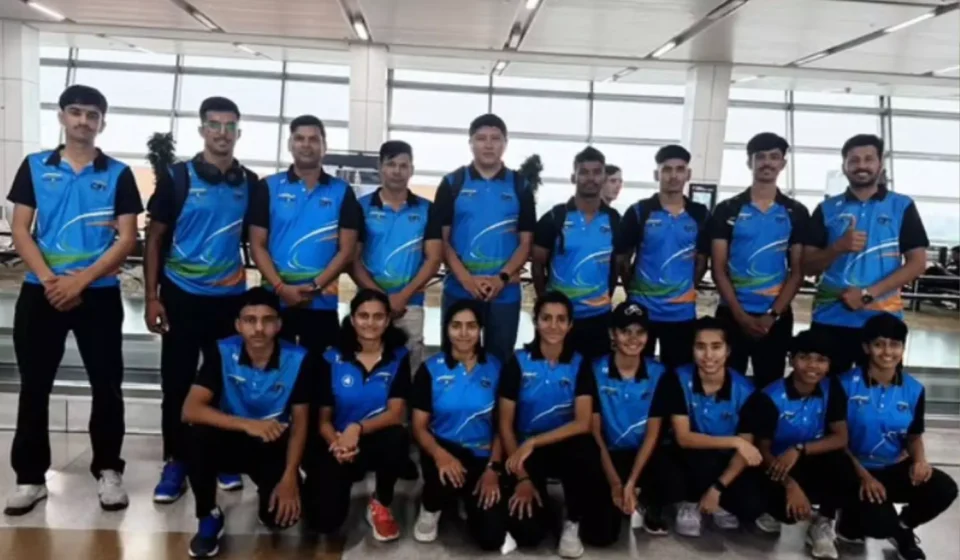
Indian Cyclists Pursue Historic Podium Finishes and Asian Games Qualification at the 2026 Asian Track Cycling Championships in the Philippines

The 2026 Asian Track Cycling Championships, currently underway at the Tagaytay City Velodrome in the Philippines, represents a pivotal juncture for Indian cycling as the nation seeks to reclaim its status among the continent’s elite. Running from March 25 to 31, the seven-day continental showdown has brought together the finest velodrome athletes from across Asia, serving not only as a battle for regional supremacy but also as the primary benchmark for the upcoming Asian Games selections. For the Indian contingent, the stakes are exceptionally high; the squad is currently navigating a three-year senior medal drought at this level, having returned empty-handed from the two previous iterations of the championships. This year’s campaign is viewed by the Cycling Federation of India (CFI) and the Ministry of Youth Affairs and Sports as a critical litmus test for the long-term developmental programs initiated over the last Olympic cycle.
The Quest to Break the Three-Year Medal Drought
India’s journey in international track cycling has seen significant peaks and troughs over the past decade. The current drought follows a period of historic success, most notably in 2022 when Ronaldo Singh Laitonjam became the first Indian to win a silver medal in a senior continental championship. Since that milestone, the transition to consistent podium finishes has proven challenging. The 2024 and 2025 editions of the Asian Track Cycling Championships saw Indian athletes finish tantalizingly close to the podium but ultimately failing to secure silverware in the senior categories.
The 2026 championships in Tagaytay City are therefore laden with psychological weight. The coaching staff has emphasized that while the primary goal is a medal, the underlying focus remains on timing and technical execution. Breaking the three-year hiatus would provide the necessary momentum for a squad that has shown immense potential in junior categories but has struggled to bridge the gap to the absolute dominance displayed by powerhouses like Japan, South Korea, and China.
Opening Day Success: A New National Record in Women’s Sprint
The Indian campaign began on a high note on March 25, driven by the exceptional performance of the women’s sprint team. Celestina, a rising star from the Andaman & Nicobar Islands, anchored the trio alongside Triyasha Paul and Keerthi Rangaswamy. The team demonstrated remarkable synchronization and explosive speed to set a new Indian national record in the women’s team sprint event.
Celestina’s rise within the Indian cycling ecosystem has been one of the most documented success stories in recent years. Hailing from a region with a growing reputation for producing track talent, her ability to lead the senior team at such a young age underscores the depth of the current talent pool. While the team did not secure a medal on the opening day, the shattering of the national record serves as a quantitative indicator of progress. In track cycling, where podiums are often decided by thousandths of a second, such incremental gains in national timings are vital for qualifying for global events, including the UCI Track Cycling World Championships.
David Beckham’s Keirin Performance and Technical Gains
The second day of the competition focused on the Men’s Keirin, an event known for its high-speed tactical maneuvering and physical intensity. David Beckham Elkatohchoongo, another standout athlete from the Andaman & Nicobar Islands, showcased his tactical maturity by reaching the final of the event. His journey to the final was marked by a significant psychological victory: he finished ahead of Japan’s Shinji Nakano, a former world medalist and a veteran of the international circuit.
In the final, Beckham faced a formidable field of world-class sprinters. Despite a valiant effort, he finished in 5th place, narrowly missing out on becoming the first Indian to medal in the Keirin at the senior Asian level. However, analysts and coaches have pointed to his performance as a "moral victory." Finishing 5th in an Asian final—especially one featuring top-tier Japanese and Malaysian riders—confirms that Beckham is currently among the top six sprinters in the continent. His performance in the Keirin is expected to serve as a warm-up for his primary discipline, the individual sprint, where he and Ronaldo Singh are expected to be India’s strongest medal prospects.
Individual Profiles: The Core of the Indian Contingent
The Indian squad for the 2026 championships is a blend of seasoned campaigners and emerging youth. Leading the charge is Ronaldo Singh, whose 2022 silver medal remains the benchmark for Indian track cycling. Ronaldo’s return to peak form is central to India’s medal hopes in the individual sprint and the 1km time trial. Having undergone specialized training stints in Europe and at the World Cycling Centre, Ronaldo’s technical proficiency in the "match sprint" will be under intense scrutiny over the coming days.
Supporting him is Jemsh Singh Keithellakpam, a rider who has shown steady improvement in the endurance and middle-distance categories. The men’s endurance squad, featuring Harshveer Singh, Vishvjeet Singh, Sahil Kumar, and Dinesh Kumar, faces the daunting task of competing in the Team Pursuit and individual endurance events like the Scratch Race and the Omnium.
On the women’s side, the focus extends beyond the sprint team. Harshita Jakhar and Meenakshi are two athletes who have garnered significant attention from the National Institute of Sports (NIS). Both have shown an "immense rise" in their power output and aerobic capacity over the last two years. Meenakshi, in particular, has become a mainstay in the individual pursuit, an event that requires grueling consistency and pacing. The inclusion of Swasti Singh, Pooja Danole, and the sprint trio of Celestina, Triyasha, and Keerthi provides India with its most well-rounded women’s squad in recent history.
The Tagaytay City Velodrome: Conditions and Challenges
The choice of Tagaytay City as the host venue introduces unique variables to the competition. The Tagaytay City Velodrome is a world-class facility, but the local climate—characterized by high humidity and fluctuating temperatures—can affect both athlete recovery and equipment performance. For track cyclists, air density is a critical factor; thinner air generally allows for faster times, but the coastal proximity and elevation of Tagaytay present a different set of aerodynamic challenges compared to the indoor velodromes of New Delhi or Nilai.
The Indian team arrived in the Philippines several days prior to the commencement of the event to acclimatize to these conditions. The technical staff has been focused on gear ratio adjustments to suit the track’s surface and the local atmospheric pressure, ensuring that the athletes can translate their training power into maximum velocity.
Strategic Importance: The Road to the 2026 Asian Games
The 2026 Asian Track Cycling Championships serve as the primary selection trial for the Asian Games, scheduled to be held in Aichi-Nagoya, Japan, later this year. The Cycling Federation of India has made it clear that performances in Tagaytay will be the deciding factor in finalizing the roster for the Games.
The Asian Games represent the pinnacle of the sport for many Indian athletes, second only to the Olympics. Given the government’s increased funding through the Target Olympic Podium Scheme (TOPS), there is significant pressure on the cycling federation to produce results that justify the investment. A medal in Tagaytay would virtually guarantee an athlete’s spot in the Asian Games squad and provide them with a higher seeding, which is crucial for favorable draws in the early rounds of sprint competitions.
Analysis of the Competitive Landscape
To understand the magnitude of the task facing Indian cyclists, one must look at the dominance of other Asian nations. Japan remains the gold standard in track cycling, particularly in the sprint events, due to their deep-rooted Keirin culture and professional domestic leagues. South Korea and China possess massive infrastructure and a high volume of athletes who compete regularly on the UCI Nations Cup circuit.
India’s strategy has been to narrow this gap through targeted high-performance coaching and international exposure. The fact that Indian riders like David Beckham are now finishing ahead of Japanese world medalists in heat races suggests that the gap is closing. However, the "final hurdle"—converting top-eight finishes into podium spots—requires a level of tactical composure that only comes with repeated exposure to high-pressure finals.
Looking Ahead: The Final Four Days
As the competition enters its final four days, the focus shifts to the individual sprint, the 1km time trial, and the endurance finals. The individual sprint is widely considered the "blue-riband" event of track cycling, and it is here that India hopes Ronaldo Singh or David Beckham can secure the elusive medal.
The endurance athletes, including Meenakshi and Harshita Jakhar, will also take center stage. Their progress in the Omnium—a multi-event discipline that tests versatility, speed, and stamina—will be a key indicator of India’s overall development in the non-sprint categories.
Official Outlook and Implications
While official statements from the CFI remain focused on the "process over results" mantra, the internal pressure to perform is palpable. Sources close to the coaching staff indicate that the record-breaking performance of the women’s sprint team has boosted morale within the camp. The technical analysis of David Beckham’s 5th place finish has also been largely positive, with coaches noting that his "peak power numbers" during the final were among the highest he has ever recorded.
The broader implications for Indian cycling are significant. A successful outing in the Philippines would likely lead to increased corporate sponsorship and further government backing for a sport that has long lived in the shadow of cricket and wrestling. Conversely, another medalless championship would prompt a rigorous review of the current coaching methodologies and selection criteria.
The Indian squad for the 2026 Asian Track Cycling Championships remains:
Men’s Squad:
- Ronaldo Singh
- David Beckham Elkatohchoongo
- Jemsh Singh Keithellakpam
- Harshveer Singh
- Vishvjeet Singh
- Sahil Kumar
- Dinesh Kumar
Women’s Squad:
- Celestina
- Triyasha Paul
- Keerthi Rangaswamy
- Swasti Singh
- Harshita Jakhar
- Pooja Danole
- Meenakshi
As the championships progress toward the March 31 conclusion, the eyes of the Indian sporting community remain fixed on Tagaytay City. The goal is clear: to turn national records and promising finishes into the tangible glory of an Asian medal, signaling the beginning of a new era for Indian track cycling on the road to the Asian Games and beyond.