Machoke: A Gen One Fighting Type’s Enduring Legacy and Strategic Versatility

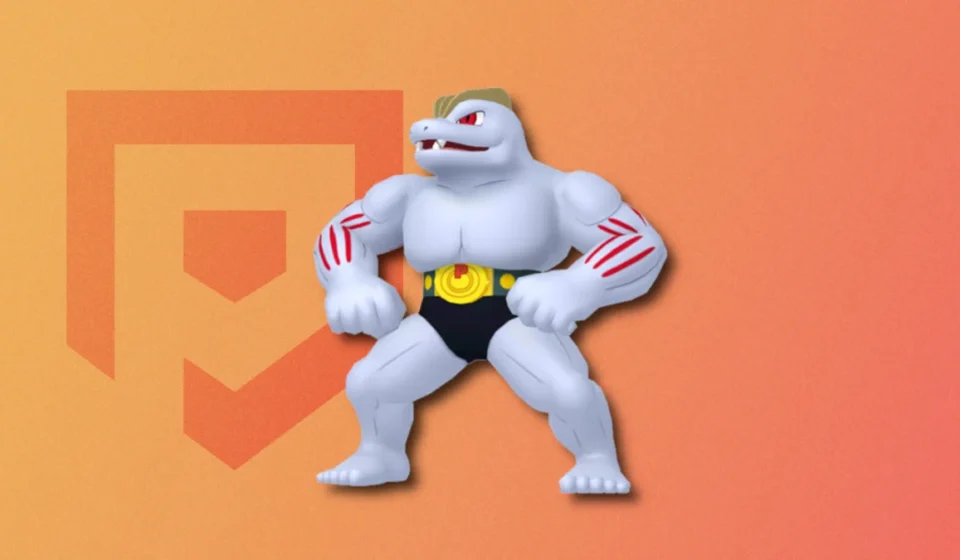
The Superpower Pokémon, Machoke, presents a somewhat divisive figure within the Pokémon universe due to its distinctly humanoid physique. Nevertheless, this Gen One staple has cemented its place as a formidable ally and a valuable asset in any trainer’s battle arsenal. This comprehensive guide delves into the multifaceted aspects of Machoke, offering a deep dive into its characteristics, in-game presence, and strategic utility across various Pokémon generations.
The expansive Pokédex, a testament to the rich biodiversity of the Pokémon world, features countless unique creatures, each holding a special place in the hearts of trainers. As we explore the intricacies of Machoke, it is important to acknowledge that every Pokémon has its proponents. For those interested in further exploration, a wealth of information on other remarkable Gen One Pokémon and broader Pokémon content is readily available.
Essential Machoke Data
To understand Machoke’s role and potential, a foundational understanding of its core attributes is crucial. These statistics provide a baseline for its capabilities and how it interacts within the game mechanics.
| Attribute | Detail |
|---|---|
| National Pokédex # | 067 |
| Type | Fighting |
| Abilities | Guts, No Guard (from Gen 4 onwards) |
| Hidden Ability | Steadfast |
| Gender Ratio | Male: 75%, Female: 25% |
| Catch Rate | 20.1% |
| Egg Groups | Human-Like |
| EV Yield | Two Attack |
This data highlights Machoke’s specialization in the Fighting type, a category known for its offensive prowess and direct combat capabilities. The abilities Guts and No Guard offer significant strategic options, while Steadfast provides a defensive edge. The gender ratio and catch rate also offer insights into its relative availability and breeding considerations within the game.
The Evolutionary Path of Machoke
Machoke’s journey begins as Machop, a relatively common Pokémon found in various early-game locations. Machop evolves into Machoke at level 28, a significant power jump that enhances its physical capabilities. The final stage of its evolution is Machamp, a powerful behemoth achieved through trading a Machoke or by using a Linking Cord in certain game iterations. This evolutionary chain underscores Machoke’s role as a pivotal mid-game powerhouse, bridging the gap between its nascent form and its ultimate, dominant evolution. The visual progression from the small, agile Machop to the muscular Machoke, and finally to the towering Machamp, reflects a clear emphasis on raw physical strength and combat readiness.
Machoke’s Presence Across Generations: A Chronological Look at Locations
The availability of Machoke has varied significantly across the different generations of Pokémon games, reflecting evolving game design and regional Pokédex inclusions. Understanding its historical presence provides context for its accessibility and the strategies trainers might have employed to acquire it.

Generation 1: The Kanto Era
In the foundational games, Pokémon Red, Blue, and Yellow, Machoke was primarily found in challenging late-game areas, emphasizing its status as a powerful, sought-after Pokémon.
- Red / Blue: Victory Road – This arduous dungeon, typically the final obstacle before the Elite Four, demanded high-level Pokémon and strategic navigation. Machoke’s presence here signaled its combat readiness.
- Yellow: Victory Road, or trade Cubone in Underground Path – The inclusion of a trade-based acquisition in Yellow offered an alternative route for players who might have struggled to find it in the wild.
Generation 2: The Johto Adventures
The sequel generation introduced new regions and expanded the Pokédex, with Machoke appearing in several key locations, often associated with mountainous or cave environments.
- Gold / Silver: Rock Tunnel and Mt. Mortar – These subterranean areas are known for their challenging terrain and formidable wild Pokémon.
- Crystal: Mt. Mortar, Mt. Silver Cave, and Rock Tunnel – The enhanced version of Generation 2 added Mt. Silver Cave, another notoriously difficult late-game area, further solidifying Machoke’s association with challenging environments.
Generation 3: The Hoenn and Kanto Remakes
The third generation saw Machoke’s acquisition primarily through evolution, with wild encounters limited to the remakes of the Kanto games.
- Ruby / Sapphire / Emerald: Evolve Machop – This generation emphasized obtaining Machoke through its pre-evolution, requiring trainers to focus on raising Machop.
- FireRed / LeafGreen: Cerulean Cave, Mt. Ember, and Victory Road – The remakes brought Machoke back to its original Kanto haunts, including the post-game dungeon, Cerulean Cave.
- Colosseum / XD: Trade – The console-based RPGs of this era often relied on trading mechanics for certain Pokémon, including Machoke.
Generation 4: The Sinnoh Region
Generation 4 offered a wide array of locations for Machoke, particularly within the varied landscapes of Sinnoh.
- Diamond / Pearl: Routes 210, 211, 216, 217, 225, 226, Stark Mountain, Mt. Coronet, Victory Road, and Acuity Lakefront – This extensive list highlights Machoke’s widespread presence across Sinnoh’s natural and mountainous terrains.
- Platinum: Routes 210, 211, 225, 226, and Mt. Coronet – The enhanced version streamlined some locations but maintained its presence in key areas.
- HeartGold / SoulSilver: Cliff Cave, Mt. Mortar, Cerulean Cave, Rock Tunnel, and the Safari Zone – The remakes of Gold and Silver reintroduced Machoke to familiar Johto and Kanto locations, with the Safari Zone offering a unique encounter method.
Generation 5: The Unova Journey
Machoke’s availability in Generation 5 was more restricted, often requiring trading or evolution.
- Black / White: Trade – Direct wild encounters were absent, making trading the primary method.
- Black 2 / White 2: Trade – The sequels continued this trend of trade-based acquisition.
Generation 6: Kalos and Hoenn Remakes
Generation 6 introduced the Friend Safari, a novel way to encounter Pokémon, and continued the evolution-centric approach for the Hoenn remakes.
- X / Y: Friend Safari (Fighting) – This feature provided a consistent way to find specific types of Pokémon, including Machoke.
- Omega Ruby / Alpha Sapphire: Evolve Machop – Similar to the original Hoenn games, Machoke was primarily obtained through evolving Machop.
Generation 7: Alola and Kanto Revisited
The Alola region offered a new environment for Machoke encounters, while the Let’s Go games brought it back to its Kanto roots.

- Sun / Moon: Vast Poni Canyon – This challenging area in the Alola region was Machoke’s main wild habitat.
- Ultra Sun / Ultra Moon: Vast Poni Canyon – The enhanced versions maintained its presence in the same location.
- Let’s Go Pikachu / Let’s Go Eevee: Victory Road – A return to its classic Kanto hunting ground.
Generation 8: Galar and Sinnoh Remakes
Generation 8 saw a significant expansion of wild areas and introduced the Grand Underground, offering numerous opportunities to find Machoke.
- Sword / Shield: Axew’s Eye, Giant’s Seat, Stony Wilderness, Hammerlocke Hills, and Max Raid Battles in Dusty Bowl, North Lake Miloch, Rolling Fields, South Lake Miloch, and Stony Wilderness – The Wild Area provided a dynamic environment for encounters.
- Crown Tundra: Max Lair (Dynamax Adventure) – This post-game feature offered another avenue for acquiring powerful Pokémon.
- Brilliant Diamond / Shining Pearl: Routes 210, 211, 216, 217, 225, 226, Stark Mountain, Mount Coronet, Victory Road, Acuity Lakefront, and Grand Underground – Spacious Cave, Grassland Cave, Whiteout Cave, and Sunlit Cavern – The Grand Underground significantly increased Machoke’s accessibility in these Sinnoh remakes.
- Legends: Arceus: Obsidian Fieldlands, Cobalt Coastlands, Coronet Highlands, and Alabaster Icelands – The unique gameplay of Legends: Arceus featured Machoke in various open-world zones.
Generation 9: Paldea and Beyond
- Scarlet / Violet: Unobtainable – In the base Paldea region, Machoke is not natively obtainable.
- Legends: Z-A: Bleu District: Wild Zone 12 – This upcoming title promises to reintroduce Machoke into a new environment.
Machoke in Pokémon Poképia
Within the specific context of Pokémon Poképia, acquiring Machoke involves a more nuanced approach related to habitat creation. Trainers need to construct either the "grassy training field" or the "box to the rhythm" habitat within the Poképia ecosystem. Fortunately, Machoke’s appearance is often tied to the "Rocky Ridges" storyline, making its spawning relatively straightforward once the appropriate habitat is established. The grassy training field is highlighted as the more accessible option, requiring only four red tall grass items and two sandbags.
Machoke’s Combat Prowess: Type Strengths and Weaknesses
As a pure Fighting-type Pokémon, Machoke possesses a distinct set of strengths and weaknesses that significantly influence its effectiveness in battle. Understanding these matchups is paramount for strategic team building and combat execution.
| Damage Category | Types Affected |
|---|---|
| Normal Damage | Dragon, Electric, Fighting, Fire, Ghost, Grass, Ground, Ice, Normal, Poison, Steel, Water |
| Weak To | Fairy, Flying, Psychic |
| Resists | Bug, Dark, Rock |
| Immune To | N/A |
Machoke’s vulnerability to Psychic-type attacks is a notable drawback, often described poetically as its physical might being no match for mental acuity. However, its resistance to Bug, Dark, and Rock-type moves, coupled with its ability to deal super-effective damage against Normal, Rock, Steel, Ice, and Dark types, provides a robust offensive and defensive profile. This makes it a critical counter to many common threats.
Machoke’s Moveset: A Comprehensive Overview
Machoke’s combat effectiveness is further defined by its diverse learnable moves. The following lists detail the moves it can acquire through leveling up and by using Technical Machines (TMs), offering a broad spectrum of offensive and supportive options.
Level-Up Moves
| Level | Move | Type |
|---|---|---|
| One | Leer | Normal |
| One | Rock Smash | Fighting |
| Seven | Focus Energy | Normal |
| 12 | Power-Up Punch | Fighting |
| 14 | Brutal Swing | Dark |
| 16 | Bullet Punch | Steel |
| 18 | Knock Off | Dark |
| 20 | Bulk Up | Fighting |
| 25 | Brick Break | Fighting |
| 30 | Bulldoze | Ground |
| 36 | Detect | Fighting |
| 44 | Double-Edge | Normal |
| 54 | Dynamic Punch | Fighting |
Learnable TM Moves
| Move | Type |
|---|---|
| Body Slam | Normal |
| Brick Break | Fighting |
| Bulk Up | Fighting |
| Bulldoze | Ground |
| Close Combat | Fighting |
| Comet Punch | Normal |
| Dig | Ground |
| Double-Edge | Normal |
| Drain Punch | Fighting |
| Dual Chop | Dragon |
| Earthquake | Ground |
| Endure | Normal |
| Facade | Normal |
| Fire Blast | Fire |
| Fire Punch | Fire |
| Fissure | Ground |
| Flamethrower | Fire |
| Focus Blast | Fighting |
| Ice Punch | Ice |
| Knock Off | Dark |
| Light Screen | Psychic |
| Low Sweep | Fighting |
| Metronome | Normal |
| Poison Jab | Poison |
| Power-Up Punch | Fighting |
| Protect | Normal |
| Rock Slide | Rock |
| Rock Smash | Fighting |
| Rock Tomb | Rock |
| Substitute | Normal |
| Thunder Punch | Electric |
| Work Up | Normal |
The breadth of Machoke’s movepool, encompassing powerful STAB (Same-Type Attack Bonus) moves like Dynamic Punch and Brick Break, along with utility options like Bulk Up and Detect, allows for flexible team synergy and adaptation to various battle scenarios. Its access to elemental punches via TMs further broadens its offensive coverage, enabling it to confront a wider array of opponents effectively.
In conclusion, Machoke, despite its somewhat controversial appearance, stands as a testament to strategic design within the Pokémon franchise. Its robust Fighting-type identity, coupled with a diverse set of abilities and a rich movepool, ensures its continued relevance as a valuable team member for trainers across generations. From its early Kanto origins to its varied presence in later regions and unique acquisition methods in newer titles, Machoke’s journey is a microcosm of the evolving Pokémon landscape, always offering a powerful, physical presence for those who understand its strengths.