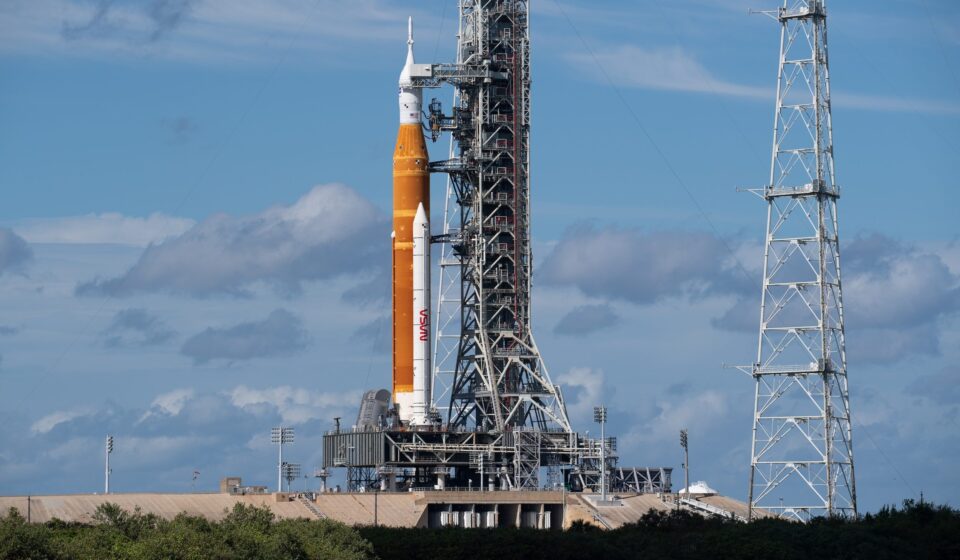

NASA has announced a new target date for the highly anticipated Artemis II crewed mission to the moon: April 1. While this date falls on April Fools’ Day, the space agency has emphasized its serious commitment to launching its monumental Space Launch System (SLS) rocket and Orion spacecraft with four astronauts aboard. This mission marks a significant milestone as it will be the first crewed flight to venture towards the moon since the Apollo 17 mission in December 1972, signaling a renewed era of human lunar exploration.
Artemis II: A Leap Towards Lunar Return
The Artemis II mission is designed as a critical precursor to eventual lunar landings. Unlike its Apollo predecessors, this mission will not involve a landing on the lunar surface. Instead, the crew will embark on a trajectory that circumnavigates the moon, performing crucial system checks and gathering valuable data. This orbital mission is a vital step in validating the hardware and operational procedures necessary for future crewed landings. The ultimate goal of the Artemis program, the first human lunar landing since the Apollo era, is currently slated for 2028.
Official Confirmation and Launch Preparations
NASA officially revealed the new target launch date during a press conference held on Thursday. Following a comprehensive Artemis II Flight Readiness Review, the launch team provided a unanimous "go" to proceed with preparations for the mission. This review is a critical juncture in the launch process, ensuring that all systems, personnel, and procedures are meticulously vetted and deemed ready for the demanding conditions of spaceflight.

The agency outlined a detailed schedule for the upcoming launch. If all systems remain nominal, the massive SLS rocket, with the Orion spacecraft already integrated, is scheduled to be rolled out to Launch Pad 39B at the Kennedy Space Center in Florida on Thursday, March 19. The launch window is set to open on April 1 at 6:20 p.m. Eastern Time. This precise timing is crucial, taking into account orbital mechanics, the position of the moon, and other celestial factors that optimize the mission trajectory and duration.
Navigating Technical Hurdles
The Artemis II mission experienced a previous delay from its initially hoped-for February launch. This postponement was necessitated by unforeseen technical issues that emerged during a critical wet dress rehearsal. A wet dress rehearsal is an essential test that simulates the full launch sequence, including fueling the rocket and performing countdown procedures, without actually igniting the engines. These rehearsals are designed to identify and rectify any anomalies before the actual launch attempt. The identification of these issues, though pushing back the launch date, underscores NASA’s commitment to safety and mission success.
In a departure from previous practices, NASA has stated that it does not intend to conduct another full wet dress rehearsal before the Artemis II launch. This decision, as articulated by NASA’s Shawn Quinn in comments to NASASpaceflight, stems from the extensive work and diagnostics already performed on the SLS rocket in the days following the identification of the previous technical challenges. The agency’s engineers have reportedly implemented and verified the necessary fixes, leading to the confidence in proceeding towards the April 1 target.
The Artemis II Crew: Pioneers of a New Era
The four astronauts selected for this historic mission represent a diverse and highly skilled crew. Commander Reid Wiseman, Pilot Victor Glover, and Mission Specialists Christina Koch and Jeremy Hansen of the Canadian Space Agency (CSA) will form the crew that will venture around the moon. This selection highlights the international collaboration inherent in the Artemis program, with Canada being the first international partner to have an astronaut participate in a lunar mission. The crew’s extensive experience in spaceflight, including previous missions to the International Space Station (ISS), equips them with the expertise necessary to manage the complexities of this pioneering voyage.

Contingency and Mission Profile
NASA has built a robust launch schedule to accommodate potential disruptions. The primary launch window on April 1 extends for two hours. Should circumstances such as technical issues or adverse weather conditions prevent a launch on that day, NASA has secured additional launch opportunities on each of the following five days. Furthermore, a separate launch opportunity is available on April 30, providing ample flexibility to ensure a successful liftoff.
Once airborne, the Orion spacecraft will initially enter Earth orbit to allow the crew and mission control to conduct thorough system checks. Following these validations, a precisely timed engine burn will propel Orion onto a translunar trajectory, setting its course for the moon. The spacecraft will then utilize the gravitational pull of both the Earth and the moon to execute a slingshot maneuver, initiating its return journey. The mission is projected to conclude approximately 10 days after launch with a splashdown in the Pacific Ocean, where recovery teams will be standing by to retrieve the capsule and its crew.
Broader Context: The Artemis Program and Lunar Ambitions
The Artemis program is NASA’s ambitious initiative to return humans to the moon and establish a sustainable presence there, serving as a stepping stone for future missions to Mars. The program’s name, derived from the twin sister of Apollo in Greek mythology, signifies a new chapter in lunar exploration. Artemis I, an uncrewed test flight of the SLS rocket and Orion spacecraft, successfully completed its mission in late 2022, demonstrating the capabilities of the hardware in deep space. Artemis II represents the crucial next step: putting astronauts on this powerful launch system and sending them on a lunar trajectory.
The program aims to achieve a number of scientific and technological objectives. These include deploying advanced scientific instruments on the lunar surface, exploring the lunar south pole for water ice, and testing new technologies for in-situ resource utilization. The knowledge and experience gained from Artemis missions are expected to pave the way for long-term human habitation on the moon and eventual crewed expeditions to the Red Planet.

The Significance of Returning to Lunar Space
The prospect of sending humans on a mission beyond low Earth orbit for the first time in over half a century carries immense significance. It reignites public interest in space exploration, inspires future generations of scientists and engineers, and underscores humanity’s innate drive to explore the unknown. The Artemis program also fosters international cooperation, bringing together space agencies and private companies from around the globe to achieve common goals.
The development of the SLS rocket and Orion spacecraft represents a monumental engineering feat. The SLS is the most powerful rocket ever built, designed to carry heavy payloads to deep space. Orion, a state-of-the-art crew capsule, is equipped with advanced life support systems and navigation capabilities to ensure the safety and success of its astronauts on long-duration missions.
Looking Ahead: Artemis III and Beyond
While Artemis II focuses on a lunar flyby, the subsequent mission, Artemis III, is intended to achieve the first crewed lunar landing of the program. This mission will see astronauts, including the first woman and the first person of color on the moon, descend to the lunar surface. The timeline for Artemis III is still under development, but it is intrinsically linked to the success of Artemis II and the ongoing development of crucial lunar lander technologies.
The journey to the moon is not merely a scientific endeavor; it is a testament to human ingenuity, perseverance, and the enduring spirit of exploration. As NASA prepares to roll out the Artemis II mission on April 1, the world will be watching with bated breath, eager to witness the dawn of a new era in space exploration and the return of humanity to the vicinity of the moon. The success of Artemis II will be a critical validation of the technologies and strategies that will guide our path as we venture further into the cosmos.