Nationwide Athletics League Under ASMITA Initiative Set to Empower Two Lakh Fifty Thousand Women Across India on International Women’s Day

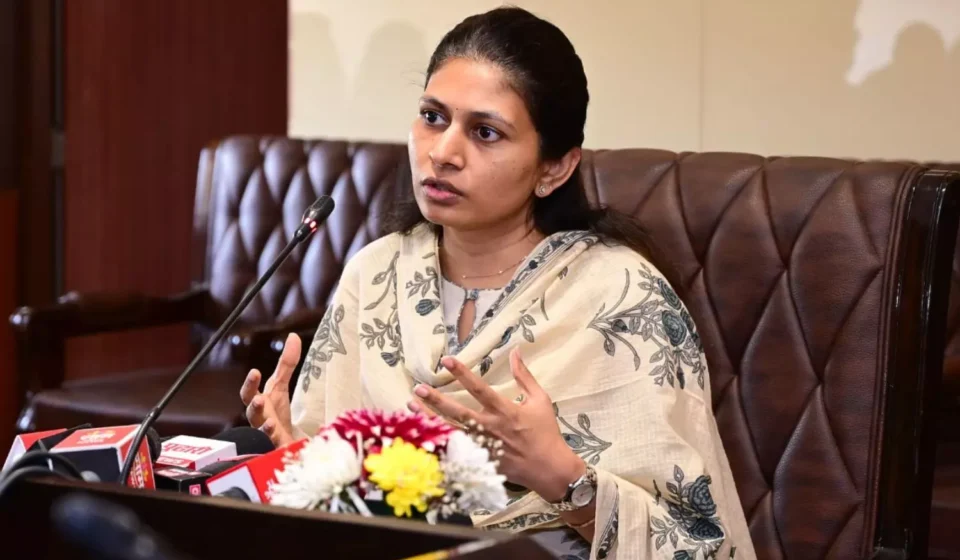
In a significant move to bolster the presence of women in the national sporting arena, the Union Ministry of Youth Affairs and Sports has announced a massive, synchronized athletics league to be held across 250 locations nationwide. This initiative, organized under the ASMITA (Achieving Sports Milestone by Inspiring Women Through Action) programme, is scheduled to take place on March 8, coinciding with International Women’s Day. The announcement was made by the Minister of State for Youth Affairs and Sports, Raksha Nikhil Khadse, during a high-level media briefing held at the Major Dhyan Chand National Stadium in New Delhi.
The upcoming league represents one of the most ambitious grassroots sporting events for women in India’s history. By leveraging the existing ASMITA platform, the government aims to create a unified sporting experience that bridges the gap between urban centers and rural heartlands. Minister Khadse emphasized that the initiative is not merely a one-day celebration but a strategic tool for national integration. She noted that there is no better instrument than the ASMITA platform—which has already seen a surge in popularity across the country—to bring together young women and provide them with a stage to showcase their athletic prowess.
The ASMITA Mission and the Khelo India Framework
The ASMITA programme operates as a vital component of the broader Khelo India mission, which was launched by the Government of India to revive the sports culture at the grassroots level. Unlike traditional sports programs that may focus on elite performance, ASMITA is specifically designed as a gender-neutral mission with a targeted focus on promoting sports among women through structured leagues and competitive frameworks.
Since its inception in 2021, the ASMITA leagues have functioned with a dual purpose. First, they aim to significantly increase the volume of female participation in physical activities and competitive sports. Second, they serve as a primary scouting ground for the Sports Authority of India (SAI) and various National Sports Federations (NSFs). By conducting these leagues across multiple age groups—ranging from zonal to national levels—the ministry creates a pipeline for talent identification that ensures no promising athlete is overlooked due to geographical or social barriers.
The Sports Authority of India provides comprehensive support to NSFs to facilitate these leagues. This support includes financial assistance, logistical coordination, and technical expertise. The goal is to move beyond the occasional tournament model and toward a sustainable, year-round competitive calendar for female athletes in India.
Tracking Progress: A Three-Year Statistical Overview
To understand the scale of the upcoming March 8 event, it is essential to look at the trajectory of the ASMITA programme over the last three years. Since 2021, the initiative has demonstrated exponential growth. To date, more than 2,600 leagues have been successfully conducted across 34 different sports disciplines. These events have spanned over 550 districts and more than 700 cities, illustrating a reach that is virtually unparalleled in Indian domestic sports.
One of the most notable achievements of the ASMITA programme is its penetration into historically underserved and challenging regions. The ministry reported that leagues have been successfully organized in the farthest corners of the North-east, including remote areas of Arunachal Pradesh and Mizoram. Furthermore, the program has made significant inroads into regions that were once heavily impacted by Naxalism. By introducing sports as a medium of engagement in these areas, the government has provided a constructive outlet for youth, particularly young women, who previously had limited access to such opportunities.
Statistical data indicates that over 300,000 women have already participated in various ASMITA events since the program’s launch. The upcoming International Women’s Day league aims to add another 250,000 participants in a single day, nearly doubling the historical participation figure in one massive push.
Logistics and Event Structure for March 8
The nationwide athletics league on March 8 will focus specifically on track events, which are considered the foundation of all athletic endeavors. The competitions will include the 100m, 200m, and 400m sprints. To ensure fair competition and a clear pathway for development, the events will be divided into three distinct age categories:
- Under-13 (U-13)
- 13-18 years
- 18+ (Senior category)
To manage an event of this magnitude, the Ministry of Youth Affairs and Sports has devised a rigorous operational framework for each of the 250 locations. Every venue will be staffed by a specialized team comprising five technical officials, ten dedicated volunteers, one competition manager, and one District Youth Officer (DYO).
In a move to provide inspiration and mentorship, each location will also feature at least one Past Champion Athlete (PCA). These veteran sportspersons will interact with the participants, sharing their experiences and providing technical insights. This mentorship component is designed to bridge the gap between aspiring youngsters and those who have already achieved success at the national or international level.
Collaborative Implementation and Capacity Building
The execution of this nationwide league involves a multi-tiered collaboration between various government and semi-government entities. Central to this effort is "MY Bharat" (Mera Yuva Bharat), an autonomous body that serves as a "Phygital" (physical + digital) platform for youth development. By integrating MY Bharat, the ministry ensures that the registration and engagement process is streamlined and data-driven.
The SAI ecosystem, including Khelo India Centres (KICs) and National Centres of Excellence (NCOEs), will provide the necessary infrastructure and high-performance oversight. At the local level, State and District Sports Associations will work alongside District Youth Officers to ensure that the events adhere to professional standards.
A critical aspect of the March 8 initiative is capacity building. The ministry has mandated that each of the 250 athletics events must include women technical officials. These officials will participate in developmental workshops and receive training in officiating norms aligned with the Athletics Federation of India (AFI). Furthermore, the program includes training for digital data upload and competition documentation. This ensures that the results from every district are recorded in a centralized database, allowing for long-term tracking of athlete performance and the creation of a national talent map.
Strategic Alignment with India’s Olympic Ambitions
The timing and scale of this initiative are deeply connected to India’s long-term sporting objectives. Minister Khadse linked the ASMITA league to the nation’s preparations for the Commonwealth Games 2030 and the highly anticipated bid to host the 2036 Olympic Games.
"We must understand that readiness begins at the district level," Khadse stated. "Hosting an Olympic Games requires more than just world-class infrastructure in a single city. It requires trained human resources in every district of India. It requires certified technical officials, administrative excellence, and a culture of sports that permeates every level of society."
By training hundreds of technical officials and competition managers for this league, the ministry is essentially building a professional workforce capable of handling large-scale international events in the future. The data collected from the 250,000 participants will also provide a baseline for India’s athletic potential as the country seeks to improve its medal tallies on the global stage.
Socio-Economic Impact and the Vision of "Nari Shakti"
Beyond the medals and the stopwatches, the ASMITA league is viewed as a vehicle for social change. The objective is to encourage girls in villages and small towns to view sports not just as a hobby, but as a viable career path. This aligns with the "Nari Shakti" (Women Power) vision championed by Prime Minister Narendra Modi, which emphasizes the empowerment of women as a cornerstone of India’s development.
For many participants in rural districts, this league will be their first exposure to a formal, timed competition with professional officiating. Such experiences are crucial for building the confidence necessary to compete at higher levels. By decentralizing the events to 250 locations, the government is removing the financial and logistical hurdles that often prevent rural families from sending their daughters to state-level competitions.
The inclusion of the 18+ category is also significant, as it encourages women to stay active in sports beyond their school years—a period where female participation typically drops off in India due to societal pressures or lack of opportunities.
Conclusion and Future Outlook
As the Ministry of Youth Affairs and Sports gears up for March 8, the focus remains on ensuring that the momentum generated by this single-day event is sustained. The ASMITA programme is expected to continue its expansion throughout the 2024-25 sporting calendar, with more disciplines being added to the league format.
The success of the 250-location athletics league will serve as a proof of concept for future nationwide "mega-events" across other sports like wrestling, boxing, and hockey. By creating a standardized, high-quality competition environment in every district, India is slowly but surely transforming its sporting landscape. The goal is to move toward a future where a young girl in a remote village in Mizoram or a small town in Maharashtra has the same access to technical officiating and talent identification as an athlete in a metropolitan city.
With the combined forces of SAI, MY Bharat, and the ASMITA initiative, the March 8 league is set to be more than a commemoration of International Women’s Day—it is poised to be a milestone in India’s journey toward becoming a global sporting superpower.