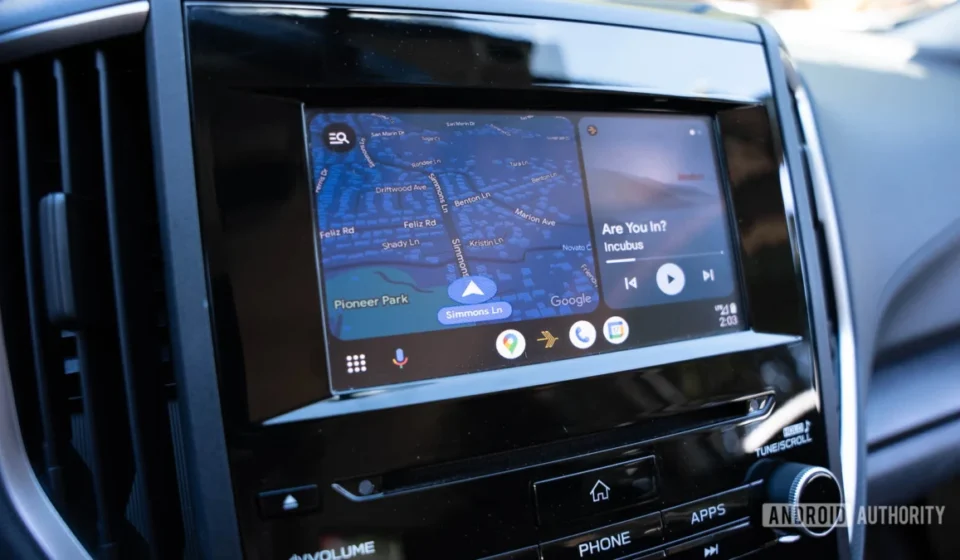
Navigation Feature Disruptions Plague Android Auto Users: Google Maps Speedometer Vanishes While Waze Journey Information Remains Hidden

A significant wave of technical issues is currently impacting the functionality of key navigation applications within the Android Auto ecosystem, leaving a substantial segment of users without critical driving information. Reports indicate that the recently introduced live speedometer feature in Google Maps on Android Auto has abruptly disappeared for many users, alongside the speed limit indicator and, in some cases, even visual cues for stop signs and traffic lights. This widespread disruption follows closely on the heels of an ongoing bug affecting Waze users, where essential journey information is being obscured, exacerbating concerns about the reliability of in-car navigation platforms powered by Google.
The Crucial Role of In-Car Navigation and Android Auto’s Evolution
Android Auto, Google’s bespoke platform designed to bring core smartphone functionalities safely and seamlessly into the vehicle’s infotainment system, has become an indispensable tool for millions of drivers worldwide. Since its introduction in 2015, the system has evolved from a simple projection interface to a sophisticated hub, integrating navigation, communication, and media consumption. Its primary allure lies in its ability to leverage familiar smartphone applications, such as Google Maps and Waze, directly onto the car’s display, offering an intuitive and integrated driving experience. The reliability of these navigation tools is paramount, not only for convenience but also for road safety, as they provide real-time directions, traffic updates, and crucial information like speed limits.
The development of in-car navigation has seen a dramatic shift from dedicated GPS devices to integrated solutions. Early in-car systems were often proprietary and costly, with infrequent map updates. The advent of smartphone integration, pioneered by systems like Android Auto and Apple CarPlay, democratized access to up-to-date, dynamic navigation powered by robust cloud services. This evolution has fostered a reliance among drivers on these platforms for everything from daily commutes to long-distance road trips. Consequently, any disruption to core functionalities, particularly those related to safety and legal compliance like speed indicators, can have significant ramifications for user experience and trust.
The Disappearing Google Maps Speedometer: A Timeline of Frustration
The live speedometer feature in Google Maps, a standard offering on its mobile application and a long-standing component of Apple CarPlay, was a highly anticipated addition to Android Auto. Its absence had been a point of contention for Android Auto users for years, often leading to comparisons with CarPlay’s more complete feature set. The first glimmers of its arrival on Android Auto began to emerge in July of the current year, when a select group of Maps beta testers reported seeing the live speedometer integrated into their navigation interface. This initial rollout was met with widespread enthusiasm within the Android Auto community, signaling Google’s commitment to feature parity across its various platforms.
The introduction of the speedometer was not a mere convenience; it addressed a fundamental need for drivers to quickly and accurately monitor their speed in relation to posted limits without having to constantly shift focus between the car’s dashboard and the navigation screen. For many, this feature offered an enhanced layer of situational awareness and an aid in adhering to traffic laws, thereby reducing the risk of speeding violations and promoting safer driving habits.
However, the excitement proved to be short-lived for many. Recent reports from various online forums, most notably the r/AndroidAuto subreddit, indicate that the live speedometer has abruptly vanished from Google Maps for a significant number of users who had previously received it. What started as a promising update has now turned into a source of considerable frustration. The issue extends beyond just the speedometer; affected users are also reporting the disappearance of the speed limit indicator itself, a crucial piece of information for legal compliance. More alarmingly, some drivers have noted the absence of visual cues for stop signs and traffic lights, features that provide critical advanced warning in complex urban environments. This sudden regression in functionality has left many users questioning the stability and reliability of the Android Auto platform. The inconsistency of the issue—with some users retaining the feature while others have lost it—further compounds the confusion and difficulty in pinpointing a common cause.
Waze’s Persistent Bug: Obscured Journey Information
Compounding the issues faced by Google Maps users, the popular community-driven navigation app, Waze, continues to grapple with its own significant bug on Android Auto. This particular issue involves the hiding of essential journey information, a core component of the Waze experience. Typically, Waze provides a rich overlay of data, including estimated time of arrival (ETA), remaining distance, upcoming turn instructions, real-time traffic alerts, and community-reported hazards. When this information is obscured or entirely missing, the utility of the application is severely diminished.
The implications of this Waze bug are substantial. Drivers rely on this information for efficient route planning and dynamic adjustments based on traffic conditions. Without clear visibility of their ETA or next turn, users may experience increased anxiety, potential missed exits, or even resort to glancing at their phone directly, a dangerous and illegal practice in many jurisdictions. The community-driven aspect of Waze, which thrives on real-time user input for traffic and hazard reporting, is also indirectly impacted. If users are struggling to even see their basic journey details, their engagement with reporting features might decrease, potentially affecting the accuracy and richness of Waze’s crowdsourced data for other drivers. This ongoing issue highlights a broader challenge in maintaining seamless integration and consistent performance for third-party applications within the Android Auto framework.
Supporting Data and Market Context
To fully appreciate the scope of these disruptions, it’s essential to consider the vast user base of Android Auto and the navigation apps within it. Android Auto is compatible with hundreds of millions of vehicles globally, supporting a significant portion of the driving population. Google Maps, by itself, boasts over a billion active users worldwide, with Waze also commanding a substantial user base, particularly in regions where its real-time traffic data is highly valued. The sheer scale means that even a bug affecting a percentage of users can translate into millions of frustrated drivers.
Industry reports consistently highlight that navigation is one of the most frequently used features on in-car infotainment systems. According to various automotive surveys, a majority of new car buyers prioritize integrated navigation and smartphone connectivity. The dependence on these systems for daily commutes, commercial transport, and leisure travel underscores the critical need for uninterrupted service. The sudden loss of features, especially those related to safety and legal compliance, not only detracts from the user experience but also raises questions about the consistency of software updates and quality control within Google’s automotive division.
Technical Analysis and Inferred Causes
The root cause of these concurrent issues remains officially unconfirmed, but industry experts and user communities have speculated on several possibilities. Software rollouts, particularly for large-scale platforms like Android Auto, are often complex, involving staged deployments, A/B testing, and server-side switches.
For the Google Maps speedometer, its initial appearance for beta testers followed by a widespread disappearance suggests a potential "rollback" by Google. This could occur if the feature, despite initial positive feedback, encountered unforeseen bugs in a broader deployment, caused performance issues on certain vehicle head units, or conflicted with other system components. A server-side change could easily enable or disable features for specific user groups or regions without requiring a full app update. This method allows developers to quickly address critical issues or pull back unstable features without forcing every user to download a new app version.
Similarly, the Waze full-screen bug could stem from a recent update to either Waze itself, the Android Auto application, or the underlying Android operating system. Compatibility issues between different software versions, particularly when one component updates faster than another, are a common source of glitches. The fragmentation of the Android ecosystem, with numerous device manufacturers and varying Android versions, can also complicate testing and deployment, making it challenging to ensure a consistent experience across all setups. Another possibility is a temporary backend service disruption affecting data delivery to the navigation apps. Without an official statement from Google or Waze, these remain informed inferences based on typical software development and deployment patterns.
Broader Impact and Implications
The ongoing navigation feature disruptions carry significant broader implications for users, manufacturers, and Google itself.
User Experience and Trust: The most immediate impact is on user experience. Drivers who rely on these features for daily navigation are suddenly finding their routines disrupted. The frustration is compounded when a much-anticipated feature like the live speedometer appears and then vanishes, eroding trust in the platform’s reliability and consistency. This can lead to users seeking alternative navigation methods, potentially increasing smartphone usage while driving, which poses its own safety risks.
Safety Concerns: The disappearance of the live speedometer and speed limit indicator raises direct safety concerns. Drivers may inadvertently exceed speed limits, increasing the risk of accidents and incurring fines. While vehicles have their own built-in speedometers, the convenience of having this information prominently displayed on the navigation screen, often with contextual speed limit data, significantly enhances driver awareness. The reported loss of stop sign and traffic light indicators further exacerbates these safety worries, particularly in unfamiliar areas.
Legal and Financial Implications: For drivers, consistent and accurate speed limit information is crucial for legal compliance. In an era where traffic enforcement often involves automated systems, unintended speeding due to a faulty navigation display could lead to costly fines and demerit points, impacting insurance premiums.
Competitive Landscape: The issues also reflect on the competitive landscape. Apple CarPlay, Android Auto’s primary rival, has largely maintained a consistent feature set and a reputation for stability. Such widespread bugs in Android Auto could potentially drive users towards competing platforms or even influence future car purchasing decisions if integrated infotainment system reliability becomes a deciding factor.
Manufacturer Relationships: Car manufacturers invest heavily in integrating Android Auto into their vehicles, promoting it as a key feature. Persistent issues could strain relationships between Google and these automotive partners, who expect a seamless and reliable user experience to uphold their brand reputation.
Official Responses and Future Outlook
As of the latest reports, Google has been contacted for an official comment on the situation. Typically, in such scenarios, companies like Google will conduct an internal investigation to identify the root cause of the problem. A common response might involve acknowledging the issue, stating that their teams are actively working on a fix, and advising users to ensure their applications and Android Auto are updated to the latest versions. However, specific timelines for resolution are often not provided, given the complexities involved in diagnosing and deploying fixes across a diverse ecosystem of devices and vehicles.
Resolutions for such issues can take various forms. A server-side fix, which does not require users to update their apps, is often the quickest for problems related to feature activation or deactivation. For more complex bugs, an over-the-air (OTA) update to the Google Maps or Waze app, or even to the Android Auto application itself, might be necessary. Users are generally encouraged to keep their apps updated and to report issues through official channels to provide developers with crucial diagnostic data.
The expectation from the user community is clear: a swift resolution and transparent communication from Google. Given the critical role of navigation in modern driving, ensuring the stability and reliability of these features is paramount. The current situation underscores the continuous challenges in developing and maintaining complex software platforms that integrate seamlessly with diverse hardware environments, while also meeting the high expectations of millions of users who rely on these systems daily for safe and efficient travel. As technology continues to evolve, the demand for robust, error-free in-car experiences will only grow, placing increased pressure on developers to deliver flawless performance.