Nvidia Vera Architecture and the Strategic Shift Toward Central Processing Units in Agentic Artificial Intelligence Infrastructure

The landscape of high-performance computing is undergoing a significant architectural transition as the industry moves from large-scale model training toward the deployment of autonomous AI agents. At the annual Nvidia GTC AI conference, Nvidia Corporation announced a strategic expansion of its hardware portfolio, signaling a renewed emphasis on central processing units (CPUs) to address the evolving requirements of "agentic AI." This shift marks a notable departure from the previous three years, during which graphics processing units (GPUs) were the primary focus of data center investment. The unveiling of the 88-core Vera data center CPU and the integrated Vera CPU Rack suggests that while GPUs remain essential for parallel processing, the next phase of artificial intelligence will rely heavily on the sequential logic and energy efficiency of advanced CPU architectures.
The Technological Pivot: From Parallel Processing to Agentic Workflows
Since the emergence of generative AI in late 2022, the technology sector has prioritized GPUs due to their ability to perform thousands of simultaneous calculations, a requirement for training large language models (LLMs). However, as the industry transitions toward "AI agents"—software entities designed to perform complex, multi-step tasks autonomously—the hardware requirements have shifted. Unlike the training phase, which requires massive raw power for pattern recognition, agentic workflows involve high-frequency decision-making, task prioritization, and sequential logic.
Nvidia’s leadership noted during the GTC conference that CPUs are becoming the primary bottleneck in scaling these new workflows. While GPUs are optimized for throughput, CPUs are designed for latency and complex branching instructions. In an agentic environment, where an AI must interact with various software tools, manage memory, and execute discrete commands in a specific order, the traditional CPU architecture offers superior performance for these "serial" tasks.
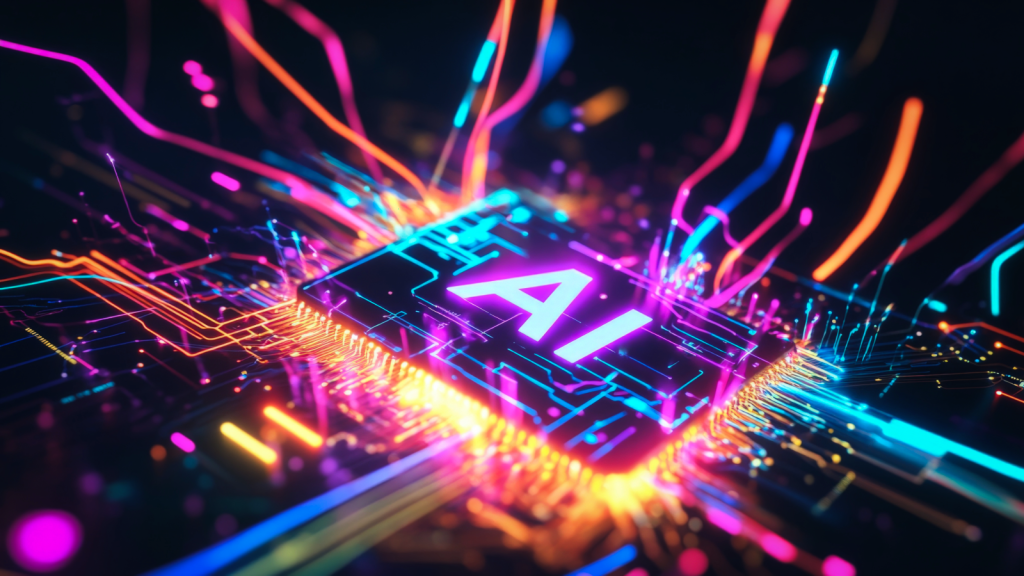
To address this, Nvidia introduced the Vera CPU, an 88-core processor specifically engineered for the data center. According to technical specifications released during the event, the Vera architecture delivers a 50% performance gain over traditional industry-standard CPUs. This performance leap is attributed to a redesigned core structure that prioritizes instructions per clock (IPC) and data movement efficiency between the processor and memory.
Technical Specifications and Infrastructure Integration
The centerpiece of the announcement was the Vera CPU Rack, a specialized infrastructure solution designed for CPU-centric workloads. This system integrates up to 256 Vera CPUs into a single, liquid-cooled rack. By utilizing liquid cooling, Nvidia claims the rack can sustain higher clock speeds across all 256 units without the thermal throttling associated with traditional air-cooled data centers.
The Vera CPU Rack is reported to offer twice the energy efficiency of previous generations. In the context of modern data center management, "performance per watt" has become the critical metric for hyperscalers like Meta Platforms, Google, and Amazon Web Services. As power grids face increasing strain from AI-driven energy demand, the ability to deliver high-level compute within a limited power envelope is a primary driver of hardware adoption.
The Vera architecture follows the success of the Grace CPU, which was recently deployed at scale within Meta Platforms’ data centers. Nvidia confirmed that the partnership with Meta, initiated in early 2026, has already resulted in measurable improvements in operational efficiency. By offloading specific management and agent-based tasks to Grace CPUs, Meta has been able to optimize its GPU clusters for pure inference, thereby reducing the total cost of ownership (TCO) for its AI infrastructure.

Chronology of the AI Hardware Evolution
To understand the significance of the Vera announcement, it is necessary to examine the timeline of AI hardware demand over the last several years:
- 2023–2024: The Training Explosion. The release of ChatGPT and subsequent models led to a global shortage of Nvidia H100 and B200 GPUs. Investment was focused almost exclusively on the "brains" of the AI, with CPUs treated as secondary components.
- 2025: The Inference and Energy Wall. As models moved from labs to production, the industry hit two major bottlenecks: the high cost of running models (inference) and the massive electricity requirements of GPU-heavy data centers. This led to an increased interest in power-efficient ARM-based CPU designs.
- Early 2026: The Rise of Agents. The focus shifted from chatbots to autonomous agents capable of managing supply chains, writing code, and conducting research. These "agentic" workflows highlighted the limitations of GPUs in handling non-parallel, logic-heavy tasks.
- March 2026: The Vera Era. Nvidia’s GTC conference solidified the CPU’s role as a co-equal partner to the GPU in the AI stack, introducing hardware specifically tuned for the "bottleneck" of agentic logic.
Market Projections and Economic Implications
The financial implications of this shift are substantial. Analysis from Bank of America suggests that the total addressable market (TAM) for data center CPUs is poised for a period of accelerated growth. Projections indicate that the CPU market will more than double by the end of the decade, rising from an estimated $27 billion in 2025 to $60 billion by 2030.
This growth is driven by the realization that AI infrastructure is not a monoculture of GPUs. A balanced data center requires a sophisticated mix of processing types. As Nvidia expands its footprint into the CPU space, it is effectively competing with long-standing incumbents like Intel and AMD in the high-end server market, while simultaneously leveraging its dominant position in AI software (CUDA) to ensure its CPUs are the preferred choice for developers.
However, the expansion of hardware capabilities faces external constraints. The AI boom is increasingly tethered to the availability of physical resources. The production of advanced CPUs and the construction of the data centers that house them require significant quantities of copper for electrical wiring, high-bandwidth memory (HBM) for data processing, and a stable supply of electricity. Market analysts have observed that the "bottleneck" has moved from the chips themselves to the commodities and utilities required to run them.

Broader Impact on Data Center Sustainability
A critical component of Nvidia’s new strategy is sustainability. The Vera CPU Rack’s emphasis on liquid cooling and energy efficiency reflects a broader industry trend toward "green" computing. Data centers currently account for a significant and growing percentage of global electricity consumption. By providing hardware that can perform 50% more work with 50% less energy, Nvidia is positioning itself as a solution to the environmental concerns raised by regulators and environmental advocacy groups.
The integration of 256 CPUs into a single liquid-cooled rack also addresses the issue of "data center real estate." With land and power permits becoming harder to secure in major tech hubs like Northern Virginia or Dublin, the ability to pack more compute power into a smaller physical footprint is a competitive advantage for cloud service providers.
Industry Reactions and Strategic Shifts
Industry analysts suggest that Nvidia’s pivot to CPUs may trigger a rotation of capital within the technology sector. For the past several years, investors have focused on "pure-play" AI companies and GPU manufacturers. However, as the limitations of a GPU-only approach become clear, there is an emerging trend toward companies that provide the "physical needs" of AI—ranging from thermal management systems to specialized memory and power delivery infrastructure.
While Nvidia remains the dominant force in the market, its high valuation has led some institutional investors to look toward the broader supply chain. The demand for Vera CPUs will likely benefit manufacturers of specialized components, including liquid cooling systems and high-density power units. Furthermore, the reliance on ARM-based architectures for these new CPUs continues to strengthen the ecosystem surrounding ARM Holdings, as tech giants seek to move away from legacy x86 architectures in favor of more customizable and power-efficient designs.

Conclusion: The New Equilibrium in AI Compute
The announcements at the Nvidia GTC conference represent a maturation of the artificial intelligence industry. The "GPU-only" gold rush is being replaced by a more nuanced understanding of computational requirements. By elevating the CPU to a central role in the agentic AI workflow, Nvidia is attempting to solve the bottlenecks of latency, logic, and energy consumption that threatened to slow the adoption of autonomous technology.
As the industry moves toward the 2030 milestone, the success of the Vera architecture will likely be measured not just by raw speed, but by its ability to enable a new generation of AI agents that can operate efficiently within the physical and economic constraints of the modern world. The shift back to the "brain" of the computer—the CPU—suggests that in the world of AI, the most advanced hardware is the one that can best mimic the sequential, logical, and multifaceted nature of human problem-solving.