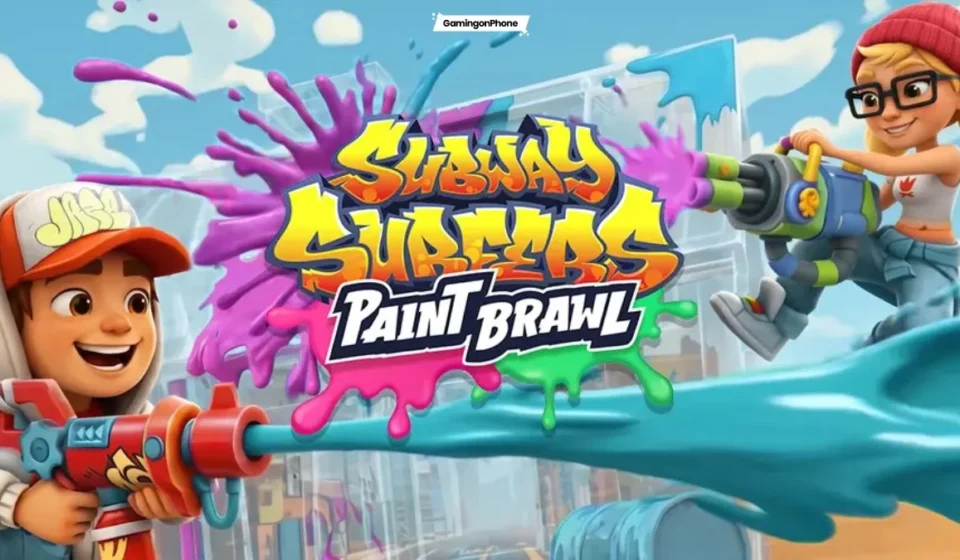
Subway Surfers-inspired multiplayer shooter Paint Brawl has been shut down after a short-lived run

The multiplayer third-person shooter, Paint Brawl, a notable spin-off from the immensely popular endless runner franchise Subway Surfers, has officially ceased operations, with its servers permanently sunset on September 1, 2026. This abrupt closure comes merely months after its regional soft launch, marking an untimely end to Miniclip’s ambitious venture into expanding the Subway Surfers universe into a competitive online arena. The development team cited that the game "did not meet our expectations," leading to the decision to reallocate resources to other projects, a common but often disheartening reality in the dynamic and fiercely competitive mobile gaming industry.
The Genesis and Transformation of Paint Brawl
Paint Brawl‘s journey began not under the Subway Surfers banner, but as an independent title known as Paint Brawl: Color of War. Developed by Miniclip, a global leader in mobile games and the parent company of SYBO Games (creators of Subway Surfers), the game initially featured its own distinct characters and original art style. This initial iteration was designed to carve out its own identity within the burgeoning mobile shooter genre, focusing on vibrant, paint-splattering combat.
However, in a strategic move aimed at leveraging established brand recognition, Miniclip opted to rebrand Paint Brawl: Color of War and integrate it into the Subway Surfers universe. This transformation involved reskinning characters, environments, and overall aesthetics to align with the iconic visual language of Subway Surfers, featuring its beloved protagonists like Jake, Tricky, and Fresh engaging in paint-fueled skirmishes. The decision was undoubtedly made with the intention of tapping into the massive global fanbase of Subway Surfers, which boasts billions of downloads and a decade-long legacy as one of the most successful mobile games of all time. The hope was that the existing loyalty and familiarity with the IP would provide a significant launchpad for the new shooter.
Gameplay Mechanics and Market Comparisons
At its core, Paint Brawl diverged significantly from the endless running mechanics that defined its parent franchise. Instead, it presented players with a third-person shooter experience where the primary objective was to spray paint across designated areas of the map, controlling territory, and engaging opponents in colorful combat using various squirt gun-like weaponry. Players would join teams, enter fast-paced matches, and strategically cover the battlefield with their team’s color, aiming to dominate the map before time ran out.
The gameplay structure, emphasis on territorial control through color, and even elements of its vibrant art style drew immediate and strong comparisons to Nintendo’s highly successful console title, Splatoon. Splatoon, launched in 2015, revolutionized the shooter genre with its unique paint-based combat, fostering a distinct aesthetic and gameplay loop that appealed to a broad audience. While Paint Brawl aimed to translate a similar concept to the mobile platform, the inherent challenges of adapting such intricate mechanics and delivering a polished, engaging experience on touchscreens were significant. The mobile version needed to simplify controls, optimize performance for a vast array of devices, and maintain the strategic depth that made its console counterpart so compelling.
A Brief Chronology of a Short-Lived Venture

The timeline of Paint Brawl‘s public life was remarkably concise, reflecting the swift decision-making often seen in the fast-paced mobile gaming market:
- Pre-2026: Development of Paint Brawl: Color of War commences under Miniclip, featuring original characters and an independent identity.
- Early 2026 (Approximate): The strategic decision is made to rebrand Color of War as Subway Surfers Paint Brawl, integrating the beloved IP to capitalize on its massive fanbase.
- April 9, 2026: Subway Surfers Paint Brawl soft launches in select regional markets, specifically the United Kingdom, Portugal, and Austria. This phased rollout is a standard practice in mobile game development, allowing developers to test core gameplay loops, server stability, player retention, and monetization strategies with a smaller, controlled audience before a wider global release.
- Mid-to-Late 2026: Following data analysis from the soft launch, the development team determines that the game is not meeting key performance indicators (KPIs) related to player engagement, retention, or potential for sustained monetization.
- Shortly Before September 1, 2026: An official announcement is made by the development team, informing players of the impending shutdown. The statement cites that the game "did not meet our expectations."
- September 1, 2026: Subway Surfers Paint Brawl servers are officially shut down. Due to its reliance on online connectivity for all gameplay, the game becomes entirely inaccessible to players, even those who still have the application installed on their devices.
This rapid progression from soft launch to shutdown underscores the cutthroat nature of the mobile gaming industry, where even games backed by major IPs and established developers are not guaranteed longevity if they fail to capture and retain a critical mass of players.
The Official Stance and Underlying Challenges
The official statement from the development team, indicating that the game "did not meet our expectations," is a common, albeit generalized, explanation for such closures. In the context of live-service mobile games, "expectations" typically encompass a range of critical metrics:
- Player Acquisition and Engagement: While the Subway Surfers IP might have driven initial downloads, sustained daily and monthly active users are crucial. Low engagement rates suggest players were not finding enough compelling reasons to return.
- Player Retention: A key indicator of a game’s health, retention measures how many players continue playing over days, weeks, and months. Poor retention signals issues with core gameplay loop, progression systems, or long-term appeal.
- Monetization: Free-to-play mobile games rely on in-app purchases (IAPs), advertisements, or subscriptions. If players are not spending or engaging with ads, the game becomes financially unviable.
- Technical Performance and Stability: Persistent bugs, server issues, or poor optimization across various devices can severely hamper the player experience.
- Market Fit and Differentiation: In a crowded genre, a game needs a strong unique selling proposition. If Paint Brawl was perceived as too derivative or simply not innovative enough, it would struggle to stand out.
Industry analysts frequently point out that the mobile shooter space is one of the most saturated and competitive segments of the mobile gaming market. Titles like Call of Duty Mobile, PUBG Mobile, Free Fire, and Brawl Stars command massive player bases and substantial revenue, setting extremely high benchmarks for quality, content updates, and community management. For a new entrant, even with a strong IP, breaking into this established ecosystem requires not just a good game, but an exceptional one that offers something truly novel or executes familiar mechanics with unparalleled polish.
The Broader Implications and Lessons Learned
The shutdown of Paint Brawl offers several insights into the complexities of mobile game development and the strategic use of intellectual property:
- IP Strength vs. Gameplay Innovation: While the Subway Surfers IP provided a significant boost in initial visibility, it could not, on its own, sustain a game if the core gameplay loop failed to resonate or innovate sufficiently. Players, especially in competitive genres, prioritize engaging mechanics and a high-quality experience over brand recognition alone. This case highlights that simply "reskinning" an existing concept, even a popular one like Splatoon‘s, may not be enough without significant adaptations and unique twists tailored for the target audience and platform.
- The High Stakes of Live Service Games: Paint Brawl‘s reliance on online connectivity meant its entire existence was tied to active server maintenance and a continuous player base. Live service games demand ongoing content updates, community interaction, and vigilant performance monitoring. Without meeting these demands or achieving critical mass, the operational costs quickly outweigh potential revenues, forcing difficult decisions. This model is inherently risky, requiring substantial upfront investment and sustained post-launch support.
- Miniclip’s Strategy Moving Forward: For Miniclip, a company with a strong portfolio of successful mobile titles and a history of acquiring promising studios, the Paint Brawl experience will likely inform future IP expansion strategies. It may lead to a more cautious approach to genre diversification for established brands or a renewed focus on deeper market research and iterative development before committing to wider launches. The core Subway Surfers game remains a powerhouse, and this spin-off’s failure is unlikely to tarnish the main brand’s immense success, but it does serve as a cautionary tale for ambitious expansions.
- Market Saturation and Player Expectations: The mobile gaming audience, particularly in the shooter genre, is sophisticated and demanding. They expect console-quality graphics (where applicable), responsive controls, fair matchmaking, regular content drops, and robust anti-cheat systems. Any game failing to meet these elevated expectations, regardless of its IP, will struggle to compete against well-entrenched titans. The timing of Paint Brawl‘s launch, entering an already crowded field, meant it faced an uphill battle from day one.
In conclusion, Subway Surfers Paint Brawl‘s short journey from an independent concept to an IP-backed shooter and ultimately to its premature shutdown on September 1, 2026, serves as a stark reminder of the volatile nature of the mobile gaming industry. It underscores that while a powerful intellectual property can open doors, sustained success hinges on compelling gameplay, robust execution, and the ability to carve out a unique identity within an increasingly competitive digital landscape. The project’s end, while disappointing for its small player base, is a common occurrence in an industry where only the most innovative and resilient titles manage to thrive long-term.