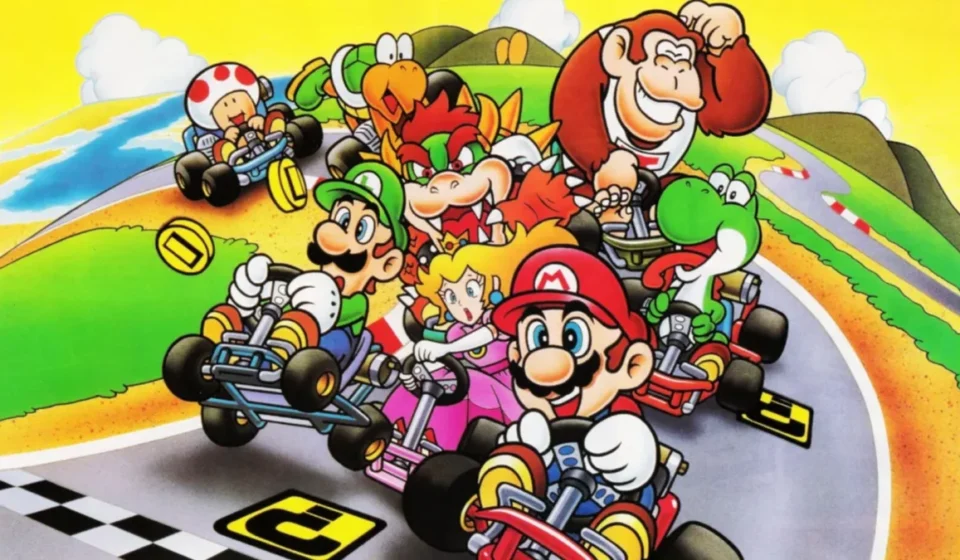

Thirty-four years ago today, August 27, 1992, the gaming landscape was irrevocably altered with the release of Super Mario Kart in Japan for the Super Nintendo Entertainment System (SNES). This seminal title, which launched on the same day Mario himself would have been eligible to obtain a driver’s license in many jurisdictions, ushered in an era of kart racing video games and solidified the Mario franchise’s dominance across multiple genres. Its enduring legacy is not merely measured in sales or sequels, but in its profound influence on game design and its ability to foster both friendly competition and, at times, familial discord.
The Genesis of a Phenomenon
The development of Super Mario Kart was spearheaded by Nintendo’s EAD (Entertainment Analysis and Development) division, led by Shigeru Miyamoto, the visionary creator of Mario. The concept emerged from a desire to expand the Mario universe beyond traditional platforming and adventure games. Initial discussions revolved around a two-player racing game that could leverage the SNES’s graphical capabilities. Early prototypes explored different approaches, including a top-down perspective, but the team ultimately settled on a pseudo-3D perspective that was groundbreaking for its time, employing Mode 7 graphics to simulate depth and rotation on the SNES. This technological innovation was crucial in distinguishing Super Mario Kart from other racing games available in the early 1990s.
The game’s roster initially featured eight iconic characters from the Mario universe: Mario, Luigi, Princess Peach, Toad, Yoshi, Donkey Kong Jr., Koopa Troopa, and Bowser. Each character was assigned unique stats, influencing their top speed, acceleration, and handling, adding a layer of strategic depth to the simple premise. The game presented 20 distinct race tracks, including the now-infamous Rainbow Road, which, even in its earliest iteration, was recognized for its challenging design and vibrant aesthetic. The inclusion of item boxes, dispensing power-ups like the Super Mushroom for a speed boost, the Green Shell for offensive projectiles, and the devastating Blue Shell for the leading racer, transformed the gameplay from a pure test of racing skill into a chaotic and unpredictable battle of wits and reflexes.
A Simpler Time, Yet Profoundly Challenging
In contrast to the sophisticated control schemes and advanced physics engines of modern racing games, Super Mario Kart operated on a foundation of relatively simple mechanics. The SNES controller, with its D-pad and four face buttons, offered a distinct tactile experience. Players navigated tracks using the D-pad for steering and acceleration, with buttons dedicated to item usage and drifting. While this setup facilitated accessibility for a broad audience, it also presented a steeper learning curve for players seeking mastery. The lack of analog control meant that precise steering and nuanced cornering were more challenging to execute, particularly for newcomers. This inherent difficulty, coupled with the unpredictable nature of item drops, contributed to the game’s reputation as a title that was easy to pick up but difficult to put down, demanding patience and practice.
The game’s graphical presentation, though dated by contemporary standards, was revolutionary for its time. The use of Mode 7 graphics allowed for a rotating and scaling background, giving the illusion of a three-dimensional environment. Sprites were pre-rendered, contributing to a detailed and vibrant visual style that captivated players. The sound design, featuring memorable character voices and an infectious soundtrack, further enhanced the immersive experience.
Evolution of the Franchise
Since its 1992 debut, the Mario Kart series has experienced a remarkable trajectory of growth and innovation. Super Mario Kart laid the groundwork, but subsequent entries have consistently pushed the boundaries of the genre. The introduction of analog control in later titles, beginning with Mario Kart 64, significantly improved the fluidity of movement and the precision of steering, allowing for more intricate drifting techniques and tighter cornering. This evolution in control schemes has made the series more accessible to a wider range of players while simultaneously offering greater depth for competitive play.
The Mario Kart franchise has expanded to include numerous installments across various Nintendo platforms, each building upon the established formula while introducing new characters, tracks, and gameplay mechanics. As of the latest releases, the series boasts over a dozen titles, including mainline entries, spin-offs, and deluxe editions. The cumulative sales of the Mario Kart series exceed 160 million units worldwide, making it one of the best-selling video game franchises of all time. Mario Kart 8 Deluxe for the Nintendo Switch, released in 2017, has alone sold over 61.97 million units as of March 2024, becoming the best-selling game on the platform.

The progression of Super Mario Kart from its SNES origins to its modern iterations highlights Nintendo’s commitment to refining and expanding its most popular intellectual properties. The series has consistently adapted to new hardware capabilities and evolving player expectations, ensuring its continued relevance and appeal across generations.
Digital Accessibility and Enduring Appeal
The enduring legacy of Super Mario Kart is further evidenced by its continued availability through Nintendo’s digital distribution services. The game has been re-released on the Virtual Console for the Wii, Wii U, and Nintendo 3DS, allowing new audiences to experience its classic gameplay. Most recently, Super Mario Kart became available to Nintendo Switch Online subscribers as part of the service’s classic games library. This digital accessibility ensures that the original entry remains a touchstone for the franchise, providing a direct link to its foundational mechanics and design principles.
Despite the technological advancements and gameplay refinements in subsequent Mario Kart titles, the original Super Mario Kart retains a unique charm and a dedicated fanbase. Its "hammy" yet distinct control feel, a consequence of the SNES hardware and early 3D rendering techniques, is often fondly remembered by long-time players. For many, the game represents a nostalgic connection to a formative period in gaming history, a time when the simple joy of digital competition could captivate an entire generation.
Impact on the Gaming Industry and Popular Culture
The impact of Super Mario Kart extends far beyond the realm of Nintendo’s own success. It is widely credited with popularizing the kart racing subgenre, inspiring countless imitators and paving the way for other successful franchises like Crash Team Racing and Sonic & All-Stars Racing. The game’s innovative use of power-ups and its focus on chaotic, party-style multiplayer experiences set a benchmark for accessible and engaging competitive gaming.
Super Mario Kart also played a significant role in demonstrating the commercial viability of spin-off titles for established video game characters. By successfully translating the beloved Mario universe into a racing context, Nintendo proved that its IPs could thrive in diverse genres, a strategy that has since been emulated by many other game developers and publishers. The franchise’s ability to consistently deliver high-quality, accessible, and fun experiences has cemented its status as a cornerstone of the gaming industry and a significant contributor to popular culture.
The iconic imagery and gameplay mechanics of Super Mario Kart have permeated popular culture, appearing in merchandise, fan art, and numerous cultural references. The concept of lobbing a red shell at a rival player, the distinctive sound of a Blue Shell’s approach, and the visual spectacle of Rainbow Road are all deeply ingrained in the collective memory of gamers worldwide.
Official Perspectives and Future Outlook
While direct statements from Nintendo executives regarding the 34th anniversary of Super Mario Kart are not typically issued in a formal capacity, the company’s consistent re-releases and continued support for the franchise speak volumes. Shigeru Miyamoto has often expressed his satisfaction with the Mario Kart series’ longevity and its ability to bring people together. In past interviews, he has highlighted the importance of creating games that are enjoyable for players of all skill levels, a philosophy that Super Mario Kart embodies.
The future of the Mario Kart series appears robust. With the ongoing success of Mario Kart 8 Deluxe and the anticipation for potential future installments, Nintendo shows no signs of slowing down. The franchise’s adaptability, coupled with its universal appeal, suggests that it will continue to evolve and entertain for many years to come. The foundational principles established by Super Mario Kart in 1992—accessible gameplay, beloved characters, and engaging competition—remain the driving force behind its enduring success, ensuring its place as a timeless classic in the annals of video game history. The simple act of taking to the track, armed with a banana peel and a dash of competitive spirit, continues to resonate, proving that some things, like the thrill of a Mario Kart race, truly stand the test of time.