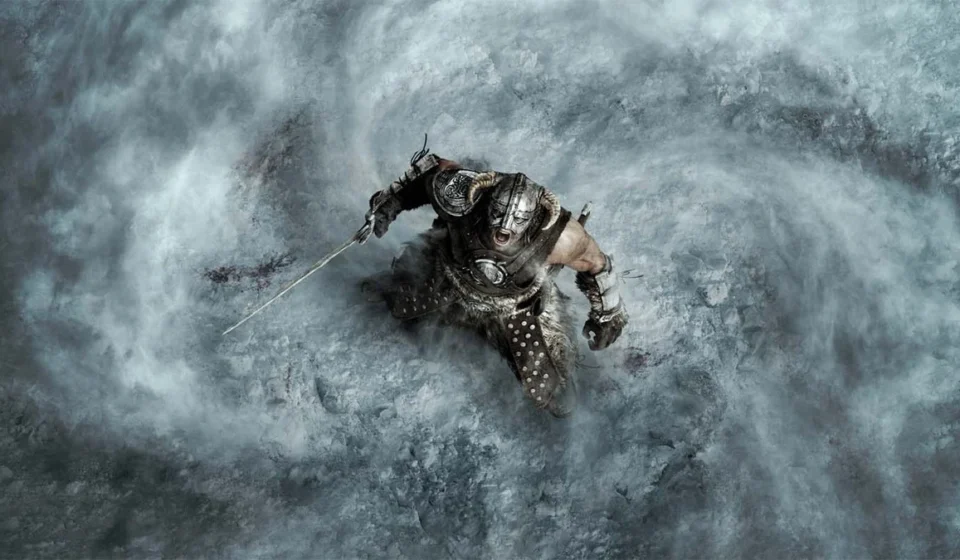
The Digital Altar Examining the Evolution of Player Rituals and Superstitions within The Elder Scrolls V Skyrim

The intersection of virtual mechanics and real-world psychological behavior has reached a significant milestone in the gaming community, as evidenced by the long-term habits of players within Bethesda Game Studios’ seminal title, The Elder Scrolls V: Skyrim. For over a decade, reports have surfaced regarding a specific subset of the player base that treats in-game religious shrines not merely as functional gameplay elements, but as conduits for real-world superstition. This phenomenon, characterized by players performing physical "rituals" or making personal wishes while their digital avatars interact with virtual altars, highlights a profound shift in how interactive media influences human behavior and cognitive associations.
In the world of Skyrim, shrines are dedicated to the "Nine Divines"—deities such as Akatosh, Arkay, and Mara—and provide players with temporary statistical bonuses or the removal of in-game diseases. However, for a notable portion of the community, the act of "activating" a shrine has transcended the digital boundary. One documented case involves a long-term player who, for years, maintained a ritual of pausing the game and making a silent request for good fortune in their personal life whenever their character approached a Shrine of Talos or Dibella. This behavior, initially born of casual play, eventually solidified into a genuine superstition, mirroring the "just in case" logic often found in traditional folklore or sports rituals.
The Mechanics of Immersion and the Psychology of Belief
To understand why a digital environment can trigger such deeply ingrained human responses, it is necessary to examine the psychological framework of immersion. In game design, immersion is often categorized into three distinct levels: sensory-motor, cognitive, and emotional. The Elder Scrolls V: Skyrim, released in November 2011, is frequently cited in academic studies of "ludic immersion" due to its expansive open world and the high degree of agency it affords the player.
Psychologists suggest that when a player spends hundreds, or even thousands, of hours within a consistent rule-set, the brain begins to blur the lines between virtual cause-and-effect and real-world outcomes. This is a variation of "operant conditioning," where the positive reinforcement received in the game—such as the "Blessing of Akatosh" increasing a character’s strength—creates a dopamine response that the player subconsciously seeks to replicate in their physical reality. The ritualization of these moments is a form of "apophenia," the human tendency to perceive meaningful connections between unrelated things. When a player makes a wish at a virtual shrine and subsequently experiences a positive real-world event, the brain may create a false causal link, reinforcing the superstitious behavior.
A Chronology of Virtual Superstition and Community Trends
The evolution of these "gamer superstitions" has followed a distinct timeline alongside the advancement of high-fidelity role-playing games (RPGs).
- 2002–2006 (The Foundation): With the release of The Elder Scrolls III: Morrowind and IV: Oblivion, the concept of "lore-heavy" environments began to take root. Players started reporting a sense of "sacredness" in certain digital locations, though the lack of graphical fidelity kept these feelings largely within the realm of roleplay.
- 2011–2015 (The Skyrim Era): The launch of Skyrim introduced a level of environmental detail that allowed for deeper emotional resonance. The "shrine ritual" began to appear in online forums like Reddit and GameFAQs, with players sharing stories of how they would never "disrespect" certain in-game temples for fear of bad luck.
- 2017 (The Cross-Over Event): A viral story emerged from Brazil involving an elderly woman who had spent years praying to a small figurine she believed was Saint Anthony. It was later discovered the figurine was actually Elrond, a character from The Lord of the Rings. This event served as a major cultural touchstone, proving that the human brain prioritizes the symbolism of an object over its intended commercial or fictional nature.
- 2020–Present (The Digital Ritualization): During the global pandemic, engagement with expansive RPGs spiked. Community discussions shifted from mere gameplay tips to the emotional and ritualistic value of in-game actions. The "Skyrim Shrine" habit was re-evaluated as a legitimate form of stress relief and a manifestation of the "illusion of control" in an uncertain world.
Comparative Analysis: The Lord of the Rings and Cultural Symbols
The comparison between the Skyrim player’s ritual and the Lord of the Rings "Saint Elrond" incident is vital for a factual analysis of these behaviors. Both cases demonstrate that the human psyche is inherently geared toward creating meaning where none was intentionally placed by creators. In the case of the LOTR figurine, the grandmother applied an existing religious framework to a pop-culture object. In the case of the Skyrim player, the individual created a new framework based on the game’s internal logic.
Data from the "Gamer Motivation Profile," a study conducted by Quantic Foundry involving over 250,000 gamers, suggests that players who score high in "Immersion" and "Creativity" are significantly more likely to develop these types of personalized rituals. For these individuals, the game world is not a static product but a dynamic space where their actions carry weight beyond the programmed code. The "vai que funciona" (just in case it works) mentality is a protective cognitive bias that allows the player to feel a sense of agency over the randomness of life.
Statements and Community Perspectives
While Bethesda Game Studios has not issued an official statement regarding the "sanctity" of their virtual shrines, developers have frequently discussed the concept of "emergent gameplay"—situations where players use the game’s tools in ways the designers never anticipated. In interviews, former Bethesda designers have noted that the goal of their environmental storytelling is to make the world feel "lived-in" and "consequential."
On community platforms, the reaction to these superstitions is often a mix of humor and empathy. A common sentiment among veteran RPG players is that these rituals are a testament to the quality of the writing and world-building. "It’s not that we literally believe a computer program is granting us luck," one forum user noted in a discussion about Skyrim habits. "It’s that the game provides a moment of reflection. The shrine is a visual cue to stop, breathe, and hope for something good. That has value, regardless of the code."
Supporting Data: The Longevity of Skyrim and Player Retention
The persistence of these behaviors is directly linked to the unprecedented longevity of The Elder Scrolls V: Skyrim. According to data from SteamDB, the game consistently maintains a daily peak of 20,000 to 30,000 concurrent players on PC alone, more than a decade after its release. When factoring in console versions and the various "Special" and "Anniversary" editions, the active player base remains in the millions.
This long-term exposure is a critical factor in the development of superstitions. Statistical analysis of player behavior suggests that the longer a user engages with a single title, the more likely they are to develop idiosyncratic habits that deviate from optimal "meta-gaming." These habits often serve to maintain the "magic" of the experience once the novelty of the mechanics has worn off. The ritual of the shrine becomes a way to keep the world feeling "alive" after the player has already completed every quest and explored every dungeon.
Broader Implications for Interactive Media and Society
The case of the Skyrim ritualist provides a window into the future of human-computer interaction. As virtual reality (VR) and augmented reality (AR) technologies become more sophisticated, the potential for digital environments to host "real" psychological meaning will only increase. This leads to several significant implications:
- Emotional Design: Developers may begin to design spaces specifically intended to facilitate mindfulness or ritualistic behavior, recognizing the mental health benefits of these "digital sanctuaries."
- Cognitive Blurring: As graphics approach photorealism, the distinction between a "religious experience" in a physical space and a "simulated experience" in a digital space may become a subject of intense sociological and ethical debate.
- Cultural Synthesis: We are witnessing the birth of a "digital folklore." Just as ancient cultures developed myths around natural landmarks, modern society is developing myths and rituals around digital landmarks.
The transformation of a simple game mechanic—a buff-granting altar—into a symbol of real-world hope is a powerful indicator of the human condition. It suggests that our need for meaning, ritual, and a sense of connection to the "divine" (or the extraordinary) is so strong that it will manifest even within the constraints of a silicon-based simulation.
Ultimately, the story of the Skyrim player who made wishes at virtual shrines is not a story about a game. It is a story about the enduring human desire to find significance in our surroundings, whether those surroundings are made of stone and mortar or pixels and code. As the gaming industry continues to evolve, these instances of "digital superstition" will likely transition from curiosities to recognized components of the modern human experience, proving that the most profound effects of technology are often the ones that occur within the mind of the user.