The Evolution of B2B Outreach: A Strategic Framework for Scaling Sales in a Competitive Global Market

The modern business-to-business (B2B) sales landscape is currently facing a significant efficiency crisis, as a majority of outreach initiatives fail to generate meaningful engagement or revenue. According to Salesforce’s latest State of Sales report, a staggering 72% of salespeople do not expect to hit their quotas this year. Industry analysts suggest that this failure is rarely a result of poor product quality or lack of motivation; instead, it is a fundamental breakdown in the sales workflow. Sales professionals are increasingly burdened by manual data entry, outdated contact information, and a lack of systematic follow-up, leading to a landscape where only 28% of practitioners are achieving their financial objectives.
As the cost of customer acquisition (CAC) continues to rise across the SaaS and professional services sectors, firms are being forced to move away from high-volume, low-precision "spray and pray" tactics. The transition toward a structured, data-driven outreach workflow has become a necessity for survival in a market characterized by digital fatigue and increased privacy regulations. This report examines the technical and strategic components required to build a resilient B2B outreach engine, from initial audience definition to the finalization of contracts.
The Strategic Identification of Ideal Customer Profiles
The foundation of any successful outreach campaign is the rigorous definition of the Ideal Customer Profile (ICP). Unlike a buyer persona, which focuses on the psychological and demographic traits of an individual, an ICP identifies the specific organizational characteristics that make a company a high-value candidate for a product or service. Market data indicates that vague targeting is the primary cause of high bounce rates and low response metrics.
An effective ICP must include firmographic data such as industry vertical, annual revenue, and employee headcount. Furthermore, modern sales teams are increasingly looking at "technographics"—the specific software stack a company uses—to determine compatibility and need. Once the organizational profile is established, sales teams must layer in buyer personas. These personas identify the decision-makers, such as Directors of Operations or VPs of Marketing, who possess the authority to approve budgets.
For instance, in the enterprise software sector, a company selling scheduling tools might target US-based hospitality groups with 50 to 200 employees. The buyer persona in this scenario would be the Operations Manager, the individual most affected by the inefficiencies of manual scheduling. By narrowing the focus to these specific parameters, sales teams can increase their relevance and reduce the time wasted on non-qualified leads.
Data Acquisition and the Verification Challenge
Once a target audience is identified, the challenge shifts to data acquisition. Manual prospecting, while accurate at low volumes, is no longer sustainable for growing enterprises. Sales development representatives (SDRs) frequently spend upwards of 20% of their week simply hunting for contact information, a process that is both costly and prone to error.
To mitigate this, industry leaders are turning to bulk email finding tools and automated lead generation platforms. These systems allow teams to upload lists of decision-makers and company domains to retrieve verified business emails in bulk. However, the use of these tools requires a balanced approach to ensure data integrity.
Experts recommend a multi-step verification process:

- Exporting filtered prospect lists from professional networks like LinkedIn Sales Navigator.
- Utilizing bulk finders to match names with company domains.
- Running those emails through secondary verification services to ensure the mailboxes are active.
This systematic approach protects the sender’s domain reputation, which is critical for long-term deliverability.
The Impact of Data Decay and Regulatory Compliance
A critical but often overlooked factor in sales failure is the rapid rate of B2B data decay. Research from HubSpot suggests that B2B databases decay at an average rate of 22.5% per year. This means that nearly a quarter of a company’s contact list becomes obsolete every twelve months due to job changes, company closures, or domain migrations.
Sending emails to invalid addresses does more than just waste time; it triggers spam filters and can lead to the blacklisting of a company’s primary communication domain. Consequently, data cleaning—removing "catch-all" addresses, generic info@ accounts, and expired domains—is now a standard prerequisite for any outreach campaign.
Furthermore, the legal landscape surrounding outreach has become increasingly complex. The General Data Protection Regulation (GDPR) in Europe and the CAN-SPAM Act in the United States mandate specific protocols for cold outreach. Compliance now requires the inclusion of clear unsubscribe links, the honoring of "do not contact" requests within ten days, and a legitimate business interest in the contact. Ethical outreach is no longer just a moral choice; it is a legal and technical necessity to ensure that emails actually reach the recipient’s inbox.
The Psychology of High-Converting Messaging
The Radicati Group reports that the average business professional receives approximately 121 emails per day. In this environment, the primary goal of an outreach email is to break through the digital noise. Journalistic analysis of successful campaigns reveals that brevity and personalization are the two most important factors in securing a response.
Subject lines must be designed to appear as peer-to-peer communication rather than marketing broadcasts. Effective subject lines often reference specific company news, such as a recent expansion or a public hiring plan. The body of the email should follow a "Value-First" structure:
- The Hook: A personalized observation about the prospect’s business.
- The Problem: An acknowledgment of a specific pain point relevant to their role.
- The Solution: A brief explanation of how the product addresses that pain point.
- The Proof: A single sentence or statistic demonstrating a past success.
- The Call to Action (CTA): A low-friction request, such as a brief 10-minute introductory call.
The removal of "filler" phrases—such as "I hope this email finds you well"—has been shown to improve engagement rates by getting to the point faster and respecting the prospect’s time.
Automation, Scaling, and the Persistence Gap
Automation has transformed the scale at which sales teams operate, but it has also introduced new risks. Yesware research indicates that 70% of sales email threads stop after the first attempt. However, the vast majority of conversions occur between the third and sixth touchpoint. This "persistence gap" is where most potential revenue is lost.
A standard high-performing outreach sequence typically spans 14 days and includes multiple touchpoints:
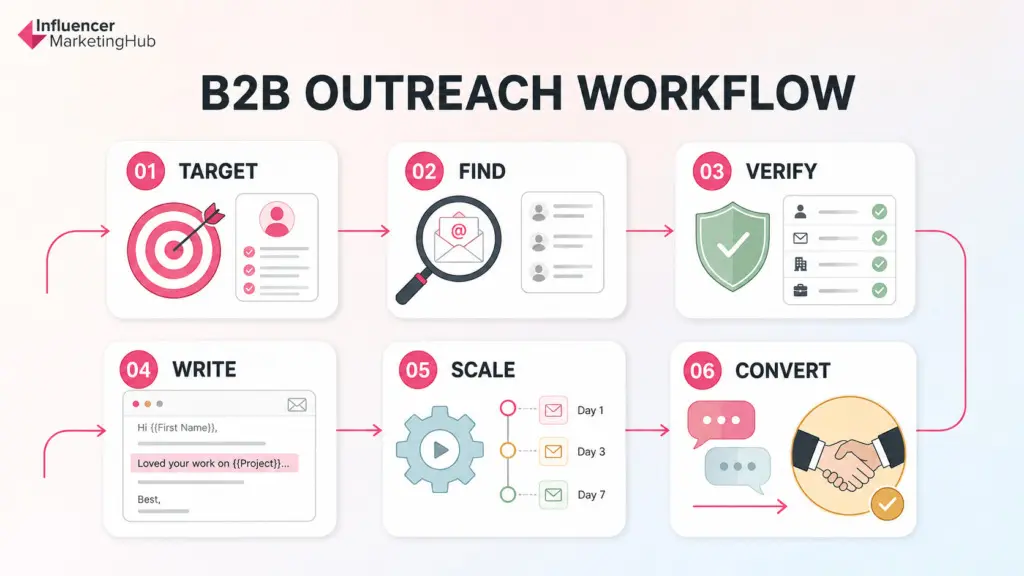
- Day 1: The initial value-based email.
- Day 3: A follow-up providing a new angle or a helpful resource.
- Day 7: A concise check-in with a direct "yes/no" question.
- Day 14: A "break-up" email, which often elicits a response from prospects who were simply too busy to reply earlier.
The integration of multi-channel strategies, such as combining emails with LinkedIn engagement, significantly boosts response rates. When a prospect sees a familiar name across multiple platforms, the perceived credibility of the outreach increases. However, experts warn that automation should never be a substitute for research. "Computer-generated junk remains junk," regardless of how many platforms it is delivered on.
Converting Responses into Sales Opportunities
The receipt of a positive response marks the transition from outreach to active sales. At this stage, speed of response is the most critical variable. A study published by the Harvard Business Review found that companies that contact prospects within five minutes of an inquiry are 100 times more likely to convert them than those who wait 30 minutes.
Once a lead is engaged, the focus shifts to qualification. Modern sales frameworks such as BANT (Budget, Authority, Need, Timing) or MEDDIC are used to determine if the prospect is a genuine fit before the sales team invests significant hours in demonstrations and proposals. The objective of the initial "discovery call" is not to sell the product, but to confirm that the prospect’s challenges align with the solution’s capabilities.
Following every interaction, sales professionals are encouraged to send a summary email within 24 hours. This recap documents the discussion, outlines next steps, and maintains the momentum of the deal. Recording these interactions in a Centralized Relationship Management (CRM) system allows for long-term data analysis, helping teams identify which outreach messages are leading to the highest-value contracts.
Broader Implications and Future Outlook
The shift toward structured outreach workflows represents a professionalization of the sales industry. As artificial intelligence (AI) continues to integrate into CRM and outreach tools, the ability to personalize at scale will become even more sophisticated. However, this also means that the barrier to entry for getting a prospect’s attention will continue to rise.
Industry analysts predict that the future of B2B sales will rely heavily on "warm outbound"—outreach triggered by specific intent signals, such as a prospect visiting a pricing page or downloading a whitepaper. Companies that fail to implement a systematic, data-verified, and persistent outreach workflow will likely find themselves among the 72% of organizations struggling to meet their growth targets.
In conclusion, B2B outreach is no longer a game of volume, but one of precision, timing, and technical discipline. By auditing current processes and fixing weaknesses in targeting, data cleanliness, and follow-up sequences, sales organizations can move from a state of "guesswork" to a repeatable engine of revenue generation. The transition to this structured approach is not merely an optimization; it is a fundamental requirement for the modern enterprise.