The Evolution of Creator Marketing: Why Unilever is Prioritizing Relationship Systems Over Transactional Scale

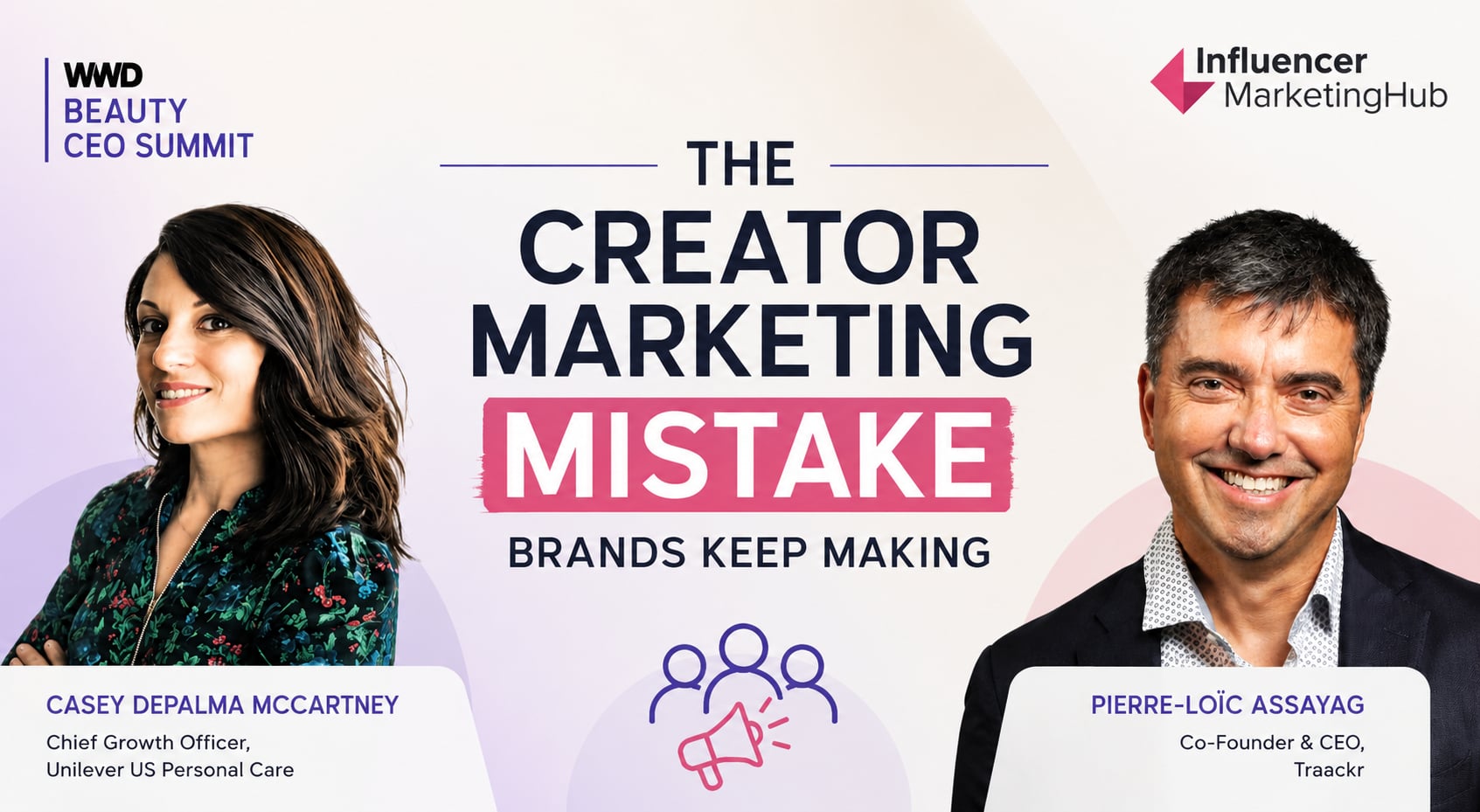
The landscape of digital advertising is undergoing a fundamental transformation as global consumer goods giants move away from experimental influencer campaigns toward integrated, high-scale creator ecosystems. At the WWD Beauty CEO Summit held in May 2024, industry leaders gathered to dissect the shifting paradigms of brand-creator dynamics, signaling that the "experimental" phase of influencer marketing has officially concluded. The discussion, featuring Casey McCartney, Chief Growth Officer at Unilever US Personal Care, and Pierre-Loïc Assayag, CEO and Founder of the influencer marketing platform Traackr, highlighted a critical transition: the move from treating creators as a media channel to treating them as a core business capability.
The summit, a premiere gathering for executives in the beauty and personal care sectors, provided the backdrop for Unilever to detail its ambitious roadmap. While the headline-grabbing figure was Unilever’s intent to expand its creator network by twentyfold, the strategic underpinnings of this expansion suggest a more nuanced approach than mere volume. The company is pivoting toward a model that prioritizes "repeatability" and "quality" over the traditional, transactional "pay-per-post" methodology that has dominated the industry for the last decade.
The Shift from Transactional Volume to Strategic Maturity
For years, the success of an influencer marketing program was often measured by the sheer number of partners or the gross reach of a campaign. However, the dialogue at the WWD Beauty CEO Summit suggested that these metrics are increasingly viewed as superficial. McCartney argued that scaling alone is a hollow objective if it is not supported by a robust infrastructure. In a mature marketing organization, the goal is not to find more creators to "buy," but to build systems that allow a brand to work with thousands of creators as efficiently as they once worked with ten.
This shift in perspective addresses a common bottleneck in corporate marketing: the "start-from-scratch" problem. In traditional models, each new campaign requires a fresh cycle of discovery, outreach, legal negotiation, and onboarding. For a conglomerate like Unilever, which manages a massive portfolio of legacy brands, this manual process is a barrier to agility. By focusing on repeatability, Unilever aims to create a "warm" network of creators who are already integrated into the brand’s culture, allowing the company to activate partnerships at the speed of social media trends rather than the speed of corporate procurement.
Case Studies in Modern Creator Integration: Dove and Vaseline
The practical application of this philosophy is most evident in the recent performance of Unilever’s flagship brands, Dove and Vaseline. These brands have moved beyond using creators as mere distribution vehicles for pre-packaged corporate messages. Instead, they are utilizing creators as a bridge between the brand’s heritage and contemporary cultural conversations.
Dove has long been a pioneer in purpose-led marketing, but its modern strategy involves cultivating long-term relationships with creators who align with its "Real Beauty" ethos years before a specific campaign is even conceived. This proactive community-building ensures that when a cultural moment arises—such as a conversation about body positivity or social media filters—the brand has a ready-made cohort of advocates who can speak authentically on its behalf.
Vaseline, a brand with a history spanning more than 150 years, has seen a dramatic resurgence by leaning into organic social listening. The "Vaseline Verified" campaign serves as a benchmark for how legacy brands can remain relevant to Gen Z and Alpha audiences. By monitoring TikTok and Instagram, Unilever identified that consumers were already using Vaseline in unconventional ways—a trend often referred to as "slugging" or specialized skincare "hacks."
Rather than ignoring these unsolicited uses or attempting to steer the conversation back to traditional advertisements, Unilever launched the "Vaseline Verified" initiative. This program involved the brand’s internal scientists testing and validating these community-led hacks. The brand then partnered with creators to amplify the scientifically backed results. This feedback loop—from consumer behavior to scientific validation to creator amplification—has resulted in Vaseline becoming the most organically discussed skincare brand in the first half of 2024.
The Role of Data and AI in Creator Intelligence
As the creator economy is projected to reach an estimated $480 billion by 2027, according to Goldman Sachs, the role of technology in managing these relationships has become paramount. Pierre-Loïc Assayag of Traackr emphasized during the summit that the next frontier of creator marketing is not automation for the sake of speed, but automation for the sake of intelligence.
The industry is currently divided on the use of Artificial Intelligence (AI). While some brands are using AI to generate synthetic influencers or automate outreach emails, Assayag warned that automating a flawed strategy only leads to faster failures. "If you start with insights… what you will amplify with AI is the good decisions instead of terrible ones," Assayag noted.
The focus is shifting toward "Creator Intelligence"—using data to understand which creators truly drive impact, which audiences are fatigued, and where there is white space in the market. Furthermore, the concept of "Data as IP" (Intellectual Property) was a central theme. In the future, a company’s most valuable asset may not be its brand logo, but its proprietary data on creator performance, historical relationship nuances, and audience conversion rates. This data allows brands to move from "guessing" which creator will work to "predicting" the ROI of a partnership with high accuracy.
Chronology of the Creator Marketing Evolution
To understand the significance of Unilever’s current strategy, it is necessary to view it through the lens of the industry’s timeline:
- 2010–2015: The Wild West Phase. Brands began sending free products to "bloggers" and early Instagrammers. Metrics were non-existent, and the process was entirely manual and relationship-driven.
- 2016–2020: The Transactional Phase. The rise of influencer agencies and platforms allowed brands to buy "reach" at scale. This era was defined by one-off posts and a focus on "vanity metrics" like likes and follows.
- 2021–2023: The Performance Phase. Following changes in privacy laws (such as Apple’s ATT), brands shifted toward creators to drive direct-to-consumer (DTC) sales. Tracking links and discount codes became the standard.
- 2024 and Beyond: The Capability Phase. As articulated at the WWD Summit, creator marketing is now being integrated into R&D, product innovation, and long-term brand equity. It is no longer a "marketing tactic" but a permanent business infrastructure.
Implications for the Global Marketing Industry
Unilever’s decision to 20x its creator network is likely to trigger a ripple effect across the consumer packaged goods (CPG) industry. Competitors such as P&G, L’Oréal, and Estée Lauder are also ramping up their digital-first strategies, leading to an increasingly crowded and expensive market for top-tier creators.
However, the analysis provided by McCartney and Assayag suggests that the winners in this space will not necessarily be the brands with the largest budgets, but those with the most efficient systems. The "democratization of influence" means that a brand’s ability to manage 2,000 micro-creators through a centralized system may be more valuable than a single multimillion-dollar celebrity endorsement.
This evolution also has profound implications for advertising agencies. The traditional agency model, which often relies on high markups for talent procurement, is being challenged by brands building in-house "Creator Centers of Excellence." These internal teams use platforms like Traackr to manage relationships directly, ensuring that the "Data IP" remains within the company rather than with a third-party vendor.
Conclusion: From Marketing Message to Cultural Conversation
The core takeaway from the WWD Beauty CEO Summit is that creator marketing has matured into a sophisticated discipline that requires a blend of human empathy and data-driven precision. Unilever’s strategy highlights that in a world of infinite content, "authenticity" is not just a buzzword but a measurable business asset.
By building repeatable systems and prioritizing long-term relationships over short-term transactions, brands can move beyond simply interrupting the consumer’s scroll. Instead, they become participants in the conversations that consumers are already having. As the creator economy continues to expand, the ability to scale these relationships sustainably will likely become the defining factor in market leadership for the next generation of personal care and beauty brands. The focus has shifted from "Who should we pay to talk about us?" to "How do we build a system where everyone is talking about us?" This distinction marks the beginning of a new chapter in the history of global advertising.