The Evolution of Modern Market Volatility How Algorithmic Trading and Stage Analysis Define the New Era of Investing

The global financial landscape is currently undergoing a structural transformation that has rendered traditional "buy and hold" strategies increasingly difficult for the average investor to execute. For decades, the foundational advice of the investment industry was to identify fundamentally strong companies and maintain positions for years, if not decades. However, recent market behavior suggests a decoupling of stock price action from underlying business fundamentals, driven by the rise of high-frequency trading (HFT), retail participation, and the total dominance of algorithmic decision-making.
Market observers have noted a "quiet panic" among market participants who find that traditional valuation metrics no longer dictate short-term price movements. It is now common for a security to fluctuate by 30% or more within a single quarter, regardless of its earnings performance. This volatility is not merely a byproduct of economic uncertainty but is a fundamental characteristic of a market wired for speed. As algorithms now account for an estimated 70% to 90% of daily U.S. equity volume, the window for decision-making has compressed from days to seconds.
The Structural Shift: From Human Decision-Making to Algorithmic Dominance
The internal mechanics of the stock market have changed more in the last decade than in the preceding half-century. Historically, the stock market was a venue where human "tape readers" and floor traders negotiated prices based on news and long-term outlooks. Today, the primary drivers of price action are housed in data centers. These automated systems are programmed to react to headlines, technical breakouts, and order flow imbalances with a velocity that exceeds human cognitive limits.
This shift has resulted in a market that moves "unmoored" from traditional news cycles. It is now frequent for a company to report positive earnings only to see its stock price plummet due to automated sell programs triggered by specific keywords or technical levels. Conversely, stocks may "rip" higher without a clear fundamental catalyst, simply because capital flow has shifted. Investment strategist Luke Lango suggests that this environment requires a departure from purely fundamental analysis toward a more systematic, momentum-based approach.
A Chronology of Market Acceleration: 1950 to the Present
To understand the current state of volatility, one must examine the historical collapse of holding periods. This timeline illustrates how the "long-term" has been redefined by technology:
- The 1950s: The average holding period for a stock on the New York Stock Exchange (NYSE) was approximately eight years. Investors focused primarily on dividends and steady industrial growth.
- The 1980s and 1990s: The introduction of electronic trading and the rise of the "dot-com" era saw holding periods drop to roughly two years.
- The 2010s: The proliferation of HFT and quantitative hedge funds further compressed holding periods to under one year.
- The Post-COVID Era (2020–Present): The average holding period has collapsed to approximately five months.
Since the onset of the COVID-19 pandemic, the market has endured three distinct bear markets—averaging one every two years. This frequency is unprecedented in modern history and suggests that the market is no longer in a temporary phase of instability, but has entered a permanent state of high-velocity rotation.
Supporting Data: The Disconnect Between Price and Performance
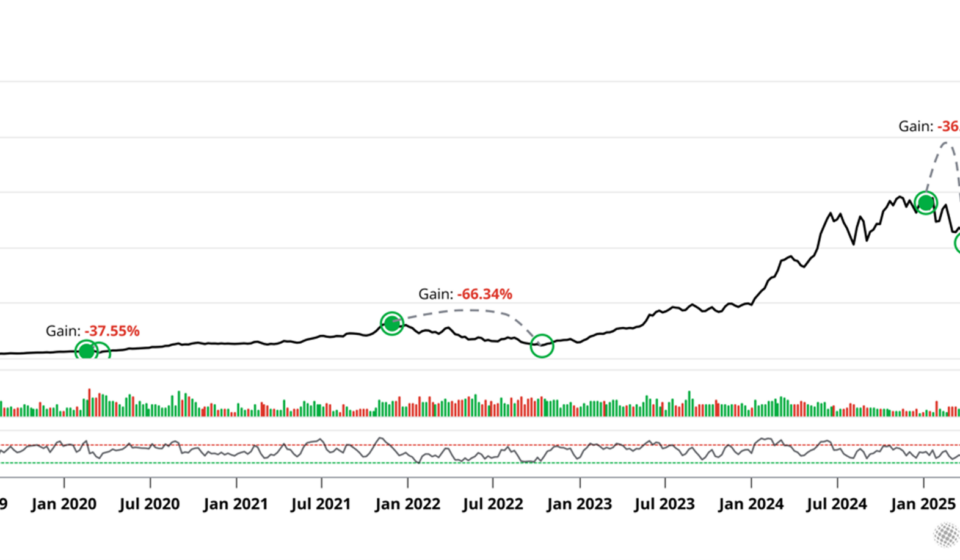
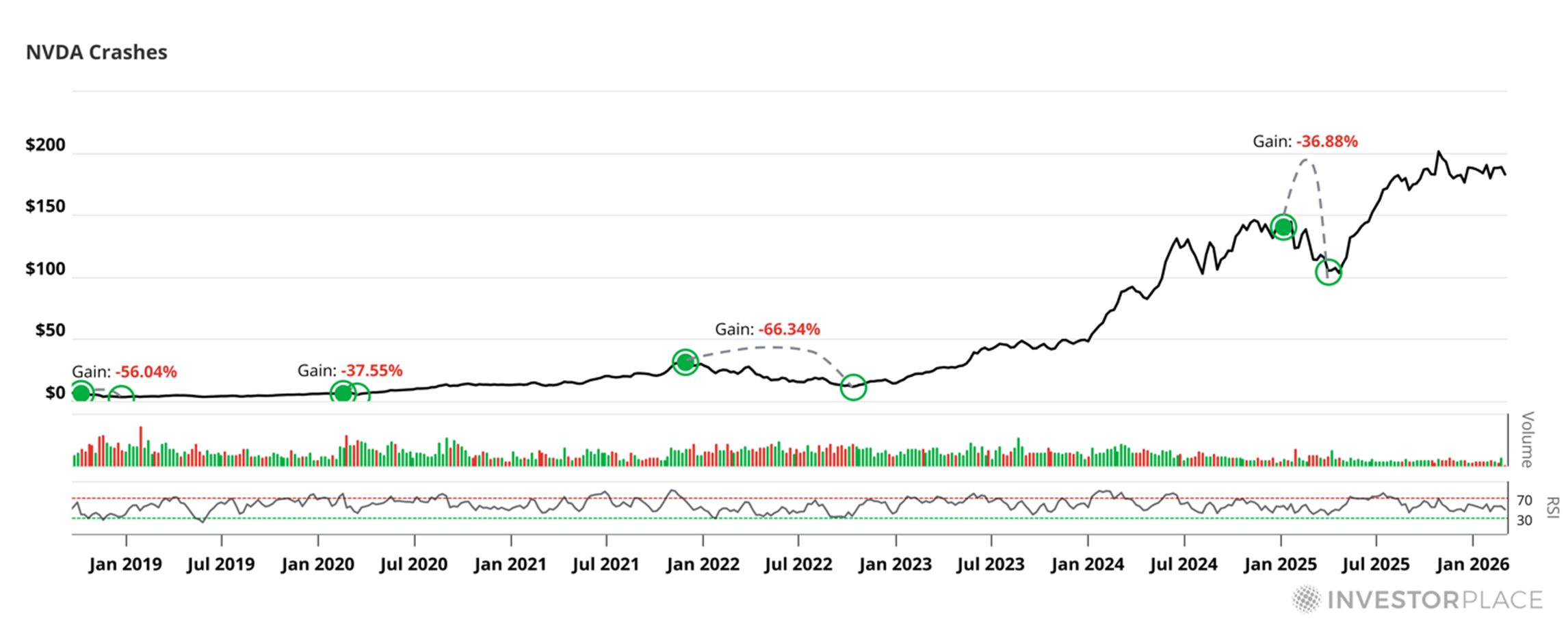
The volatility of the current market is best exemplified by the price action of "blue-chip" leaders. Nvidia Corp. (NVDA), despite its status as a cornerstone of the artificial intelligence revolution, has experienced four major crashes of 35% or more in the last eight years. Similarly, Netflix Inc. (NFLX) has seen drawdowns exceeding 50% before recovering to new highs.
For many investors, "just holding" through these periods is psychologically and financially untenable. Loss aversion—the tendency to prefer avoiding losses over acquiring equivalent gains—often leads investors to sell at the bottom of these algorithmic-driven swings, only to buy back in once the price has already recovered.
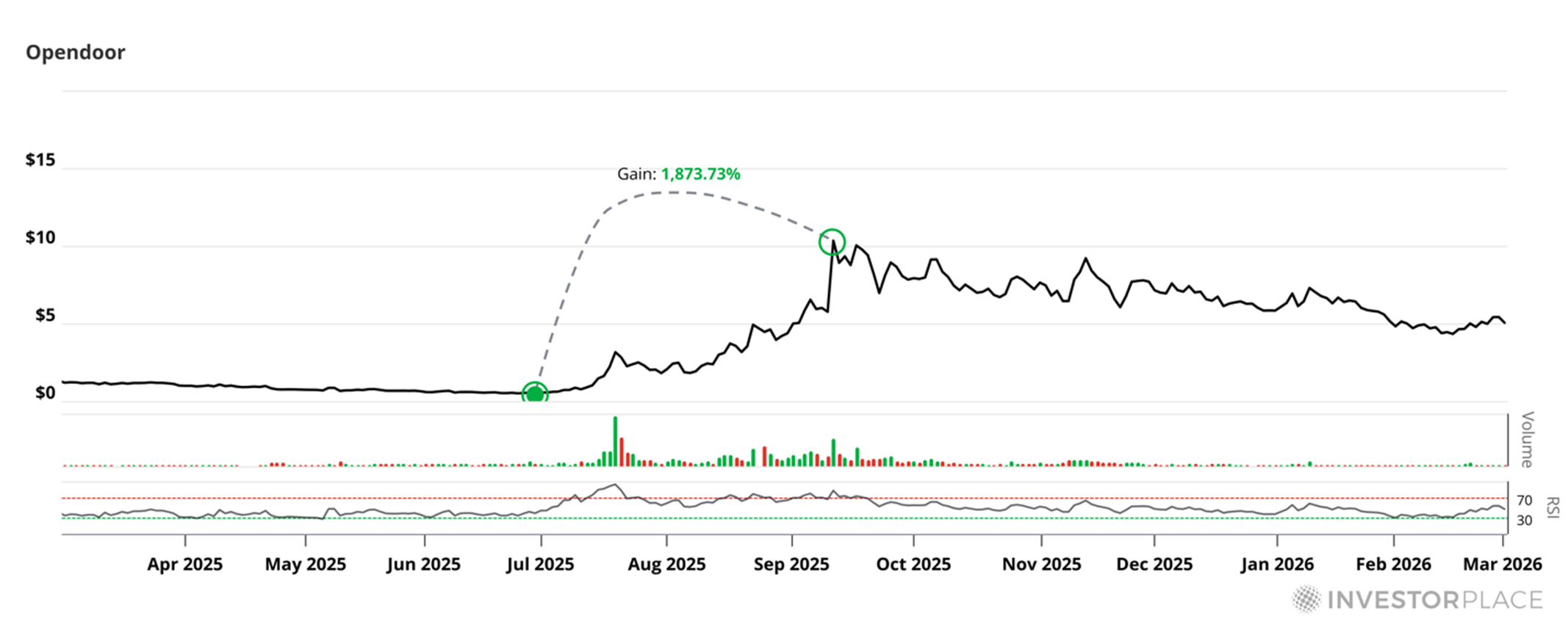
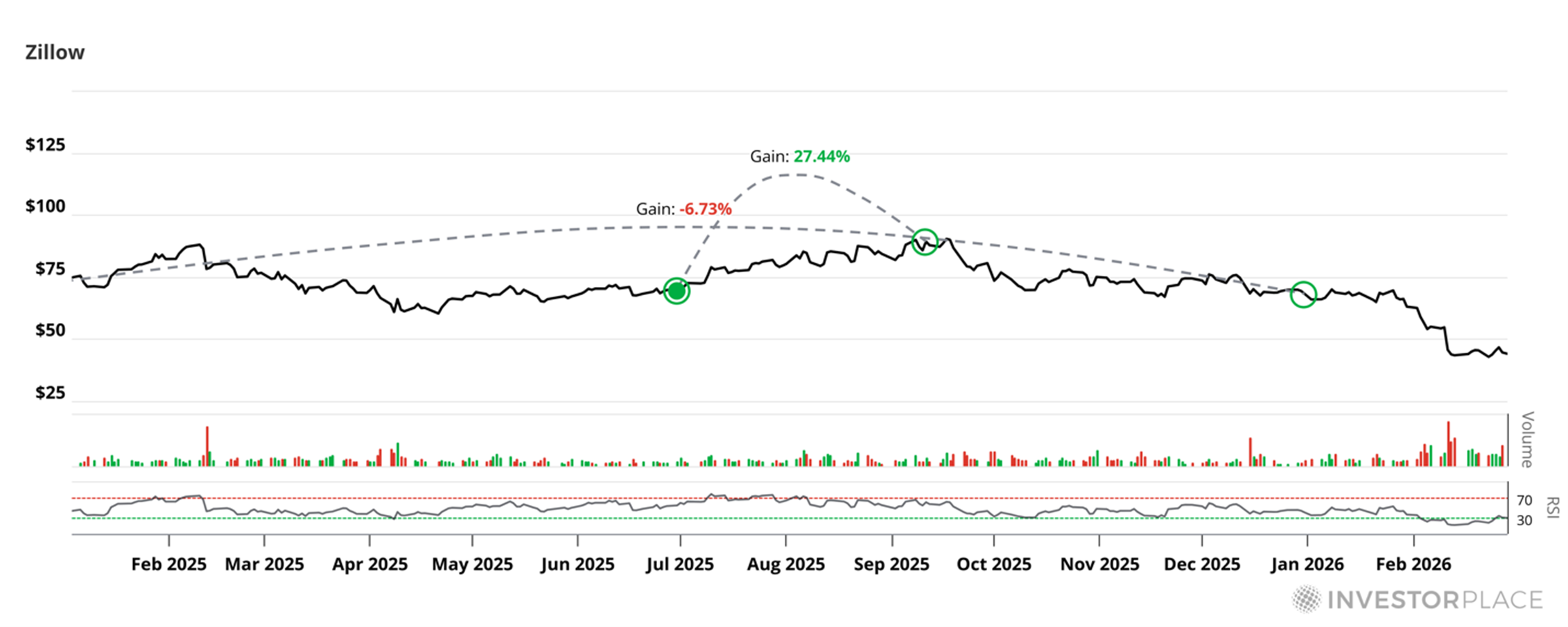
The disconnect is even more apparent in the mid-cap and growth sectors. For instance, in recent trading cycles, Opendoor Technologies Inc. (OPEN) experienced a rally of nearly 1,900% in a two-month window during a period when its business fundamentals were objectively deteriorating. Meanwhile, its competitor, Zillow Group Inc. (Z), which maintained a stronger revenue position and market share, remained relatively stagnant. This suggests that in the modern market, capital flow and institutional "accumulation" are often more predictive of short-term returns than balance sheet health.
The Methodology of Stage Analysis
As fundamental analysis becomes less reliable for timing entries and exits, many professionals are returning to "Stage Analysis," a technical framework popularized by market veteran Stan Weinstein. This methodology categorizes every stock into one of four recurring stages:
- Stage 1 (Consolidation): The stock moves sideways as selling pressure dries up and institutional "quiet accumulation" begins.
- Stage 2 (The Breakout): This is the advancing phase where the stock breaks above its moving averages on high volume. This is where the majority of capital gains are realized.
- Stage 3 (The Top): The stock begins to move sideways again as institutions begin to "distribute" or sell their shares to late-coming retail investors.
- Stage 4 (The Decline): The stock breaks down below support levels, entering a sustained downtrend.
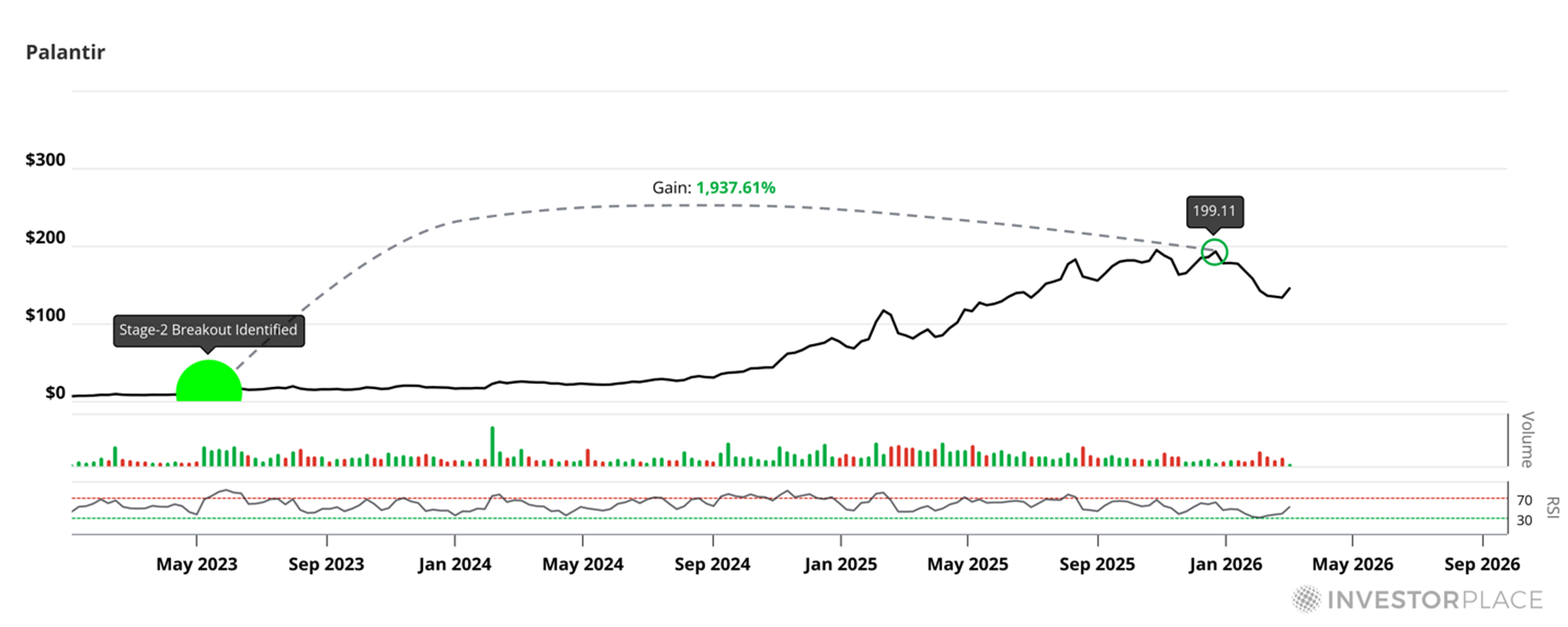
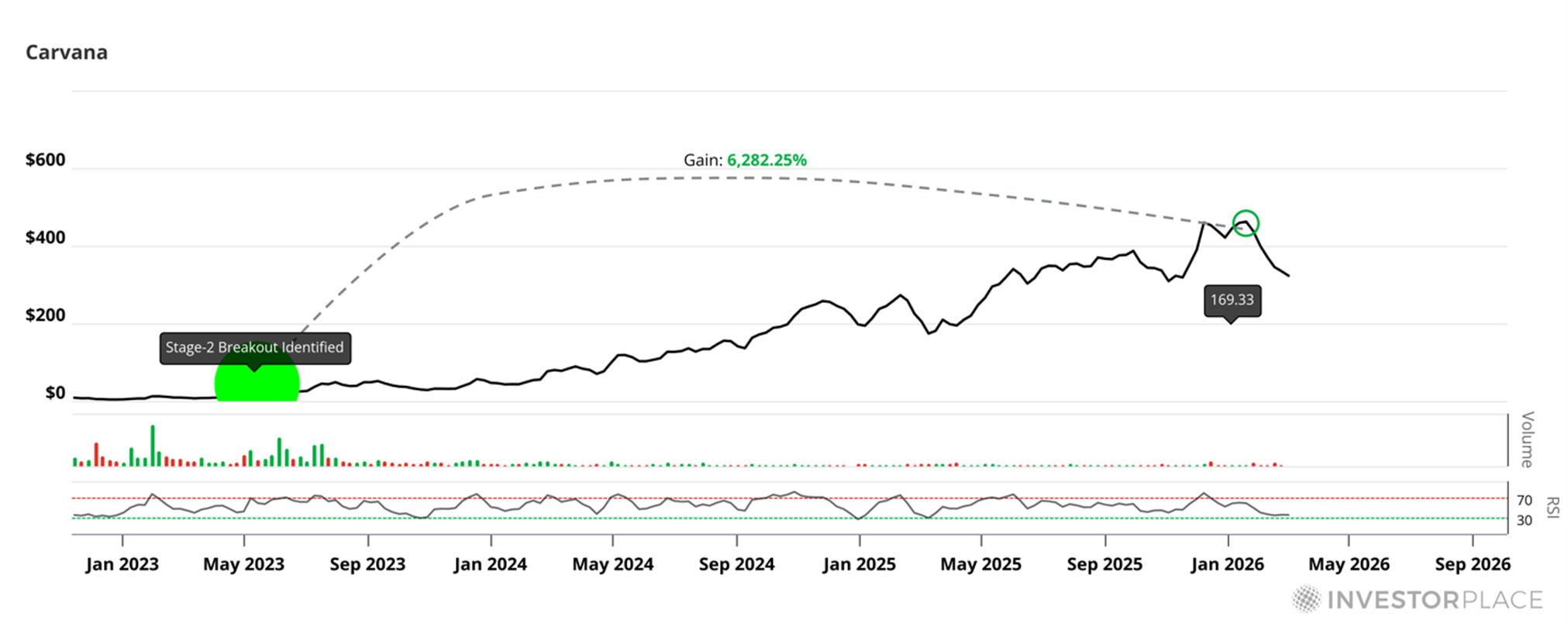
In a high-volatility environment, identifying the transition from Stage 1 to Stage 2 is critical. Recent examples include Palantir Technologies Inc. (PLTR), which surged from $9 to over $200 after confirming a Stage 2 breakout, and Carvana Co. (CVNA), which saw a 6,000% increase from its technical breakout point.
Technological Responses: The Rise of Systematic Screening
Because there are thousands of publicly traded securities, it is impossible for human analysts to manually monitor every potential breakout. To combat the speed of institutional algorithms, investment teams are increasingly utilizing proprietary "breakout screeners." These systems scan the market for specific signatures of institutional momentum, assigning "breakout scores" based on price velocity and volume confirmation.
According to back-testing data from Luke Lango’s research team, such systematic approaches were able to flag eight of the top-performing stocks of 2025 before their primary advances began. These included companies like AppLovin Corp. (APP), Root Inc. (ROOT), and MicroStrategy Inc. (MSTR). The objective of these systems is not to predict earnings, but to identify when institutional money has already begun to move into a sector, allowing smaller investors to "piggyback" on the trend.
Broader Economic Impact and Investor Implications
The shift toward an algorithmic, high-velocity market has significant implications for wealth inequality and retirement planning. Traditional pension funds and 401(k) participants, who often rely on slow-moving mutual funds, may find themselves disadvantaged in a market where leadership rotates every few months.
Furthermore, the evolution of "Agentic AI"—systems that can not only react to data but also interact with other AI systems in real-time—suggests that market speed will only increase. This could lead to "flash crashes" or "melt-ups" that occur in the absence of any traditional economic news.
Financial analysts suggest that the "new normal" for investors involves three core pillars:
- Acceptance of Volatility: Recognizing that a 30% drawdown does not necessarily mean a company is failing.
- Systematic Discipline: Moving away from "gut feel" and toward data-driven entry and exit points.
- Technological Integration: Utilizing tools that can process market data at a scale humans cannot replicate.
Conclusion: Adapting to the New Market Paradigm
The stock market of the 2020s is a vastly different entity than the one that existed in the 20th century. The influence of high-frequency algorithms and the surge in retail participation have created a system where price behavior is often detached from business reality. While the mantra of "buying great businesses" remains valid over decades, the path to those long-term gains is now characterized by violent, short-term swings.
For the modern investor, success likely depends on the ability to identify capital flows rather than just reading income statements. By utilizing frameworks like Stage Analysis and systematic screening tools, investors can attempt to navigate the volatility rather than being victimized by it. The market is not slowing down; therefore, the strategies used to conquer it must evolve in kind. As the decision-making process shifts from the boardroom to the data center, the advantage goes to those who can interpret the signals left behind by the machines.