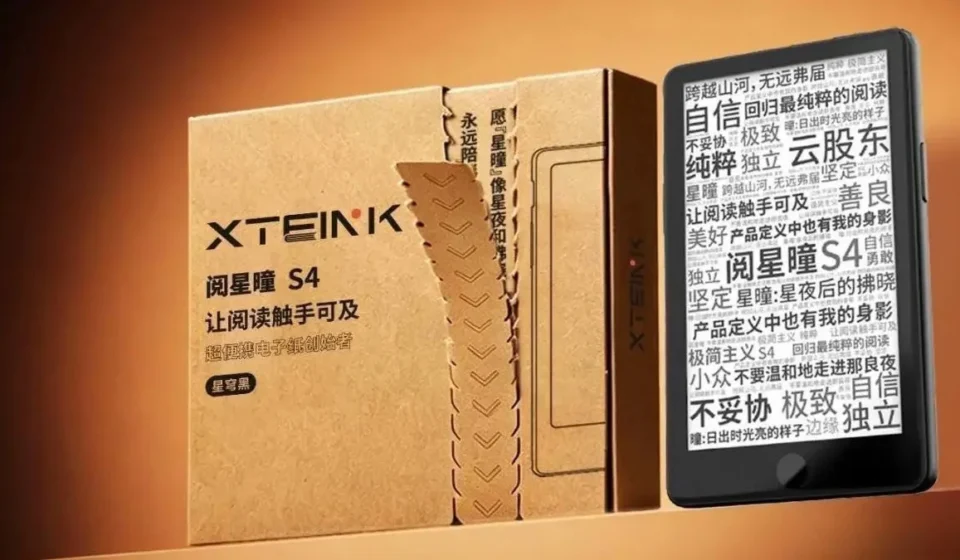
The Evolution of Portable Reading: Xteink S4 Unveiled with Android 11 and Enhanced Features

The e-reader market, traditionally dominated by a handful of established players offering largely closed ecosystems, is witnessing a significant shake-up with the official unveiling of the Xteink S4. This new device, positioned as the spiritual successor to the well-received Xteink X4, promises to redefine the portable reading experience by integrating the versatility of Android 11 into a compact E-Ink form factor. The Xteink S4 aims to address the limitations of its predecessor, particularly its proprietary operating system, by embracing a more open and user-friendly platform, thereby significantly expanding its utility and appeal to a broader audience of digital readers.
From Niche Appeal to Mainstream Ambition: Xteink S4’s Strategic Redesign
When Xteink introduced the Xteink X4, it quickly carved out a notable niche within the e-reader community. Its distinctive features, such as its pocketable design and magnetic attachment capabilities, resonated strongly with users seeking a highly portable and convenient device for digital consumption. The X4 was lauded for its commitment to DRM-free reading, a significant draw for enthusiasts who prioritize ownership and control over their digital libraries, free from the encumbrances of publisher-imposed restrictions. Its E-Ink display provided a comfortable reading experience, mimicking the feel of traditional paper, a crucial attribute for extended reading sessions. However, the X4 was not without its drawbacks, primarily stemming from its proprietary Linux-based operating system. This closed ecosystem severely limited the device’s functionality, restricting users to DRM-free EPUB files and precluding the installation of popular third-party reading applications like Kindle, Kobo, or KOReader. This limitation, while appealing to a specific segment, inherently constrained its market reach and versatility.
The introduction of the Xteink S4 represents a strategic pivot for the Chinese startup, signaling an ambition to move beyond its niche appeal and contend for a larger share of the mainstream e-reader market. The company has evidently listened to user feedback and industry trends, recognizing the growing demand for more flexible and open e-reading solutions. By adopting Android 11, the S4 fundamentally transforms from a specialized, single-purpose device into a versatile digital companion. This shift addresses the primary constraint of the X4, unlocking a wealth of possibilities for content access and application integration. The move to a widely adopted operating system like Android is a calculated risk and a bold statement, aiming to position the S4 as a comprehensive reading platform rather than just a simple e-reader. This strategic redesign suggests Xteink’s intent to offer a device that not only excels in its core function of reading but also provides the broader utility and customization options that modern consumers expect from their portable electronics. The anticipated international launch further underscores this ambition, indicating a desire to compete on a global scale against well-entrenched competitors.
Addressing the X4’s Limitations
The Xteink X4, despite its innovative form factor and dedication to DRM-free content, faced significant limitations due to its proprietary Linux-based operating system. This system, while functional for its intended purpose, restricted users solely to EPUB files that lacked digital rights management. This meant that readers with extensive libraries tied to platforms like Amazon Kindle, Kobo, or even open-source aggregators like KOReader, found the X4 incompatible with their existing ecosystems. The inability to sideload or install alternative reading applications was a critical barrier for many potential users, reducing the device’s overall utility. Furthermore, the X4’s 650mAh battery, while offering respectable longevity for a simple E-Ink device, was considered modest by some users who desired longer intervals between charges, especially for a device designed for constant portability. The absence of a front light also limited its usability in low-light conditions, forcing users to rely on external illumination. These factors collectively positioned the X4 as a niche product, appealing primarily to a specific segment of tech-savvy users willing to adapt to its constraints for the benefit of its unique form factor and DRM-free stance.
The Promise of a Pocketable Powerhouse
The Xteink S4 endeavors to transcend these limitations, presenting itself as a "pocketable powerhouse" that marries the beloved compact design of its predecessor with significantly enhanced functionality. The most transformative upgrade is undoubtedly the transition to Android 11. This change is not merely an incremental improvement but a fundamental re-architecture of the device’s core capabilities. Android 11 unlocks the potential for users to install virtually any reading application available on the Android ecosystem, from the official Kindle and Kobo apps to specialized readers like Moon+ Reader or the aforementioned KOReader. This level of flexibility directly addresses the X4’s most significant drawback, allowing users to consolidate their entire digital reading experience onto a single, highly portable device, regardless of their preferred platform or file format.
Beyond the operating system, the S4 also boasts substantial hardware upgrades. The battery capacity has more than doubled, from 650mAh in the X4 to a robust 1,400mAh, promising significantly extended usage times and reducing charging frequency – a critical factor for any portable device. The inclusion of a versatile front light, capable of emitting both cool and warm tones, is a direct response to user demand for enhanced readability in various lighting conditions, from bright daylight to complete darkness. Furthermore, the S4 incorporates modern connectivity options like USB-C, Wi-Fi, and Bluetooth, facilitating faster data transfers, universal charging compatibility, and the potential for wireless audio, should users wish to listen to audiobooks. These combined enhancements aim to deliver a truly versatile and uncompromised reading experience within an incredibly compact form factor, making the S4 a compelling option for a much wider demographic of digital readers.
A Deep Dive into the Xteink S4’s Specifications and Upgrades
The Xteink S4’s technical specifications reveal a thoughtful evolution from its predecessor, designed to enhance both performance and user experience while maintaining its core identity as a highly portable E-Ink device. These upgrades are not just incremental; they represent a significant leap forward in capabilities, particularly when benchmarked against other devices in its category. The design philosophy appears to be one of maximizing utility within minimal dimensions, a challenge that Xteink seems to have embraced successfully.
Display and Form Factor: Compact Brilliance
At the heart of the Xteink S4’s appeal is its 4.3-inch E-Ink touchscreen, offering a resolution that translates to 220 pixels per inch (PPI). This display size is notably smaller than most mainstream e-readers, such as the Kindle Paperwhite (6.8 inches, 300 PPI) or Kobo Clara 2E (6 inches, 300 PPI), reinforcing its "pocketable" nature. While the PPI is slightly lower than some premium offerings, 220 PPI is more than adequate for crisp text display on a screen of this size, ensuring legibility without straining the eyes. For comparison, many entry-level e-readers typically offer around 167-212 PPI. The E-Ink technology itself remains a cornerstone, providing a glare-free, paper-like reading experience that is gentle on the eyes and highly power-efficient, a stark contrast to backlit LCD or OLED screens found in smartphones.
In terms of physical dimensions, the Xteink S4 maintains an impressive slim profile, measuring just 6.98mm thick. This makes it comparable to, or even thinner than, many modern smartphones and significantly slimmer than many e-readers. Its weight of 95 grams further emphasizes its ultra-portable design. To put this into perspective, a typical smartphone often weighs between 150-250 grams, and even small e-readers like the Kobo Nia weigh around 172 grams. This featherlight construction ensures that the S4 can be comfortably held for extended periods with one hand, or even attached to the back of a larger smartphone, mirroring the X4’s innovative accessory potential. The combination of a compact E-Ink screen, slim profile, and minimal weight positions the S4 as a truly unique offering for readers who prioritize portability above all else, ensuring it slips effortlessly into any pocket or small bag.
Performance and Storage: Powering Your Digital Library
Under the hood, the Xteink S4 is equipped with 2GB of RAM and 32GB of internal storage. The 2GB of RAM represents a significant upgrade from the X4 (which likely had much less, typical for basic Linux devices) and is a crucial enabler for the Android 11 operating system. Android, being more resource-intensive than a proprietary Linux kernel, requires a certain baseline of RAM to operate smoothly, especially when running multiple applications or handling background processes. While 2GB might seem modest by smartphone standards, for an E-Ink device primarily focused on reading and light app usage, it should provide a fluid experience for navigating menus, opening e-books, and switching between reading applications. The 32GB of storage capacity is ample for a vast digital library. Considering that an average e-book file size ranges from a few hundred kilobytes to a few megabytes, 32GB can comfortably store tens of thousands of books, ensuring that users have their entire collection readily accessible without concerns about running out of space. This capacity also allows for the installation of numerous reading apps and potentially even some audiobooks.
Battery Life: Endurance for the Avid Reader
One of the most significant and eagerly awaited improvements in the Xteink S4 is its substantially upgraded battery capacity. The device now features a 1,400mAh battery, a remarkable increase from the 650mAh battery found in its predecessor, the Xteink X4. This more than doubling of battery capacity is critical, especially given the transition to the more power-hungry Android 11 operating system. While the X4’s 650mAh battery was claimed to offer up to two weeks of moderate use, the demands of Android, with its background processes, Wi-Fi, and Bluetooth connectivity, would typically shorten such longevity if the battery size remained unchanged.
With the 1,400mAh battery, the S4 is positioned to deliver excellent endurance. E-Ink displays are inherently power-efficient, consuming significant power only when the screen refreshes. Combined with optimized Android software and Xteink’s power management protocols, it is reasonable to anticipate that the S4 will offer several weeks of battery life under typical reading conditions, even with the enhanced features and operating system. This extended battery life is a major convenience factor for frequent travelers, commuters, or anyone who dislikes the constant need to recharge their devices. It ensures that the S4 can be a reliable companion for prolonged periods away from a power source, reinforcing its utility as a dedicated reading device.
Connectivity and Comfort: Modern Conveniences
The Xteink S4 incorporates a suite of modern connectivity features and comfort enhancements that significantly elevate the user experience. The inclusion of Wi-Fi enables seamless wireless transfer of e-books, synchronization of reading progress across devices (via cloud-based reading apps), and access to online content stores. Bluetooth connectivity further expands its utility, primarily allowing users to connect wireless headphones or speakers for listening to audiobooks, a feature increasingly sought after in contemporary e-readers. This integration transforms the S4 from a purely visual reading device into a comprehensive audio-visual content consumption tool, aligning with the growing popularity of audiobooks.
Crucially, the S4 also features a cool and warm front light. This adaptive lighting system is a significant upgrade from devices without any integrated illumination, and even from those with only a single-tone front light. The ability to adjust both the brightness and the color temperature (from a cooler, bluer light suitable for daytime to a warmer, amber hue ideal for evening reading to reduce eye strain and blue light exposure) ensures optimal readability in virtually any lighting condition. This feature is a staple in premium e-readers and its inclusion in the compact S4 underscores Xteink’s commitment to delivering a high-quality reading experience. Finally, the adoption of a USB-C port for charging and data syncing brings the S4 in line with contemporary industry standards. USB-C offers faster charging, higher data transfer speeds, and reversible connectors, providing greater convenience and compatibility with a wide range of modern cables and accessories. This universal port simplifies the charging ecosystem for users who likely already use USB-C for their smartphones and other devices.
The Android Advantage: Opening Up the E-Reader Ecosystem
The strategic decision by Xteink to transition the S4 from a proprietary Linux-based operating system to Android 11 is arguably the most pivotal development for the device. This move fundamentally redefines the S4’s capabilities and its competitive positioning within the e-reader market. It represents a clear acknowledgment of evolving consumer expectations for flexibility and open access to content, moving away from the more restrictive models that have characterized the e-reader landscape for years.
Breaking Free from Proprietary Constraints
The previous Xteink X4, with its specialized Linux OS, was inherently limited. It functioned primarily as a reader for DRM-free EPUB files, which, while appealing to a specific segment of users, alienated a vast majority who are entrenched in ecosystems like Amazon Kindle, Kobo, or Google Play Books. These platforms often employ Digital Rights Management (DRM) to protect copyrighted content, making it incompatible with devices that do not support their specific DRM schemes. The X4’s inability to install third-party applications meant that users could not access their purchased content from these major vendors directly on the device. This forced a cumbersome workflow of removing DRM (where legally permissible or technically feasible for personal use) or converting file formats, which few casual readers are willing to undertake.
By embracing Android 11, the Xteink S4 effectively shatters these proprietary constraints. Android’s open-source nature and robust app ecosystem mean that users are no longer limited to a single format or content source. This transition allows the S4 to become a truly universal reading device, capable of accommodating diverse digital libraries and preferences. It democratizes access to content, giving users the freedom to choose where they purchase and consume their e-books, rather than being dictated by the device’s inherent limitations. This move aligns the S4 with the broader trend in consumer electronics towards greater interoperability and user choice.
A World of Apps at Your Fingertips
The most direct and immediate benefit of Android 11 on the Xteink S4 is the ability to sideload and install a vast array of reading applications. This means that users can download and utilize the official apps for Kindle, Kobo, Nook, Google Play Books, Libby (for library books), and many more. For example, a user with an extensive Kindle library can simply install the Kindle app, log in, and access all their purchased titles directly on the S4. The same applies to Kobo users or those who prefer the highly customizable experience of open-source readers like KOReader or Moon+ Reader. This flexibility transforms the S4 into a central hub for all digital reading content, regardless of its origin.
Furthermore, the Android ecosystem extends beyond just dedicated reading apps. Users might potentially install dictionary apps, note-taking applications, or even cloud storage services for easier document management. While the E-Ink display’s refresh rate and grayscale limitations mean that graphic-intensive applications or video streaming would be impractical, the core utility of text-based applications and content consumption is dramatically expanded. This capability is a game-changer for many readers who have long wished for a compact E-Ink device that doesn’t force them into a single vendor’s ecosystem, effectively eliminating the need for multiple e-readers for different platforms.
Navigating the Android E-Ink Experience
While the integration of Android 11 offers unprecedented flexibility, it also presents unique considerations for an E-Ink device. Android was primarily designed for vibrant, high-refresh-rate LCD/OLED screens, not the slower, grayscale, and refresh-intensive E-Ink technology. Xteink will need to ensure significant optimization to provide a smooth user experience. This includes fine-tuning refresh rates to minimize ghosting (residual images from previous screens) and optimizing app performance for the E-Ink display characteristics.
Developers often optimize Android for specific hardware, and adapting it for E-Ink requires careful calibration of touch responsiveness, animation speeds, and power consumption. Users should anticipate a slightly different interaction experience compared to a color smartphone, with potentially slower screen transitions or occasional full-screen refreshes to clear ghosting. However, companies like Xteink have been increasingly adept at this optimization, often providing different refresh modes (e.g., normal, speed, A2 mode) that balance display quality with responsiveness. The success of the S4’s Android implementation will largely depend on how well Xteink has managed these technical challenges, ensuring that the "Android Advantage" translates into a genuinely superior and seamless reading experience rather than a compromise.
Chronology of Innovation: From X4’s Genesis to S4’s Launch
The journey from the Xteink X4 to the S4 is a testament to iterative design and responsiveness to market feedback. This chronology highlights how a niche product can evolve into a more broadly appealing device by strategically addressing its shortcomings and embracing new technological paradigms.
The Xteink X4: A Foundation Laid
The Xteink X4 made its debut, reportedly, in late 2025 or early 2026, quickly garnering attention for its unique form factor and philosophy. It was designed as an ultra-portable E-Ink device, small enough to attach magnetically to the back of a smartphone, and championed DRM-free reading. Its 4.3-inch screen and minimalist design appealed to a specific segment of users who valued portability and open content access above all else. Reviewers and early adopters praised its innovative concept and comfortable reading experience. However, almost immediately, the limitations of its proprietary Linux-based operating system became a recurring point of feedback. While functional for its intended purpose, the inability to install third-party reading apps and its restricted file format compatibility were frequently cited as significant barriers to wider adoption. The 650mAh battery, while offering decent performance for its limited feature set, also hinted at room for improvement in terms of overall endurance.
User Feedback Drives Evolution
Following the X4’s launch and subsequent market reception, Xteink likely engaged in a period of collecting and analyzing user feedback. This feedback loop, common in the tech industry, would have highlighted the clear demand for greater versatility, particularly regarding app support and battery life. Enthusiast communities on forums and tech review sites consistently expressed a desire for a pocketable E-Ink device that could integrate seamlessly with existing digital libraries from major platforms. The idea of an "open" E-Ink device that runs Android was a frequent topic of discussion among power users who felt constrained by the closed ecosystems of market leaders like Amazon and Kobo. This collective voice from the user base, identifying the critical pain points of the X4, served as a direct catalyst for the development of its successor. It underscored that while the X4’s form factor was innovative, its software limitations were hindering its full potential.
The S4’s Imminent Arrival
Building on this critical feedback, Xteink embarked on the development of the S4. The strategic decision to adopt Android 11 was likely made early in the development cycle, recognizing its potential to address the primary software limitations of the X4. Hardware improvements, such as the increased battery capacity (1,400mAh), the inclusion of a cool and warm front light, more RAM (2GB), and expanded storage (32GB), were systematically integrated to enhance both performance and user comfort. The transition to USB-C and the inclusion of Wi-Fi and Bluetooth also reflect a commitment to modern connectivity standards. Reports from Good e-Reader indicate that the Xteink S4 is now available in China, marking the culmination of this development cycle. This initial launch phase in its home market will serve as a crucial testbed for the device, allowing Xteink to gather real-world performance data and refine its software before a broader global release. The expectation of an international launch in the coming months suggests a confident outlook from Xteink regarding the S4’s readiness for a worldwide audience.
Industry Reactions and Market Implications
The launch of the Xteink S4, particularly its shift to Android 11, is poised to elicit varied reactions across the e-reader industry and among its consumer base. This strategic move by a relatively smaller player has the potential to ripple through the market, influencing product development and consumer expectations.
Xteink’s Vision: A Statement of Intent
From Xteink’s perspective, the S4 represents more than just a product upgrade; it is a clear statement of intent. While no official statements have been released beyond product specifications, one can logically infer the company’s message: a commitment to innovation driven by user needs. A hypothetical statement from Xteink might emphasize: "Our goal with the S4 was to build upon the strong foundation of the X4 while directly addressing key areas of improvement identified by our dedicated user base. The shift to Android 11 represents a significant leap in flexibility and user experience, enabling our readers to access a vast ecosystem of content and personalize their reading journey like never before. We believe the Xteink S4 sets a new benchmark for what a pocketable e-reader can achieve." This inferred stance highlights their ambition to provide a premium, versatile experience in a compact form factor, directly challenging the established norms of the e-reader market.
Analyst Perspectives: Shaking Up the Status Quo
Industry analysts are likely to view the Xteink S4’s launch, particularly its Android integration, as a significant strategic maneuver. They might comment on the potential for this device to disrupt the current market hierarchy, which has long been dominated by Amazon’s Kindle and Rakuten Kobo. A hypothetical analyst perspective might state: "This move by Xteink is a clear signal of intent to move beyond a niche audience. By embracing Android, they are directly challenging the closed ecosystems of market leaders and offering a compelling alternative for users seeking more control over their digital libraries. The key to its success will lie in pricing, international distribution, and how effectively Xteink can optimize Android for the unique characteristics of E-Ink displays, managing performance and battery life." Analysts will also be scrutinizing the S4’s performance, particularly how smoothly Android 11 runs on E-Ink, and how well Xteink handles software updates and ongoing support, which are critical for the long-term viability of an Android-based device. The potential for a new competitor to gain traction could prompt larger players to re-evaluate their own product strategies, possibly leading to more feature-rich or open offerings in the future.
Consumer Excitement: A Long-Awaited Solution
For consumers, especially those who have expressed frustration with the limitations of existing e-readers, the Xteink S4 is likely to generate considerable excitement. The prospect of a pocketable E-Ink device running a full Android OS addresses a long-standing desire for flexibility and convenience. A typical consumer reaction might be: "The X4 was a great concept, but the limited OS held it back. Android 11 changes everything; now I can truly consolidate my reading apps on one device, from Kindle to library apps, without compromising on portability. This is the e-reader I’ve been waiting for!" This sentiment reflects a demand for devices that adapt to users’ diverse content sources rather than forcing them into a single ecosystem. The combination of a powerful battery, versatile front light, and the freedom of Android is expected to resonate strongly with avid readers who prioritize both convenience and comprehensive access to their digital libraries. The anticipation for an international launch will be high among these eager consumers.
The Broader Impact: Reshaping the E-Reader Landscape
The launch of the Xteink S4 with Android 11 has implications that extend beyond Xteink as a company, potentially reshaping the broader e-reader landscape and influencing future product development across the industry. This move signals a potential shift in consumer expectations and competitive strategies.
Challenging the Giants: Kindle and Kobo
For years, the e-reader market has been a duopoly, primarily dominated by Amazon’s Kindle and Rakuten Kobo. Both companies offer robust ecosystems, vast content libraries, and a range of devices, but largely operate on proprietary software that ties users to their respective stores. While both offer features like adjustable front lights and waterproof designs, the ability to run competing apps directly on their devices is non-existent. The Xteink S4’s embrace of Android directly challenges this closed model. By allowing users to access Kindle, Kobo, and other reading apps on a single device, Xteink offers a compelling alternative that prioritizes user freedom over platform lock-in. This could exert pressure on Amazon and Kobo to consider offering more flexible solutions or to innovate further within their own ecosystems to maintain their competitive edge. While Xteink is a smaller player, its success could demonstrate a viable market for "open" e-readers, potentially inspiring other manufacturers or even prompting the giants to adapt their strategies, perhaps through strategic partnerships or by offering limited app support for non-competitor services.
The Rise of Open E-Reading
The Xteink S4 is part of a growing trend towards "open" e-reading devices, primarily those running Android. While devices like the Boox series from Onyx have offered Android-based E-Ink tablets for some time, the S4 distinguishes itself with its ultra-compact form factor and focused reading experience. This burgeoning segment caters to users who desire the benefits of E-Ink (eye comfort, battery life) combined with the versatility of an Android app ecosystem. The success of devices like the S4 could accelerate the shift in consumer preference towards e-readers that are not bound to a single storefront. This could lead to a more fragmented but ultimately more innovative market, where device manufacturers compete not just on hardware specifications but also on the breadth of content access and the quality of their Android-on-E-Ink optimization. It also empowers users to bypass regional content restrictions or to seamlessly integrate their digital library from various sources onto a single, preferred device.
Global Availability: The Next Frontier
While the Xteink S4 is initially launching in China, the company’s intention for an international release in the coming months is a crucial next step. The success of the X4 hinted at a global demand for such a device, and the S4, with its enhanced features and Android OS, is even better positioned for international appeal. However, a global launch presents its own set of challenges, including navigating international distribution networks, marketing to diverse linguistic and cultural markets, and providing robust customer support. The pricing strategy for international markets will be particularly critical, as it will determine how competitively the S4 stands against established players. If Xteink can successfully execute its international rollout, the S4 has the potential to become a globally recognized player in the niche but growing market for compact, versatile e-readers, further cementing the trend towards more open and user-centric digital reading experiences worldwide. Its availability outside of China will be the true test of its market impact and its ability to challenge the established order.
Conclusion: A New Chapter for Portable Digital Reading
The Xteink S4 represents a significant evolution in the landscape of portable digital reading. By building upon the innovative, pocketable design of its predecessor, the X4, and critically addressing its limitations with the adoption of Android 11 and a suite of hardware enhancements, Xteink is poised to open a new chapter for e-readers. The device’s commitment to user flexibility, robust battery life, and comfortable reading experience through its adaptive front light and E-Ink display, positions it as a compelling alternative to the largely closed ecosystems that have long defined the market. While challenges remain in optimizing Android for E-Ink and navigating global distribution, the S4’s strategic design and feature set suggest a future where digital readers have unprecedented control and access to their content, regardless of platform. This move by Xteink not only elevates its own product line but also contributes to a broader industry trend towards more open, versatile, and user-centric e-reading solutions, promising a more dynamic and competitive market for years to come.