The Foldable Frontier: 2026 Poised for Mainstream Dominance as Xiaomi 18 Fold Emerges as Performance Powerhouse

The landscape of mobile technology is on the cusp of a significant transformation, with 2026 widely anticipated to be the pivotal year for foldable smartphones to transcend niche appeal and achieve widespread consumer adoption. This burgeoning era of flexible displays is being fueled by a confluence of factors, including the critical acclaim garnered by Samsung’s latest Galaxy Z Fold8, which has been met with enthusiastic reviews for its expansive, book-style form factor. Simultaneously, persistent and credible rumors surrounding Apple’s imminent launch of its inaugural foldable device, speculated to be branded as the iPhone Ultra, are injecting a potent dose of anticipation into the market. As these industry giants solidify their presence in the foldable segment, a new challenger is emerging from the East, poised to disrupt the competitive arena. Leaked specifications and early performance benchmarks suggest that Xiaomi’s forthcoming 18 Fold could represent a formidable leap forward in foldable device capabilities, potentially redefining performance expectations for this innovative category.
The Dawn of a New Foldable Era
The trajectory of foldable phones has been one of gradual innovation and increasing refinement since their initial introduction. Early iterations often grappled with durability concerns, bulkiness, and software optimization for the unique form factor. However, with each subsequent generation, manufacturers have addressed these challenges, leading to more robust designs, sleeker profiles, and a more seamless user experience. Samsung, a pioneer in the foldable market, has consistently pushed the boundaries with its Galaxy Z Fold and Flip series. The Galaxy Z Fold8, in particular, has been lauded for its expansive internal display, which offers a tablet-like canvas for productivity and entertainment, and a refined external screen that provides convenient smartphone functionality. This successful integration of dual-screen experiences has undoubtedly paved the way for broader market acceptance.
The potential entry of Apple into the foldable market with the iPhone Ultra next month represents a watershed moment. Historically, Apple’s entry into a new product category has often been characterized by meticulous product development and a significant impact on market dynamics. If the iPhone Ultra lives up to expectations, it could catalyze a surge in consumer interest and investment in foldable technology, further accelerating its mainstream adoption. This dual pressure from established leaders, Samsung and potentially Apple, creates an environment ripe for intense competition, which is precisely where Xiaomi is positioning itself.
Xiaomi 18 Fold: A Performance Contender Emerges
While the full technical specifications of the Xiaomi 18 Fold remain under wraps, initial information and leaked details paint a compelling picture of a device engineered for raw power. Xiaomi has officially confirmed that the 18 Fold will be equipped with its proprietary Xring O3 chip. Although this processor may not yet be a household name among consumers, emerging performance data from independent sources suggests it could be a true game-changer in the mobile chipset arena.
Recent reports, citing insights from "Xiaobai’s Tech Reviews" via Notebookcheck, have highlighted the exceptional performance of the Xring O3. In rigorous benchmark tests, the Xring O3 has demonstrated an impressive ability to compete directly with the industry’s leading processors. Specifically, in single-core performance metrics, it has been observed to go "toe-to-toe" with Qualcomm’s anticipated Snapdragon 8 Elite Gen 5 and Apple’s forthcoming A19 Pro chip. This level of parity with established high-performance silicon is a significant achievement for a new entrant.
However, it is in the realm of multi-core performance where the Xring O3 truly distinguishes itself. Benchmarks indicate that the chip "comfortably beats both" its key competitors in these tests. Multi-core performance is critical for handling demanding tasks such as multitasking, complex gaming, video editing, and AI processing. Achieving a lead in this area suggests that the Xiaomi 18 Fold could offer an unparalleled level of responsiveness and power efficiency for users engaging in intensive mobile computing.
Implications for Mobile Gaming and Productivity
The potential performance prowess of the Xiaomi 18 Fold, coupled with its anticipated book-style form factor, positions it as a highly attractive device for mobile gaming enthusiasts. The current iteration of foldable gaming often involves compromises. While larger foldable displays offer a more expansive view than traditional smartphones, many games are not optimized for these wider aspect ratios, leading to "letterboxing" – black bars at the top and bottom of the screen – which can detract from immersion.

The book-style design, exemplified by devices like the Samsung Galaxy Z Fold series and presumably the Xiaomi 18 Fold, naturally lends itself to wider screen real estate when unfolded. This broader display is far more conducive to gaming experiences, minimizing or even eliminating the letterboxing issue that plagues less wide foldable devices. By combining exceptional processing power with an optimized form factor, the Xiaomi 18 Fold could elevate the mobile gaming experience to new heights, potentially earning a prominent spot in guides to the best gaming phones.
Beyond gaming, the enhanced performance capabilities will also translate to significant benefits for productivity. Users who rely on their smartphones for multitasking, managing complex documents, running multiple applications simultaneously, or engaging in creative tasks will find the Xiaomi 18 Fold to be an exceptionally capable tool. The ability to seamlessly switch between apps, edit rich media, and leverage advanced software features will be significantly amplified by the raw processing power of the Xring O3 chip.
Visualizing the Xiaomi 18 Fold
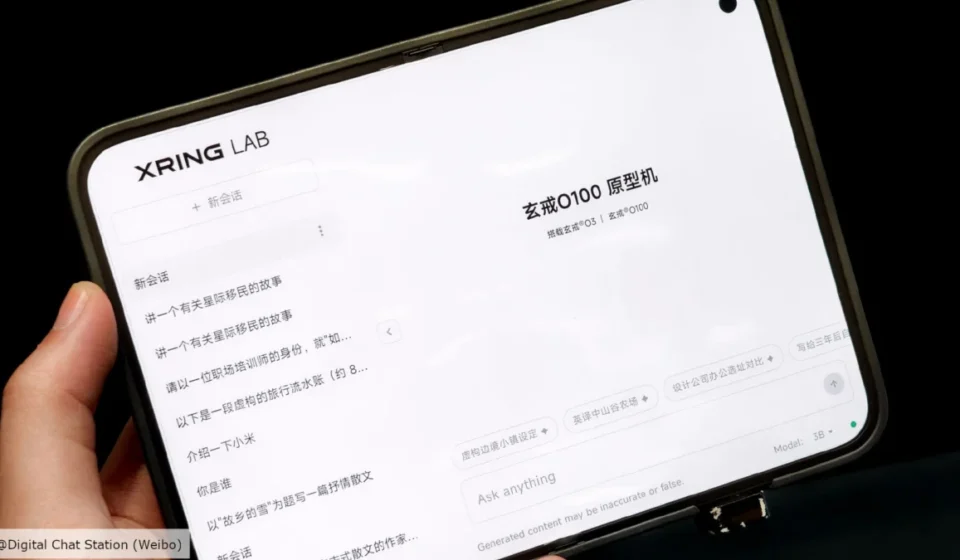
Early visual insights into the Xiaomi 18 Fold have emerged, offering a glimpse of its design. Prominent tipster Digital Chat Station has shared leaked images that showcase the device’s aesthetic. These visuals suggest a form factor that aligns with the wider, book-style designs that are proving popular, indicating a deliberate move by Xiaomi to cater to users seeking an expansive viewing and interaction area. While these images are of a prototype, they provide a strong indication of the device’s intended design language and suggest that Xiaomi is aiming for a premium and ergonomic build. The leaked images hint at a device that looks the part of a high-end foldable, aiming to blend sophisticated design with cutting-edge technology.
Navigating the Road Ahead: Caveats and Market Dynamics
Despite the exciting prospects, several factors warrant careful consideration as the Xiaomi 18 Fold approaches its launch. The performance benchmarks for the Xring O3 chip were derived from tests conducted on a prototype device, not the final Xiaomi 18 Fold itself. It is a common occurrence for performance characteristics to subtly shift between prototype stages and mass-produced units due to final hardware integration, thermal management adjustments, and software optimizations. Therefore, while the early results are incredibly promising, the actual performance of the 18 Fold in real-world scenarios may differ slightly from the benchmark data.
Furthermore, the global availability of the Xiaomi 18 Fold remains an open question. Xiaomi has confirmed a launch event for the Chinese market in September. However, details regarding release plans for other international regions, including Europe and North America, are yet to be announced. Historically, Xiaomi’s foldable devices have primarily seen wider availability within the Chinese market, with limited official distribution in Western countries. It is highly probable that the 18 Fold will follow a similar pattern, making its official acquisition in markets like the United States unlikely through conventional retail channels, even for Xiaomi’s most advanced smartphones. This geographical disparity in availability could significantly influence its global impact.
The Evolving Chipset Landscape
It is also crucial to acknowledge that the competitive landscape of mobile processors is in constant flux. The performance figures for the Xring O3 chip were measured against anticipated Qualcomm Snapdragon 8 Elite Gen 5 and Apple A19 Pro processors. However, the final specifications and performance of these next-generation flagship chips from Qualcomm and Apple are not yet fully disclosed. Apple, in particular, is expected to unveil its latest silicon with the iPhone Ultra, and Qualcomm is continually refining its mobile platform. As these new chips are officially released, a more definitive comparison of the Xring O3’s capabilities against its direct competitors will become possible. This ongoing evolution of mobile silicon underscores the dynamic nature of the smartphone industry and the continuous pursuit of higher performance.
The Foldable Race Intensifies
The emergence of the Xiaomi 18 Fold, with its potential for groundbreaking performance, signifies a broadening of the competitive field in the foldable smartphone market. While Apple and Samsung currently hold a significant advantage in terms of brand recognition and established distribution networks in many global markets, Xiaomi’s technological advancements could allow it to carve out a substantial niche. The company has a history of delivering high-value, feature-rich devices, and if the 18 Fold can successfully combine its impressive processing power with a compelling user experience and a competitive price point, it could indeed become a serious contender, challenging the established order and further accelerating the mainstream adoption of foldable technology worldwide. The race for foldable supremacy is undeniably heating up, with 2026 poised to be a defining year for this transformative mobile category.