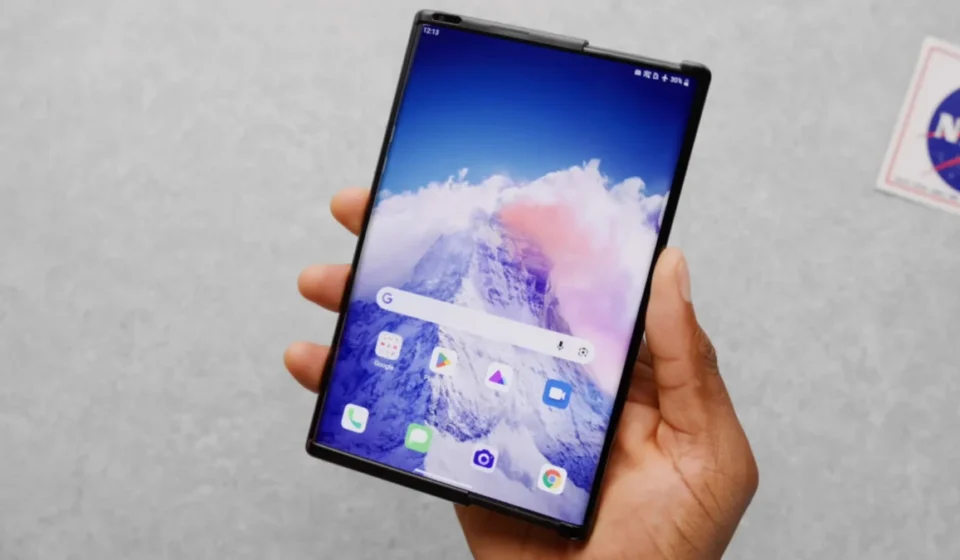

The recent revelations surrounding the canceled LG Rollable phone prototype have reignited discussions about the innovative spirit of LG’s former smartphone division, offering a poignant glimpse into what might have been. Following an initial teardown by Zack Nelson of JerryRigEverything, tech enthusiast Marques Brownlee (MKBHD) has now provided a comprehensive hands-on review, showcasing the device’s groundbreaking design and remarkably polished user experience. These insights confirm that the LG Rollable was far more than a mere concept; it was a near-market-ready device poised to challenge the burgeoning foldable phone segment with a distinctly different approach to expandable displays.
The Rise and Fall of LG’s Smartphone Ambition
To truly appreciate the significance of the LG Rollable, it is essential to understand the trajectory of LG’s smartphone business. For over a decade, LG Electronics was a formidable player in the global smartphone market, known for its willingness to experiment with form factors and features that often pushed the boundaries of conventional design. From the curved displays of the LG G Flex series to the modular design of the LG G5, and later the dual-screen accessory for its V-series phones, LG consistently demonstrated a commitment to innovation, even if not all its ventures translated into commercial success.
However, despite its engineering prowess and design ambition, LG’s smartphone division struggled to maintain profitability in an increasingly competitive market dominated by giants like Samsung, Apple, and emerging Chinese manufacturers. The company faced persistent challenges in marketing, software updates, and pricing strategies, leading to years of consecutive financial losses. By the mid-2010s, its global market share began to dwindle, and by 2020, it was a shadow of its former self, despite valiant efforts with devices like the unique swivel-screen LG Wing and the aesthetically pleasing LG Velvet. These devices, while critically acclaimed for their novelty, failed to reverse the financial tide.
In April 2021, after more than five years of continuous losses totaling approximately $4.5 billion, LG made the difficult decision to exit the smartphone business entirely. This move sent ripples through the Android community, as many fans lamented the loss of a brand synonymous with daring, often eccentric, innovation. The cancellation of the LG Rollable, which had been teased just months before at CES 2021, became a symbol of this departure – a final, tantalizing "what if" from a company that consistently dared to be different.
A Glimpse into the Past: The Rollable’s Public Debut
The journey of the LG Rollable from a whispered rumor to a tangible prototype in the hands of prominent tech reviewers has been a fascinating one. The device first captured public imagination at CES 2021, where LG briefly showcased it as part of its "Explorer Project," an initiative aimed at developing innovative and unconventional mobile experiences. The initial tease, a short video clip demonstrating its expanding screen, promised a revolutionary alternative to folding phones, generating significant excitement among tech enthusiasts and industry observers.
However, the enthusiasm was short-lived. Following LG’s announcement to close its mobile division, the Rollable’s fate was sealed. The project was officially canceled, and the device seemed destined to remain an elusive piece of technological history. That is, until recently.
Earlier this month, Zack Nelson, known for his rigorous durability tests and teardowns on his YouTube channel JerryRigEverything, surprised the Android community by obtaining an LG Rollable prototype. His video offered an unprecedented look inside the device, revealing the intricate mechanical engineering required for its expanding display. Nelson’s ability to successfully disassemble and then re-assemble the complex mechanism showcased the sophisticated design that LG had achieved, proving the device was far from a crude concept.
Building upon this foundational technical insight, Marques Brownlee’s recent hands-on video, published later in the month, completed the picture. While Nelson focused on the "how it works," Brownlee delved into the "what it feels like to use," providing the crucial user experience perspective that had been missing. His review allowed viewers to imagine what daily life with an LG Rollable might have entailed, highlighting its potential strengths and weaknesses as a consumer product.
Engineering Marvel: Design and Mechanics of the LG Rollable
At the heart of the LG Rollable’s innovation is its unique display technology. Unlike foldable phones that employ a hinge to bend a single panel or connect two separate screens, the Rollable utilizes a single, curved flexible OLED panel that seamlessly slides out from within the phone’s chassis. In its compact form, the device sports a standard 6.7-inch display, offering a familiar smartphone experience. With a simple gesture, this screen extends horizontally, unfurling to a nearly 7.5-inch panel. The expansion is continuous, creating a truly immersive, larger display area without the disruptive crease typically associated with foldables.
The magic behind this transformation lies in the sophisticated internal mechanisms. Brownlee’s review confirms the presence of twin-geared motors working in concert with spring-loaded arms. These components precisely control the unrolling and retracting of the flexible display, ensuring a smooth, consistent motion. The engineering involved is remarkable, allowing the phone to expand and contract with an impressive degree of precision and apparent robustness. As a testament to the strength and engineering integrity of these motors, MKBHD demonstrated the device’s ability to actually push a laptop across a desk while expanding – a striking visual that underscores the power embedded within its slim frame.
The user interaction with this expanding screen is designed to be intuitive and engaging. Brownlee showcased that a simple three-finger swipe gesture across the display initiates the expansion or retraction process. This gesture is accompanied by a distinctive sound effect, presumably designed to mask any subtle mechanical noises from the internal motors and enhance the user’s perception of a premium, futuristic device. Furthermore, when opening the phone from the lock screen, a captivating animation of the default wallpaper "blooming" or "shifting" across the expanding display adds another layer of polish to the user experience. These thoughtful touches in both hardware and software suggest that LG had invested significant effort into refining the Rollable, indicating it was far closer to mass production than many had initially speculated.
Beyond the Rollable Screen: Thoughtful Design Innovations
The rollable form factor presented LG with a unique set of design challenges, which the company addressed with remarkable creativity and ingenuity. The innovative nature of the expanding display necessitated a complete rethinking of traditional smartphone elements, leading to several clever solutions:
-
Rear Display Functionality: When the rollable display is fully stowed, a portion of the flexible screen remains partially visible behind a transparent glass casing on the back of the device. This effectively creates a functional secondary display on the rear. This rear panel can be utilized for a variety of purposes, such as showing notifications, displaying a calendar, acting as a timer, or showcasing now-playing media content. Crucially, it also enables the use of the phone’s primary cameras (a 64MP main sensor and a 12MP ultrawide) for high-quality selfies, with the rear display serving as a viewfinder. This dual-purpose design maximizes the utility of the flexible screen, even when not fully extended.
-
Capacitive Controls and Relocated Buttons: The curved nature of the display on both sides of the LG Rollable, where the screen tucks away, left no room for conventional physical buttons. LG’s solution was to implement capacitive volume controls directly on the screen’s edge. While such controls can sometimes be less tactile than physical buttons, their integration here is a necessity dictated by the form factor. The power button also required a unique placement, residing somewhat unusually beneath the rear camera arrangement. These design choices highlight the compromises and creative problem-solving required to bring such a radical concept to life.
-
Seamless Software Optimization: The software experience on the LG Rollable appears remarkably polished for a prototype. Applications like the settings menu demonstrate adaptive UI, automatically switching to a two-column layout when the screen is extended to take advantage of the increased display real estate, and reverting to a condensed, single-column view when the device is closed. This level of software fluidity and optimization is crucial for any device with a dynamic screen size, ensuring a consistent and intuitive user experience regardless of the display’s configuration. It underscores LG’s commitment to delivering a cohesive product, not just a hardware showcase.
Rollable vs. Foldable: A Viable Alternative?
The emergence of the LG Rollable prototype inevitably prompts a comparison with its contemporary, the foldable phone. Devices like Samsung’s Galaxy Z Fold and Z Flip series, and more recently Google’s Pixel Fold, have established the foldable form factor as a viable, albeit still nascent, segment of the premium smartphone market. The core question is: could the rollable design have offered a superior or at least competitive alternative?
The primary allure of the rollable concept is the promise of a truly creaseless, continuously expanding display. Foldables, despite significant advancements, still contend with a visible and often tactile crease where the screen bends. Brownlee’s review, however, reveals that even the LG Rollable, while presenting a less pronounced distortion than many modern foldables, still exhibits visible display creases when fully unrolled. This suggests that the fundamental challenges of manipulating flexible OLED panels, whether by folding or rolling, lead to similar physical manifestations in the display.
Nevertheless, the rollable design offers distinct advantages. It provides a larger screen area on demand without adding significant thickness to the device when in its compact form, unlike foldables which double in thickness when closed. The expansion mechanism is also arguably more elegant, offering a seamless transition rather than a hard fold. The "wow" factor of a screen literally unrolling from within the device is undeniable and could have carved out a unique niche in the market.
Conversely, foldables have the advantage of a more established, albeit still evolving, ecosystem. The engineering challenges for rollables, particularly concerning durability, dust ingress, and the longevity of the intricate motor mechanisms, might be even greater than for foldables. Furthermore, the cost of producing such a complex device at scale would undoubtedly be substantial, potentially limiting its market appeal.
It’s also worth noting that LG was not alone in exploring this innovative form factor. Other companies, like Samsung Display, have showcased their own "slidable" phone concepts at events like MWC 2026, indicating a broader industry interest in alternatives to traditional folding mechanisms. This context suggests that LG was indeed on the cutting edge of display technology, exploring avenues that the industry continues to pursue.
The Broader Impact and Enduring Legacy
The posthumous unveiling of the LG Rollable prototype serves as a powerful reminder of LG’s often-underappreciated contribution to mobile innovation. While the company’s smartphone division ultimately succumbed to market pressures, its legacy of daring experimentation continues to influence the industry. The Rollable, in particular, encapsulates LG’s spirit: a willingness to invest in ambitious, potentially game-changing technologies, even if the commercial success was not guaranteed.
Had the LG Rollable made it to market, it would have undoubtedly pushed the boundaries of smartphone design and functionality. It could have spurred greater competition in the expandable display market, potentially accelerating the development of more durable and affordable flexible screen technologies. Its polished software and thoughtful hardware integrations suggest that LG was not merely creating a gimmick but aiming for a genuinely user-centric product.
The challenges of mass-producing such a device, ensuring its long-term durability, and building a compelling software ecosystem around a dynamic display were formidable. These are the same hurdles that foldables are still navigating. The LG Rollable might have faced an uphill battle in terms of cost, repairability, and consumer adoption, especially given LG’s weakening market position at the time.
Ultimately, the LG Rollable stands as a poignant symbol of technological ambition unfulfilled. It is a testament to the engineering prowess and creative vision that once characterized LG’s mobile division. Its appearance in these detailed reviews not only allows tech enthusiasts to appreciate a piece of canceled history but also sparks a renewed debate about the future of smartphone form factors. Was it a genuine game-changer that the world missed out on, or an intriguing but ultimately impractical concept? The answer remains subjective, but its existence undeniably enriches the narrative of mobile innovation and underscores the value of audacious design in an often-homogenized market.