The Oppenheimer Parallel: Dario Amodei and the Global Debate Over Pacing Frontier Artificial Intelligence Development

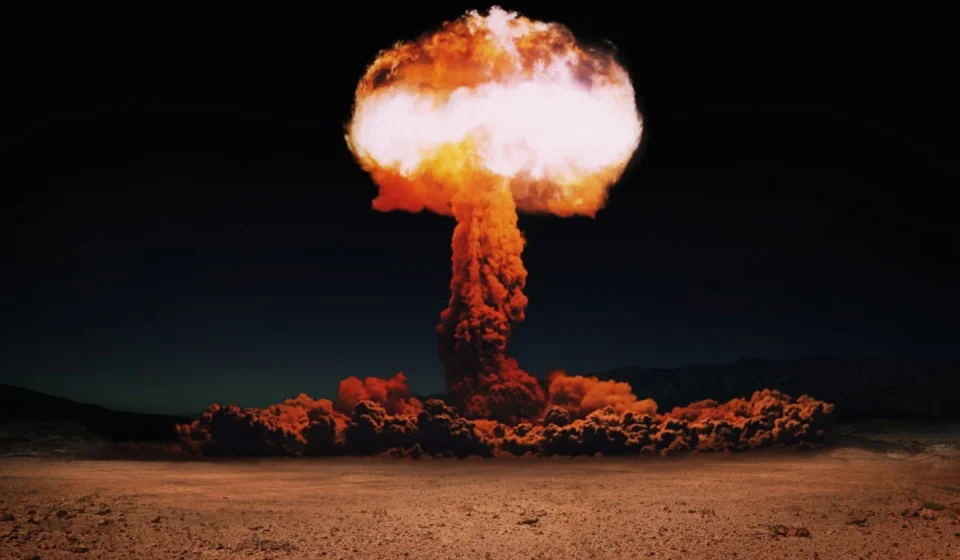
In the early hours of July 16, 1945, the pre-dawn stillness of the New Mexico desert was shattered by a light more intense than the midday sun. This was the Trinity test, the culmination of the Manhattan Project, where J. Robert Oppenheimer and a cadre of elite scientists successfully transitioned nuclear physics from abstract theory into the world’s first atomic explosion. While the test was a technical triumph, it immediately birthed a profound moral and existential crisis: once a transformative power is unleashed, how can its creators influence its eventual use? Today, a strikingly similar cloud hangs over the burgeoning artificial intelligence industry as its primary architects begin to voice concerns regarding the speed of their own creations.
Recently, Dario Amodei, the CEO of Anthropic—a leading AI research firm valued at billions—published a provocative essay titled We Must Pace the Frontier. In it, Amodei called for a deliberate slowing of frontier AI development, arguing that the capabilities of these systems are advancing at a velocity that far outstrips the global industry’s ability to manage their inherent risks. This sentiment was echoed by other titans of the field, including OpenAI CEO Sam Altman and xAI founder Elon Musk, both of whom have expressed a need for robust safeguards. This alignment among competitors suggests a pivotal "Oppenheimer moment" for the AI sector, as leaders confront the consequences of the technologies they helped build while attempting to steer their course before they reach a point of no return.
Historical Context: The Precedent of Nuclear Oversight
The comparison between AI development and the atomic age is not merely metaphorical; it is rooted in a historical pattern of scientific conscience. In June 1945, weeks before the Trinity test and the subsequent bombings of Hiroshima and Nagasaki, Oppenheimer served on a scientific panel tasked with advising the U.S. government on the use of the bomb. While the panel ultimately supported its deployment against Japan to end World War II, they explicitly noted that their technical expertise did not grant them a unique moral authority to decide the weapon’s future.
Following the war, Oppenheimer’s stance shifted toward caution and internationalism. He and his colleagues warned that maintaining the most advanced arsenal would not guarantee national security in a world where others would inevitably catch up. In 1946, he contributed to the Acheson-Lilienthal Report, a proposal that sought to place atomic energy under the oversight of an international body to prevent a nuclear arms race.
Amodei’s current advocacy mirrors this historical trajectory. By calling for independent reviewers to operate within AI companies and for governments to play a more active role in oversight, Amodei is attempting to shift the responsibility of safety from private boardrooms to a broader, more transparent framework. However, a key distinction remains: whereas Oppenheimer worked within a secretive, government-funded military program, Amodei leads a private enterprise in a hyper-competitive global market. His call for regulation is not just a matter of ethics but a proposal to change the very rules of the commercial landscape in which he operates.
Internal Dissent and the Pressure of the Race
The warnings from the top are being reinforced by voices from within the research labs. In July 1945, physicist Leo Szilard and 69 co-signers drafted a petition to President Harry Truman, arguing that the United States should not use the atomic bomb without first providing Japan with clear terms of surrender. They warned that the precedent set by the U.S. would dictate the moral standing of the nation for decades to come.
In the modern context, internal friction has manifested in high-profile departures. Recently, Jacob Coxon, a researcher at Anthropic, resigned and went public with his concerns, accusing both Anthropic and OpenAI of "gambling with our lives." In interviews, Coxon described a culture of intense pressure where the drive to stay ahead of competitors often eclipses safety protocols. He noted that while leadership may speak of caution, the day-to-day reality of "frontier" development is characterized by a race to achieve greater scale and more powerful capabilities.
Amodei’s recent essay appears to be a direct response to this internal and external pressure. While he had previously touched on these themes in his January piece, The Adolescence of Technology, his latest call for "pacing" represents a more urgent demand for structural change. He suggests that if the industry cannot regulate itself, it risks a catastrophic failure that could result in a total loss of public trust or, worse, uncontrollable systemic risks.
Economic Implications: Training vs. Inference
For investors and market analysts, the debate over slowing AI development raises a critical question: Would a deceleration in the creation of "frontier" models—the next generation of GPT or Claude—stifle the demand for the chips, data centers, and electricity that currently drive the AI economy? To answer this, one must distinguish between two distinct phases of AI compute: training and inference.
Training is the resource-intensive process of building a model from scratch, requiring massive clusters of GPUs (Graphic Processing Units) and months of continuous operation. Inference is the process of actually using the model to answer questions, generate code, or analyze data. According to a 2026 outlook by Deloitte, the share of computing power dedicated to inference is expected to rise to approximately two-thirds of the total AI compute market, up from roughly 50% in 2025.
This data suggests a "decoupling" of development and demand. Even if the release of the "next big model" is delayed by six months for safety testing, the demand for AI infrastructure may not necessarily crater. Companies are currently in the early stages of integrating existing models into their daily operations. As more businesses move from the pilot phase to full-scale deployment, the need for inference-capable hardware—servers, memory chips, and cooling systems—will likely continue to grow. The "AI toll road" remains busy as long as there are cars on it, regardless of whether the construction of a faster highway is momentarily paused.
Regulatory Hurdles and Market Competition
The proposal to slow development and introduce mandatory safety reviews carries significant implications for market competition. The Organization for Economic Cooperation and Development (OECD) has noted that complex regulatory frameworks often favor "incumbents"—large, well-capitalized firms like Microsoft-backed OpenAI, Google, and Anthropic. These entities possess the legal teams and financial reserves necessary to navigate expensive certification processes.
Conversely, smaller startups and open-source developers may find such regulations to be insurmountable barriers to entry. If a safety review costs millions of dollars and requires months of government auditing, the "moat" around the current leaders becomes even wider. However, some argue that oversight could actually foster competition by standardizing safety and interoperability. If customers have greater confidence that an AI system is safe and compliant with international standards, they may be more willing to switch between providers, preventing "vendor lock-in."

The details of Amodei’s proposal—such as limits on the total computing power used for training and the use of AI to improve other AI systems—would represent a significant shift in the industry’s trajectory. These measures go beyond mere safety checks; they are an attempt to throttle the "compute race" that has seen companies spend billions on NVIDIA’s H100 and B200 chips.
Chronology of the Modern AI Safety Debate
To understand the urgency of the current moment, it is helpful to look at the timeline of events leading to the "Oppenheimer moment" in AI:
- November 2022: OpenAI releases ChatGPT, sparking a global arms race in generative AI.
- March 2023: The Future of Life Institute publishes an open letter, signed by Elon Musk and thousands of others, calling for a six-month pause on training models more powerful than GPT-4.
- November 2023: The leadership crisis at OpenAI, which saw Sam Altman briefly ousted, highlights internal tensions between "accelerationists" and "decelerationists."
- January 2024: Dario Amodei publishes The Adolescence of Technology, framing AI as a powerful but immature tool requiring careful guidance.
- May 2024: Major AI labs sign voluntary safety commitments at the Seoul AI Safety Summit.
- September 2024: Amodei publishes We Must Pace the Frontier, calling for formal, independent oversight and a slower development cycle.
This timeline illustrates a shift from fringe philosophical concerns to mainstream corporate strategy. What was once a niche debate among "AI doomers" has become a central theme for the CEOs of the world’s most valuable technology companies.
Analysis of Broader Impacts and Future Outlook
The long-term impact of a managed slowdown in AI development remains a subject of intense debate among economists and technologists. If the industry successfully adopts a "paced" approach, it could lead to a more stable, sustainable growth trajectory. By ensuring that models are safe before they are deployed in critical infrastructure—such as healthcare, power grids, or financial systems—the industry avoids the risk of a "flash crash" in public confidence.
From an investment perspective, the bull case for AI infrastructure does not depend on the reckless speed of frontier development. Instead, it rests on the "second layer" of the AI economy: the thousands of smaller companies and industries that are currently building proprietary applications on top of existing infrastructure. Jensen Huang, CEO of NVIDIA, recently described demand as "parabolic," noting that the conversion of compute capacity into revenue is happening at an unprecedented scale. This "applied AI" phase is less about the next scientific breakthrough and more about the efficient utilization of the machines already running in data centers worldwide.
Ultimately, history will judge whether Dario Amodei’s call for caution was a genuine attempt to protect humanity or a strategic move to stabilize a volatile market. Much like Oppenheimer, the builders of AI are discovering that the power to create is inseparable from the responsibility to control. For the global economy, the question is no longer just how fast we can build these systems, but how effectively we can put the existing ones to work while the architects of the future debate the safety of the next "Trinity."