
The intersection of geopolitical instability and rapid technological advancement has reached a critical inflection point as the conflict involving Iran reshapes the global strategic landscape. While international attention remains fixed on the potential closure of the Strait of Hormuz and the escalating threat of drone incursions along the Western coastline, a parallel revolution is occurring in the realm of physical artificial intelligence. This shift from software-based large language models to autonomous systems capable of interacting with the physical world is fundamentally altering both military doctrine and the industrial infrastructure required to support it.
The gravity of current headlines—ranging from the FBI’s warnings of domestic drone threats to the Department of War’s collaboration with AI labs like Anthropic—often obscures smaller, yet highly significant, technological milestones. One such event occurred recently at the University of Bristol, where two brothers, Matthew and Thomas Pidden, demonstrated a custom-built robot capable of solving a 4x4x4 Rubik’s Cube in just 45 seconds. While the feat earned a Guinness World Record, its true importance lies in the technical parameters of the demonstration: the robot utilized local processing power and optical sensors to solve a complex spatial problem without relying on external networks or cloud computing. This achievement highlights the accelerating trend of "Edge AI," where intelligence is embedded directly into physical machinery, a development with profound implications for modern warfare and industrial automation.
The Rise of Physical AI and Robotic Integration
The transition of artificial intelligence from the digital "cloud" to the physical "dirt" represents the next major phase of the technological revolution. While software platforms like ChatGPT captured the public imagination in 2023, the current year is defined by the integration of AI into tangible assets. Major corporations are already leading this transition. Amazon, for instance, has deployed over one million robots across its fulfillment centers to manage logistics and inventory. Tesla continues to iterate on its "Optimus" humanoid robot, which utilizes computer vision and end-to-end neural networks to learn physical tasks through observation rather than explicit programming.
In a military context, this "physical AI" manifests as autonomous surveillance drones, intelligent munitions, and robotic logistical chains. The ability for a machine to see, analyze, and manipulate objects in real-time—without the latency of a cloud connection—is essential for operations in contested environments where electronic warfare may sever traditional communication links. The Pidden brothers’ homemade robot, though a civilian project, proves that the barrier to entry for sophisticated physical automation is falling, suggesting that both state and non-state actors will soon have access to increasingly capable autonomous systems.
Geopolitical Catalysts: Operation Epic Fury and the Iran Conflict
The ongoing hostilities involving Iran have served as a catalyst for the rapid deployment of these technologies. Under the framework of "Operation Epic Fury," the United States and its allies are increasingly relying on AI-driven systems to monitor maritime traffic in the Persian Gulf and defend against swarms of low-cost loitering munitions. The strategic importance of the Strait of Hormuz, through which approximately 20% of the world’s petroleum passes, has made the development of autonomous naval and aerial patrols a matter of national security.
However, the proliferation of AI in a theater of war creates an unprecedented demand for physical infrastructure. Behind every autonomous drone and every predictive algorithm lies a massive backbone of data centers, semiconductor fabrication plants, and high-capacity computing clusters. This infrastructure is not merely a commercial asset; it has become a strategic necessity. As military operations become more data-intensive, the ability to maintain the "compute" and the energy required to power it is now viewed with the same importance as the maintenance of aircraft carriers or missile silos.
The Energy Bottleneck and the Emergence of the Shadow Grid
The most significant constraint on the AI revolution is no longer software sophistication or hardware availability, but the availability of electricity. Training a single large-scale AI model can consume as much energy as thousands of homes use in a year. When scaled to the level of national defense and global commerce, the power requirements are staggering. The existing civilian electric grid, characterized by aging transmission lines and a delicate balance of supply and demand, was not designed to accommodate the exponential growth of AI hyperscalers.
In response to this challenge, a landmark shift in energy policy occurred on March 4. President Donald Trump convened the chief executives of the world’s leading technology firms—including Alphabet, Microsoft, Meta, Amazon, Oracle, xAI, and OpenAI—at the White House to address the looming energy crisis. The result was the "Ratepayer Protection Pledge," a strategic agreement designed to shield American households from rising utility costs driven by AI demand.

Under this pledge, technology companies are incentivized to move away from the public grid and instead "build, bring, or buy" their own dedicated power sources. This is leading to the creation of what analysts have termed the "Shadow Grid"—a parallel energy infrastructure owned and operated by private technology firms. This system includes:
- Private Natural Gas Plants: On-site generation to provide baseline power for massive data center campuses.
- Small Modular Reactors (SMRs): Next-generation nuclear technology integrated directly into the footprint of computing hubs.
- Independent Transmission Lines: Dedicated high-voltage lines that bypass traditional utility substations to ensure 100% uptime for critical AI workloads.
This bifurcation of the energy sector ensures that the "AI economy" can continue to expand without collapsing the public infrastructure. However, it also means that the control of energy production is becoming increasingly centralized among the world’s largest technology providers.
Strategic Implications for National Security
The development of the Shadow Grid is as much a national security story as it is an economic one. In the context of the Iran conflict, the ability of the United States to maintain a technological edge depends on the resilience of its computing backbone. If a geopolitical adversary were to target the domestic energy grid, the existence of an independent, hardened power system for AI and military applications would provide a critical layer of redundancy.
Furthermore, the infrastructure that supports commercial AI is the same infrastructure that powers the operational backbone of U.S. military dominance. Predictive maintenance for fighter jets, real-time satellite imagery analysis, and autonomous drone coordination all require the massive throughput of the modern data center. Consequently, the companies building this infrastructure are becoming de facto defense contractors, regardless of their primary commercial focus.
Investment Trends: The Physical Foundations of the AI Era
For investors, the shift toward physical AI and independent energy infrastructure presents a new set of "New Rules." The primary beneficiaries are no longer just the software developers, but the companies providing the physical components necessary for these systems to function in the real world.
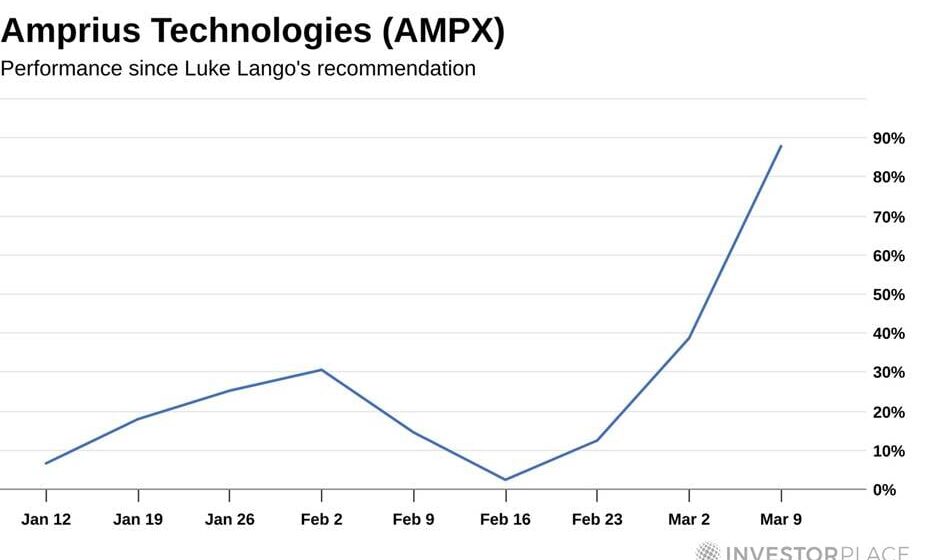
One such company is Amprius Technologies (AMPX), which has emerged as a leader in the development of high-energy silicon anode lithium-ion batteries. Traditional lithium-ion batteries often lack the energy density required for long-endurance drone flights or high-performance robotic movement. Amprius’s technology offers significantly higher energy density and faster charging capabilities, making it a critical supplier for the very types of autonomous systems currently being deployed in the Iran conflict and beyond.
The performance of such stocks, even during periods of market volatility caused by geopolitical tension, underscores the market’s recognition of the "physical backbone" as the true value driver of the AI era. As the conflict in the Middle East continues to turbocharge the adoption of autonomous systems, the demand for advanced batteries, specialized semiconductors, and independent power solutions is expected to grow at an accelerating rate.
Conclusion: A New Era of Strategic Infrastructure
The Pidden brothers’ Rubik’s Cube-solving robot and the strategic maneuvering in the Strait of Hormuz are two sides of the same coin. Both illustrate a world where intelligence is being pushed into the physical realm, necessitating a massive and immediate overhaul of global infrastructure. The "Shadow Grid" and the rise of physical AI represent a departure from the digital-first era of the early 21st century.
As the United States navigates the complexities of the Iran conflict and the broader challenges of the AI revolution, the focus has shifted to the physical foundations of power—both literal and figurative. The companies that control the batteries, the reactors, the data centers, and the autonomous machines are the ones currently defining the future of global security and economic prosperity. For the broader public and the investment community alike, understanding this transition from software to physical infrastructure is no longer optional; it is the prerequisite for navigating the new geopolitical and economic reality.