The Ultimate Guide to Building, Customizing, and Claiming Your Pokopia Home

While the diverse habitats of Pokopia offer essential sanctuaries for Pokémon, establishing a permanent residence within a Pokopia house transcends mere shelter. These customizable abodes provide an expansive canvas for personal expression, allowing trainers to curate unique living spaces and welcome multiple Pokémon companions. Crucially, claiming a Pokopia house as your own home is paramount for seamless inter-island travel, enabling rapid teleportation and streamlining your adventuring endeavors. This comprehensive guide delves into the multifaceted process of constructing Pokopia homes, from manual building and leveraging Pokémon assistance to upgrading existing structures, strategically inviting residents, and ultimately, designating a personal haven. After all, your dedication to fostering a thriving Pokopia certainly warrants a comfortable retreat for your loyal companions and yourself.
The Foundation of a Pokopia Dwelling: From Basic Structure to Personalized Haven
The genesis of a Pokopia house is surprisingly accessible, requiring little more than a foundational understanding of construction principles. To manually erect a Pokopia house, the core requirement is the creation of a simple square enclosure constructed from blocks, complete with an entrance. This fundamental structure, once established, will be recognized within the game interface, appearing in the top-left corner of the screen as an unoccupied dwelling. Visual cues, such as grey circles, will indicate the housing capacity, representing the number of Pokémon that can reside within its walls.
However, the rudimentary nature of this initial construction serves as a blank slate, ripe for personalization and enhancement. The world of Pokopia offers an extensive array of building materials, including diverse blocks, decorative windows, roofing options, and essential furnishings. These components can be acquired through various avenues. Players can engage in crafting, utilizing Pokopia’s intricate crafting recipes to fashion custom items. Alternatively, the Pokémon Center’s PC shop and the trading stalls operated by Pokémon present opportunities to purchase pre-made items. Furthermore, exploration and resource gathering play a vital role, with players able to discover and forage for materials scattered across the islands. A particularly useful in-game mechanic, the "Rock Smash" move, empowers players to gather various blocks, enabling the creation of unique walls and floors even in the absence of specific crafting blueprints. This democratizes the building process, allowing for creative expression from the outset.

Leveraging Pokémon Prowess for Efficient Construction
For trainers who prefer a more streamlined approach to home construction, Pokopia offers an ingenious alternative: the Pokopia building kit. These kits, akin to pre-fabricated housing modules, can be procured from the Pokémon Center’s PC shop, much like furnishings and other building materials. Additionally, keen-eyed explorers may discover these valuable kits nestled within shimmering ripples on the ground or within the contents of Poké Balls found during their expeditions.
The utilization of a building kit involves a straightforward placement process. The trainer positions the kit in their desired location, initiating the construction sequence. Subsequently, the trainer must furnish the kit with the requisite building materials, which are typically stored in a designated box at the front of the kit. The next critical step involves recruiting and assigning Pokémon to the construction project. Most building kits necessitate at least one Pokémon possessing the "Building" specialty. However, the complexity of certain kits may demand the collaboration of Pokémon with additional specialized skills, such as "Bulldoze" for earthmoving, "Burn" for specialized material processing, or "Water" for certain finishing touches.
Once all necessary materials have been supplied and the appropriate Pokémon workforce has been assigned, the trainer simply initiates the build process by pressing the designated "build" button. It is important to note that construction via building kits operates on a real-world time basis. Larger and more elaborate structures will naturally require a longer duration to complete. The player’s Pokédex will provide an estimated completion time once the construction commences, allowing for strategic planning. A crucial consideration for trainers is that Pokémon assigned to a building project are temporarily unavailable for other tasks until the construction is finalized. This means that any Pokémon engaged in building cannot be utilized for assistance or other activities during that period. For those who find the waiting period arduous, Pokopia offers a "Pokopia time skip" feature, allowing for an accelerated progression of construction timelines, albeit with potential in-game consequences or resource implications that are detailed elsewhere.
Establishing Your Personal Sanctuary: The Significance of the Ditto Flag
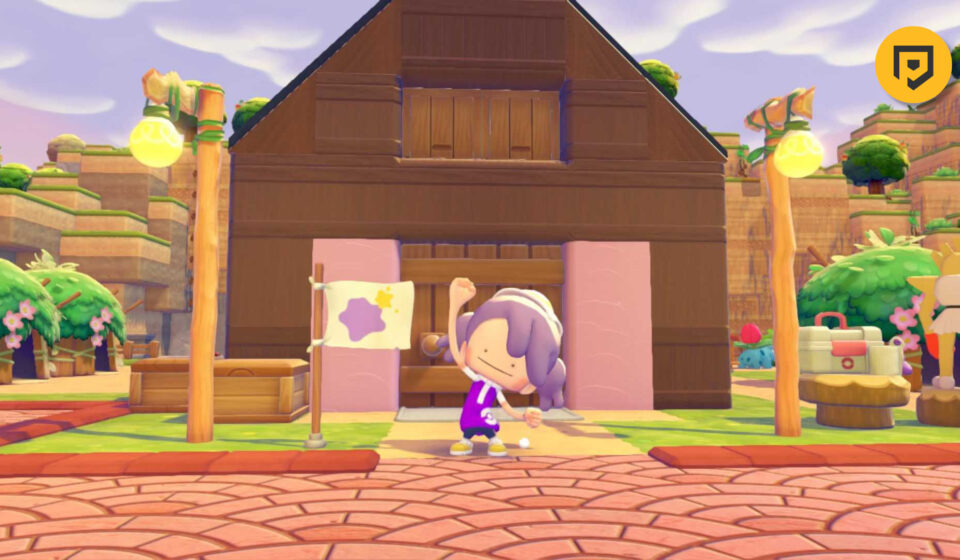
The ability to designate a Pokopia house as one’s personal home carries significant strategic advantages. Primarily, it serves as the player’s respawn point, meaning that each morning, the player will awaken within their designated home. More importantly, it enables instant teleportation back to this chosen residence at any given moment via the "Return Home" option found within the Pokédex interface. This functionality drastically reduces travel time between islands, fostering a more efficient and enjoyable exploration experience. The game allows for the establishment of one designated home per island, providing players with multiple bases of operation across the diverse regions of Pokopia. The process of claiming a home is remarkably simple: it involves placing a "Ditto flag" outside the chosen dwelling.

The crafting recipe for the Ditto flag is acquired by progressing through the main story quests within the Withered Wasteland region. To craft a Ditto flag, players will need to gather specific components: one sturdy stick, one unit of twine, and one leppa berry. Once crafted and placed, the Ditto flag visually signifies ownership and activates the associated home functionalities. The flexibility of this system allows players to relocate their primary residence by simply moving the Ditto flag to a different location, enabling them to adapt their base of operations as their exploration needs evolve.
Evolving Your Abode: Upgrading and Remodeling Pokopia Houses
The evolution of a Pokopia house does not cease with its initial construction. For homes built using the building kit method, a sophisticated system for upgrading and remodeling is in place. This process is initiated by placing a new building kit directly over an existing structure. This action essentially triggers a comprehensive overhaul, transforming the house into an entirely new dwelling while retaining all of its previously installed furniture and decorative elements. This innovative feature allows players to significantly alter the aesthetic and functional aspects of their homes without the need to re-furnish them from scratch.
However, it is important to note certain limitations within this remodeling system. Players cannot downgrade a larger house into a smaller one. This means that the dimensions of the house are fixed once the initial building kit is placed. Furthermore, the remodeling process cannot be initiated if a Pokémon is currently residing within the house. Trainers must ensure that all occupants are temporarily relocated before commencing any upgrade or remodeling activities. This ensures a smooth transition and prevents any disruption to the Pokémon’s living arrangements.
Cultivating a Community: Inviting Pokémon Residents
Beyond personal comfort and strategic utility, Pokopia houses serve as vital communal hubs, designed to accommodate a growing population of Pokémon companions. To invite a Pokémon to reside in a house, trainers must first persuade the Pokémon to follow them. Once the Pokémon is in tow, the trainer leads it to the prospective dwelling and presents the option for them to move in. A critical prerequisite for a Pokémon agreeing to take up residence is the presence of at least three pieces of furniture within the house. While some building kits come pre-furnished, many will require the trainer to independently source and install furniture. Each house possesses a predetermined maximum occupancy, dictated by its size and the number of available living spaces.

The appeal of a Pokopia house over natural habitats is generally high among Pokémon. However, the game acknowledges the individual preferences of each Pokémon. Every Pokémon possesses a unique set of likes and dislikes, which directly influence their contentment within a dwelling. To foster a truly happy and thriving Pokémon community, trainers are encouraged to meticulously furnish their homes with items, decorations, and even food that align with their residents’ specific interests. This personalized approach significantly enhances the Pokémon’s comfort level, which, in turn, has a positive cascading effect on the overall environmental level of the island. A higher island environment level can unlock new resources, attract rarer Pokémon, and contribute to the overall prosperity of the Pokopia region. This intricate system underscores the importance of thoughtful customization and a deep understanding of each Pokémon’s needs to create a truly harmonious living environment.
The Broader Implications: Pokémon Welfare and Island Development
The integration of robust housing mechanics within Pokopia signifies a deeper commitment to the well-being of its Pokémon inhabitants. By providing players with the tools to construct, customize, and personalize homes, the game encourages a more nurturing and engaging relationship between trainers and their Pokémon. This goes beyond the traditional Pokémon battle and collection mechanics, introducing elements of habitat management and community building.
The tangible benefits of well-maintained and personalized Pokémon homes, such as increased Pokémon happiness and improved island environment levels, suggest a core game design philosophy centered on fostering a symbiotic relationship between the player and the game world. This approach not only enhances the individual player’s experience by providing clear goals and rewards but also contributes to a more vibrant and dynamic game universe. The ability to attract and house more Pokémon can lead to increased biodiversity on islands, potentially unlocking new gameplay opportunities and challenges. Furthermore, the concept of "claiming a home" and its link to rapid travel underscores the game’s emphasis on player agency and efficient progression, allowing players to tailor their experience to their preferred playstyle, whether it be exploration, collection, or community building. The Pokopia housing system, therefore, represents a significant evolution in how players can interact with and influence the Pokémon world, moving beyond simple companionship to active stewardship and development.