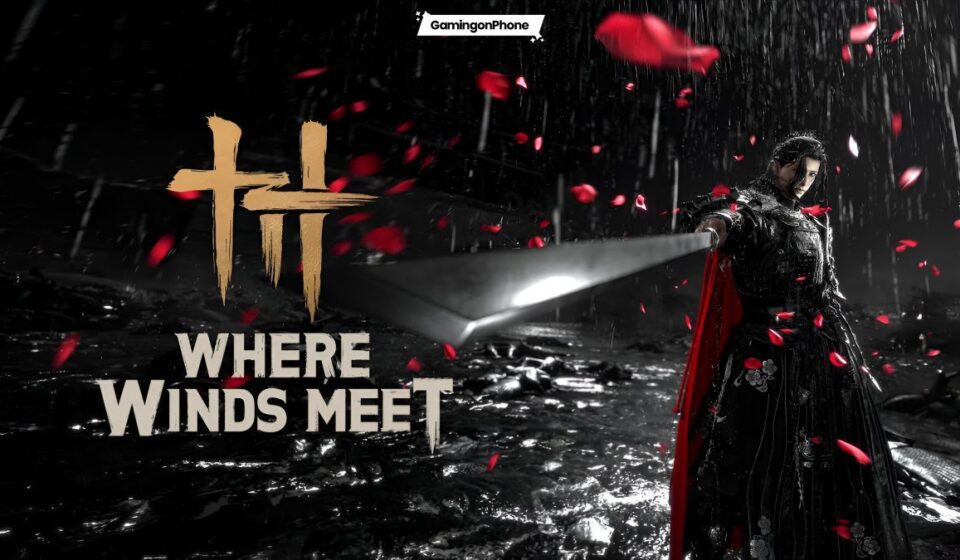
Where Winds Meet Emerges as Ambitious Open-World Wuxia RPG, Redefining Free-to-Play Standards

Developed by EverStone Studio and published by NetEase Games, Where Winds Meet is an ambitious open-world action role-playing game (RPG) that immerses players in a meticulously crafted world steeped in ancient martial arts traditions, intricate political intrigue, and breathtaking landscapes. The title has garnered significant attention for its expansive scope and commitment to delivering a premium experience within a free-to-play framework, challenging conventional expectations for the genre. This analysis delves into the core mechanics, narrative design, aesthetic presentation, and strategic implications of Where Winds Meet within the broader gaming landscape.
Development Journey and Strategic Positioning
The journey of Where Winds Meet began with EverStone Studio’s vision to create a Wuxia-inspired open-world RPG that pushed the boundaries of visual fidelity and gameplay depth, particularly on mobile platforms. Early development phases, often spanning several years, focused on iterating complex combat systems and designing an expansive world that felt both dynamic and historically resonant with ancient Chinese folklore and martial arts philosophies. Publisher NetEase Games, a global leader in mobile and PC gaming, recognized the project’s potential, investing significant resources to support its ambitious scale. NetEase’s strategic involvement not only provided crucial funding and technical expertise but also positioned Where Winds Meet for a broad international audience, leveraging the publisher’s extensive market reach and experience in launching successful live-service titles.
The game’s initial announcements and beta tests generated substantial industry buzz, largely due to its striking visuals and the promise of a robust, console-quality experience on mobile devices. This positioning aimed to capitalize on the growing demand for high-fidelity mobile gaming experiences that transcend the typical casual market, appealing to players seeking deep RPG progression and intricate combat without the barrier of an upfront purchase. The free-to-play model, while common in mobile gaming, was presented with a clear commitment to avoiding aggressive monetization, a critical factor for player retention and positive community reception in a competitive market.

Dynamic Combat System Rooted in Wuxia Principles
At the core of Where Winds Meet‘s appeal is its highly dynamic and fluid combat system, which draws heavily from classic Wuxia martial arts. This system emphasizes player skill, strategic weapon mastery, and precise execution, distinguishing it from many button-mashing alternatives in the action RPG genre. Players are not restricted to a single weapon style; instead, the game encourages seamless switching between a diverse arsenal, including swords, twin blades, spears, fans, and even umbrellas. Each weapon type is meticulously designed with unique attack patterns, animations, and rhythmic properties, necessitating a flexible approach to encounters. This multi-weapon system promotes continuous experimentation and adaptation, ensuring that combat remains fresh and engaging throughout the player’s journey.
Beyond basic attacks, the combat mechanics integrate essential defensive and offensive maneuvers. Timing-based parries, agile dodges, and precise counterattacks are not merely supplementary actions but critical components for surviving challenging engagements. Early game experiences often serve as a demanding tutorial, quickly illustrating that mindless aggression is insufficient against more formidable adversaries. The successful execution of these mechanics elevates combat encounters, transforming them into intricate dances of offense and defense that reward mastery.
Further enhancing the combat depth are the "Mystic Arts" – supernatural techniques that introduce an additional layer of strategic complexity. These abilities, often visually spectacular, can significantly alter the flow of battle, providing players with potent tools to adapt to various enemy types and combat scenarios. The strategic deployment of Mystic Arts, combined with weapon proficiencies and foundational martial arts techniques, creates a multifaceted combat experience that feels both cinematic and deeply satisfying. From small-scale skirmishes in rural villages to epic boss battles that demand heightened awareness and tactical precision, Where Winds Meet‘s combat consistently delivers a high level of polish and strategic depth, establishing it as one of the game’s most compelling features.
An Expansive World Blending Narrative and Open-World Freedom

Where Winds Meet crafts a rich, living world that masterfully balances a compelling narrative with the expansive freedom inherent to open-world exploration. The game initially unfolds as a single-player experience set within a fictionalized interpretation of ancient China, a period characterized by political instability, clandestine organizations, and the personal quests of wandering martial artists. Players assume the role of a young and initially naive protagonist, navigating this tumultuous world, uncovering secrets, and forging their own path.
The narrative design eschews rigid linearity, instead empowering players to define their engagement with the world. Main story quests provide a foundational epic, but players are equally encouraged to diverge, pursuing numerous side stories, exploring ancient ruins, solving environmental puzzles, or simply traversing the vast map to discover hidden secrets. The world is populated by a diverse array of non-player characters (NPCs), whose interactions and incidental dialogues contribute to the overall sense of a vibrant, lived-in environment. These elements collectively reinforce the game’s commitment to player agency and emergent storytelling.
The central themes of the narrative—honor, betrayal, loyalty, and self-discovery—are woven into the fabric of the main questline and many of its branching side stories. However, the initial hours of gameplay can present a steep learning curve. The sheer volume of interconnected systems, tutorials, and mechanics introduced early on may feel overwhelming to new players, leading to an uneven pacing. This initial complexity requires patience, but once players acclimate to the game’s various interwoven systems, the narrative gains significant momentum, becoming a deeply engaging experience that complements the freedom of exploration.
As players progress, Where Winds Meet introduces multiplayer content, seamlessly integrating co-operative experiences into the shared world. While the primary narrative remains a solo journey, players can team up with friends or other adventurers to tackle co-op battles, delve into challenging dungeons, re-engage with powerful boss encounters, and participate in dynamic world events. This multiplayer integration is designed to enhance the overall experience without disrupting the immersive quality of the solo campaign, offering varied reasons for collaboration and extending the game’s longevity.
Breathtaking Visuals and Immersive Audio Design

Visually, Where Winds Meet sets a high bar, presenting a world that is not merely beautiful but vibrant, richly detailed, and incredibly diverse. The environments range from lush, verdant forests and tranquil villages to sprawling, bustling cities and enigmatic, forgotten tombs. Each region possesses a distinct atmospheric quality, meticulously rendered to evoke a sense of place and history. The sweeping landscapes, particularly during dynamic weather cycles or day-night transitions, frequently achieve a cinematic grandeur, enhancing the overall immersion.
The character animations warrant particular commendation for their elegance and expressiveness. Movements are fluid and responsive, capturing the inherent grace and intensity characteristic of martial arts battles. Even routine actions, such as walking through a crowded market or scaling a towering mountain, are imbued with a sense of realism and immersion due to the meticulous attention to detail in the animation work. This graphical fidelity extends to environmental details, texture quality, and lighting effects, all contributing to a visually striking presentation that often belies its free-to-play nature.
The audio design effectively complements the visual splendor. The orchestral soundtrack skillfully blends traditional Chinese instruments with dramatic compositions, creating a rich auditory tapestry that enhances both moments of serene exploration and intense combat. Sound effects are equally impactful, providing satisfying weight to every clash of steel, the mystical energies of activated abilities, and the subtle sounds of movement across varied terrains.
Voice acting, while generally strong, exhibits some variation depending on the chosen language setting. The original Chinese audio with accompanying subtitles often provides the most authentic and immersive experience, capturing the nuanced cultural context. While the English voice-over is competently performed, some players might find it occasionally less natural, potentially altering the perceived authenticity of the historical setting. This preference highlights the importance of offering diverse language options to cater to a global player base.
Responsive Controls and Evolving User Interface

Control responsiveness stands out as a significant strength of Where Winds Meet. The game’s user interface (UI) has been thoughtfully adapted for touch controls on mobile platforms, ensuring that movement, combat actions, and ability activations feel precise and intuitive. Players can quickly master dodging, executing attacks, and chaining complex abilities, allowing for fluid and engaging gameplay on smaller screens. This optimization is crucial for an action-oriented RPG, where split-second decisions and precise inputs are often necessary for success.
However, the UI itself, particularly in the early stages, can present a challenge due to its inherent complexity. The sheer number of systems, menus, and on-screen buttons, characteristic of deep live-service RPGs, can initially feel overwhelming, especially for players new to the genre or the game’s specific mechanics. Navigating through the various progression trees, inventory management, and quest logs requires a period of adjustment, and it is not uncommon for new players to feel disoriented by the wealth of information presented.
This initial clutter is, to some extent, an unavoidable consequence of the game’s ambitious scope and the depth of its underlying systems. As players invest more time and become familiar with the game’s structure and the location of various functions, the UI transitions from a source of confusion to a manageable and functional interface. The learning curve, while steep, ultimately gives way to a comprehensive system that supports the game’s intricate mechanics and extensive content.
Robust Optimization Across Mobile Platforms
One of the most impressive technical achievements of Where Winds Meet is its robust optimization across a wide range of mobile devices. The game performs remarkably well even on mid-range hardware, maintaining smooth frame rates and responsive gameplay. Flagship devices are capable of running the game at higher graphical settings, showcasing its full visual potential without significant performance degradation. This level of optimization is a critical factor for accessibility and widespread adoption in the mobile gaming market, where hardware variations are considerable.

Frame rates remain largely stable, even during graphically intensive sequences such as large-scale battles or densely populated city scenes. While, like many large-scale live-service titles, occasional minor bugs and performance quirks may arise, these instances are typically infrequent and do not significantly detract from the overall experience. The development team’s commitment to ongoing updates and patches demonstrates a proactive approach to addressing these issues, ensuring a consistently refined and stable gameplay environment for the player base. This consistent performance on mobile devices positions Where Winds Meet as a technical benchmark for the genre.
A Fair Free-to-Play Model and Market Implications
Where Winds Meet implements a free-to-play monetization model that notably avoids many of the aggressive, pay-to-win pitfalls prevalent in the mobile gaming industry. The game primarily offers cosmetic items, seasonal battle passes, and optional gacha draws for players interested in character customization or acquiring certain in-game advantages. Crucially, core game progression, narrative content, and fundamental gameplay mechanics are not locked behind paywalls. This design philosophy ensures that the vast majority of the game’s content is accessible to all players, regardless of their spending habits.
The extensive cosmetic customization options allow players to personalize their characters with a wide array of outfits, weapon skins, and visual effects. While some premium cosmetic items may carry a significant cost, they offer no discernible gameplay advantages, thereby maintaining a relatively fair competitive environment. This equitable approach fosters a healthier player community and encourages engagement based on merit and time investment rather than financial outlay.
This fair monetization strategy is a refreshing departure in the free-to-play landscape and has significant implications for both player retention and industry trends. By prioritizing player experience over aggressive monetization, Where Winds Meet appeals to a broader audience, including those wary of predatory microtransactions. It demonstrates that a commercially successful free-to-play model can coexist with a generous and player-friendly design. This approach allows both casual players and dedicated enthusiasts to invest their time rather than their money and still feel adequately rewarded, contributing to a more sustainable and positive long-term engagement with the game.

Conclusion: A Landmark in Mobile Open-World RPGs
Where Winds Meet stands as a bold and ambitious open-world adventure that fully embraces its Wuxia roots, delivering an experience far more premium than its free-to-play price tag suggests. Developed by EverStone Studio and published by NetEase Games, it has successfully carved out a niche by offering fluid, skill-based combat, a richly detailed and expansive world, deep progression systems, and a remarkably fair monetization model.
While the game’s initial learning curve can be steep, the UI may feel overwhelming at first, and the early pacing occasionally uneven, these challenges are ultimately surmountable. Once players navigate the initial complexities and become familiar with its intricate systems, Where Winds Meet blossoms into an incredibly rewarding journey. It offers a wealth of memorable battles, breathtaking scenery, and an engaging narrative that encourages both focused progression and free exploration.
Its strategic positioning within the Wuxia genre, coupled with NetEase’s publishing prowess, has allowed it to reach a global audience eager for high-quality mobile experiences. The game’s technical optimization across diverse mobile hardware further solidifies its accessibility and broad appeal. For enthusiasts of martial arts, open-world exploration, or deep action RPG systems, Where Winds Meet represents a significant and compelling offering, setting a new benchmark for what a free-to-play mobile title can achieve in terms of scope, quality, and player-centric design. It is not merely another entry in the crowded mobile market but a potential game-changer that redefines expectations for the genre.