Apple’s Lost Vision: The Ambitious, Unfinished "Copland" Operating System Rises from Emulation’s Depths

In the mid-1990s, Apple embarked on a monumental undertaking to reinvent its Macintosh operating system with a project codenamed "Copland." Announced with considerable fanfare, the ambitious endeavor promised a modern, modular, and feature-rich OS designed to propel the Macintosh into the next millennium. However, due to a confluence of escalating project management challenges and relentless feature creep, Copland never saw a commercial release, becoming one of Apple’s most infamous and consequential near-misses in its storied history. While the full vision of Copland remained unrealized, fragments of its innovative concepts and technologies were eventually integrated into subsequent Mac OS releases, notably Mac OS 7.6 and Mac OS 8, serving as a testament to the underlying potential of the ill-fated project. The complete abandonment of Copland before its completion was a stark indicator of the deep-seated issues plaguing Apple’s internal development processes during that era.
The Genesis and Demise of a Revolutionary OS
The development of Copland began in earnest in the early 1990s, fueled by Apple’s desire to address the aging architecture of the classic Mac OS and to compete more effectively with the rapidly evolving Windows operating system from Microsoft. The project aimed to introduce a host of groundbreaking features, including preemptive multitasking, true memory protection, a more robust file system, and an advanced user interface. The goal was to create a stable, scalable, and secure platform that could support the increasingly complex demands of personal computing.
However, as development progressed, the project became a victim of its own ambition. The scope of Copland expanded exponentially, with new features being added without a clear roadmap or a firm grasp on the underlying complexities. This "feature creep", coupled with significant organizational and management issues within Apple, led to missed deadlines and mounting frustration. The development team struggled to integrate the disparate components into a cohesive and functional whole. By August 1996, the situation had become untenable, forcing Apple’s leadership to make the difficult decision to officially cancel the Copland project.
A Glimpse into the Past: Copland Re-emerges Through Emulation
For decades, the full operational state of Copland remained largely a historical curiosity, accessible only through scattered remnants and anecdotal accounts. The operating system was notoriously difficult to run even on the original hardware it was designed for, let alone in a simulated environment. This changed recently when Michael Steil, a dedicated researcher and engineer specializing in the reverse engineering of vintage hardware and software, achieved a significant breakthrough.
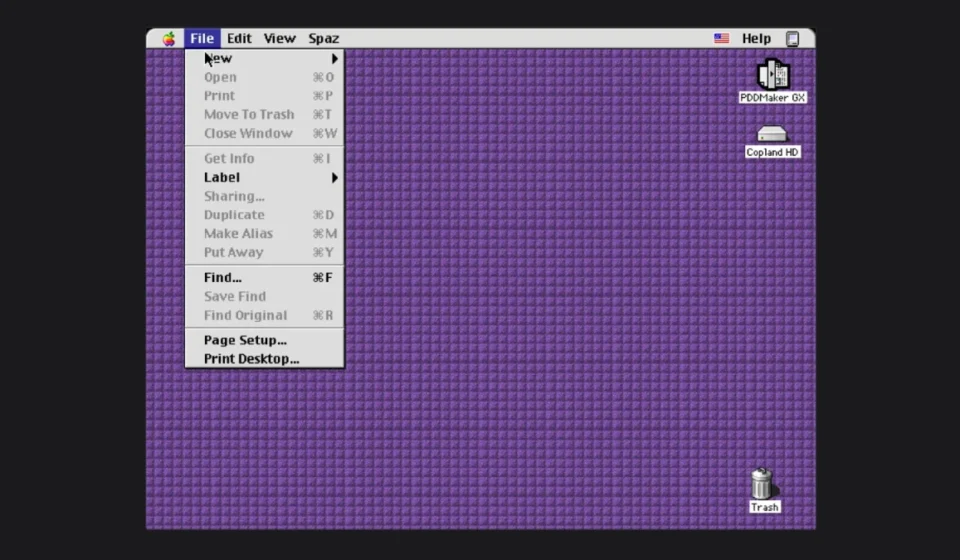
Steil successfully managed to get a beta version of Copland, specifically the D11E4 build, running within an emulator. This remarkable feat required extensive modifications to the open-source PowerPC emulator, DingusPPC. In an interview, Steil detailed the arduous process, revealing that it took approximately eleven distinct patches to coax Copland into booting and functioning within the emulated environment. This achievement not only provides a rare opportunity to experience a piece of computing history but also sheds light on the technical hurdles that ultimately contributed to Copland’s downfall.
Steil has generously made his work accessible to the public. A browser-based version of Copland is now available on his website, allowing anyone with an internet connection to interact with this piece of lost technology. Furthermore, he has shared the necessary patches on GitHub, enabling other enthusiasts and researchers to replicate his success and delve deeper into Copland’s architecture and functionality.
The D11E4 Beta: The Closest We Got to Copland’s Full Potential
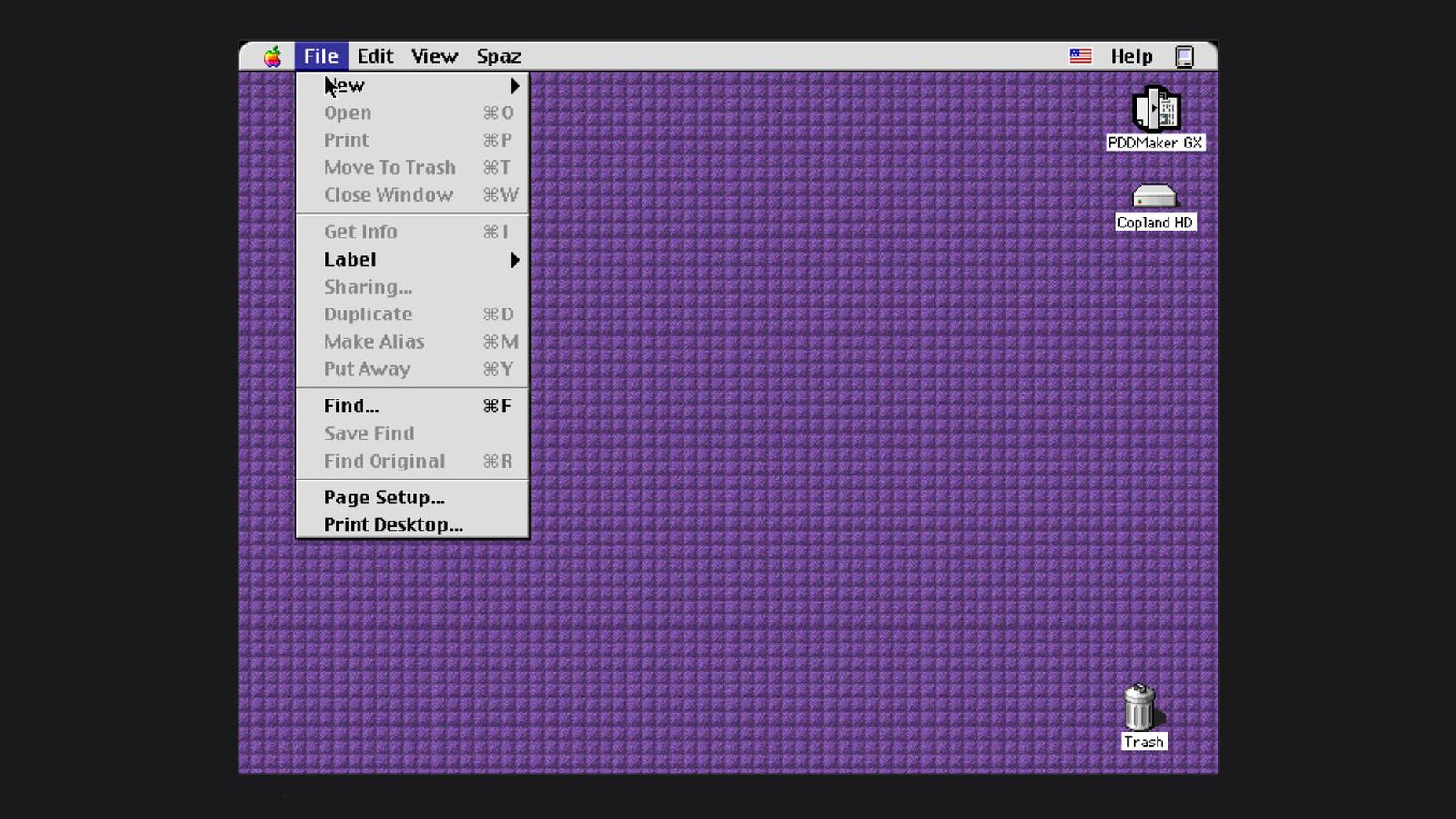
The specific version of Copland that Steil managed to emulate, D11E4, represents one of the final beta releases before the project’s cancellation. While it was a significant step forward from earlier iterations, it still suffered from inherent instability and incomplete features. Developers at the time noted that even this late-stage beta was far from ready for a commercial launch, underscoring the immense challenges Apple faced in bringing Copland to fruition.
The difficulty in running Copland on real hardware has always been a significant barrier to its study. Its intricate design and reliance on specific hardware configurations meant that even minor deviations could lead to system crashes. The ability to run it in emulation, therefore, is a monumental step in understanding its internal workings and the architectural decisions made by Apple’s engineers. It allows for a more systematic analysis of its components and a better appreciation of the innovative, albeit ultimately unfulfilled, potential it held.
The Legacy of Copland: Paving the Way for Mac OS X
The cancellation of Copland in August 1996 marked a critical juncture for Apple. Faced with the urgent need for a modern operating system, the company began exploring external solutions. This strategic shift ultimately led to one of the most pivotal acquisitions in Apple’s history: NeXT Computer. In 1997, Apple purchased NeXT, bringing its founder, Steve Jobs, back into the company he co-founded.
The operating system developed by NeXT, NeXTSTEP, proved to be the foundational technology that would eventually evolve into Mac OS X (now macOS). NeXTSTEP possessed many of the advanced features and architectural strengths that Copland had strived for, including a robust Unix-based kernel, object-oriented programming, and a sophisticated graphical user interface. The acquisition and subsequent integration of NeXTSTEP’s technology allowed Apple to leapfrog its internal development challenges and create a stable, secure, and modern operating system that has served as the bedrock of the Mac experience for over two decades.
Therefore, while Copland itself was a commercial failure, its influence is undeniable. Key concepts and technologies that were developed during the Copland era, such as its object-oriented frameworks and some of its user interface elements, found their way into Mac OS 7.6 and Mac OS 8, providing incremental improvements to the existing system. More significantly, the lessons learned from Copland’s spectacular failure directly informed Apple’s strategic decisions, leading to the NeXT acquisition and the birth of the modern Mac operating system.
Supporting Data and Chronology
- Early 1990s: Apple begins development of the Copland operating system, aiming to replace the classic Mac OS with a modern, modular architecture.
- Mid-1990s: Development progresses, with multiple beta versions released to internal testers and select developers. Significant challenges emerge in project management and feature integration.
- August 1996: Apple officially cancels the Copland project due to insurmountable development hurdles and escalating costs.
- Late 1996 – Early 1997: Apple explores external solutions for a new operating system.
- December 1996: Apple announces its intention to acquire NeXT.
- Early 1997: The acquisition of NeXT is completed, bringing Steve Jobs back to Apple.
- 1997 onwards: NeXTSTEP technology begins to be integrated into Apple’s OS development, forming the basis for Mac OS X.
- 1998: Mac OS 8 is released, incorporating some elements and design philosophies from the earlier Copland work.
- 2001: Mac OS X (version 10.0 Cheetah) is officially launched, marking the commercial realization of the NeXTSTEP lineage.
- September 2026: Michael Steil successfully emulates the Copland D11E4 beta, making it accessible to the public via browser and sharing the necessary patches.
Broader Impact and Implications
The story of Copland serves as a cautionary tale in software development. It highlights the dangers of unchecked ambition, the critical importance of disciplined project management, and the need for clear strategic vision. For Apple, the failure of Copland was a painful but ultimately transformative experience. It forced the company to confront its internal development deficiencies and led to a radical strategic realignment that, under Steve Jobs’s renewed leadership, revitalized the company and set it on a path to unprecedented success.
The ability to run Copland in emulation today offers invaluable insights for historians of technology, computer science students, and software engineers. It provides a tangible link to a pivotal period in Apple’s history and allows for a deeper understanding of the evolution of operating system design. By studying the successes and failures of projects like Copland, we can gain a greater appreciation for the complexities of innovation and the often-unforeseen paths that lead to technological advancement. The availability of Steil’s work ensures that this lost chapter of computing history is no longer relegated to the shadows but can be explored and learned from by a new generation. The echoes of Copland’s unfulfilled promise resonate through the success of macOS, a testament to the enduring power of vision, even when its initial execution falters.