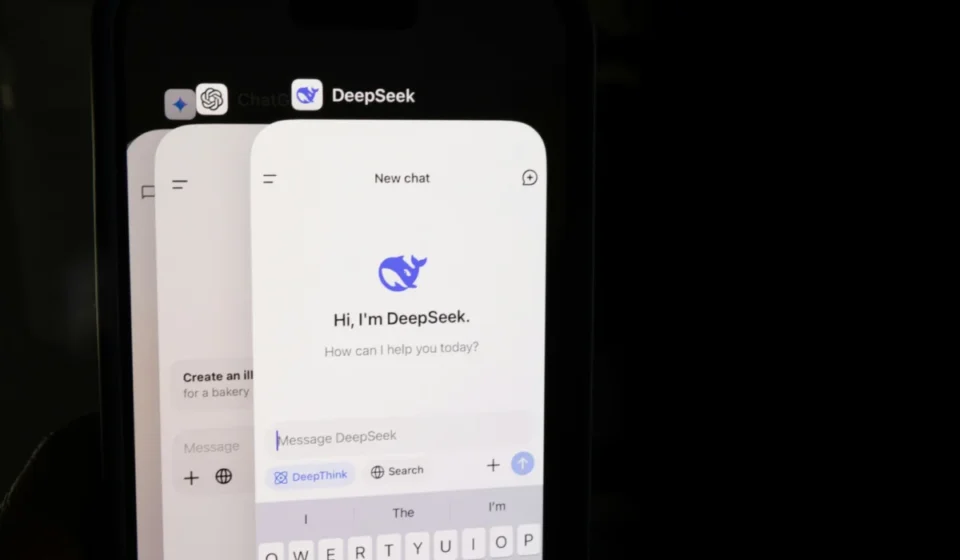
DeepSeek’s Super-Agent Signals a New Era of Proactive AI in Software Development

The artificial intelligence landscape is witnessing a significant evolution in its approach to software development, moving beyond reactive code-generation tools to proactive agents designed to integrate seamlessly into the development workflow. Chinese AI company DeepSeek has taken a bold step in this direction with the release of its open-source prototype, Super-Agent. Unlike traditional AI coding assistants that await explicit prompts, Super-Agent is engineered to actively monitor developer group chats, identify potential coding challenges, and proactively suggest solutions, marking a pivotal shift towards more autonomous and integrated AI collaborators in the software engineering process.
This development places DeepSeek directly in competition with established players like Anthropic’s Claude Code and OpenAI’s Codex, both of which have made significant inroads in the rapidly expanding market for AI-powered software development tools. The overarching ambition driving these advancements is to cultivate AI agents that function not merely as passive assistants, but as active, contributing members of development teams, capable of initiating actions and anticipating needs.
The Dawn of the Proactive AI Developer Agent
DeepSeek’s Harness team has unveiled Super-Agent, a tool specifically designed to scan developer discussions for insights into coding problems and to propose viable solutions. The company articulates a clear objective: to maximize value delivery while minimizing the need for constant human oversight. This represents a substantial departure from the conventional chatbot interaction model, where developers typically articulate a problem, provide context, and then request the AI to generate or rectify code. DeepSeek’s innovative approach aims to embed the AI agent directly within the conversational nexus where coding issues organically arise, fostering a more intuitive and responsive development environment.
The technological underpinnings of Super-Agent are rooted in what DeepSeek terms the "agent harness." This sophisticated software scaffolding envelops a large language model, imbuing it with the requisite capabilities to undertake more complex and multifaceted tasks. The Harness team at DeepSeek was established earlier this year with the express purpose of developing agents that can rival the coding services offered by leading U.S. AI firms.
However, it is crucial to contextualize Super-Agent as a prototype, rather than definitive proof that DeepSeek has definitively surpassed its established competitors. The announcement, while significant, does not yet provide concrete metrics on Super-Agent’s reliability for intricate development projects or its readiness for large-scale deployment. Nevertheless, the conceptual leap towards proactive AI assistance in coding is undeniable.
DeepSeek’s Proactive Stance Challenges Industry Giants
The burgeoning field of AI-assisted software development has seen significant contributions from major technology firms. Anthropic’s Claude Code, for instance, is already empowering developers by assisting with code navigation, debugging complex issues, generating new code segments, facilitating test execution, and even streamlining the pull request process. Similarly, OpenAI has showcased agent-based workflows with Codex, demonstrating capabilities that extend beyond mere code generation to encompass parallel task execution and sophisticated code review functionalities across the entire software development lifecycle.
DeepSeek’s Super-Agent enters this competitive arena with a distinct strategic advantage: its focus on proactively monitoring developer conversations. Instead of passively responding to direct queries, Super-Agent endeavors to anticipate when a developer might require assistance, thereby bridging potential gaps in workflow efficiency. This proactive methodology is particularly salient as the next frontier in AI competition shifts towards agents capable of automating entire workstreams, rather than solely generating impressive individual outputs. Both OpenAI, Anthropic, and now DeepSeek are actively pursuing this transformative opportunity.

Strategic Fundraising and Future Implications
The strategic importance of DeepSeek’s advancements is underscored by its recent financial activities. In its latest funding round, preceding a planned initial public offering (IPO), the company reportedly secured approximately 100 billion yuan (roughly $15 billion), according to reports from Bloomberg. This substantial capital infusion is indicative of investor confidence in DeepSeek’s ambitious roadmap and its potential to disrupt the AI sector.
The intensification of competition within the AI coding tool market holds the promise of delivering more capable and cost-effective solutions for developers. As these tools mature and become more accessible, they could significantly accelerate development cycles, reduce bugs, and democratize access to sophisticated programming assistance.
While Super-Agent represents an early indicator of the industry’s trajectory, it is not yet a catalyst for developers to abandon established tools like Claude Code or Codex. The true measure of its impact will lie in its long-term performance, scalability, and its ability to demonstrably enhance developer productivity and code quality in real-world scenarios. The ongoing race to develop more intelligent and autonomous AI agents for software development is poised to reshape the industry in profound ways, with DeepSeek’s Super-Agent marking a significant milestone in this evolutionary journey.
The Evolution of AI in the Development Lifecycle: A Historical Context
The journey of AI in software development can be traced back to early expert systems and rule-based programming, which aimed to automate specific aspects of coding. However, the true inflection point arrived with the advent of deep learning and large language models (LLMs). The initial wave of AI coding tools primarily focused on code completion and simple code generation, acting as sophisticated autocomplete features. Tools like GitHub Copilot, launched in 2021, revolutionized this by leveraging LLMs to suggest entire lines or blocks of code based on context.
The subsequent phase saw the emergence of chatbots designed for more conversational coding assistance. Developers could ask questions, describe problems, and receive explanations or code snippets in response. This marked a significant improvement in user interaction and problem-solving capabilities. OpenAI’s Codex, powering tools like GitHub Copilot, and Google’s Bard (now Gemini) demonstrated the potential of LLMs to understand natural language queries related to programming.
Anthropic’s Claude Code further expanded these capabilities, emphasizing enterprise-grade features and ethical considerations in AI development. Its ability to handle complex codebases and assist with tasks like debugging and test generation positioned it as a powerful tool for professional developers.
DeepSeek’s Super-Agent represents the next logical, and arguably more ambitious, step in this evolution. By shifting from a reactive, prompt-driven model to a proactive, context-aware approach, it aims to integrate AI more deeply into the collaborative fabric of software development. The concept of an AI agent that "listens in" on conversations and offers unsolicited, yet relevant, assistance is a significant conceptual leap, moving AI from the periphery of the development process to a more central, participatory role.
Technical Foundations and Challenges
The "agent harness" technology mentioned by DeepSeek is a critical component of this new paradigm. An agent harness typically refers to a framework that provides an AI model with the necessary infrastructure to interact with its environment, access external tools, and execute actions. This includes capabilities such as:

- Tool Integration: Enabling the AI to call upon various software tools, libraries, or APIs to perform specific tasks (e.g., running code, accessing documentation, querying databases).
- Memory and Context Management: Allowing the AI to retain information from past interactions and conversations to maintain continuity and provide more relevant responses.
- Planning and Reasoning: Equipping the AI with the ability to break down complex problems into smaller, manageable steps and devise strategies to achieve desired outcomes.
- Observational Capabilities: For Super-Agent, this likely involves sophisticated natural language processing (NLP) to parse developer chat logs, identify keywords, sentiment, and coding-related discussions.
The challenges associated with such a proactive agent are considerable. Ensuring accuracy and relevance is paramount; an agent that constantly interrupts with unhelpful suggestions could be more detrimental than beneficial. Furthermore, privacy concerns arise when an AI system actively monitors team communications. DeepSeek will need to address how it ensures the security and confidentiality of these conversations. The model’s ability to discern genuine coding problems from casual discussions, and to offer solutions that are both correct and idiomatic to the project’s specific codebase and standards, will be critical for its adoption. The potential for "hallucinations" or generating incorrect code, a known issue with LLMs, needs to be rigorously mitigated in a proactive context.
The Global AI Race and Market Dynamics
DeepSeek’s emergence as a significant player in the AI coding race highlights the intensifying global competition in artificial intelligence. While U.S.-based companies have historically led many AI advancements, companies from China and other regions are rapidly closing the gap, often with substantial government backing and a strong focus on commercial applications. DeepSeek’s substantial funding round of $15 billion signals its ambition to compete on a global scale, not just in terms of technological innovation but also market penetration.
The AI for software development market is projected for significant growth. Analysts predict that the market for AI-powered developer tools will expand exponentially in the coming years, driven by the increasing demand for faster development cycles, improved software quality, and the growing complexity of software systems. Companies that can offer truly transformative solutions, like proactive AI agents, are poised to capture a substantial share of this market.
The competitive landscape is characterized by rapid iteration and constant innovation. OpenAI, with its foundational models and ecosystem, has set a high bar. Anthropic has distinguished itself with a focus on safety and constitutional AI. Google, through its Gemini family of models, is integrating AI across its vast product suite. DeepSeek’s strategy of focusing on specific, high-impact applications like proactive coding assistance, backed by significant financial resources, positions it as a formidable competitor in this dynamic environment.
Future Outlook and Developer Adoption
The ultimate success of Super-Agent and similar proactive AI tools will hinge on several factors:
- Reliability and Accuracy: Developers will only adopt tools that consistently provide correct and helpful solutions. Any significant error rate could quickly lead to distrust.
- Seamless Integration: The agent must integrate smoothly into existing development workflows and tools (e.g., Slack, Microsoft Teams, Jira) without causing disruptions.
- User Experience and Control: Developers need to feel in control. The AI should augment, not dictate, their work. Mechanisms for fine-tuning the AI’s behavior and providing feedback will be crucial.
- Cost-Effectiveness: While initial prototypes may be open-source, widespread adoption will depend on affordable pricing models for commercial use.
- Addressing Ethical and Privacy Concerns: Transparent policies regarding data usage, privacy, and algorithmic bias will be essential for building trust.
The shift towards proactive AI agents in software development is not merely an incremental improvement; it represents a fundamental re-imagining of the developer’s relationship with artificial intelligence. If DeepSeek’s Super-Agent prototype can mature into a reliable and valuable tool, it could indeed usher in an era where AI is not just a helpful assistant, but an indispensable member of the development team, constantly working to optimize the creation and maintenance of software. The coming years will be a critical period for observing how these ambitious AI initiatives translate into tangible benefits for the global developer community.