Market Outlook Following Midterm Elections and the Strategic Shift Toward Selective Equity Positioning Heading Into 2027

The shift in legislative power resulting from the recent midterm elections has established a new political reality in Washington, characterized by a divided government that market analysts suggest could serve as a primary catalyst for a sustained bull market in equities. With Democrats securing control of Congress and President Donald Trump maintaining executive authority, the United States is entering a period of anticipated political gridlock. Historically, such environments have provided a stable backdrop for financial markets by limiting the potential for sweeping legislative changes that could disrupt corporate earnings or fiscal policy. As the investment community assesses the implications of this power split, historical data and current economic indicators point toward a significant rally that may extend through the 2026-2027 cycle.
Historical Precedents of Political Gridlock and Market Performance
The concept of political gridlock as a favorable condition for Wall Street is rooted in decades of empirical data. When power is divided between the executive and legislative branches, the likelihood of radical policy shifts—such as significant tax increases or major regulatory overhauls—diminishes. This legislative inertia provides a predictable environment for corporations to execute long-term capital allocation strategies.
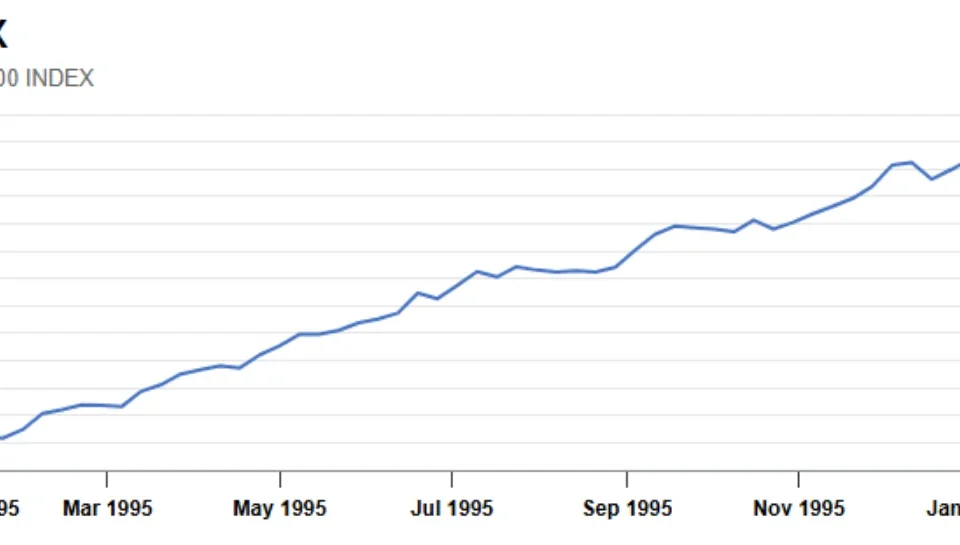
A primary historical reference point is the 1994 midterm election cycle. During that period, Republicans gained control of both the House and Senate for the first time in four decades, creating a sharp divide with the Clinton administration. At the time, media sentiment was largely pessimistic. On November 7, 1994, the Los Angeles Times questioned whether the market was experiencing a "last gasp" before a bear market. Contrary to these fears, the S&P 500 surged by more than 34% in 1995. This period marked the beginning of a historic bull market driven by technological innovation and relative fiscal restraint necessitated by divided government.
Analyst Louis Navellier notes that the current environment shares several characteristics with the mid-1990s. The tension between a Republican presidency and a Democratic-controlled Congress is expected to result in a "clinched" political state where neither side can easily push through an agenda without significant compromise. For investors, this often translates to a market that focuses less on Washington and more on corporate fundamentals and technological advancements.
The Role of Artificial Intelligence as a Structural Growth Catalyst
While political stability provides the foundation, the primary engine of the current market expansion is the rapid integration of artificial intelligence (AI) across the global economy. Similar to how the internet transformed the economic landscape starting in 1995, AI is currently driving a massive wave of capital expenditure.
Technology giants and industrial firms are investing hundreds of billions of dollars into the infrastructure required to sustain AI development, including specialized semiconductors, massive data centers, and upgraded power grids. Despite concerns that a Democratic-led Congress might introduce regulatory hurdles—particularly regarding the environmental impact of data centers and electricity consumption—the momentum behind AI appears resilient.
Market data indicates that the demand for AI computing power currently exceeds supply, with major hardware providers reporting order backlogs extending into 2026. Furthermore, the localized economic benefits of AI infrastructure, including job creation and increased tax revenue, provide a bipartisan incentive for lawmakers to support continued development. While regional regulatory adjustments may occur, the overarching trajectory of AI-driven productivity gains is expected to remain a dominant theme for investors through 2027.
Quantitative Analysis of Post-Midterm Seasonal Trends
The historical correlation between midterm elections and positive market performance is one of the most consistent patterns in technical analysis. Since 1942, the S&P 500 has risen in the period between November of a midterm year and the following June in 21 out of 21 instances. The average gain during this specific window is approximately 16%.
This trend aligns with broader seasonal patterns. According to the Stock Trader’s Almanac, the six-month period from November through April has historically been the strongest for the S&P 500, yielding an average return of 7% since 1945. In contrast, the May-to-October period has averaged a more modest 2% return. The convergence of this seasonal strength with the post-midterm historical certainty creates a high-probability window for equity appreciation.
Current macroeconomic conditions further bolster this optimistic outlook. While the Federal Reserve continues to monitor inflation and interest rate trajectories, corporate America has demonstrated remarkable resilience. The alignment of historical seasonal data with current earnings momentum suggests that the traditional "year-end rally" could transition into a multi-year expansion.

Corporate Earnings Momentum and Sector Performance
The fundamental health of the market is currently reflected in robust corporate earnings reports. According to data from FactSet, the S&P 500 is on pace for a 30.2% earnings growth rate in the third quarter. This performance is characterized by high quality, with 82% of reporting companies exceeding analyst estimates.
Notably, earnings growth is not confined to a single industry. All 11 sectors of the S&P 500 are reporting year-over-year growth, with the energy, technology, and materials sectors leading the expansion.
- Technology: Driven by AI demand and software-as-a-service (SaaS) resilience.
- Energy: Benefiting from tight supplies of refined products, such as diesel, and strong refining margins.
- Materials: Supported by infrastructure projects and the physical requirements of the "new economy" buildout.
Forward-looking estimates remain aggressive. Analysts have projected a 28.4% increase in S&P 500 earnings for the fourth quarter. Uncharacteristically, many analysts have been upwardly revising their estimates late in the reporting cycle, a signal that corporate profitability is outpacing even optimistic expectations.
The Transition to a Stock-Picker’s Market in 2027
Despite the positive macro outlook, market experts warn that the era of "a rising tide lifts all boats" may be concluding. As the market matures, the dispersion between high-performing companies and laggards is expected to widen. This phenomenon, often referred to as a "narrowing market," requires investors to be increasingly selective.
In the immediate aftermath of the midterm elections, the market experienced a period of rotation. Initial gains were often driven by short-covering in undervalued sectors, while some high-growth AI stocks experienced temporary profit-taking. However, historical patterns suggest that after the initial post-election volatility, the market invariably returns its focus to earnings and fundamental strength.
The concept of "stock grading" has become central to navigating this transition. By evaluating companies based on quantitative factors—such as sales growth, operating margin expansion, and earnings surprises—investors can distinguish between stocks that are merely riding market momentum and those with sustainable growth trajectories. As the 2027 investment landscape takes shape, the ability to identify "fresh tennis balls" (stocks with high rebound potential) versus "rocks" (fundamentally weak stocks) will be the primary differentiator for portfolio performance.
Upcoming Strategic Briefing and Tool Implementation
In response to these shifting dynamics, financial analysts are providing new resources to help investors recalibrate their strategies. Louis Navellier has announced a special online event scheduled for Thursday, November 12, at 2:00 p.m. Eastern Time. The session is designed to address the specific challenges of the post-midterm environment and the road to 2027.
The event will feature:
- Direct Stock Recommendations: Disclosure of one specific equity to buy based on current momentum and one high-profile stock to avoid.
- System Access: An opportunity for participants to utilize the "Stock Grader" system, a proprietary tool that evaluates equities based on a combination of fundamental and quantitative metrics.
- Market Rotation Analysis: A breakdown of which sectors are poised to lead the next phase of the bull market as AI infrastructure spending evolves.
Registration for the event provides investors with access to exclusive content focused on navigating political gridlock and maximizing the benefits of the current earnings boom.
Conclusion: Navigating the Path to 2027
The combination of a divided government, a generational technological shift in AI, and record-breaking corporate earnings creates a unique opportunity for the investment community. While political friction in Washington often generates negative headlines, the historical reality is that such environments frequently coincide with periods of significant wealth creation in the financial markets.
As the United States moves beyond the midterm elections, the focus shifts from political speculation to fundamental execution. Investors who prioritize earnings quality and maintain a disciplined approach to stock selection are likely to be the primary beneficiaries of the projected rally. The road to 2027 will undoubtedly feature periods of volatility, but the structural foundations—political gridlock, AI innovation, and strong corporate fundamentals—suggest a favorable long-term outlook for the American equity market.