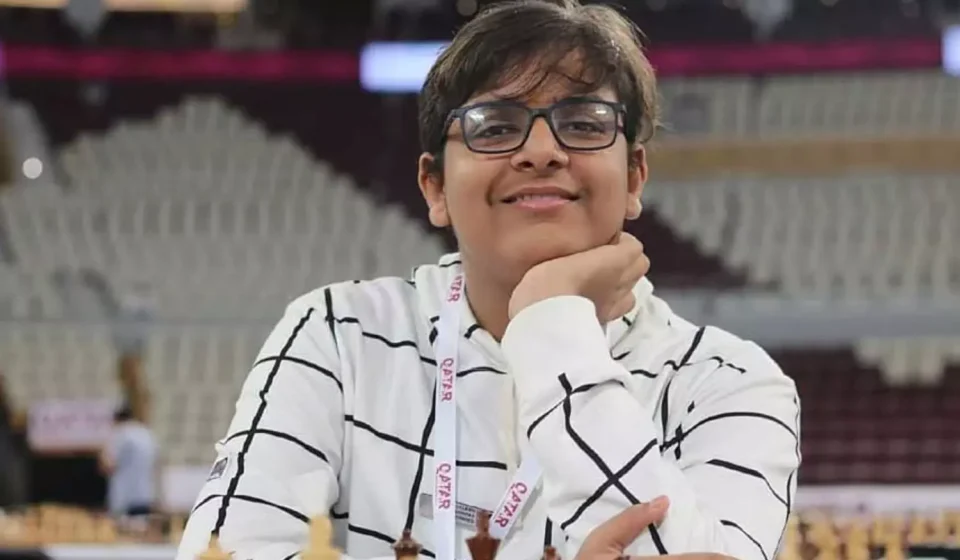
Mayank Chakraborty Makes History as Assam’s First Grandmaster and India’s 94th Chess Title Holder

The landscape of Indian chess reached a significant milestone on Friday as 16-year-old Mayank Chakraborty officially secured the Grandmaster (GM) title, becoming the 94th Indian to achieve the highest honor in the sport. While the title itself adds to India’s growing list of elite players, Chakraborty’s achievement carries a unique historical weight: he is the first player from the state of Assam, and the wider Northeast region of India, to be conferred with the Grandmaster designation. This breakthrough marks a pivotal moment for the sport’s geographical expansion within the country, moving the center of gravity beyond the traditional chess powerhouses of Tamil Nadu, Maharashtra, and West Bengal.
Chakraborty’s final requirement for the title was met during a high-stakes international tournament in Stockholm, Sweden. Competing in the 8th GM Tournament, the young prodigy displayed a level of dominance that belied his age. Over the course of nine grueling rounds, Chakraborty amassed a total of 7 points, finishing a full point ahead of his nearest competitor, Jonah Willow of England. His performance in Stockholm was characterized by tactical precision and a resilient endgame, allowing him to navigate a field of seasoned international masters and fellow grandmaster aspirants.
The victory in Sweden did more than just secure his third and final GM norm; it also provided the necessary boost to his international rating. Chakraborty’s LIVE ELO rating surged to a career-high of 2508, comfortably surpassing the 2500-point threshold required by FIDE, the International Chess Federation, for the Grandmaster title. For a player who has been steadily climbing the ranks since his early childhood, this leap into the 2500+ bracket signifies his transition from a rising talent to a formidable competitor on the global stage.
The Journey to the Final Norm: A Technical Overview
The path to becoming a Grandmaster is one of the most rigorous journeys in professional sports, requiring a player to achieve three Grandmaster "norms"—high-performance benchmarks in international tournaments—and a FIDE rating of at least 2500. For Mayank Chakraborty, the journey culminated in Stockholm, but the foundation was laid through years of consistent performance in domestic and international circuits.
In the Stockholm tournament, Chakraborty’s path to the title was nearly flawless. Out of nine rounds, he remained undefeated through the majority of the event, securing critical wins against higher-rated opponents that bolstered his performance rating for the tournament. By the time he reached the penultimate round, the math was in his favor, but the pressure remained to maintain his lead. His final score of 7/9 not only secured the norm but also the tournament trophy, signaling that he was not merely looking to "draw" his way to a title but was actively seeking to dominate the field.
The second-place finisher, Jonah Willow, who ended with 6 points, provided a strong challenge, but Chakraborty’s ability to convert slight advantages into full points proved to be the deciding factor. This clinical approach has become a hallmark of Chakraborty’s playing style, which blends modern engine-backed preparation with a deep intuitive understanding of positional play.
Breaking the Regional Barrier: Significance for Assam and the Northeast
While India has produced 94 Grandmasters since Viswanathan Anand first broke the barrier in 1988, the distribution of these titles has historically been skewed toward the southern and western states. Chennai, often dubbed the "Chess Capital of India," has produced a disproportionate number of GMs, followed by hubs like Mumbai, Delhi, and Kolkata.
Mayank Chakraborty’s emergence as the first Grandmaster from Assam is, therefore, a watershed moment for the "Seven Sisters" states of Northeast India. Historically, the region has been celebrated for its contributions to Indian football, boxing, and weightlifting, but chess had remained a discipline where the region lacked a top-tier representative. Chakraborty’s success proves that with the right talent and support systems, the Northeast can compete at the highest levels of intellectual sports.
Local chess officials in Assam have noted that Chakraborty’s rise is likely to trigger a "boom" in chess enrollment across the state. Much like the "Anand effect" inspired a generation in the 1990s, Chakraborty is now positioned as a role model for young players in Guwahati, Jorhat, and Dibrugarh. His achievement validates the efforts of the All Assam Chess Association and local academies that have worked to improve the infrastructure for the sport in the region over the last decade.
A Prolific Year for Indian Chess: The 2026 Context
Chakraborty is the third Indian to earn the Grandmaster title in the first quarter of 2026 alone, highlighting the staggering pace at which the country is producing elite talent. His achievement follows closely on the heels of Aarav Dengla, a 17-year-old from Mumbai who became the 93rd Grandmaster just two weeks prior. Earlier in January, Aaryan Varshney had set the tone for the year by becoming India’s 91st Grandmaster.
This rapid succession of titles is indicative of a broader trend in Indian sports. The "Golden Generation" of Indian chess—led by the likes of D. Gukesh, R. Praggnanandhaa, and Arjun Erigaisi—has created a competitive ecosystem where young players are exposed to world-class training and competition much earlier than previous generations. The 2026 season is shaping up to be one of the most productive years in the history of the All India Chess Federation (AICF), with several other International Masters currently sitting on two norms and nearing the 2500 rating mark.
The data suggests that the average age of becoming a Grandmaster in India is steadily decreasing. Chakraborty, at 16, fits perfectly into this new demographic of "teenage titans" who are skipping traditional developmental steps and moving straight into the world’s top 200 rankings before they finish high school.
Official Reactions and Future Implications
While formal celebrations are being planned in his hometown, the initial reactions from the chess community have been overwhelmingly positive. The Bridge, a prominent sports media outlet, was among the first to announce the news, congratulating Chakraborty for "making history as the first ever from Assam and the entire Northeast."
The All India Chess Federation is expected to recognize Chakraborty’s achievement with a formal felicitation. Analysts suggest that his entry into the GM ranks will also open doors for more corporate sponsorships, which are vital for young players who must travel extensively to Europe to participate in the high-category tournaments necessary for rating growth.
From a technical perspective, the next goal for Chakraborty will be the 2600 ELO mark, often considered the threshold for entering the "Super Grandmaster" trajectory. At 2508, he has already established himself as one of the top junior players in the world. His performance in Stockholm suggests he has the stamina for the long, multi-day formats used in the FIDE World Championship cycles.
Broader Impact on Indian Sports Policy
Chakraborty’s success also brings into focus the effectiveness of India’s sports scholarship programs. Many of India’s recent Grandmasters have benefited from government initiatives like the Target Olympic Podium Scheme (TOPS) or support from Public Sector Undertakings (PSUs). As a history-maker for Assam, Chakraborty is expected to receive significant support from the state government, which has recently increased its budget for sports infrastructure.
The logistical challenges of being a chess professional in India—ranging from the high cost of foreign coaches to the expenses of international travel—remain a hurdle. However, Chakraborty’s success in Sweden demonstrates that Indian players are increasingly adept at managing these challenges, often spending months in Europe to play "circuits" of back-to-back tournaments.
Conclusion: A New Chapter for the Northeast
Mayank Chakraborty’s coronation as a Grandmaster is more than a personal victory; it is a geographic expansion of India’s intellectual sporting map. By taking the title in such a dominant fashion in Stockholm, he has signaled that he is ready for the international stage. As the 94th Grandmaster of India, he joins an elite fraternity, but as the 1st Grandmaster of Assam, he stands alone as a pioneer.
The eyes of the chess world will now follow Chakraborty as he returns to India to prepare for the next series of elite invitationals. With the national championships and international opens on the horizon, the 16-year-old from Assam has not just reached a destination; he has cleared the starting line for what promises to be a distinguished career in professional chess. His journey from the local clubs of the Northeast to the winner’s podium in Stockholm serves as a testament to the talent burgeoning in every corner of the country, waiting for the right moment to make its mark on the world.