Sports Ministry Revitalizes Target Olympic Podium Scheme with 249 Athletes Selected for Commonwealth and Asian Games Preparation

The Ministry of Youth Affairs and Sports (MYAS) has significantly accelerated India’s preparations for the upcoming Commonwealth Games and Asian Games by overhauling the roster of its premier high-performance initiative, the Target Olympic Podium Scheme (TOPS). During the 169th meeting of the Mission Olympic Cell (MOC) held on Wednesday, officials approved the inclusion of 249 athletes into the program, marking a strategic pivot toward youth development and discipline-specific excellence. This comprehensive list includes 56 athletes in the TOPS Core Group, 62 para-athletes, and 130 promising talents in the Developmental Group, reflecting a multi-tiered approach to international podium finishes.
The revision comes at a critical juncture in the international sporting calendar. With the next cycle of major multi-sport events approaching, the MOC’s decisions highlight a rigorous merit-based evaluation of recent international performances. The inclusion of new faces and the promotion of existing talent from the Developmental Group to the Core Group underscore the government’s commitment to providing elite-level resources to those demonstrating consistent world-class potential.
Strategic Focus on Shooting and Boxing
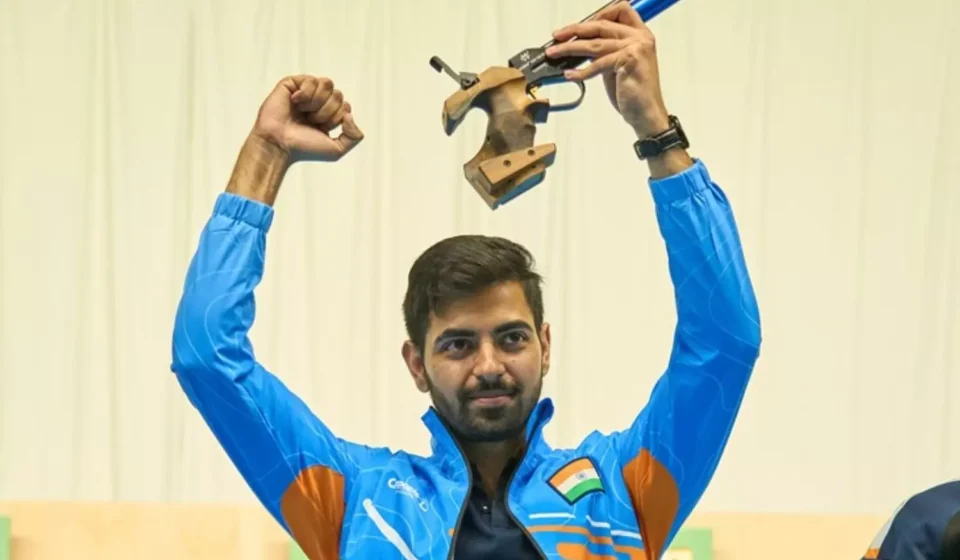
Among the various sporting disciplines, shooting and boxing have emerged as the primary beneficiaries of this latest revision. These sports have historically been strongholds for India on the global stage, and the Ministry appears keen to capitalize on a new wave of talent. World Champion Samrat Rana, whose rise in the pistol disciplines has been meteoric, joins the list alongside multiple World Cup medalist Suruchi Phogat. Their inclusion is a direct result of their podium finishes and high-scoring consistency in International Shooting Sport Federation (ISSF) events.
Furthermore, Niraj Kumar has secured a spot in the scheme following a commendable fifth-place finish at the ISSF World Shooting Championships. In a sport where margins are razor-thin, the Ministry’s decision to back athletes who are on the cusp of world-leading scores is seen as a tactical move to ensure India remains a powerhouse in the shooting range.
The boxing contingent also sees significant reinforcement. Hitesh Gulia, a gold medalist at the World Boxing Finals, and Jaismine Lamboria have both been elevated to the TOPS Core List. Lamboria, who competes in the women’s 57 kg category, has already established herself as a world-class operator. By moving these athletes from the Developmental Group to the Core List, the MOC has ensured they receive enhanced financial support and specialized training interventions required to transition from continental contenders to global champions.
Promotions and Performance-Based Upgrades
The 169th MOC meeting placed a heavy emphasis on rewarding "breakthrough" performances. One of the most notable promotions is that of long-distance runner Gulveer Singh. Singh has been in exceptional form, shattering national records in both the 5,000-meter and 10,000-meter events. His transition to the Core Group signals a rare and welcome focus on track events where India has traditionally struggled to find consistent representation at the highest levels.
In the badminton arena, the mixed doubles pair of Tanisha Crasto and Dhruv Kapila has been integrated into the Core Group. Mixed doubles has become an increasingly competitive field, and the Crasto-Kapila duo’s consistent presence in the world’s top 20 rankings made their inclusion a logical step. Their presence in the Core Group will allow for more targeted coaching and participation in high-tier BWF (Badminton World Federation) tournaments, which are essential for maintaining and improving their global standing.
Aquatics also received recognition through Rishab Das, the national record holder in the men’s 200m backstroke. Das has been included in the Developmental Group, a move intended to provide him with the necessary runway to shave off the crucial seconds required to meet Olympic and Asian Games qualifying standards.
The Target Asian Games Group (TAGG) and Para-Sports
Recognizing the specific challenges and prestige of the Asian Games, the Ministry has maintained a specialized sub-category known as the Target Asian Games Group (TAGG). This group is designed for veteran athletes and specialists whose primary focus is the continental showpiece. Notable inclusions in this category include veteran squash player and two-time world champion Joshna Chinappa, javelin thrower Annu Rani, tennis player D. Suresh, and cyclist Anjali Jakhar.
Annu Rani’s inclusion is particularly significant given her history of podium finishes at the Asian level and her role as a trailblazer for Indian women in field events. The TAGG provides these athletes with a customized support structure that accounts for their specific training cycles and recovery needs, which often differ from younger athletes in the Developmental Group.
The Ministry’s commitment to inclusivity and the burgeoning success of India’s para-sports movement was also evident in the revised list. A total of 62 para-athletes have been included, with high-profile names like Paralympic gold medalist Pramod Bhagat and Naveen Sivakumar featuring prominently. Following India’s record-breaking performance at the recent Paralympic Games, the continued and expanded support for para-athletes under TOPS is aimed at sustaining this momentum and ensuring that the infrastructure for para-sports remains world-class.
Accountability and the Reality of Exclusions
A key feature of the Target Olympic Podium Scheme is its stringent adherence to performance metrics. The program is not a permanent entitlement but a performance-linked support system. Consequently, the latest revision saw the exclusion of several high-profile names based on their recent international outings.
Wrestler Deepak Punia, badminton star HS Prannoy, and shooters Shiva Narwal and Divyansh Singh Panwar were among those removed from the list. While these athletes have been pillars of Indian sports in recent years, the MOC’s decision reflects a "performance-first" philosophy. HS Prannoy, for instance, has struggled with injury and form in the post-Olympic period, while the shooting duo of Narwal and Panwar faced stiff competition from emerging talents who have outperformed them in recent trials and international championships.
Sources within the Ministry suggest that these exclusions are not necessarily permanent; athletes who show a return to form in domestic and international circuits can be reconsidered in future MOC meetings. This "revolving door" policy is intended to keep athletes motivated and ensure that taxpayer-funded resources are directed toward those currently displaying the highest medal-winning probability.
Financial Framework and Structural Support
The financial implications for the selected athletes are substantial and provide the necessary cushion to focus entirely on training. Athletes inducted into the TOPS Core Group are entitled to a monthly Out-of-Pocket Allowance (OPA) of ₹50,000. Those in the Development Group receive ₹25,000 per month.
However, the benefits of TOPS extend far beyond the monthly stipend. The scheme covers:
- International Training and Competition: Funding for overseas training camps, including travel, boarding, and lodging.
- Specialized Equipment: Access to high-end sporting gear that may not be readily available in India.
- Support Staff: Provision for personal coaches, physiotherapists, nutritionists, and mental conditioning experts.
- Medical Support: Comprehensive coverage for injury management and rehabilitation.
This holistic support system is managed by the Mission Olympic Cell, which consists of legendary former athletes, high-ranking sports administrators, and technical experts who evaluate every request—from a specific brand of shoes to a particular training venue in Europe—on a case-by-case basis.
Historical Context: The Evolution of TOPS
The Target Olympic Podium Scheme was launched by the Ministry of Youth Affairs and Sports in 2014 with the objective of identifying and grooming potential medal winners for the Olympics. Since its inception, the scheme has undergone several iterations to become more data-driven and athlete-centric.
The success of the scheme was most visible during the Tokyo 2020 Olympics and the subsequent Paris 2024 cycle, where a significant majority of India’s medalists and finalists were beneficiaries of TOPS. By identifying talent early through the Developmental Group and providing them with a pathway to the Core Group, the Ministry has created a pipeline that reduces the "talent gap" that previously plagued Indian sports between Olympic cycles.
Broader Implications for Indian Sport
The inclusion of 249 athletes in this revised list signals a massive scaling up of India’s sporting ambitions. By broadening the base of supported athletes, the Ministry is moving away from a model that relies on a few "star" performers to a more systemic approach where multiple athletes in each discipline are vying for top honors.
This strategy is particularly relevant for the Commonwealth Games and Asian Games, where India aims to improve its overall medal tally and diversify its success across different sports. The emphasis on records (as seen with Gulveer Singh) and world rankings (as seen with Crasto and Kapila) indicates that the MOC is using objective global benchmarks to justify its investments.
As the athletes begin their specialized training programs under the newly revised TOPS list, the focus shifts to the national federations and coaching staff to convert this administrative support into podium finishes. With the 169th MOC meeting setting the stage, the roadmap for India’s journey toward the 2026 Commonwealth Games and the next Asian Games is now officially in motion, backed by a rigorous framework of financial, technical, and medical support.