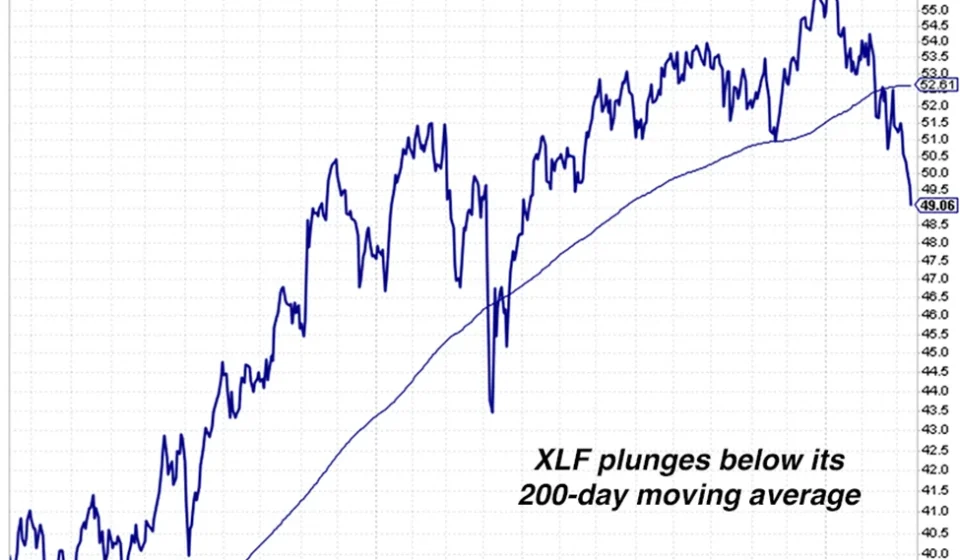

The standard benchmark for American equity performance, the S&P 500, has entered a period of prolonged stagnation, leaving investors to navigate a market characterized by broad-index inertia and hyper-specific sector volatility. As of Tuesday’s market close in March 2026, the index remains down 1.6% year-to-date. This lack of momentum is not a recent development; technical analysis reveals that the S&P 500 has largely trended sideways since early October 2025, failing to capitalize on the broader technological optimism that defined much of the previous two years.
However, beneath this surface-level neutrality, a significant divergence is occurring. While the broad market struggles to find a catalyst, a specific segment of the artificial intelligence (AI) supply chain—semiconductor memory—is experiencing a parabolic rise. This divergence highlights a shift in investor sentiment from general AI enthusiasm toward a focused interest in the physical bottlenecks of the digital economy.
The Memory Bottleneck: A Crisis in AI Infrastructure
The primary driver of current market outperformance is the realization that artificial intelligence infrastructure has reached a critical supply constraint. While much of the early AI boom focused on the processors designed by companies like Nvidia, the industry is now grappling with a severe shortage of Dynamic Random-Access Memory (DRAM).
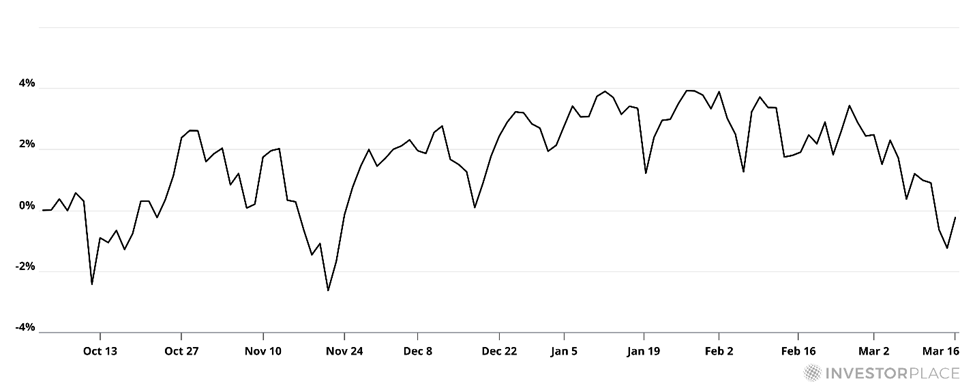
In the current 2026 market environment, memory-related stocks have decoupled from the broader tech sector. Lam Research (LRCX) has advanced 31% year-to-date, Applied Materials (AMAT) has gained 36%, and Micron Technology (MU) has surged by 60%. These gains are predicated on the "memory bottleneck," a term increasingly used by industry leaders to describe the inability of memory hardware to keep pace with the processing power of modern Graphics Processing Units (GPUs).
The technical reality of AI calculation requires that massive datasets be moved rapidly between the processor and the memory units. If the memory capacity is insufficient, the processor—no matter how powerful—is forced into idle states while data is reloaded. This creates a functional ceiling on AI performance. Macro investing expert Eric Fry has noted that "without enough DRAM, AI systems simply run out of room to process information."
High-Bandwidth Memory (HBM) and the Data Center Surge
The specific catalyst within the memory sector is High-Bandwidth Memory (HBM). This specialized form of DRAM allows for the vertical stacking of memory chips, facilitating the movement of enormous volumes of data at speeds previously unattainable. HBM has become the essential component for the next generation of AI training models, yet supply remains critically constrained.
The scale of the imbalance is significant. Current industry projections indicate that nearly 100 gigawatts of new data center capacity are scheduled to come online globally over the next four years. However, the current and projected supply of DRAM is estimated to support only 15 gigawatts of that capacity over the next 24 months. This 85-gigawatt deficit represents a structural chokepoint that ensures high pricing power for companies within the memory supply chain. Investors are increasingly pivoting toward these "bottleneck" companies, recognizing that the firms controlling these essential components are positioned to capture a disproportionate share of AI-related profits.
Expanding Constraints: Copper and Energy Infrastructure
The "bottleneck" investment thesis is not limited to silicon. As the digital economy expands, the physical requirements of data centers are straining global resources. Two areas currently under scrutiny are the supply of copper and the availability of affordable energy.
Copper remains a fundamental component for the electrical wiring and cooling systems required by high-density data centers. Similar to the memory market, copper production is struggling to meet the surge in demand, leading to concerns regarding long-term infrastructure viability.
Simultaneously, the energy requirements of AI are creating localized crises in power grids. In specific regions with high data center density, electricity costs have reportedly increased by as much as 267% compared to five years ago. This energy crunch is forcing a multi-pronged approach to power generation, involving a mix of wind, solar, nuclear, and natural gas. For investors, the companies providing the infrastructure to meet this 24/7 power demand represent a defensive yet growth-oriented alternative to the stagnant S&P 500.
Financials Flashing Warning Signs for the Broader Economy
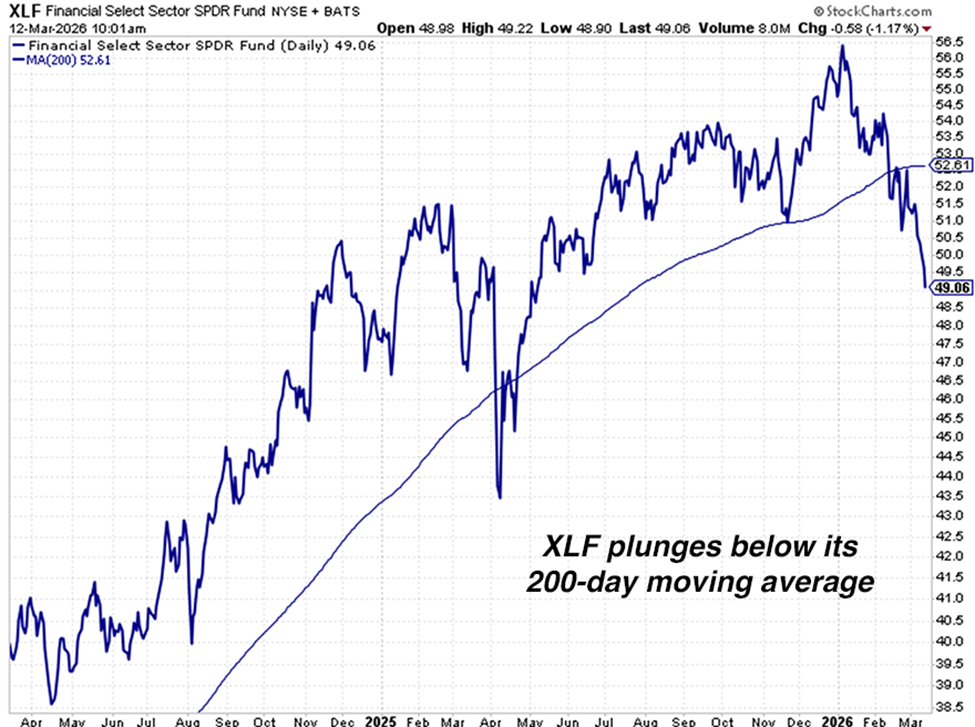
While the tech supply chain identifies specific opportunities, the financial sector is providing a more somber outlook for the overall market. The Financial Select Sector SPDR Fund (XLF), which tracks the performance of major U.S. banks and financial institutions, is currently flashing technical warning signs that have historically preceded broader economic downturns.
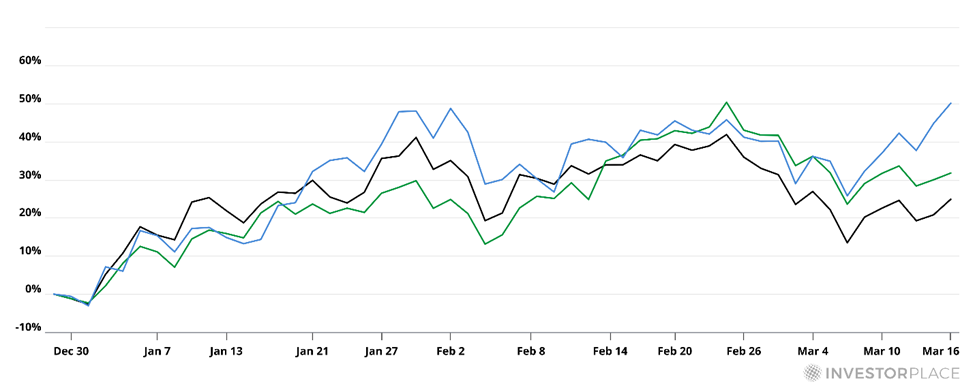
The XLF includes heavyweights such as JPMorgan Chase (JPM), Bank of America (BAC), Wells Fargo (WFC), and Goldman Sachs. As the "backbone" of the American economy, these firms are highly sensitive to changes in lending capacity, business expansion, and consumer credit health. After a steady bull market that lasted from late 2023 through early 2026, the sector has recently undergone a sharp correction.
The XLF is currently down double digits from its recent highs and has breached its 200-day moving average. In technical analysis, the 200-day moving average is considered a primary indicator of a long-term trend. Brian Hunt, editor of Money & Megatrends, suggests that "all the really bad things—crashes, panics, horrible bear markets—happen below the 200-day moving average."
The current weakness in financials is attributed to several factors:
- Industry Exposure: Banks have significant exposure to software and traditional tech industries that are currently being disrupted by AI.
- Economic Friction: Emerging resource constraints (energy and materials) are beginning to increase the cost of doing business, potentially slowing loan demand.
- Market Sentiment: The sector recently hit a nine-month low, suggesting that institutional investors are de-risking in anticipation of a cooling economy.
For the S&P 500 to break out of its current neutral trend, the financial sector would likely need to rally at least 6% to reclaim its long-term moving average. Until that occurs, the broader market remains in a vulnerable technical position.
Bitcoin and the Cryptocurrency Bust Cycle
In the digital asset space, Bitcoin is currently navigating the "bust" phase of its well-documented four-year cycle. After reaching a peak above $126,000 in October 2025, the cryptocurrency has trended lower, trading at approximately $74,700 as of mid-March 2026.
Despite the prevailing bearish sentiment, market analysts are looking for an accumulation zone. Historically, Bitcoin corrections have provided opportunities for long-term investors to scale into positions when "fear replaces euphoria." While some commodity strategists have forecasted a catastrophic drop to $10,000, calling the asset "uninvestable," historical data suggests that such declarations often coincide with market bottoms.
According to data from BitcoinDeaths.com, the asset has been declared "dead" by mainstream financial analysts 471 times. An investor who placed $100 into Bitcoin at each of these "death" declarations would currently hold a portfolio valued at over $77 million. This highlights the asymmetry of the asset class: while volatility is high, the long-term trend has consistently defied terminal predictions.
Current analysis by innovation expert Luke Lango suggests that the primary accumulation target for the current cycle lies between $50,000 and $58,000. This range is expected to be tested in the second or third quarter of 2026. Lango advises a strategy of gradual scaling rather than attempting to time the absolute bottom, noting that "the asymmetry is what you are buying, not the number."
Broader Impact and Market Implications
The divergence between the "stuck" S&P 500 and the "soaring" supply chain stocks represents a maturation of the current investment cycle. The "easy money" phase of broad index investing appears to have concluded, replaced by a market that rewards deep fundamental analysis of supply chain constraints.
The "FutureProof 2026" event, featuring Eric Fry, is expected to further detail these structural shifts. The focus will likely remain on the "chokepoint" theory of investing—identifying the specific materials, components, or services that are essential to the modern economy but are in critically short supply.
For the average investor, the current environment necessitates a move away from passive index-tracking and toward selective sector allocation. The warning signs in the financial sector suggest that the risks of a broader market correction are elevated, while the bottlenecks in AI memory, energy, and copper provide a roadmap for where capital is likely to flow in a resource-constrained world. As the S&P 500 continues its multi-month sideways pattern, the ability to identify these "lucrative bottlenecks" will likely be the deciding factor in portfolio performance for the remainder of 2026.